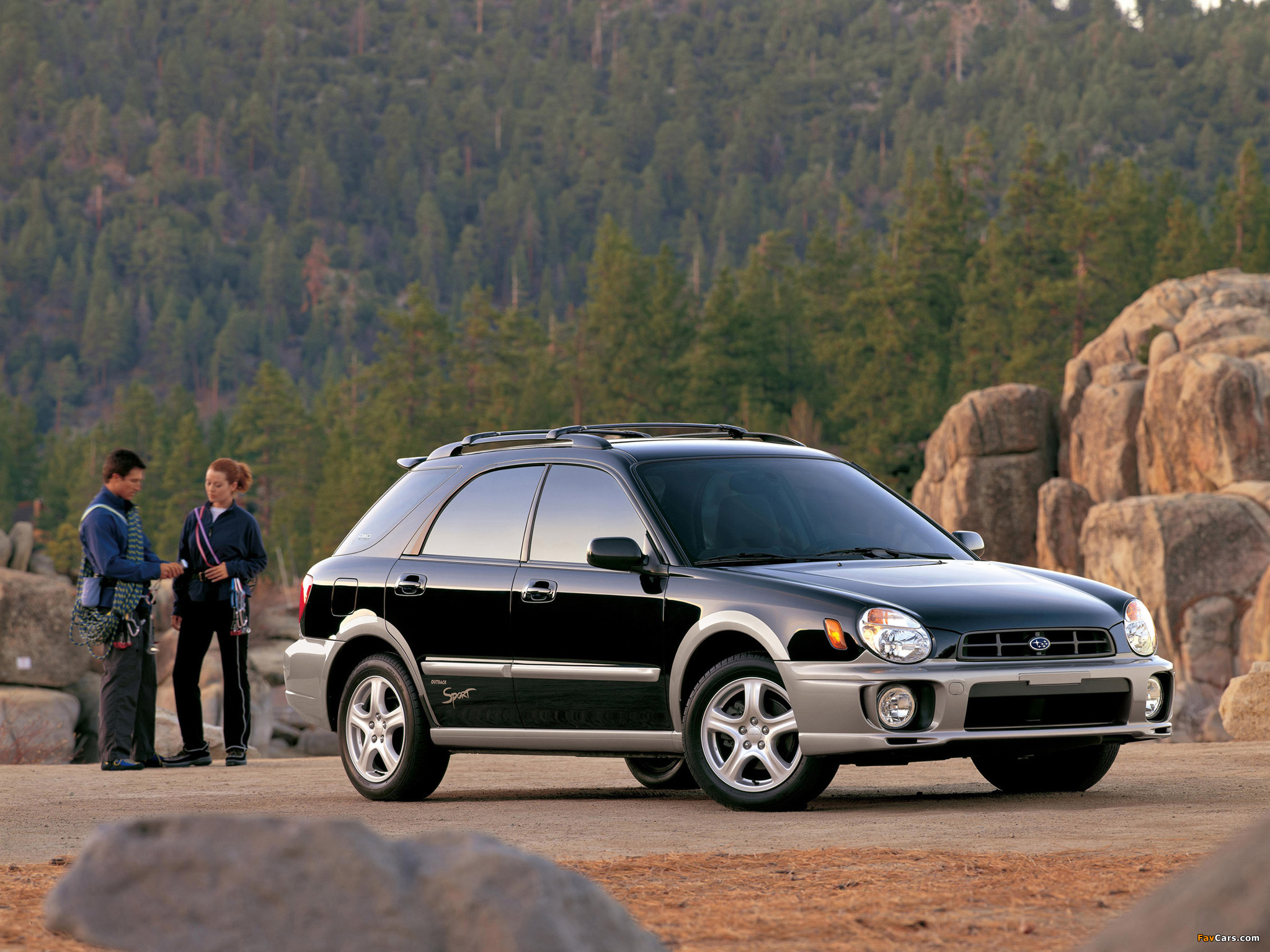
The 2002 Subaru Impreza Outback Sport is a ruggedized, compact all-wheel-drive hatchback that bridges the gap between a traditional passenger car and a utility vehicle. Built on the second-generation Subaru Impreza platform, it pairs standard symmetrical all-wheel drive with lifted suspension styling, unique two-tone body cladding, and a practical interior layout tailored for everyday utility and light outdoor adventure.
Introduction to the Second-Generation Impreza Outback Sport
The year 2002 marked a significant turning point for Subaru's compact lineup. Following the total redesign of the Impreza platform for the 2002 model year, the Outback Sport variant inherited a stiffer chassis, modernized styling, and refined driving dynamics compared to its predecessor. Unlike the larger Subaru Outback—which began as an appearance and suspension package on the Legacy wagon before spinning off into its own distinct model line—the Outback Sport remained a dedicated trim level of the Impreza compact hatchback.
For buyers seeking a vehicle capable of navigating harsh winter weather, muddy logging roads, and tight urban parking spaces simultaneously, the 2002 Subaru Impreza Outback Sport offered a compelling compromise. It combined the nimble handling of a compact car with the elevated stance and weather-conquering traction of a dedicated crossover utility vehicle, long before the modern crossover boom dominated the automotive market.
Design, Styling, and Exterior Features
The exterior presentation of the 2002 Impreza Outback Sport is defined by its distinct two-tone paint scheme, which visually separated the upper body panels from the lower protective cladding. This rugged aesthetic was not merely cosmetic; the lower body plastic shields protected the paint from rock chips and debris encountered on unpaved roads.
Up front, the 2002 Impreza introduced a controversial "bug-eye" headlight design featuring round dual headlamp clusters, which set it apart from subsequent revisions of the second-generation chassis. The Outback Sport added several model-specific exterior enhancements to distinguish it from the standard Impreza TS wagon:
- Raised Suspension: A modest suspension lift increased ground clearance, easing navigation over deep snow ruts and trail obstacles.
- Roof Rails: Factory-installed roof crossbars provided immediate utility for mounting bicycle racks, cargo boxes, or kayak carriers.
- Unique Badging and Graphics: Specialized "Outback Sport" decals and distinct front bumper styling accentuated its adventurous positioning.
- All-Season Tires: Wrapped around 15-inch alloy wheels, the factory tires were selected to balance highway comfort with reasonable traction on loose surfaces.
Powertrain, Engine Specifications, and Drivetrain
Beneath the aluminum hood of the 2002 Subaru Impreza Outback Sport lies a naturally aspirated, 2.5-liter horizontally opposed "boxer" four-cylinder engine, designated internally as the EJ251. This power plant produces 165 horsepower at 5,600 rpm and 166 pound-feet of torque at 4,000 rpm. The low center of gravity inherent to the boxer engine layout contributes positively to the vehicle's cornering stability.
Power is routed through Subaru's signature Symmetrical All-Wheel Drive system. Buyers of the 2002 model had two transmission choices: a five-speed manual transmission or a four-speed electronically controlled automatic transmission. The behavior of the all-wheel-drive system differed based on the chosen transmission:
- Manual Transmission Models: Utilized a continuous viscous-coupling center differential that split torque evenly (50/50) between the front and rear wheels under normal driving conditions, shifting power dynamically when slip was detected.
- Automatic Transmission Models: Employed an electronically managed active all-wheel-drive system featuring an electronically controlled hydraulic transfer clutch, which continuously varied torque distribution based on throttle input, vehicle speed, and wheel slippage.
Technical Specification Overview
| Specification Category | Manual Transmission Variant | Automatic Transmission Variant |
|---|---|---|
| Engine Type | 2.5L SOHC 16-Valve Boxer 4-Cylinder | 2.5L SOHC 16-Valve Boxer 4-Cylinder |
| Horsepower | 165 hp @ 5,600 rpm | 165 hp @ 5,600 rpm |
| Torque | 166 lb-ft @ 4,000 rpm | 166 lb-ft @ 4,000 rpm |
| Drivetrain | Symmetrical All-Wheel Drive | Symmetrical All-Wheel Drive |
| Transmission | 5-speed manual | 4-speed automatic |
| EPA Fuel Economy (City/Hwy) | 20 / 27 mpg (historical rating) | 20 / 26 mpg (historical rating) |
| Ground Clearance | Approx. 6.1 inches | Approx. 6.1 inches |
Interior Comfort, Cargo Capacity, and Ergonomics
The interior of the 2002 Impreza Outback Sport prioritizes functional durability over luxury. The cabin utilizes straightforward, hard-wearing plastic materials designed to withstand mud, snow, and heavy everyday use. Seating surfaces on the Outback Sport featured durable, water-repellent flat-woven cloth upholstery designed specifically to appeal to active lifestyle buyers.
The front bucket seats offer adequate lateral support and long-distance comfort, though rear-seat legroom is notably tight for adult passengers due to the compact overall footprint of the Impreza architecture. Cargo versatility is enhanced by a 60/40 split-folding rear seatback. With the rear seats upright, the cargo area accommodates groceries and smaller gear; folding the seats flat reveals a practical hatch opening capable of swallowing bulkier items like camping gear, snowboards, or small furniture pieces.
Instrumentation is clean and legible, featuring large analog dials for the speedometer and tachometer. Standard interior amenities for the 2002 model year included power windows, power door locks, cruise control, air conditioning, and an AM/FM/CD audio system. Storage pockets in the doors, a center console with a dual-tier armrest, and multiple cupholders round out the cabin's practical utility.
Driving Dynamics and On-Road Performance
On the road, the 2002 Subaru Impreza Outback Sport feels nimble, communicative, and secure. The rigid second-generation chassis provides a solid foundation for the MacPherson strut front suspension and dual-link independent rear suspension. While the suspension tuning is slightly softer and taller than that of a standard Impreza sedan, body roll in tight corners remains well-controlled.
Steering is managed by a power-assisted rack-and-pinion setup that delivers direct feedback, allowing the driver to place the car accurately on twisty backroads or narrow snowy lanes. The primary performance limitation is straight-line acceleration; the 2.5-liter engine provides adequate power for daily commuting and passing maneuvers, but it can feel strained when the vehicle is fully loaded with passengers and cargo, particularly when paired with the power-sapping four-speed automatic transmission.
The standout performance characteristic remains its inclement-weather composure. In heavy rain, sleet, or accumulated snow, the Symmetrical All-Wheel Drive system inspires high levels of driver confidence, maintaining traction where front-wheel-drive competitors struggle.
Common Maintenance Items and Reliability Considerations
While the 2002 Subaru Impreza Outback Sport is generally regarded as a durable and mechanically straightforward vehicle, its advancing age and specific engineering traits require proactive maintenance awareness. Owners and prospective buyers should evaluate several recurring mechanical considerations:
- Head Gaskets: The EJ251 engine from this era is historically susceptible to external oil or coolant leaks at the head gasket interface. While revised multi-layer steel (MLS) gaskets largely resolved this issue in later years, inspecting for seepage around the engine block remains a priority.
- Timing Belt Replacement: The engine utilizes a rubber timing belt that requires scheduled replacement every 105,000 miles or 105 months, along with the water pump and tensioner pulleys. Neglecting this maintenance risks catastrophic engine interference.
- Suspension Bushings and Struts: Original rubber suspension bushings, control arms, and strut mounts frequently degrade over time, leading to clunking noises, wandering steering alignment, and a harsher ride quality.
- Rust Inspection: Like many vehicles of this vintage, road salt used during harsh winters can lead to corrosion on rear quarter panels, rocker panels, and structural subframes. A thorough undercarriage inspection is essential.
Frequently Asked Questions
What is the difference between a Subaru Impreza Outback Sport and a standard Impreza wagon?
The Impreza Outback Sport is a trim level of the Impreza wagon that features a slightly raised suspension for increased ground clearance, unique two-tone exterior body cladding, standard roof rails, specialized interior upholstery, and specific alloy wheel designs. Mechanically, the engine and all-wheel-drive systems are largely identical to standard non-turbo Impreza wagons of the same year.
Is the 2002 Subaru Impreza Outback Sport good in the snow?
Yes. Thanks to Subaru’s permanent Symmetrical All-Wheel Drive system, balanced weight distribution, and added ground clearance, the Outback Sport performs exceptionally well in deep snow, ice, and winter storms, provided it is equipped with a quality set of winter tires.
What kind of fuel economy does the 2002 Outback Sport get?
When new, EPA fuel economy estimates for the 2002 Outback Sport ranged around 20 mpg in city driving and approximately 26 to 27 mpg on the highway. Real-world fuel economy in modern driving conditions typically hovers in the low-to-mid 20s, varying based on transmission type, vehicle maintenance, and driving habits.
Does the 2002 Outback Sport have a turbocharger?
No. The 2002 Outback Sport utilizes a naturally aspirated 2.5-liter four-cylinder boxer engine. It does not feature a turbocharger. For turbocharged performance from this generation, buyers historically looked to the Impreza WRX variant.
How much towing capacity does a 2002 Outback Sport have?
Subaru did not officially rate the North American Impreza Outback Sport for significant trailer towing. While aftermarket class I hitch receivers are available for carrying light utility trailers or bicycle racks, heavy towing is discouraged due to limitations in engine torque, transmission cooling, and braking capacity.
Conclusion and Final Recommendation
The 2002 Subaru Impreza Outback Sport represents a classic era of rugged, mechanical simplicity from Subaru. It delivers a balanced mix of hatchback utility, sure-footed all-wheel-drive traction, and straightforward mechanical design that appeals to DIY enthusiasts, budget-conscious commuters, and winter drivers alike. When evaluating a used model, prioritize service history—specifically verification of timing belt and head gasket maintenance—alongside a thorough check for structural rust to ensure dependable operation.