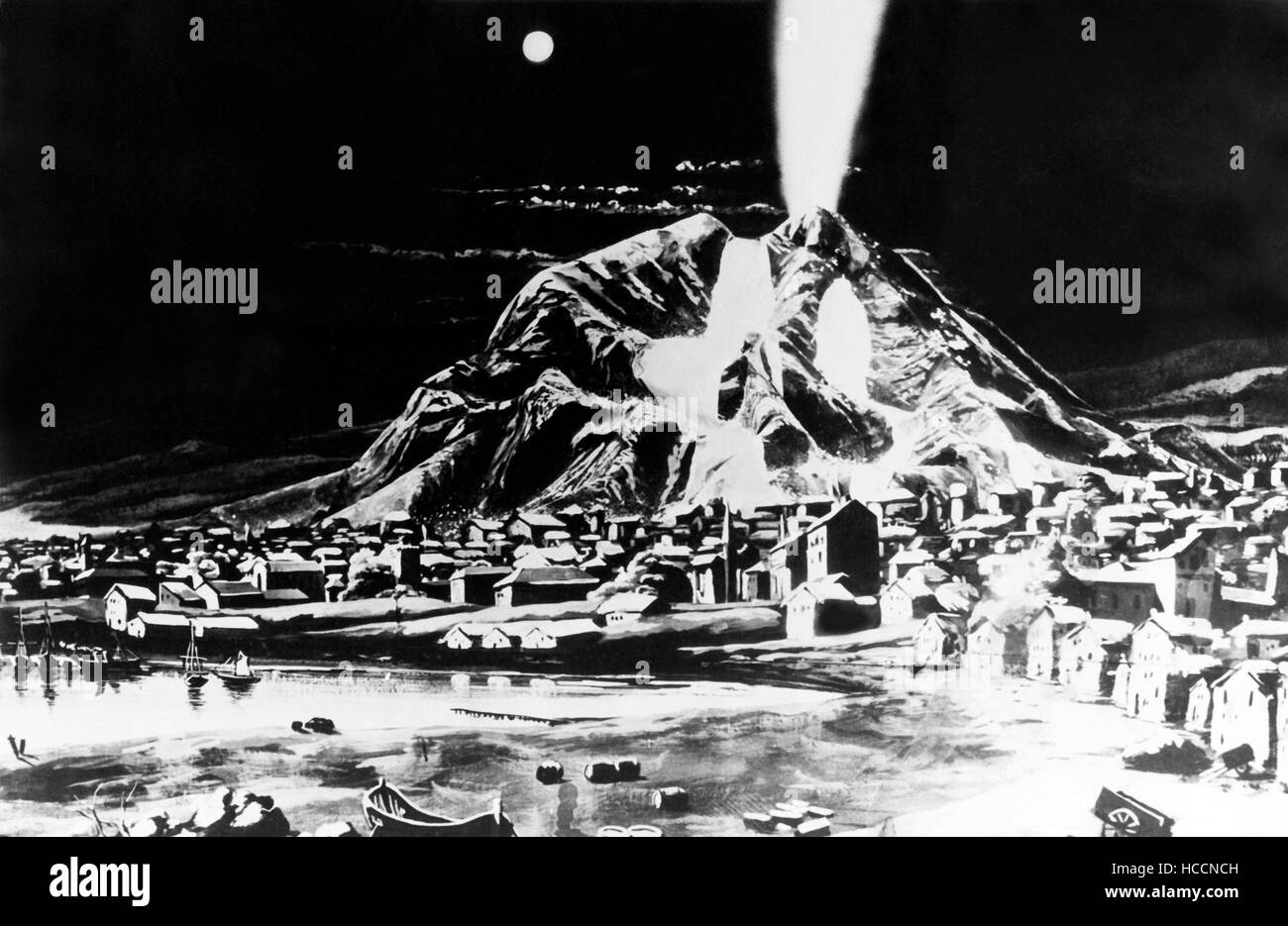
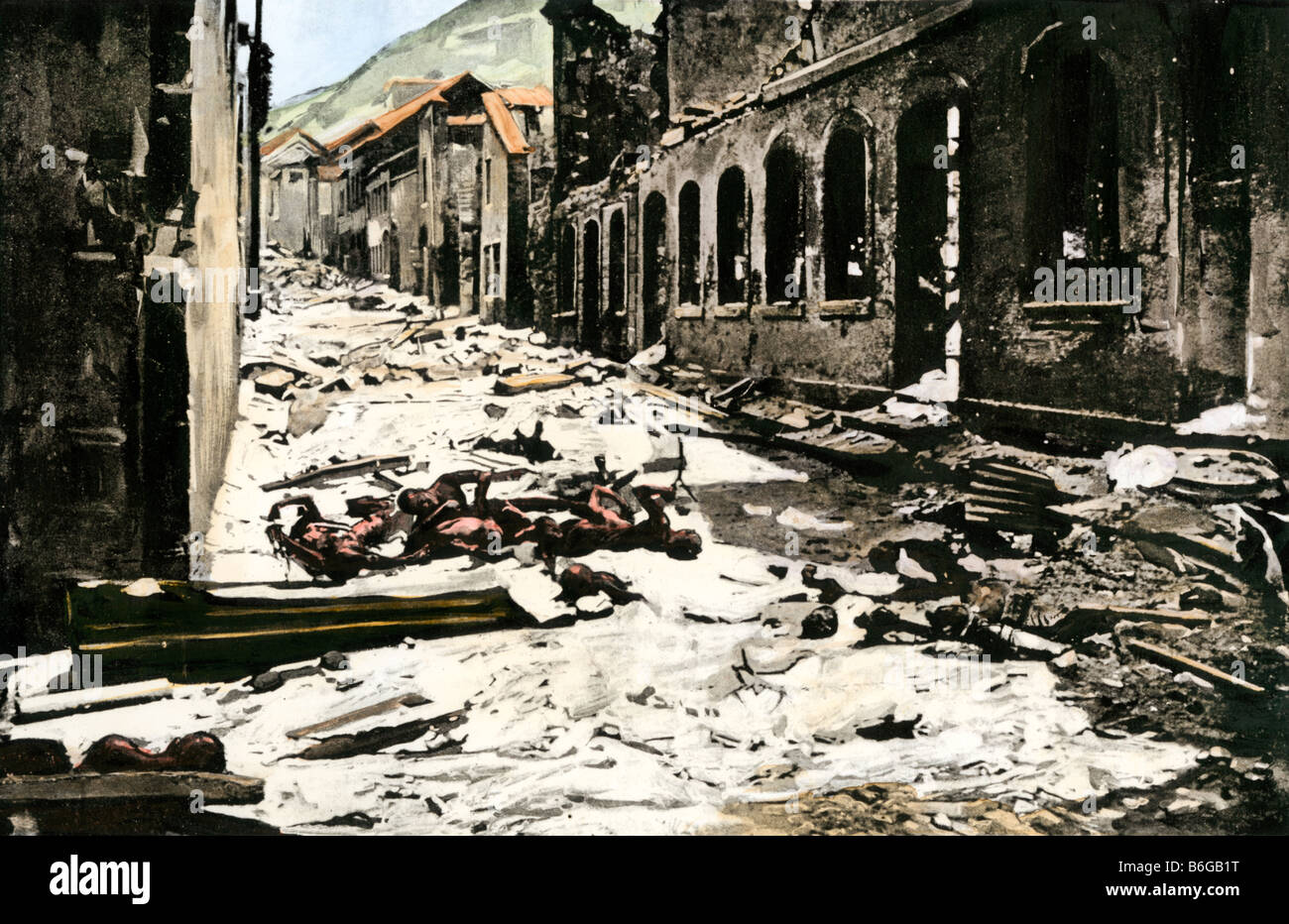
The 1902 eruption of Mount Pelée on the Caribbean island of Martinique was one of the deadliest volcanic disasters in recorded history, killing an estimated 29,000 to 30,000 people in minutes. Triggering a cataclysmic pyroclastic flow that completely obliterated the prosperous cultural and economic capital of Saint-Pierre, the event fundamentally transformed modern volcanology, leading to the identification and study of nueées ardentes—glowing avalanche clouds of superheated gas, ash, and rock.
Historical Context and the Prosperity of Saint-Pierre
Before the fateful catastrophe of May 1902, Saint-Pierre was widely regarded as the crown jewel of the French Lesser Antilles. Often called the "Paris of the Lesser Antilles," the city was a bustling, sophisticated hub of commerce, culture, and intellectual life. It boasted paved streets, an ornate opera house, modern utilities, and a vibrant port that served as a primary export center for rum, sugar, and coffee. Its strategic location along the Caribbean Sea facilitated thriving maritime trade, drawing merchants, diplomats, and tourists from across the globe.
Dominating the backdrop of this thriving urban center was Mount Pelée, a massive stratovolcano rising 1,397 meters (4,583 feet) above sea level. Though local populations knew the mountain as a volcano—having experienced a minor steam eruption in 1851—the collective memory of the island's inhabitants largely underestimated its destructive potential. The mountain was lushly forested, its slopes cultivated with rich agricultural plots, offering no immediate sense of impending doom to the approximately 30,000 residents living within its immediate shadow.
The social and political climate of Martinique in the spring of 1902 added a tragic human layer to the unfolding disaster. The island was in the midst of a heated gubernatorial election, and local politicians, along with the local newspaper Les Colonies, heavily downplayed the mounting volcanic unrest. Influential figures actively encouraged residents to remain in Saint-Pierre, urging voters not to evacuate and falsely reassuring the public that the mountain posed no real threat to the city's safety. This lethal combination of political maneuvering, media complacency, and general scientific ignorance set the stage for one of history's most devastating administrative and humanitarian failures.
Early Warning Signs and Volcanic Unrest
The precursor activity to the cataclysmic eruption began months before May 1902, providing ample physical warnings that went largely unheeded or misinterpreted. As early as July 1902—though historical accounts note sulfurous fumes and minor steam venting were observed as early as summer 1901—residents reported increasingly strong sulfur odors emanating from fissures near the summit. These fumaroles grew larger and more active over the ensuing months.
By April 1902, the activity intensified dramatically. Local inhabitants noted small earthquakes, minor ash falls dusting the roofs of Saint-Pierre, and rumbling noises from the interior of the volcano. The wildlife of the region began to react to the subterranean disturbances long before human evacuation plans were considered. Massive numbers of venomous pit vipers (Fer-de-lance), giant centipedes, and insects fled the upper slopes of Mount Pelée, descending into Saint-Pierre and surrounding coastal villages. This mass migration resulted in hundreds of snakebites among humans and domestic animals, killing dozens of people and livestock in the streets before the volcanic gas even reached the city.
In late April, minor phreatic (steam-driven) explosions occurred near the summit, throwing ash and debris across parts of the northern side of the island. On May 2, a more powerful explosion sent a thick cloud of black ash over the Rivière Blanche, cutting off the local sugar works and disrupting telegraph lines. The Étang Sec, a summit crater lake, boiled over, sending boiling mudflows (lahars) down the flanks of the mountain. These mudflows destroyed two sugar estates and killed nearly 40 workers near the Plaine des Cafes. Despite these unmistakable signs of an impending eruption, city officials maintained that Saint-Pierre was safe, protected by natural topography, and that the mountain's activity would soon subside.
The Cataclysmic Eruption of May 8, 1902
The defining moment of the disaster occurred at approximately 8:02 AM local time on May 8, 1902, Ascension Thursday. Mount Pelée's western flank ruptured catastrophically. Rather than a traditional vertical explosion projecting ash miles into the stratosphere, the volcano experienced a lateral blast. A massive, weakened section of the crater wall collapsed, unleashing a horizontal pyroclastic flow—a glowing avalanche of superheated gas, pulverised rock, and incandescent ash reaching temperatures estimated between 700°C and 1,000°C (1,300°F to 1,832°F).
Driven by extreme pressure and gravity, this lethal cloud raced down the slopes of the mountain along the valley of the Rivière Blanche at hurricane speeds, traversing the four-mile distance to Saint-Pierre in less than three minutes. The density and velocity of the flow allowed it to hurdle natural barriers, instantly engulfing the entire city in a suffocating, fiery hurricane of death.
| Parameter | Details of the May 8, 1902 Eruption |
|---|---|
| Time of Impact | Approximately 8:02 AM, May 8, 1902 |
| Nature of Blast | Lateral pyroclastic flow (nueée ardente) |
| Estimated Temperature | 700°C to 1,000°C (1,300°F to 1,832°F) |
| Velocity | Estimated over 100 mph (160 km/h) |
| Casualties | ~29,000 to 30,000 fatalities |
| Survivors in City | Only 2 to 3 documented survivors |
The physical impact on Saint-Pierre was absolute and instantaneous. Stone buildings were leveled from their foundations, iron structures were twisted into shapeless metal, and ships anchored in the harbor capsized, caught fire, or were crushed by the sudden displacement of water and falling debris. Among the vessels in the harbor was the SS Roraima, a Canadian steamship that had arrived only hours before. The ship was immediately battered by a hail of burning debris and enveloped in the scorching gas cloud, resulting in the deaths of the vast majority of its crew and passengers.
Survivors and Remarkable Exceptions
Given the ferocity and speed of the pyroclastic flow, survival within Saint-Pierre was nearly impossible. Yet, history records a few miraculous exceptions that provided crucial forensic data for early volcanologists studying the event.
The most famous survivor was Ludger Sylbaris (born Louis-Auguste Cyparis), a local laborer who had been arrested the night before and placed in an underground, windowless stone jail cell for fighting. The heavy, semi-subterranean dungeon protected him from the intense heat and toxic gases, though he suffered severe burns on his hands, legs, and back. He was discovered four days later by rescue parties, becoming a global celebrity and later touring with the Barnum & Bailey Circus as "The Man Who Survived Vesuvius" (mistaking the volcano's identity for Vesuvius).
Another confirmed survivor was Léon Compère-Leandre, a shoemaker whose home was situated on the edge of the destruction zone on the outskirts of Saint-Pierre. Despite suffering severe burns, he managed to flee on foot to the neighboring village of Fonds-Saint-Denis, recounting a terrifying wall of fire and an atmosphere that felt as though all oxygen had been instantly consumed. A young girl named Havivra Da Ife also survived by taking a small boat out into the bay with her cousin before the blast, though her cousin died from injuries shortly after the event.
Scientific Impact and the Discovery of Nueées Ardentes
The 1902 disaster marked a watershed moment in the history of volcanology. Prior to the eruption of Mount Pelée, scientific understanding of explosive volcanism was heavily centered on Plinian eruptions, such as the famous destruction of Pompeii by Mount Vesuvius in 79 CE, where heavy ash falls accumulated gradually or buried cities over hours.
The phenomenon observed at Mount Pelée introduced a entirely new class of volcanic hazard: the nueée ardente (glowing cloud), now globally recognized as a pyroclastic density current. French scientists, most notably Alfred Lacroix, were dispatched by the French Academy of Sciences to study the aftermath. Lacroix's meticulous field investigations, geological sampling, and documentation of the physical state of destroyed buildings provided the foundational framework for modern physical volcanology. He explained how gas-rich, highly viscous magma can shatter violently upon release, generating a fluidised, high-density suspension of hot gas and solid particles that hugs the ground and moves with terrifying speed.
Furthermore, the eruption of Mount Pelée was followed by the extraordinary extrusion of a massive lava spine—often called the Peléan Spine or Tower of Pelée. Rising directly from the summit crater, this solid pillar of viscous lava reached a height of over 300 meters (1,000 feet) before slowly crumbling and eroding over subsequent months. This geological feature gave volcanologists unprecedented insights into lava dome mechanics and the behavior of highly viscous, gas-depleted dome-forming magmas.
Subsequent Activity and Ongoing Monitoring
While the May 8 disaster is the most infamous event, Mount Pelée remained active throughout the remainder of 1902 and into 1903. A second major pyroclastic flow on August 30, 1902, destroyed the neighboring commune of Morne-Rouge, killing an additional 1,000 to 1,500 people. This subsequent tragedy underscored the persistent danger of active dome collapse and proved that the initial May explosion was part of a protracted eruptive cycle rather than an isolated anomaly.
Today, Mount Pelée is classified as an active volcano and is continuously monitored by the Observatoire Volcanologique et Sismologique de Martinique (OVSM), operated by the Institut de Physique du Globe de Paris (IPGP). Modern monitoring networks utilize state-of-the-art seismic sensors, GPS ground deformation tracking, gas emission spectrometers, and hydrological monitoring stations to detect any signs of renewed unrest. Saint-Pierre was partially rebuilt in the decades following the disaster and remains inhabited today, though strict emergency planning, hazard mapping, and evacuation protocols are maintained to protect the modern population against future volcanic threats.
Frequently Asked Questions
What caused the extreme destruction in Saint-Pierre during the 1902 eruption?
The destruction was caused by a lateral pyroclastic flow—a high-speed, ground-hugging avalanche of superheated gas, ash, and pumice stones reaching temperatures up to 1,000°C. This incandescent current traveled down the slopes of Mount Pelée at hurricane speeds, instantly incinerating and leveling everything in its path within minutes.
Why did so many people stay in Saint-Pierre despite warning signs?
Residents remained in the city largely due to a combination of political complacency, upcoming elections, and misleading reassurances from local authorities and the press. Officials and newspaper editors actively discouraged evacuation to prevent panic and maintain voter turnout, falsely claiming the volcano posed no threat.
Who were the survivors of the Mount Pelée disaster?
Only a handful of people survived directly within Saint-Pierre. The most famous was Ludger Sylbaris, a prisoner incarcerated in a thick, semi-subterranean stone dungeon that shielded him from the blast's extreme heat and toxic gases. A shoemaker named Léon Compère-Leandre and a young girl named Havivra Da Ife also survived on the edges of the city and in the bay, respectively.
How did the 1902 eruption change modern science?
The disaster revolutionized volcanology by leading scientists to identify and analyze nueées ardentes (pyroclastic flows) for the first time. French geologist Alfred Lacroix’s extensive post-eruption studies established critical principles regarding glowing avalanches, viscous lava dome extrusion, and the mechanics of explosive volcanic hazards.
Is Mount Pelée still considered an active volcano today?
Yes, Mount Pelée remains an active volcano and is continuously monitored by the Martinique Volcano and Seismological Observatory. While the area around Saint-Pierre has been repopulated, scientists track seismic activity, ground deformation, and gas emissions to ensure early warning capabilities for the region.