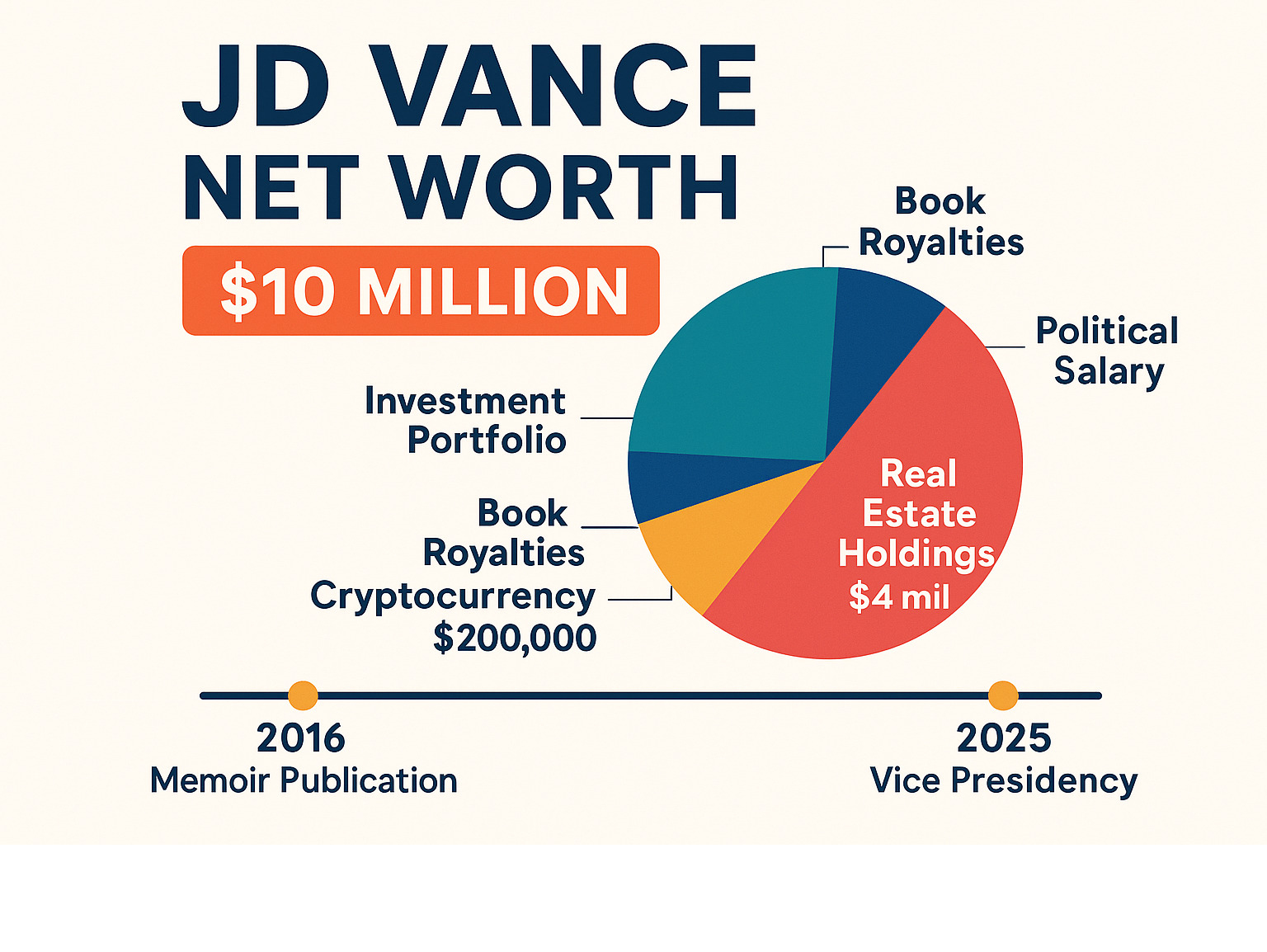
Achieving a 10 million dollar net worth represents a significant financial milestone that moves an individual into the ultra-high-net-worth individual tier, bringing unique opportunities, complex tax considerations, and specialized asset protection requirements.
Reaching a 10 mill net worth requires a deliberate combination of compounding investments, strategic business equity building, disciplined real estate accumulation, and comprehensive risk mitigation. As wealth scales to this level, the primary focus shifts from aggressive capital accumulation to capital preservation, estate planning, and multi-generational tax optimization.
Defining a 10 Million Net Worth in Modern Wealth Management
A net worth of $10,000,000 places an individual well above the standard high-net-worth threshold, which traditionally begins at $1 million in liquid investable assets. In the wealth management industry, this tier sits comfortably within the mass affluent to ultra-high-net-worth spectrum.
The Composition of High-Value Portfolios
At this scale, a person's balance sheet is rarely held in a single asset class. Diversification becomes both a defense mechanism and a growth engine. A typical 10 mill net worth portfolio is distributed across several categories:
- Liquid Investable Assets: Public equities, fixed-income instruments, mutual funds, and exchange-traded funds ranging from $3 million to $5 million.
- Private Equity and Business Ventures: Closely held businesses, startup equity, angel investments, or limited partnership shares in private funds.
- Real Estate Holdings: Primary residences, commercial properties, and real estate investment trusts (REITs).
- Alternative Investments: Commodities, private credit, structured notes, and occasionally luxury assets or digital assets.
Liquidity Versus Illiquidity
One of the primary challenges at the 10-million-dollar mark is managing the ratio of liquid assets to illiquid wealth. While real estate and private businesses often drive rapid wealth generation, they lack immediate liquidity. Wealth managers generally advise maintaining a minimum of 20% to 30% of a 10 mill net worth in liquid or near-liquid instruments to manage emergencies, tax obligations, and sudden investment opportunities without forced asset sales.
Strategies for Accumulating and Scaling to 10 Million Dollars
Reaching a 10 mill net worth rarely happens through standard W-2 employment or traditional retirement savings accounts alone. It typically demands structural leverage, compounding returns over decades, or liquidity events via entrepreneurship.
Business Equity and Entrepreneurship
The vast majority of individuals who achieve a 10 million dollar net worth do so by building, scaling, and eventually exiting a privately held business. Building business equity creates enterprise value that outpaces standard wage growth.
- Scalable Business Models: Creating companies with low marginal costs of expansion allows revenue to decouple from headcount.
- Strategic Exits: Planning for mergers, acquisitions, or private equity recapitalization events that convert illiquid enterprise value into liquid capital.
- Reinvestment: Plowing retained earnings back into high-yielding operational projects or diversified external portfolios.
Strategic Real Estate Portfolios
Real estate serves as both an inflation hedge and a cash-flow generator. Scaling a real estate portfolio requires moving beyond single-family residential rentals into commercial real estate, multifamily apartment complexes, or triple-net-lease retail properties.
- Leverage Management: Utilizing low-cost mortgages strategically to acquire appreciating assets while retaining cash reserves.
- Tax-Advantaged Exchanges: Utilizing mechanisms like 1031 exchanges to defer capital gains taxes when rolling proceeds from one property sale into another.
Compounding Market Returns
For those accumulating wealth through capital markets, the math of compounding requires high initial savings rates paired with decades of disciplined investing. Achieving $10 million starting from zero through public markets alone demands maximizing tax-advantaged accounts, keeping investment fees minimal, and systematically increasing contributions as income grows.
Asset Protection and Risk Management for High-Net-Worth Portfolios
As net worth increases, so does exposure to litigation, liability, and market volatility. Protecting a 10 mill net worth requires structural legal defenses implemented long before a dispute or liability arises.
Legal Structures and Trusts
Relying solely on standard auto and homeowners insurance is insufficient for individuals holding multi-million-dollar balance sheets.
| Protection Tool | Primary Function | Ideal Use Case |
|---|---|---|
| Umbrella Liability Policy | Extends standard liability limits across auto and home policies. | Providing an extra $5M to $10M in baseline coverage against personal liability claims. |
| Irrevocable Life Insurance Trust (ILIT) | Removes life insurance proceeds from the taxable estate. | Providing liquidity for estate taxes without inflating the taxable estate value. |
| Asset Protection Trust (APT) | Shields assets from future creditors while retaining certain benefits. | Established in favorable domestic or offshore jurisdictions for high-risk professionals. |
| Family Limited Partnership (FLP) | Consolidates family assets while maintaining management control. | Transferring business or real estate equity to heirs at discounted valuations. |
Insurance Optimization
Comprehensive risk management involves auditing all existing policies. High-net-worth individuals often utilize specialized insurance carriers that offer higher coverage limits, agreed-value coverage for high-end collectibles, worldwide liability protection, and dedicated risk-management consultants who inspect properties to prevent losses before they occur.
Tax Mitigation and Wealth Preservation
Taxes represent one of the largest drags on a 10 mill net worth. Without proactive planning, federal, state, and local income taxes, capital gains taxes, and estate taxes can erode a significant portion of accumulated wealth.
Income and Capital Gains Optimization
Minimizing the tax burden involves strategic asset location—placing high-yield, tax-inefficient assets inside tax-deferred or tax-exempt accounts, while holding tax-efficient instruments like index funds or long-term equities in taxable brokerage accounts.
- Tax-Loss Harvesting: Systematically realizing investment losses to offset realized capital gains and up to ordinary income limits.
- Charitable Giving Strategies: Utilizing donor-advised funds (DAFs) or charitable remainder trusts (CRTs) to donate appreciated assets, eliminate capital gains tax liabilities, and secure valuable charitable income tax deductions.
Estate Tax Planning
Under current federal tax laws, the lifetime estate and gift tax exemption provides a high threshold for individuals and married couples, but legislative changes and state-level estate taxes can introduce substantial tax liabilities.
- Gifting Strategies: Utilizing annual gift tax exclusions to transfer wealth to children or grandchildren tax-free.
- Generation-Skipping Transfer Trusts (GSTT): Protecting multi-generational wealth from being heavily taxed each time it passes to a new generation.
Frequently Asked Questions
What is a safe annual withdrawal rate for a 10 million dollar net worth?
The traditional four percent rule suggests drawing $400,000 annually adjusted for inflation. However, for a 10 mill net worth, financial planners often recommend a more conservative dynamic withdrawal rate between 3% ($300,000) and 3.5% ($350,000) to ensure the principal outlasts multi-generational timelines, factoring in taxation, inflation, and changing market cycles.
How much cash should someone with a 10 mill net worth keep liquid?
Generally, holding 5% to 10% of the portfolio in pure cash or short-term Treasury bills is sufficient for immediate operational needs and emergencies. An additional 15% to 20% can be held in semi-liquid assets such as short-term bonds or public equities that can be liquidated within days.
Do I need a family office if I have a 10 million dollar net worth?
A dedicated single-family office is typically cost-effective only for net worths exceeding $50 million to $100 million, due to the high operational overhead required to staff legal, accounting, and investment professionals. However, individuals with a 10 mill net worth often utilize multi-family offices or hire a dedicated team of fee-only fiduciary financial advisors, specialized CPAs, and estate planning attorneys.
What are the main threats to a 10 million dollar net worth?
The primary threats to ultra-high-net-worth portfolios are behavioral mistakes during market downturns, aggressive litigation, inadequate estate planning leading to forced asset sales, and excessive investment management fees that compound negatively over decades.
Next Steps for Managing Multi-Million-Dollar Portfolios
Managing a 10 mill net worth requires shifting from independent financial tracking to building a coordinated team of licensed professionals, including a fiduciary financial advisor, a certified public accountant specializing in high-net-worth taxation, and an estate planning attorney. Conduct a comprehensive audit of your current asset allocation, legal structures, and insurance coverage to identify vulnerabilities and position your capital for sustainable, multi-generational preservation.