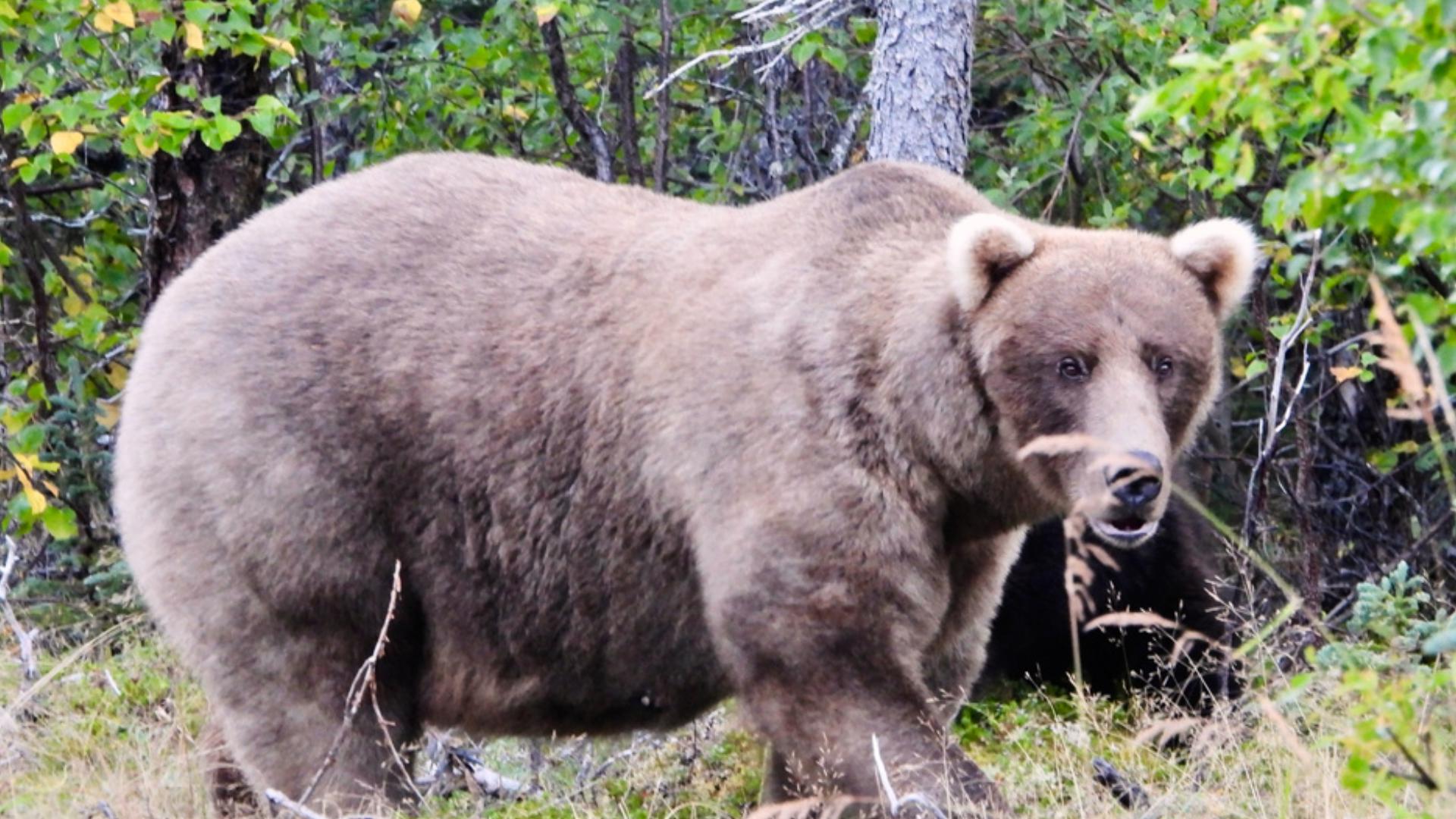
Fat Bear Week 2025 concluded with a surprising victory by the bear known as Chunk, whose win captured public imagination not just for his sheer physical dominance, but due to a unique behavioral shift that transformed how voters perceived seasonal survival in Katmai National Park.
The annual tournament hosted by explore.org and Katmai National Park and Preserve consistently draws millions of votes from wildlife enthusiasts across the globe. Year after year, fans analyze before-and-after photographs of brown bears gorging on salmon along the Brooks River, marveling at how much weight these apex predators can gain before entering winter hibernation. Yet, the 2025 competition defied traditional expectations. While previous years often favored massive bears that established absolute territorial control through intimidation, Chunk’s victory turned on a surprising behavioral and strategic pivot: his masterclass in energy conservation amid extreme environmental competition.
Understanding why Chunk claimed the title requires a close examination of Katmai's shifting ecosystem, the rigorous mechanics of Fat Bear Week voting, and the nuanced survival strategies that separate a typical contender from a champion. This comprehensive guide explores the background of the competition, the specific details of Chunk’s victory, the ecological context of the Brooks River, and the broader lessons the event teaches about wildlife conservation and public engagement.
The Evolution and Mechanics of Fat Bear Week
Fat Bear Week began in 2014 as a modest, local initiative known as "Fat Bear Tuesday." Conceived by Katmai ranger Mike Fitz, the project was designed to celebrate the ecological health of the park's brown bear population while educating the public about bear biology. Over the next decade, the event exploded into a global digital phenomenon, attracting millions of web page views, intense media coverage, and high-stakes virtual ballots reminiscent of a March Madness sports bracket.
How the Competition Works
The tournament pairs individual bears against each other in a single-elimination bracket format. Voters evaluate contenders based on two main criteria outlined by the National Park Service:
- Successful Fattening: The visible transformation of the bear from lean spring arrivals to massive, rolly-polly giants by late summer and autumn.
- Resource Management Strategies: How bears secure their meals, whether through dominance at the prime fishing spots like Brooks Falls or alternative foraging tactics.
Voters cast their ballots online over a week-long period in early October. The contest serves as a celebration of success; surviving the harsh Alaskan winter requires bears to build up massive fat reserves, as they will fast for up to six months while denning.
The Stakes of Hibernation Preparation
Brown bears in Katmai National Park face an extraordinary biological challenge. Unlike mammals in milder climates, coastal brown bears must consume enough calories to sustain their bodies through a winter dormancy period where they neither eat, drink, nor defecate. Achieving this state requires hyperphagia—a seasonal period of extreme appetite driven by hormonal changes.
During hyperphagia, a bear might consume upwards of 30 to 40 salmon a day, alongside sedges, berries, and occasionally other sources of protein. The bears that secure the best fishing spots early and maintain high-calorie intake emerge victorious not just in the online tournament, but in the ultimate contest of natural selection.
| Bear Characteristic | Summer Phase (July) | Autumn Phase (September/October) | Primary Biological Goal |
|---|---|---|---|
| Weight Range | 600 – 800 lbs (Average adult male) | 1,000 – 1,400+ lbs | Storing subcutaneous and visceral fat |
| Metabolic State | Active foraging, muscle maintenance | Hyperphagia, rapid adipose tissue accumulation | Maximizing caloric surplus |
| Behavioral Focus | Territorial establishment, mating | Energy conservation, strategic fishing | Minimizing unnecessary caloric expenditure |
Meet Chunk: Identity, History, and Status in the Brooks River Hierarchy
To understand the surprise surrounding Chunk’s 2025 victory, one must look at his history within the Brooks River bear community. Known to researchers and bear cam viewers as Bear 435, Chunk is a large adult male who has spent years establishing his presence in Katmai.
The Rise of Bear 435
For several seasons, Chunk lived in the shadow of other legendary bears, such as the reigning titans who controlled the lip of Brooks Falls—the most coveted and lucrative fishing real estate in the park. The lip of the falls allows a bear to simply stand in one spot and catch leaping sockeye salmon as they try to clear the rushing water.
Bears who hold the lip typically weigh significantly more because they expend very little energy relative to the caloric intake they receive. Younger or subordinate bears, by contrast, are forced to fish in the lower river, chase salmon in the rapids, or scavenge scraps left behind by dominant rivals.
For years, Chunk was viewed as a capable competitor, but not necessarily the undisputed king of the river. His physique was muscular, and his bulk was impressive, but he lacked the mythic status of past champions like Bear 480 Otis or Bear 747. That dynamic shifted dramatically leading into the autumn of 2025.
The 1 Surprising Reason Chunk Won: The Economics of Energy Conservation
While casual voters often cast ballots purely based on who looks the widest or heaviest in side-by-side comparison photos, wildlife experts and seasoned bear cam observers look deeper into bear behavior. The single surprising reason Chunk won Fat Bear Week 2025 came down to his revolutionary shift from aggressive territorial dominance to ultra-efficient energy conservation.
The Trap of Dominance
Historically, many large male bears believed that maintaining dominance over the prime fishing spots required constant vigilance, boundary patrolling, and aggressive posturing. This behavior, while effective for securing fish in the short term, burns immense amounts of calories. Dominant bears often engage in physical altercations, chase intruders, and spend hours pacing riverbanks—energy expenditures that cut directly into their net fat accumulation.
Chunk’s Calculated Strategy
During the 2025 season, observers noted a distinct change in Chunk’s methodology. Rather than fighting for control of the waterfall's lip or wasting precious energy displacing smaller bears, Chunk adopted a low-impact, high-efficiency foraging strategy:
- Strategic Positioning: Chunk utilized secondary fishing locations, such as the jacuzzi and the lower river riffles, where sockeye salmon bottlenecked without requiring him to fight dominant rivals.
- Caloric Economy: He minimized unnecessary motion, often resting for extended periods to let his metabolism focus entirely on converting ingested salmon into dense fat layers rather than burning it off through stress and conflict.
- Timing the Run: Chunk timed his peak feeding windows to coincide with the densest salmon returns, maximizing his catch-per-hour ratio while minimizing physical exertion.
This behavioral pivot allowed Chunk to pack on an astonishing volume of weight without suffering the physical toll typically borne by aggressive alpha males. When voters and park rangers reviewed his physical transformation—noting his smooth, expansive contours and rounded profile—they realized that Chunk had achieved peak biological success through intelligence and restraint rather than brute force.
Comparative Analysis: Chunk Versus Traditional Contenders
To fully appreciate why Chunk’s strategy resonated so strongly in 2025, it helps to compare his approach with other common archetypes in Fat Bear Week history.
| Contender Strategy | Primary Tactic | Energy Cost | Caloric Return | 2025 Outcome |
|---|---|---|---|---|
| The Territorial Alpha | Displacing rivals at the waterfall lip | Extremely High | High, but offset by high expenditure | Outcompeted by more efficient foragers |
| The Opportunistic Scavenger | Foraging in lower river and deep pools | Low to Moderate | Moderate | Consistent weight gain, rarely wins the top title |
| Chunk's Strategic Conservation | Low-conflict zones, maximal rest, high-yield timing | Minimal | Exceptionally High | Won Fat Bear Week 2025 |
This comparison highlights why Chunk’s win was viewed as an educational triumph for the National Park Service. It demonstrated to the public that survival in the wild is not merely about intimidation or being the biggest bully on the river, but about ecological adaptation and smart resource management.
Ecological Health and Habitat Significance of Katmai National Park
The popularity of Fat Bear Week extends far beyond internet entertainment; it serves as a vital public engagement tool for conservation science. Katmai National Park and Preserve represents one of the most pristine, intact salmon-based ecosystems left on Earth.
The Salmon Connection
The abundance of brown bears in Katmai is directly tied to the Bristol Bay watershed, which supports the largest wild sockeye salmon run in the world. Without millions of returning salmon, bears like Chunk could never reach weights exceeding 1,000 pounds.
The relationship between the salmon and the forest is symbiotic. Bears catch salmon and drag them into the surrounding woods to eat, leaving nutrient-rich carcasses behind. Nitrogen and phosphorus from the marine-derived fish carcasses fertilize the soil, supporting old-growth spruce forests, berry bushes, and a diverse array of terrestrial wildlife. When voters celebrate Chunk’s victory, they are implicitly celebrating the health of this entire interconnected watershed.
Climate and Environmental Pressures
While Katmai remains protected, brown bears face growing environmental pressures across their broader ranges, including climate variability, shifting salmon run timings, and habitat encroachment. Events like Fat Bear Week draw millions of eyes to these issues, transforming online voters into conservation advocates who understand the delicate balance required to sustain healthy wildlife populations.
Common Misconceptions About Fat Bear Week
As the tournament has grown, several misconceptions have circulated among casual participants and online commentators. Clarifying these points helps maintain the scientific integrity of the event.
- Misconception 1: The fattest bear always wins. While weight is a primary metric, voters frequently reward bears who demonstrate remarkable recovery from injury, successful rearing of spring cubs, or clever foraging tactics. Chunk's win proved that strategy and body condition efficiency matter just as much as raw mass.
- Misconception 2: Fat Bear Week is a beauty pageant. Rangers repeatedly emphasize that fatness in brown bears is a sign of health, resilience, and life insurance against starvation. It is an ecological celebration of survival rather than an aesthetic contest.
- Misconception 3: Bears eat all winter. Bears enter torpor, a specialized form of mammalian hibernation where their heart rate slows, body temperature drops slightly, and they rely entirely on the fat reserves accumulated during hyperphagia. They do not forage or eat until spring thaw.
Practical Lessons and Next Actions for Wildlife Enthusiasts
For those inspired by Chunk’s 2025 victory and eager to engage more deeply with brown bear ecology, several constructive steps can be taken:
- Monitor the Bear Cams: Follow the live feeds provided by explore.org at Brooks Falls throughout the summer season to observe bear behavior firsthand before voting in future brackets.
- Support Conservation Organizations: Back non-profit groups and trusts dedicated to protecting the Bristol Bay watershed and preserving vital salmon habitats from industrial threats.
- Practice Bear Safety: If visiting bear country in Alaska or the Pacific Northwest, educate yourself on proper food storage, carrying bear spray, and maintaining safe distances to ensure human-wildlife coexistence.
- Educate Others: Share the ecological lessons of Fat Bear Week—such as the importance of caloric conservation and watershed health—with friends and family who enjoy the tournament purely for entertainment.
Chunk’s victory in Fat Bear Week 2025 will be remembered as a masterclass in biological efficiency. By trading aggressive dominance for calculated energy conservation, Bear 435 secured not only his winter survival, but a permanent place in wildlife tourism history.