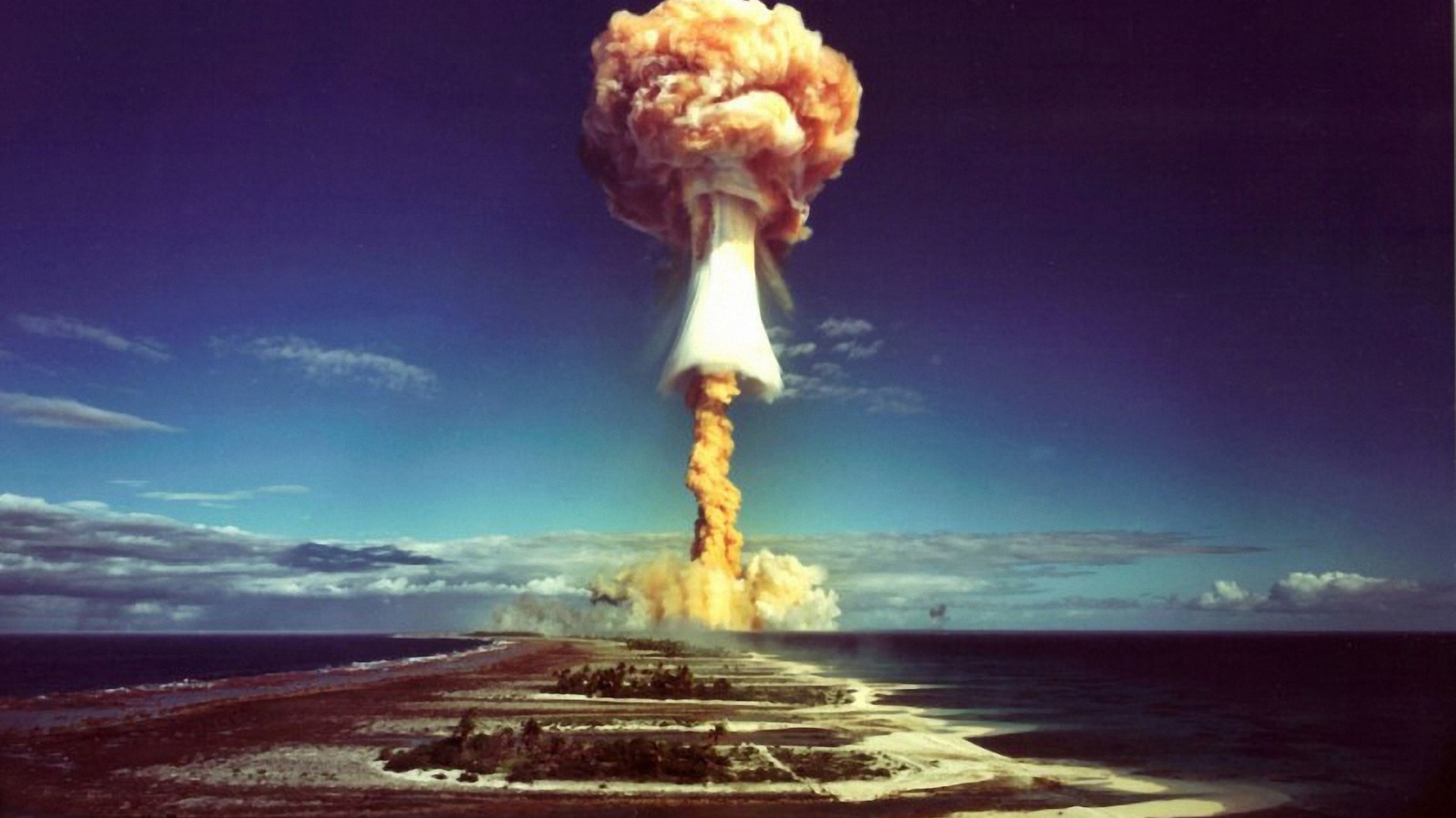
While the terms are often used interchangeably in casual conversation, "atomic" and "nuclear" refer to different aspects of physics. An atomic bomb is a specific type of nuclear weapon that relies solely on nuclear fission, whereas "nuclear bomb" is an umbrella term that encompasses all weapons deriving explosive power from nuclear reactions, including those that utilize fusion processes.
The Technical Hierarchy of Explosive Power
To understand the relationship between these two terms, one must view them through the lens of physics. The term "nuclear" is the parent category. A nuclear weapon is any device that releases energy through nuclear reactions—either the splitting of atomic nuclei (fission) or the fusing of atomic nuclei (fusion).
"Atomic bomb" (often abbreviated as A-bomb) serves as a historical and technical sub-category. It refers exclusively to early-generation weapons that utilize the process of nuclear fission. When a heavy nucleus, such as Uranium-235 or Plutonium-239, is bombarded by a neutron, it splits into smaller nuclei, releasing a massive amount of energy and further neutrons, which sustain a chain reaction. Because this process occurs at the atomic level and does not require a secondary fusion stage, the label "atomic" became the common designation for the weapons used in the 1940s.
In contrast, the term "nuclear bomb" is more inclusive. It covers atomic bombs but also includes thermonuclear weapons, commonly known as hydrogen bombs or H-bombs. These weapons utilize a two-stage process: a primary fission trigger (an atomic bomb) creates the heat and pressure necessary to initiate a secondary fusion reaction, where isotopes of hydrogen (deuterium and tritium) fuse together. This fusion reaction releases significantly more energy than fission alone.
Historical Context and Nomenclature
The terminology became embedded in the public consciousness during the final stages of World War II. When the Manhattan Project culminated in the Trinity test and the subsequent bombings of Hiroshima and Nagasaki, these devices were almost universally referred to as "atomic bombs." The name highlighted the new, terrifying reality of tapping into the energy binding the atom itself.
By the early 1950s, the development of the hydrogen bomb introduced a new class of weaponry. Scientists and military strategists began distinguishing between the "A-bomb" (fission-based) and the "H-bomb" (fusion-enhanced). As the variety of nuclear devices expanded—including tactical nuclear weapons, neutron bombs, and depth-charge nuclear payloads—the term "nuclear" became the standard technical identifier for the entire class of weaponry. Today, referring to all such devices as "nuclear" is technically precise, while "atomic" is usually reserved for historical discussion or specifically describing first-generation fission weapons.
Comparing Mechanisms: Fission vs. Fusion
The primary difference lies in the physics of the reaction. Understanding this distinction is essential for grasping why these weapons have such vastly different explosive yields.
Fission: The Atomic Mechanism
Fission is the process of breaking apart. In an atomic bomb, a "sub-critical" mass of fissile material is brought to a "super-critical" state. This is achieved either by firing one piece of uranium into another (the gun-type assembly used in the Hiroshima "Little Boy" bomb) or by imploding a sphere of plutonium using conventional explosives (the implosion-type assembly used in the Nagasaki "Fat Man" bomb). Once the critical mass is reached, the chain reaction proceeds at an exponential rate, releasing energy in microseconds.
Fusion: The Thermonuclear Mechanism
Fusion is the process of joining together. Because fusion requires extreme temperatures and pressures—similar to those found in the core of the sun—it cannot be easily started with conventional explosives. Therefore, a modern thermonuclear weapon carries an "atomic bomb" inside it. When the atomic fission trigger detonates, it generates the extreme heat required to force hydrogen isotopes to fuse. The fusion reaction releases far more neutrons and energy, which can then trigger further fission in a secondary layer of uranium, multiplying the destructive power of the weapon manifold.
| Feature | Atomic Bomb (Fission) | Hydrogen Bomb (Thermonuclear) |
|---|---|---|
| Primary Process | Nuclear Fission (Splitting) | Nuclear Fusion + Fission |
| Trigger | Conventional Explosives | Atomic Fission Bomb (Primary) |
| Energy Source | Uranium-235 or Plutonium-239 | Hydrogen Isotopes (D-T) + Fissile Material |
| Relative Yield | Kilotons | Megatons |
| Complexity | Relatively simpler design | Highly sophisticated multi-stage design |
The Scale of Destructive Potential
The distinction between atomic and nuclear weapons is also one of magnitude. Because the fission chain reaction is limited by the amount of fissile material that can be assembled before it blows itself apart, the maximum yield of a pure atomic bomb is physically capped.
Thermonuclear weapons, by contrast, are theoretically unlimited in yield. Because the fusion fuel can be packed into a weapon in large quantities without immediately reaching a critical mass (as fissile material does), engineers can scale the size of the explosion to a much higher degree. This is why the most powerful weapons in modern global arsenals are invariably thermonuclear, while "atomic" designs are often relegated to tactical roles or as the foundational triggers for more advanced systems.
Common Misconceptions
One frequent point of confusion is the assumption that if a weapon is "nuclear," it must necessarily involve a massive explosion. While this is true of strategic weapons, the term "nuclear" also encompasses tactical devices designed for limited theater use.
Additionally, many people incorrectly assume that the radiation effects of atomic and nuclear bombs are fundamentally different. While the composition of the fallout can vary based on the specific fuel and the efficiency of the reaction, both types of weapons produce three primary effects:
- Thermal Radiation: Intense heat and light that cause burns and fires.
- Blast Wave: A high-pressure shockwave that causes structural damage.
- Ionizing Radiation: Immediate radiation from the reaction and residual radioactive fallout that poses long-term health risks.
Whether the explosion was produced by pure fission (atomic) or a fusion-fission sequence (nuclear), the biological and environmental consequences remain rooted in the release of radioactive isotopes and the immediate physical impact of the detonation.
Frequently Asked Questions
Is every atomic bomb a nuclear bomb?
Yes. Because atomic bombs rely on the manipulation of the nucleus of the atom through fission, they are a subset of the broader category of nuclear weapons.
Are hydrogen bombs considered atomic bombs?
No. While they contain an atomic bomb as a trigger, the weapon as a whole is classified as a thermonuclear or fusion bomb. The inclusion of the fusion stage moves the device beyond the "atomic" classification.
Why don't we just call them all nuclear bombs?
In professional and military contexts, we do. The term "atomic bomb" persists primarily due to its historical significance and because it remains a shorthand way to distinguish simple fission devices from more complex thermonuclear ones.
Is the fallout from an atomic bomb worse than a hydrogen bomb?
The severity of the fallout depends more on the height of the detonation (airburst vs. ground burst) and the materials used in the weapon's casing than on the fission/fusion distinction alone. Both types can produce dangerous, long-lasting radioactive contamination.
Do modern militaries still use atomic bombs?
Modern nuclear arsenals rely almost exclusively on thermonuclear designs because they are more efficient and can be scaled to higher yields. However, the "atomic" fission mechanism remains an essential, non-negotiable component of every thermonuclear weapon.
Practical Considerations and Safety
The study of these devices is largely academic or historical for the general public, as the production, possession, and dissemination of nuclear technology are strictly controlled by international treaties and national security laws. The Global Non-Proliferation regime and the activities of the International Atomic Energy Agency (IAEA) represent the current standard for oversight. If you are researching this topic for academic purposes, refer to the official reports from the IAEA or historical archives from the Department of Energy to ensure the accuracy of technical specifications and historical timelines.
For those interested in the history of the early atomic age, viewing original documents from the Manhattan Project archives provides the clearest insight into how these devices were developed and categorized at the inception of the nuclear era.