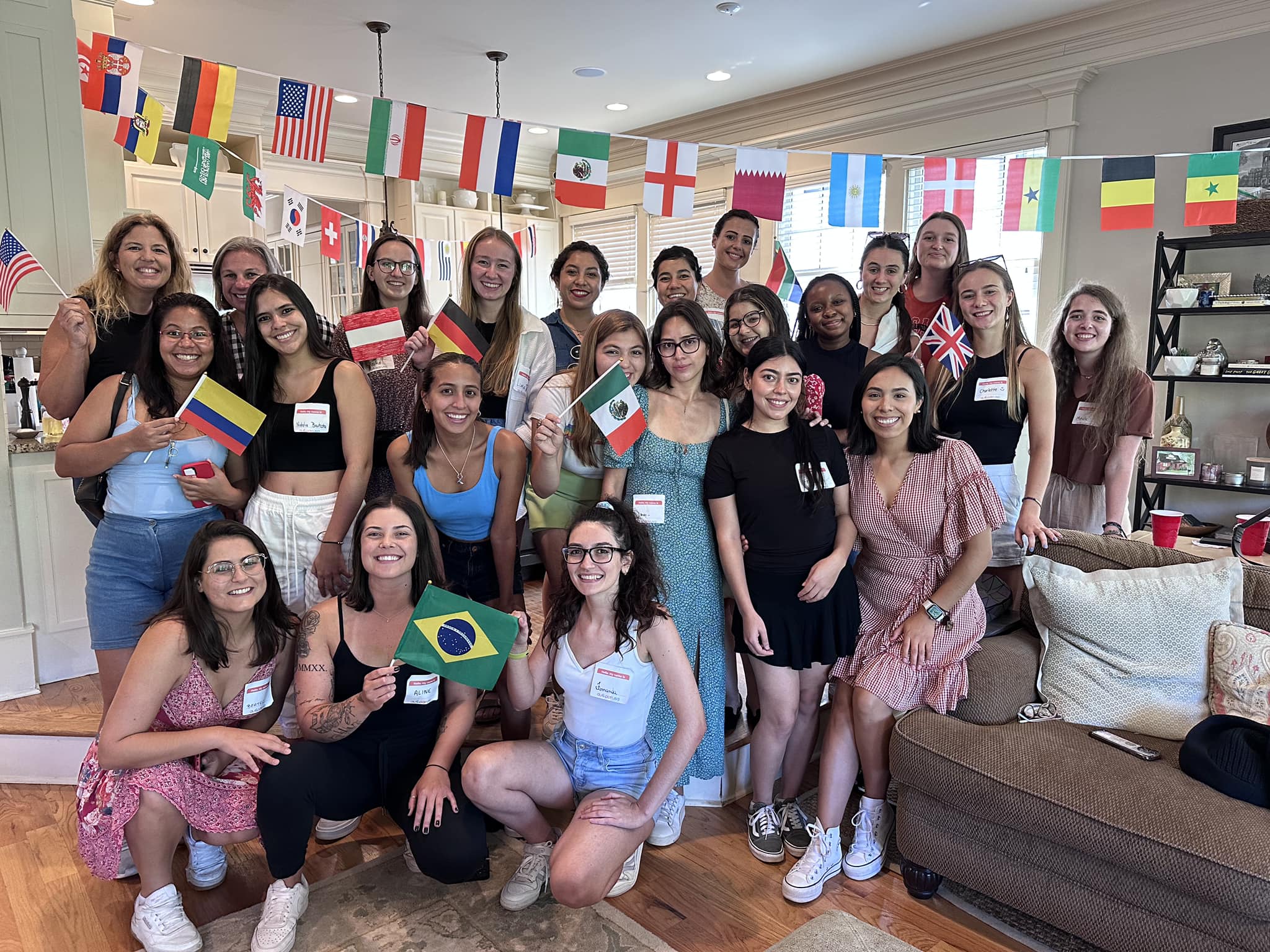
An au pair in Maryland is an international young adult, aged 18 to 26, who provides up to 45 hours per week of live-in childcare under the federal J-1 Exchange Visitor Program. Host families provide room, board, a weekly stipend, and an educational allowance through a U.S. Department of State-designated agency.
Understanding the U.S. Au Pair Program in Maryland
The au pair program operates as a federally regulated cultural exchange managed by the U.S. Department of State Exchange Visitor Program. Unlike hiring a private household employee or nanny, host families in Maryland welcome an au pair into their home as an extended family member. The au pair assists with childcare duties while experiencing American life and completing post-secondary coursework.
Because the program is established at the federal level, core regulations—including maximum working hours, mandatory time off, and visa sponsorship—are standardized across all 50 states. However, practical implementation depends heavily on state-specific and local factors. In Maryland, proximity to Washington, D.C., dense suburban corridors, state driver licensing laws, and access to higher education institutions shape how host families and au pairs structure their daily routines and regulatory compliance.
Au Pair vs. Household Nanny
Understanding the legal and operational differences between an au pair and a nanny is essential before committing to the program:
- Legal Status: An au pair enters the United States on a temporary J-1 Exchange Visitor visa sponsored by a designated sponsor agency. A nanny is an employee (either a citizen, legal permanent resident, or work-authorized non-citizen) subject to standard federal and Maryland employment laws.
- Living Arrangements: Au pairs live in the host family's primary residence in a private bedroom. Nannies typically live off-site, though live-in nannies exist under standard employment contracts.
- Work Schedule and Duty Limits: Au pair hours are strictly capped by federal regulations at 10 hours per day and 45 hours per week, limited exclusively to childcare and light childcare-related housework. Nannies can work overtime subject to Maryland wage and hour laws.
- Compensation Structure: Au pair compensation consists of room, board, a federally regulated minimum weekly stipend, and an educational allowance. Nannies receive standard hourly wages subject to state minimum wage laws, payroll tax withholding, and state unemployment contributions.
Eligibility Requirements for Host Families and Au Pairs
To participate in the program, both host families and prospective au pairs must satisfy eligibility criteria enforced by designated sponsor agencies and federal regulations.
- FEDERAL J-1 VISA MANDATES
- Max 10 Hours/Day
- Max 45 Hours/Week
- 1.5 Days Off/Week
- MARYLAND STATE & LOCAL IMPLEMENTATION
- MVA Driver Licensing
- Community College Course Credits
- Local Agency Cluster
- Suburban Commute & Vehicle Access
Host Family Requirements
Maryland families applying to host an au pair must demonstrate that they can provide a safe, supportive, and compliant environment. Prerequisites include:
- Citizenship Status: At least one host parent must be a U.S. citizen or legal permanent resident.
- Language Environment: Fluent English must be spoken in the home as the primary language.
- Background Screening: All adult household members must pass a background check, including criminal history and sex offender registry verification.
- Private Accommodations: The family must provide a private, suitable bedroom for the au pair with standard furnishings, a window, and proper heating/cooling.
- Financial Capability: Families must prove their financial ability to cover program fees, weekly stipends, food, and the $500 educational contribution.
- Parental Supervision: The family must agree to have an adult home during the first three days after the au pair's arrival to facilitate onboarding.
Au Pair Requirements
Prospective au pairs undergo a vetting process conducted by overseas partner offices and designated U.S. agencies before receiving visa sponsorship. Applicants must meet the following baseline requirements:
- Age: Between 18 and 26 years old at the time of program start.
- Education: Secondary school graduate or equivalent qualification.
- Proficiency: Spoken and written English proficiency adequate to function in a household and communicate in emergencies.
- Experience: A minimum of 200 documented hours of childcare experience (minimum 500 hours for specialized or infant care tracks).
- Vetting: Clear criminal history, successful physical exam, and favorable personal and professional references.
Financial Obligations and Program Cost Breakdown
Hosting an au pair in Maryland involves both upfront agency fees and ongoing weekly expenses. The total annual cost typically ranges between $19,000 and $24,000, depending on agency pricing, local transportation choices, and household arrangements.
| Expense Category | Responsible Party | Estimated Cost / Frequency | Description & Details |
|---|---|---|---|
| Agency Application & Processing Fees | Host Family | $300 – $500 (one-time) | Application fee, background check processing, and matching services. |
| Agency Program Fee | Host Family | $9,000 – $11,000 (annual) | Covers international recruitment, J-1 visa sponsorship, flights, local coordination, and medical insurance. |
| Minimum Weekly Stipend | Host Family | $195.75 minimum / week | Base rate established under federal rules, paid directly to the au pair every week. |
| Educational Allowance | Host Family | Up to $500 / year | Direct payment toward tuition and mandatory course fees for accredited coursework. |
| Room and Board | Host Family | Variable (In-kind) | Private bedroom and three balanced meals per day provided throughout the stay. |
| Maryland Auto Insurance & Fuel | Host Family | $800 – $2,000 / year | Premium increase for adding a J-1 driver under 25 to family policy, plus gas for personal/childcare driving. |
| MVA Licensing & Testing Fees | Shared / Family | $50 – $150 (one-time) | Alcohol/drug safety course, knowledge test, and Maryland license issuance fees. |
Understanding the Weekly Stipend Framework
The federal base minimum stipend of $195.75 per week is derived from the federal minimum wage offset by a standard room-and-board credit allowance. Host families should review their agency contract and any relevant state updates to ensure compliance with current wage standards and program guidelines.
Many families in high-cost areas of Maryland choose to pay higher stipends or offer bonuses during holidays and performance milestones. Payments must be issued consistently every week, regardless of whether the au pair works the maximum 45 hours or fewer hours during a given period.
Maryland Driving Regulations and Local Logistics
Transportation is a vital consideration for host families in Maryland. Outside of areas directly served by the Washington Metro or Baltimore Light Rail, operating a personal motor vehicle is usually necessary for transporting children to school, extracurricular activities, and medical appointments.
MARYLAND MVA J-1 LICENSING FLOWCHART
- Foreign License Validity Check (Up to 60 days in MD)
- Complete 3-Hour Safe Driving (Alcohol & Drug) Program
- Document Verification (DS-2019, Passport, I-94, MD Residency)
- Pass MVA Vision & Knowledge Tests
- Schedule & Pass MVA Practical Road Skills Exam
Motor Vehicle Administration (MVA) Compliance
Under rules enforced by the Maryland Motor Vehicle Administration, out-of-country drivers must obtain a Maryland driver's license if they reside in the state for more than 60 days and plan to drive regularly. To apply for a Maryland driver's license on a J-1 Exchange Visitor visa, the au pair must present:
- Identity and Legal Status: Valid passport, J-1 visa stamp, Form DS-2019, and electronic Form I-94 arrival record.
- Social Security Status: A Social Security Card or a formal Letter of Ineligibility issued by the Social Security Administration (SSA).
- Proof of Maryland Residency: Two approved documents establishing residential address (e.g., bank statement, official mail, or agency residence verification letter).
- Alcohol and Drug Safety Program: Completion certificate for the mandatory Maryland 3-Hour Safe Driving (Alcohol and Drug Education) Program.
- Tests: Vision screening, written knowledge test, and driving skills exam (unless originating from a foreign jurisdiction with an MVA reciprocity agreement, such as France, Germany, South Korea, or Taiwan).
Auto Insurance and Driving Responsibilities
Adding an international driver under the age of 25 to a household auto insurance policy in Maryland will increase monthly premiums. Host families should consult their insurance provider before the au pair arrives to clarify coverage limits, collision deductibles, and local policy requirements.
Families should establish clear, written guidelines regarding:
- Permissible use of vehicles during off-duty hours.
- Responsibility for fuel costs accumulated during personal travel.
- Mileage limits or driving radii for personal trips.
- Rules regarding cell phone use (Maryland strictly prohibits handheld mobile device use while driving).
Educational Requirements and Maryland Colleges
Federal regulations require au pairs to complete at least six semester hours of academic credit (or 60 hours of classroom instruction) at an accredited post-secondary institution during their 12-month program. The host family must provide up to $500 toward tuition, required books, and course registration fees.
Maryland offers a strong network of public higher education institutions that accommodate international student schedules through evening, weekend, and short-term continuing education offerings.
Recommended Institutions for Au Pairs in Maryland
- Montgomery College: Located across campuses in Rockville, Germantown, and Silver Spring, Montgomery College offers non-credit continuing education, ESL classes, and tailored continuing education units (CEUs) popular among local au pairs.
- Anne Arundel Community College (AACC): Serving families in Annapolis and surrounding areas, AACC provides weekend courses and flexible schedule options.
- Community College of Baltimore County (CCBC): Offers accredited continuing education programs at multiple locations across Baltimore County.
- Prince George's Community College (PGCC): Provides accessible ESL, business, and humanities coursework in the Washington Metropolitan area.
- Towson University & University of Maryland System: Select locations offer professional development certificates and specialized continuing education suitable for fulfilling visa requirements.
Au pairs must submit proof of course completion to their local agency representative before applying for a second-year extension or completing their J-1 program term.
Step-by-Step Guide to Hosting an Au Pair in Maryland
Navigating the application, matching, and onboarding process requires advance planning. Families should budget 8 to 12 weeks from initial registration to the au pair's arrival at their Maryland home.
Step 1: Select a Department of State Designated Agency
Host families must work with an officially designated au pair agency. Agencies operating across Maryland include Cultural Care Au Pair, Au Pair in America, AuPairCare, GoAuPair, and Agent Au Pair. Evaluate agencies based on local coordinator coverage in your specific Maryland county, total program fees, candidate database size, and emergency support services.
Step 2: Application and Vetting
Complete the host family application profile detailing household dynamics, daily schedules, family rules, living accommodations, and specific childcare expectations. Submit home photos, family references, and clear required background checks.
Step 3: Candidate Screening and Interviewing
Review candidate profiles, background summaries, video introductions, and reference checks. Conduct structured video interviews with candidates to discuss:
- Childcare experience and comfort with specific age groups (e.g., infants vs. school-age children).
- Driving skills, comfort level with Maryland weather conditions, and rural/suburban roads.
- Daily family schedules, household rules, diet, and expectations regarding privacy.
- Personal goals, educational plans, and cultural exchange expectations.
Step 4: Matching and Visa Issuance
Once both parties agree to match, the agency processes Form DS-2019 (Certificate of Eligibility for Exchange Visitor Status). The prospective au pair schedules an interview at a U.S. embassy or consulate in their home country to obtain the J-1 visa stamp.
Step 5: Arrival, Orientation, and Onboarding
Upon arrival in the United States, au pairs complete the agency's mandatory training program covering child development, safety, CPR, and cultural adaptation. They then travel to the Maryland host family's home.
Federal law mandates that host parents dedicate time during the first three days after arrival to help the au pair adapt to the home, learn daily routines, meet school teachers, and understand safety protocols.
Timeline to Host:
- [Week 1-3] Application & Vetting
- [Week 4-6] Interviews & Matching
- [Week 7-9] Visa Processing
- [Week 10-12] Arrival & Onboarding
Program Regulations, Working Hours, and Dispute Resolution
To maintain compliance with federal program mandates, host families must strictly observe working hour limits and rest periods.
Working Hour Limits and Time Off Rules
- Daily Limit: Maximum of 10 hours of active duty per calendar day.
- Weekly Limit: Maximum of 45 hours of active duty per calendar week.
- Weekly Rest: At least 1.5 consecutive days off per week.
- Monthly Rest: At least one full weekend off per month (from Friday evening until Monday morning).
- Paid Vacation: Two complete weeks (10 business days) of paid vacation per 12-month placement term, arranged by mutual agreement.
Au pairs are not permitted to serve as general housekeepers, yard workers, or commercial employees. Their duties are restricted to childcare and light tasks directly related to the children, such as preparing child meals, doing children's laundry, and tidying children's bedrooms or play spaces.
The Role of Local Childcare Coordinators
Agencies assign a Local Childcare Coordinator (LCC) or regional counselor who resides within an hour's drive of the host family in Maryland. The LCC conducts a monthly check-in with both the host family and the au pair, hosts monthly cultural activities for local au pair clusters, and assists in resolving conflicts.
Managing Disputes and Rematch Procedures
If friction arises regarding schedule expectations, communication gaps, or house rules, the host family and au pair should first address the issue directly, followed by involvement from their LCC.
If the relationship cannot be sustained, the agency initiates a formal two-week transition period known as a rematch:
- The au pair remains in the host family home (or temporary agency housing) during the transition period.
- The agency lists the au pair in the national rematch portal to allow other host families across Maryland or the U.S. to interview them.
- The original host family can review incoming prospective au pair profiles already in the country.
- If no match occurs within 14 days, the au pair must return to their home country unless an extension or alternative arrangement is approved by the agency sponsor.
Frequently Asked Questions
What is the current minimum weekly stipend for an au pair in Maryland?
The federal standard base minimum stipend is $195.75 per week, based on federal minimum wage rules and room-and-board deductions. Host families should confirm specific stipend guidelines with their chosen agency, as some regions or agency agreements may suggest higher rates.
Can an au pair drive with an international license in Maryland?
An au pair can drive legally on a valid foreign license during their first 60 days of residence in Maryland. After 60 days, Maryland MVA regulations require non-residents who operate a motor vehicle regularly to obtain a Maryland driver's license by passing required tests and completing the 3-Hour Safe Driving (Alcohol and Drug) Program.
Is an au pair permitted to care for infants under three months old?
No. Federal regulations prohibit au pairs from serving as the primary caregiver for infants under three months of age unless a parent or another responsible adult is physically present in the home.
How are medical expenses and health insurance handled for au pairs?
Designated J-1 sponsor agencies provide standard basic travel health insurance covering emergency medical care and injuries during the program term. Host families are not required to provide full health insurance, but they must ensure the au pair has access to local healthcare providers if medical care is needed.
Can host families deduct room and board expenses from the weekly stipend?
No. The standard minimum stipend already factors in the allowable room-and-board offset under federal Department of Labor regulations. Host families cannot deduct additional fees for food, utilities, rent, or basic household supplies from the au pair's stipend.
Recommended Next Steps
- Assess Your Schedule Needs: Review your weekly childcare schedule to confirm your required coverage fits within 10 hours per day and 45 hours per week.
- Verify Private Space: Ensure your home provides a dedicated, fully private bedroom suitable for an adult occupant.
- Compare Agencies: Contact at least two Department of State-designated agencies operating in your Maryland county to evaluate local cluster size, LCC support, and agency fee structures.
- Consult Auto Insurance Provider: Request a policy quote to estimate the cost of adding a young driver to your auto policy.
- Begin Application: Complete the online host family profile 2 to 3 months before your desired start date to allow ample time for candidate matching and visa processing.
Disclaimer: Childcare regulations, state wage guidelines, and immigration policies change periodically. Families should verify current administrative details with their designated J-1 agency sponsor and official government sources.