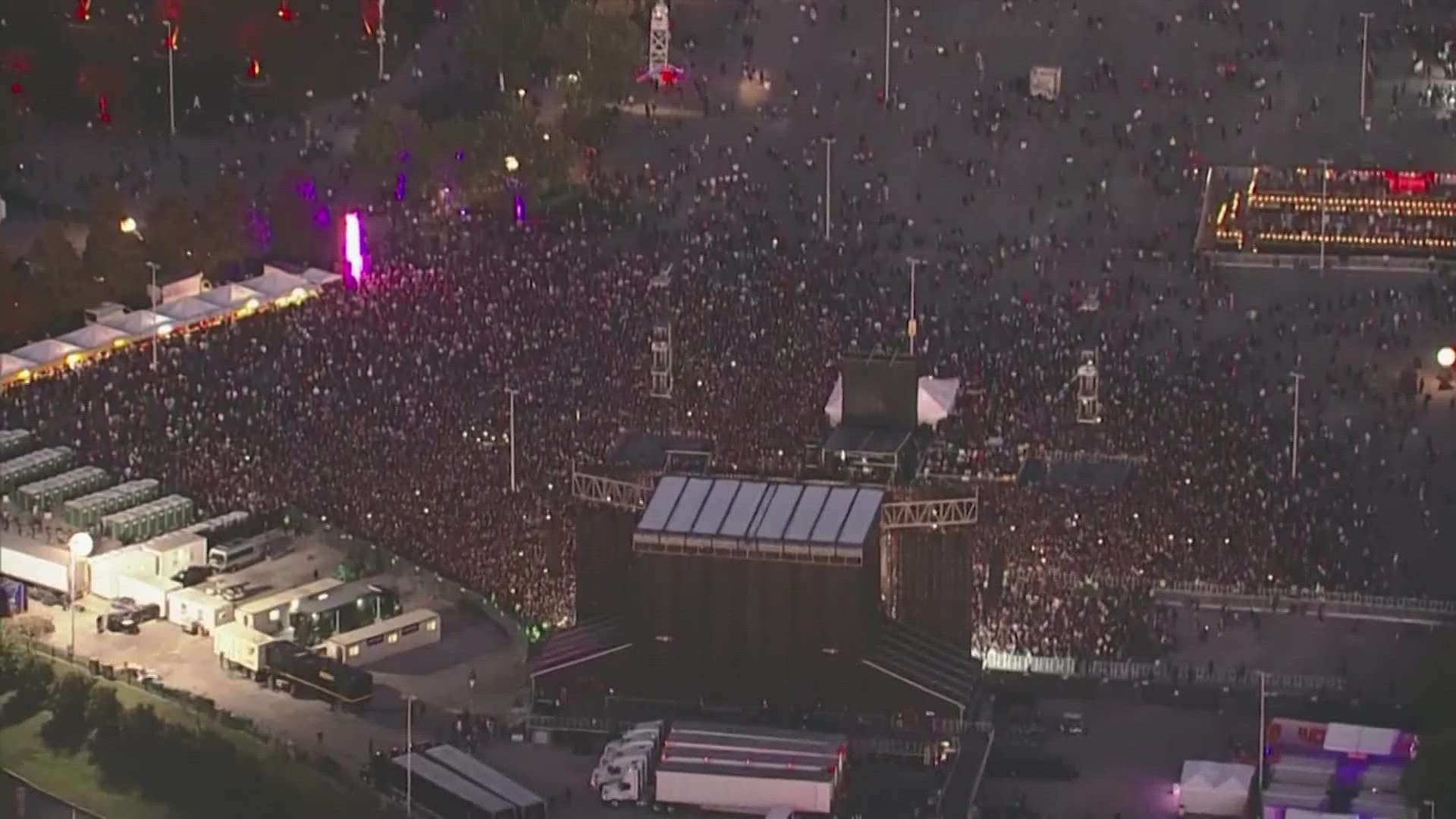
The Astroworld Festival tragedy, which occurred on November 5, 2021, at NRG Park in Houston, Texas, serves as a watershed moment in live music history, highlighting the catastrophic failure of crowd management protocols and the resulting loss of ten lives. The disaster prompted a massive re-examination of concert safety, crowd crush dynamics, and the shared legal and ethical responsibilities of performers, promoters, and venue operators in high-density environments.
Anatomy of the Crowd Crush at Astroworld
The events of November 5, 2021, were defined by a "crowd crush"—a phenomenon that occurs when a high density of people is compressed into a confined space, leading to pressure that makes breathing physically impossible. At Astroworld, the design of the festival grounds, specifically the placement of barricades and the density of the audience, created a pressure cooker environment.
Crowd safety experts distinguish between a "crowd surge," which is a forward movement, and a "crowd crush," which is a static or near-static condition where pressure is exerted from multiple directions. As the crowd surged toward the stage, the sheer volume of attendees exceeded the physical capacity of the barricades to manage them. Once the density reached a critical threshold—often cited as more than four to five people per square meter—individual movement becomes impossible. In this state, the pressure exerted by the crowd becomes a lethal force, causing "asphyxial death," where the chest cavity is squeezed to the point that the lungs can no longer expand to intake oxygen.
The Role of Performers in Crowd Control
A central point of contention following the tragedy was the role of the performer, Travis Scott, in mitigating the crisis. In live event protocols, artists are often the only people on the stage with a visual vantage point of the entire crowd. While artists are responsible for the performance, their role in safety is often debated within the industry.
Modern event safety guidelines suggest that the artist must be a critical part of the "stop-work" authority. If an artist notices individuals losing consciousness or emergency vehicles attempting to enter the crowd, they are uniquely positioned to pause the show. At Astroworld, the visual stimulation, the bass-heavy nature of the sound system, and the lighting design created a disconnect between the artist’s perspective and the reality on the ground. This failure of communication—where the performer was not immediately aware of the life-threatening conditions—highlights a critical flaw in traditional concert operation hierarchy: the reliance on security to signal danger to the artist, rather than establishing a direct, automated link between medical personnel and the stage.
Promoter Responsibility and Incident Command
Live Nation, as the promoter, and Scoremore, the organizer, held the primary responsibility for the venue's operational safety. The incident command structure is designed to oversee communication between security, medical, and law enforcement. During the Astroworld event, reports indicated that the communication channels were overwhelmed.
The core failure in event safety here was the breakdown of the "Event Safety Plan." Every large-scale festival is required to have a document approved by local authorities that outlines ingress/egress points, medical staffing, security training, and emergency protocols. The failure occurred when the density of the crowd physically prevented the movement of emergency responders. When medical staff were needed, they were often trapped within the same dense crowd they were attempting to assist, rendering them unable to reach the victims effectively.
Key Factors in Large-Scale Event Safety
| Safety Element | Requirement | Impact of Failure |
|---|---|---|
| Crowd Density | Limited to < 4 people per sqm | Physical crush and asphyxiation |
| Emergency Ingress | Clear lanes for stretcher/medic access | Delayed medical intervention |
| Communication | Direct line between medics and stage | Delayed stop-work order |
| Barricade Design | "Pens" to distribute weight | Excessive forward pressure on front rows |
| Staff Training | Recognizing signs of crush vs. hype | Failure to identify emergency situations |
Legal Framework and Jurisdictional Limits
Following the tragedy, hundreds of lawsuits were filed against the organizers, the venue, and the artists. The legal fallout centered on "duty of care." In Texas, as in many jurisdictions, event organizers have a legal obligation to provide a reasonably safe environment for invitees.
The courts examined whether the organizers anticipated the potential for a crowd surge. Expert testimony in these cases often centers on whether the event's design—specifically the "festival seating" or general admission model—was appropriate for the specific demographic and the genre of music. Legal liability often hinges on whether the defendants ignored "red flags" (such as earlier breaches of the gates) and whether their security staff were adequately trained to manage the specific risks associated with "mosh pit" culture and high-intensity performances.
Evolving Standards for Event Safety in 2026
As of 2026, the industry has seen a shift toward more robust technology and protocol integration. The "lessons learned" phase has moved into policy implementation.
- AI-Enhanced Crowd Monitoring: Many major venues now utilize real-time video analytics that use heat maps to detect crowd density. When density reaches a pre-set threshold, the system triggers an automatic alert to the production manager and security lead.
- Standardized Stop-Work Protocols: It is now standard for the "stop-work" power to be formally granted to multiple stakeholders, including the head of security and the lead medical officer, who can override the artist's feed directly if a mass casualty event is detected.
- Modular Barricade Systems: The implementation of "pen" systems is now more widespread to break the crowd into smaller, manageable pods, preventing the "domino effect" of pressure that occurs in large, open-floor areas.
- Medical Integration: Medics are no longer positioned only on the periphery; they are increasingly integrated into the crowd structure with elevated platforms and clear "medical lanes" that are strictly enforced by law enforcement.
The Human Element: Training and Psychology
Safety is not just an engineering problem; it is a psychological one. Crowd dynamics are influenced by the behavior of the crowd itself. When participants feel the excitement of a performance, their perception of danger is often dampened by adrenaline.
Modern training for event staff now focuses heavily on the "crowd psychology" of a crush. Security personnel are trained to watch for the "wave" motion that precedes a collapse. By identifying these patterns early, staff can attempt to relieve the pressure before it reaches a lethal stage. This requires a cultural shift where security staff are empowered to be proactive rather than reactive.
FAQ: Understanding Event Safety
What is a crowd crush? A crowd crush is a life-threatening situation where the density of a crowd exceeds the space, creating pressure that prevents individuals from moving or breathing. It is not caused by panic, but by the physical compression of the crowd.
Are festivals required to follow specific safety regulations? Yes. Festivals must submit and adhere to an event safety plan reviewed by local fire marshals, police, and emergency services. This plan dictates everything from exit capacity to medical staff-to-attendee ratios.
What is the "stop-work" authority at a concert? The "stop-work" authority is the right of a designated safety professional to halt a performance immediately if a danger to life or safety is observed. In light of 2021, many venues now ensure this power is shared between the artist and onsite safety leads.
Can an artist be held legally liable for concert injuries? Legal liability is complex and depends on the specific actions of the artist. If the artist is found to have encouraged unsafe behavior or ignored direct signals that people were being harmed, they can be held partially responsible under various tort laws.
How can I stay safe at a large concert? Always locate the exits when you enter the venue. Avoid the center-front area if you are uncomfortable with high-density pressure. If you feel the crowd starting to sway or push consistently, move laterally toward the edges of the crowd rather than fighting the current.
Next Steps for Event Attendees
For concert-goers in 2026, the primary responsibility remains situational awareness. While the burden of safety rests with the organizers, participants play a role by staying alert to their environment. Before entering a high-density area, scan the perimeter for emergency exits and note the location of medical tents. If you feel the physical pressure of the crowd becoming unbearable, do not attempt to move forward; move to the periphery where the density is lower. Understanding that event safety is a shared responsibility is the first step in ensuring that the tragedy of 2021 does not repeat itself.