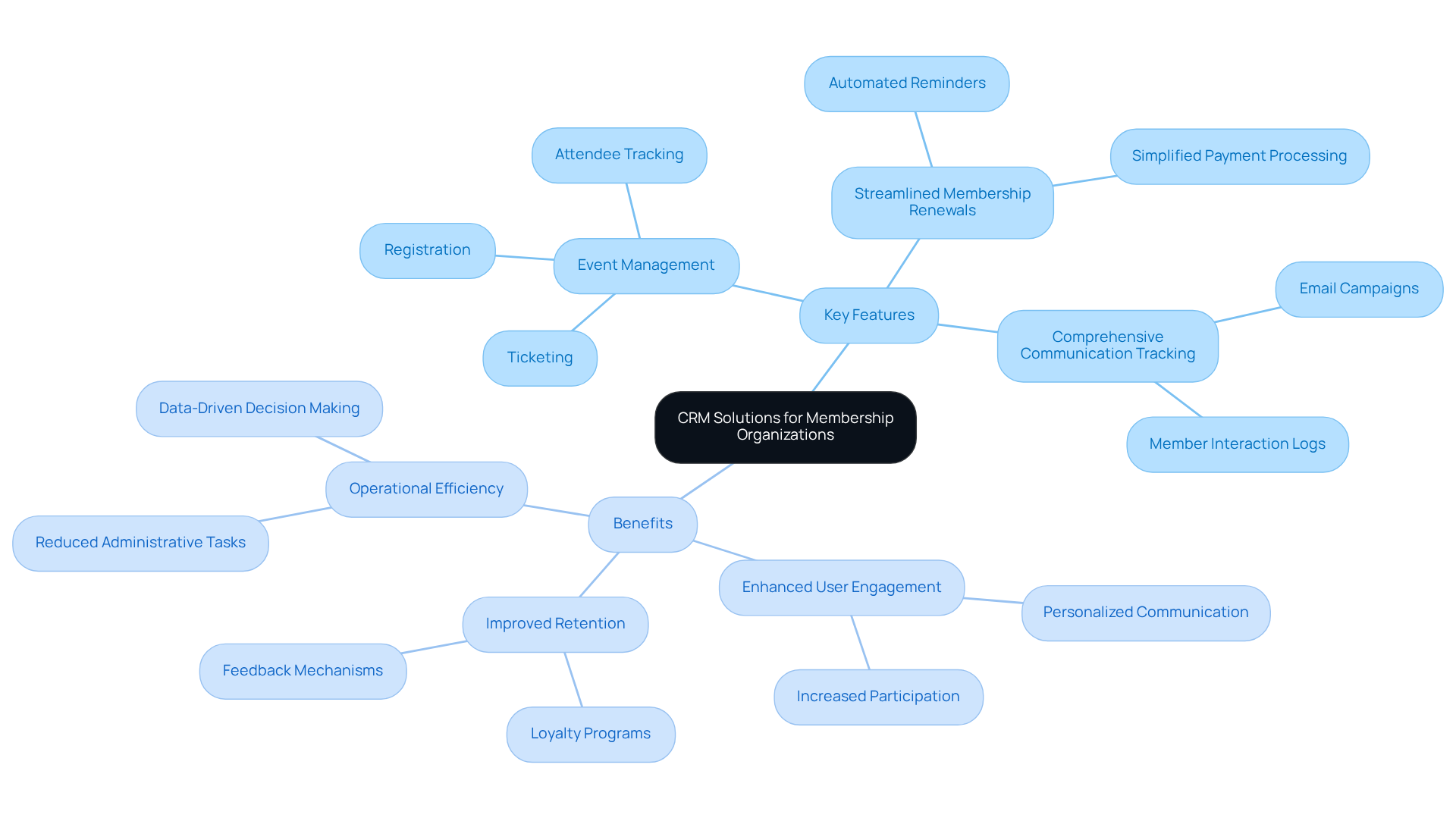
Association CRM software is a centralized digital platform specifically engineered to manage member data, automate administrative workflows, and facilitate high-level engagement for professional societies, trade associations, and non-profits. In 2026, these systems integrate advanced artificial intelligence to provide predictive insights into member retention and personalized experiences that traditional database management tools cannot match.
Defining the 2026 Association CRM Landscape
In 2026, the term "CRM" (Customer Relationship Management) within the association sector has largely converged with "AMS" (Association Management System). While historically these were distinct categories—CRMs being sales-focused and AMS being membership-focused—the modern landscape demands a hybrid approach. Today's association CRM software for member organizations acts as the "single source of truth," consolidating disparate data streams from marketing, events, finance, and learning management systems (LMS) into one unified profile for every member.
The primary goal of this software is no longer just record-keeping; it is relationship optimization. For a professional association, this means moving beyond a digital Rolodex to a proactive system that identifies when a member is at risk of lapsing or when they are ready for a leadership role. The 2026 environment prioritizes API-first architecture, allowing organizations to plug in niche tools (like specialized abstract management or legislative tracking) without disrupting the core database.
Key Differences Between General CRMs and Purpose-Built AMS
A common dilemma for executive directors is whether to use a general-purpose CRM (such as Salesforce or Microsoft Dynamics 365) or a purpose-built AMS (such as iMIS, Fontiva, or MemberClick). Both paths are viable in 2026, but they require different strategic approaches.
General CRMs with Association Overlays
General CRMs offer unparalleled flexibility and a vast ecosystem of third-party apps. However, out of the box, they lack specific association logic, such as "anniversary-based renewals" or "chapter hierarchies." Organizations using these platforms in 2026 typically employ an "overlay" or a managed package specifically designed for associations. This provides the power of a global enterprise platform with the specific workflows required for membership management. The trade-off is often a higher total cost of ownership due to the need for specialized consultants and custom configurations.
Purpose-Built AMS Platforms
Purpose-built systems are designed with the "Association Professional" in mind. These platforms come pre-configured with modules for dues processing, committee management, and conference registration. In 2026, these systems have closed the gap in terms of user interface (UI) and user experience (UX), offering sleek, intuitive dashboards that require less technical expertise than general CRMs. They are often more cost-effective for small to mid-sized organizations that do not have dedicated IT staff to manage complex CRM customizations.
Essential Features for Modern Member Organizations
To remain competitive and relevant in 2026, association CRM software must provide a specific set of high-functioning modules. These features facilitate the daily operations of the staff while enhancing the value proposition for the members.
1. Robust Member Profiles and Segmentation
The heart of the CRM is the member profile. In 2026, these profiles are dynamic. They track not only contact information and transaction history but also digital body language—which articles the member reads, which webinars they attend, and their contributions to online community forums. This data allows for hyper-segmentation. Instead of sending a generic newsletter to 10,000 people, associations can send targeted updates to "Early-career professionals in the Pacific Northwest who are interested in sustainability."
2. Automated Dues and Financial Management
Financial transparency and security are paramount. Modern CRMs handle complex billing cycles, including multi-year memberships, corporate bundles (where one company pays for several employees), and monthly recurring revenue models. Integration with secure payment gateways (like Stripe or PayPal) is standard, but in 2026, the system must also support global tax compliance (VAT/GST) and multi-currency transactions for international organizations. Automation is key here; the software should handle renewal reminders, grace periods, and automated suspension of benefits for non-payment without manual intervention.
3. Integrated Event Management
Events remain the lifeblood of many associations. A top-tier CRM manages the entire event lifecycle:
- Call for Proposals: Managing speakers and abstract submissions.
- Registration: Tiered pricing based on membership status or early-bird deadlines.
- On-site Logistics: QR code check-ins and integration with mobile event apps.
- Post-Event Analytics: Measuring ROI and attendee satisfaction scores directly within the member record.
4. Self-Service Member Portals
In 2026, members expect a "frictionless" experience. A self-service portal allows members to update their own contact information, download invoices, register for events, and access gated content without calling the association office. These portals are now mobile-first, ensuring that members can interact with the organization as easily on a smartphone as they do on a desktop.
The Impact of AI and Predictive Analytics
Artificial Intelligence (AI) has transitioned from a buzzword to a fundamental component of association CRM software. In 2026, AI is used primarily for Predictive Member Sentiment. By analyzing patterns in engagement data, the CRM can assign a "health score" to each member. If a member who previously attended three events a year has not opened an email in six months, the AI flags them as a "high churn risk," prompting the membership team to reach out with a personalized offer.
Furthermore, Generative AI within the CRM assists staff in drafting personalized communications. It can analyze a member's history and suggest the most relevant committee openings or educational courses to recommend, significantly increasing the conversion rate for non-dues revenue.
Data Security and Compliance Standards
As associations hold significant amounts of Personally Identifiable Information (PII) and financial data, security is a non-negotiable priority. In 2026, association CRM software must adhere to several critical standards:
- GDPR and CCPA/CPRA Compliance: Even small associations often have members in various jurisdictions, making global privacy compliance essential.
- SOC 2 Type II Certification: This provides independent verification that the software provider’s security controls are effectively designed and implemented.
- PCI-DSS Level 1: For organizations processing credit card payments, maintaining the highest level of Payment Card Industry Data Security Standards is mandatory to mitigate the risk of data breaches and financial liability.
Comparing Association CRM Solutions
Selecting the right software requires a comparison of how different systems handle the unique needs of an organization. The following table outlines the three primary categories of association software available in 2026.
| Feature/Category | Purpose-Built AMS | General CRM with Overlay | Open-Source / Custom |
|---|---|---|---|
| Primary Audience | Small to Mid-sized Associations | Large/Complex Trade Orgs | Niche Orgs with Dev Teams |
| Implementation Time | 3–6 Months | 6–12+ Months | 12+ Months |
| Ease of Use | High (Association-centric) | Moderate (Requires Training) | Low (Technical focus) |
| Customization | Moderate (Configuration-based) | Very High (Code-based) | Unlimited |
| Integration Depth | High for standard tools | Extensive via Ecosystem | Manual/API-heavy |
| 2026 Cost Trend | Predictable SaaS fees | Variable (Licensing + Dev) | High Initial / Low License |
The Selection and Implementation Process
Choosing an association CRM is a long-term commitment, often spanning 7 to 10 years. A rushed selection process is one of the most common causes of project failure.
Phase 1: Requirements Gathering
Organizations must look beyond what they do today and define what they want to do in five years. This involves interviewing stakeholders from every department—finance, marketing, events, and education—to identify "pain points." The result should be a detailed Request for Proposal (RFP) that focuses on outcomes rather than just features.
Phase 2: Vendor Demos and Sandboxing
When viewing demos, it is crucial to use the organization's own data samples. Generic vendor data always looks perfect. A "sandbox" or trial environment allows staff to test real-world scenarios, such as "How do I process a refund for a corporate member who also has a student discount?"
Phase 3: Data Migration and Cleaning
Implementation is the ideal time for "data hygiene." Organizations should not migrate 20 years of "dirty data" (duplicate records, incomplete addresses, or deceased members) into a brand-new system. Most successful implementations in 2026 involve a rigorous data scrubbing process before the final "Go-Live."
Phase 4: Training and Change Management
The most sophisticated software in the world will fail if the staff does not use it. Training must be ongoing, not a one-time event. In 2026, the best CRM providers offer "In-App Guidance" and digital adoption platforms (DAPs) that walk users through new processes in real-time.
Common Pitfalls to Avoid
Even with the advanced tools available in 2026, many organizations struggle with CRM transitions. Avoiding these mistakes is essential for a high return on investment:
- Over-Customization: Trying to make the new software work exactly like the old legacy system. This prevents the organization from benefiting from the modern workflows built into the new platform.
- Underestimating Migration Costs: Data migration is often the most expensive and time-consuming part of the project. Organizations should budget at least 30-50% of the software cost for migration and configuration.
- Ignoring the Member Experience: If the staff-facing side of the CRM is powerful but the member-facing portal is clunky, member satisfaction will drop, regardless of how efficient the internal office becomes.
Frequently Asked Questions
What is the difference between an AMS and a CRM?
While the terms are often used interchangeably in 2026, a CRM (Customer Relationship Management) is a broad tool for managing any interaction with a "customer," whereas an AMS (Association Management System) is a CRM specifically pre-built with association logic, such as membership tiers, dues, and committee tracking. Most modern associations use a system that functions as both.
How much does association CRM software cost in 2026?
Pricing is typically based on two factors: the number of staff users and the number of member records. For a mid-sized association (5,000–10,000 members), SaaS (Software as a Service) fees generally range from $10,000 to $40,000 annually. Implementation and data migration can cost an additional one-time fee of $20,000 to $100,000 depending on complexity.
Can small associations with limited budgets use these systems?
Yes. Many vendors now offer "Essentials" or "Express" versions of their software designed specifically for small associations with fewer than 1,000 members. These platforms provide core functionality (dues, basic events, and email) at a lower price point, often starting as low as $2,000 to $5,000 per year.
How do we handle data privacy and security?
In 2026, look for vendors that provide SOC 2 Type II compliance and offer multi-factor authentication (MFA) as a default. Ensure the software allows for easy data exports to comply with "Right to be Forgotten" requests under GDPR or similar privacy laws.
How long does implementation typically take?
A standard implementation for a mid-sized organization takes 6 to 9 months. This includes discovery, data cleaning, configuration, user acceptance testing (UAT), and staff training. Large trade associations with complex legacy data may require 12 to 18 months.
Recommendations for Moving Forward
For organizations looking to upgrade or implement an association CRM in 2026, the first step is to perform a Digital Maturity Assessment. Determine if your current roadblocks are due to your software's limitations or your internal processes. If your software cannot provide a 360-degree view of your members or if you are still using spreadsheets to manage renewals, it is time to move to a specialized system.
Prioritize integrations over features. It is better to have a CRM that integrates perfectly with a specialized event app than a CRM that has a mediocre event module built-in. Finally, focus on the "Member Journey." The best CRM software is the one that makes your members feel recognized and valued every time they interact with your organization.