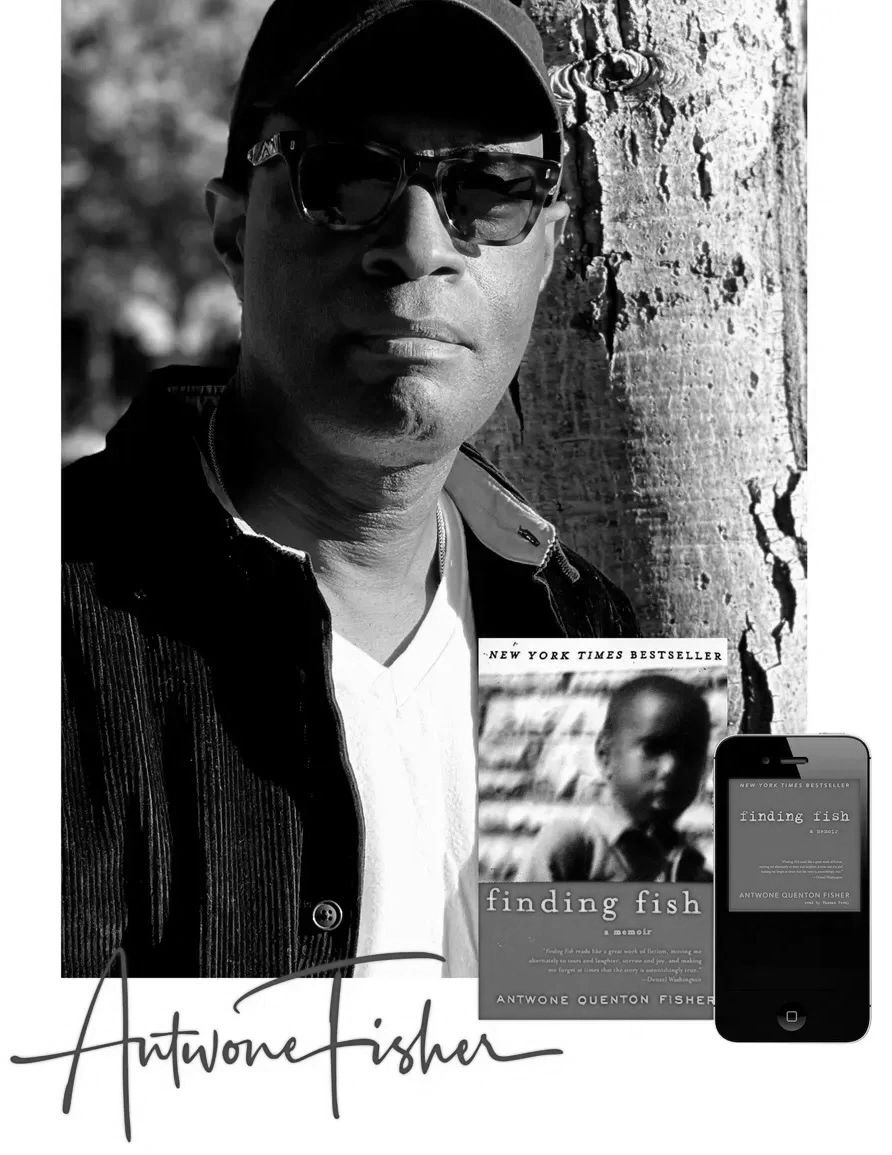
Antwone Fisher is an acclaimed American screenwriter, author, and producer whose life story serves as a profound testament to human resilience. Born in a correctional facility and raised within a traumatic foster care environment, Fisher overcame homelessness and abuse to become a successful filmmaker, most notably for the 2002 biographical film Antwone Fisher and his memoir Finding Fish.
The journey of Antwone Fisher is not merely a "rags-to-riches" Hollywood narrative; it is a complex study of the American foster care system, the search for identity, and the power of storytelling as a tool for healing. As of 2026, Fisher remains a prominent figure in the entertainment industry and a dedicated advocate for child welfare, using his platform to reform the systems that once failed him.
Early Life and the Challenges of the Foster Care System
Antwone Quenton Fisher was born on August 3, 1959, in the Ohio Reformatory for Women in Marysville, Ohio. His birth occurred under tragic circumstances; his father, Eddie Elkins, had been fatally shot by a former girlfriend just months before Antwone was born. His mother, Eva Mae Fisher, was incarcerated at the time of his birth and was unable to care for him.
Within weeks of his birth, Fisher was placed into the custody of the state. He spent his first two years in a loving foster home, but he was eventually moved to the home of the Picketts—a decision that would define the next fourteen years of his life. The Pickett household, led by the Reverend and Mrs. Pickett, was a site of extreme physical, emotional, and sexual abuse. Fisher often speaks about the psychological toll of being told he was worthless and "unwanted" by the very people tasked with his care.
During this period, the social services system failed to detect the ongoing trauma. Fisher’s experiences highlight a dark era in child welfare where oversight was minimal, and the voices of foster children were often ignored. Despite the darkness of these years, Fisher found solace in his imagination and a growing interest in the arts, which served as a survival mechanism during his most difficult moments.
The Transition to Adulthood: Homelessness and the Navy
At age 17, Fisher was "aged out" of the foster care system. With no family support and no financial resources, he was sent to a George Junior Republic school, a reformatory-style institution for troubled youth. After leaving the institution, he found himself homeless on the streets of Cleveland, Ohio. This period represented a critical juncture in his biography, as he faced the high probability of incarceration or premature death that often plagues former foster youth.
In a move to change his trajectory, Fisher joined the United States Navy in the late 1970s. The military provided the structure, discipline, and stability that had been absent throughout his childhood. During his eleven-year tenure in the Navy, Fisher served as a logistics specialist and spent significant time stationed in Japan.
It was during his service that Fisher sought psychiatric help to deal with his volatile temper—a symptom of his repressed childhood trauma. He was treated by Dr. Jerome Davenport, a Navy psychiatrist who encouraged Fisher to confront his past and seek out his biological family. This relationship became the emotional core of his later screenplay and was instrumental in his transition from a survivor to a storyteller.
Finding Roots and Reclaiming Identity
Empowered by his progress in therapy, Fisher began the arduous process of tracing his lineage. His search led him back to Cleveland, where he discovered the Elkins family. Unlike the rejection he feared, he was welcomed with open arms by his father’s relatives. This discovery provided him with a sense of belonging and a historical context for his existence.
The most poignant moment of his search was meeting his biological mother, Eva Mae Fisher. The encounter was not a Hollywood-style reconciliation but a complex, bittersweet realization. He discovered a woman who had been broken by her own life circumstances, which helped Fisher move toward forgiveness and closure. This chapter of his life is a cornerstone of the "Antwone Fisher biography" because it marks the shift from a man defined by his lack of family to a man defined by his understanding of his heritage.
The Path to Hollywood: From Security Guard to Screenwriter
After leaving the Navy with an honorable discharge, Fisher moved to Los Angeles. He secured a job as a security guard at Sony Pictures Studios. While guarding the gates of the studio, Fisher began telling his life story to anyone who would listen, including producers and executives.
His storytelling caught the attention of producer Todd Black, who recognized the cinematic potential of Fisher's journey. Black encouraged Fisher to write the screenplay himself. Despite having no formal training in screenwriting, Fisher spent years honing his craft. He reportedly wrote over forty drafts of the screenplay, a process that required him to relive his trauma repeatedly to achieve the necessary emotional honesty.
In 2001, prior to the film's release, Fisher published his autobiography, Finding Fish. The book became a New York Times bestseller and established him as a serious literary talent. The subsequent 2002 film, Antwone Fisher, directed by and starring Denzel Washington, received critical acclaim and multiple awards, catapulting Fisher into the global spotlight.
Professional Achievements and Literary Contributions
Fisher's career did not stop with his debut success. He transitioned into a multifaceted career as a screenwriter, producer, and author. His work consistently explores themes of family, masculinity, and the African American experience.
Key Works and Contributions
| Title | Year | Format | Primary Role |
|---|---|---|---|
| Finding Fish | 2001 | Memoir | Author |
| Antwone Fisher | 2002 | Film | Screenwriter / Producer |
| Who Will Cry for the Little Boy? | 2003 | Poetry | Author |
| ATL | 2006 | Film | Screenwriter |
| A Boy Should Know How to Tie a Tie | 2010 | Guide/Memoir | Author |
| The Blue Cherry Tree | 2021 | Novel | Author |
Beyond film, Fisher has authored poetry and instructional books. A Boy Should Know How to Tie a Tie: And Other Lessons for Succeeding in Life is particularly significant, as it offers the fatherly advice he never received to a new generation of young men. As of 2026, he continues to develop television projects and independent films that focus on social justice and personal transformation.
Impact on Social Policy and Advocacy
Perhaps the most enduring legacy of Antwone Fisher is his work outside of Hollywood. He has become one of the most influential voices for foster care reform in the United States. He frequently testifies before Congress and works with organizations such as the Child Welfare League of America.
Fisher advocates for:
- Increased oversight of foster homes to prevent the abuse he suffered.
- Better transition programs for youth aging out of the system.
- Family preservation initiatives that help biological parents stabilize their lives.
His story has been used as a case study for social workers and psychologists to understand the long-term effects of childhood trauma and the importance of resilience. By turning his private pain into a public mission, Fisher has influenced legislation and helped improve the lives of thousands of children in the state system.
Artistic Style and Philosophy
Fisher’s writing is characterized by its "unflinching honesty" and "emotional accessibility." He avoids the sensationalism often found in stories of abuse, choosing instead to focus on the internal psychological journey of his characters. He often states that his goal is not to elicit pity, but to provide a roadmap for others who are lost.
In his screenwriting, he emphasizes the importance of the "found family"—the mentors, friends, and strangers who step in when biological families are absent. This philosophy is evident in both his work on Antwone Fisher and his contributions to other projects like ATL, where community ties serve as a safety net for the protagonists.
Frequently Asked Questions
Is the movie "Antwone Fisher" a true story?
Yes, the movie is based on the real-life experiences of Antwone Fisher as detailed in his memoir Finding Fish. While some cinematic liberties were taken for pacing and narrative flow, the core events—including the abuse by the Picketts, his time in the Navy, and the search for his family—are factually accurate.
Who played Antwone Fisher in the film?
Derek Luke played the title role in the 2002 film. This was Luke's breakout performance, for which he won several awards, including the Independent Spirit Award for Best Male Lead. Denzel Washington played the role of the Navy psychiatrist, Dr. Jerome Davenport.
What is Antwone Fisher doing in 2026?
In 2026, Antwone Fisher continues to work as a screenwriter and producer in Hollywood. He is also a sought-after motivational speaker and remains deeply involved in child welfare advocacy. He recently released a new collection of essays focusing on the intersection of art and healing.
Did Antwone Fisher ever forgive his foster parents?
In his writings and interviews, Fisher describes a complex process of moving past the anger associated with the Pickett family. While he does not "excuse" the abuse, he has spoken about the importance of releasing the burden of hatred in order to live a productive life. He chose to focus his energy on his own family and his advocacy work rather than remaining tethered to his abusers.
How many siblings does Antwone Fisher have?
Through his search for the Elkins family, Fisher discovered he had several half-siblings. Reconnecting with them was a significant part of his journey toward establishing his identity and understanding his father's side of the family.
Final Recommendation
For those interested in the full depth of Antwone Fisher’s biography, the best course of action is to read his memoir, Finding Fish, in conjunction with watching the 2002 film. While the film provides a powerful visual and emotional summary, the book offers a more granular look at the systemic issues within the foster care system and the internal dialogue of a survivor. Fisher’s life remains a primary resource for anyone studying the impact of childhood trauma or the mechanics of professional screenwriting in the modern era.