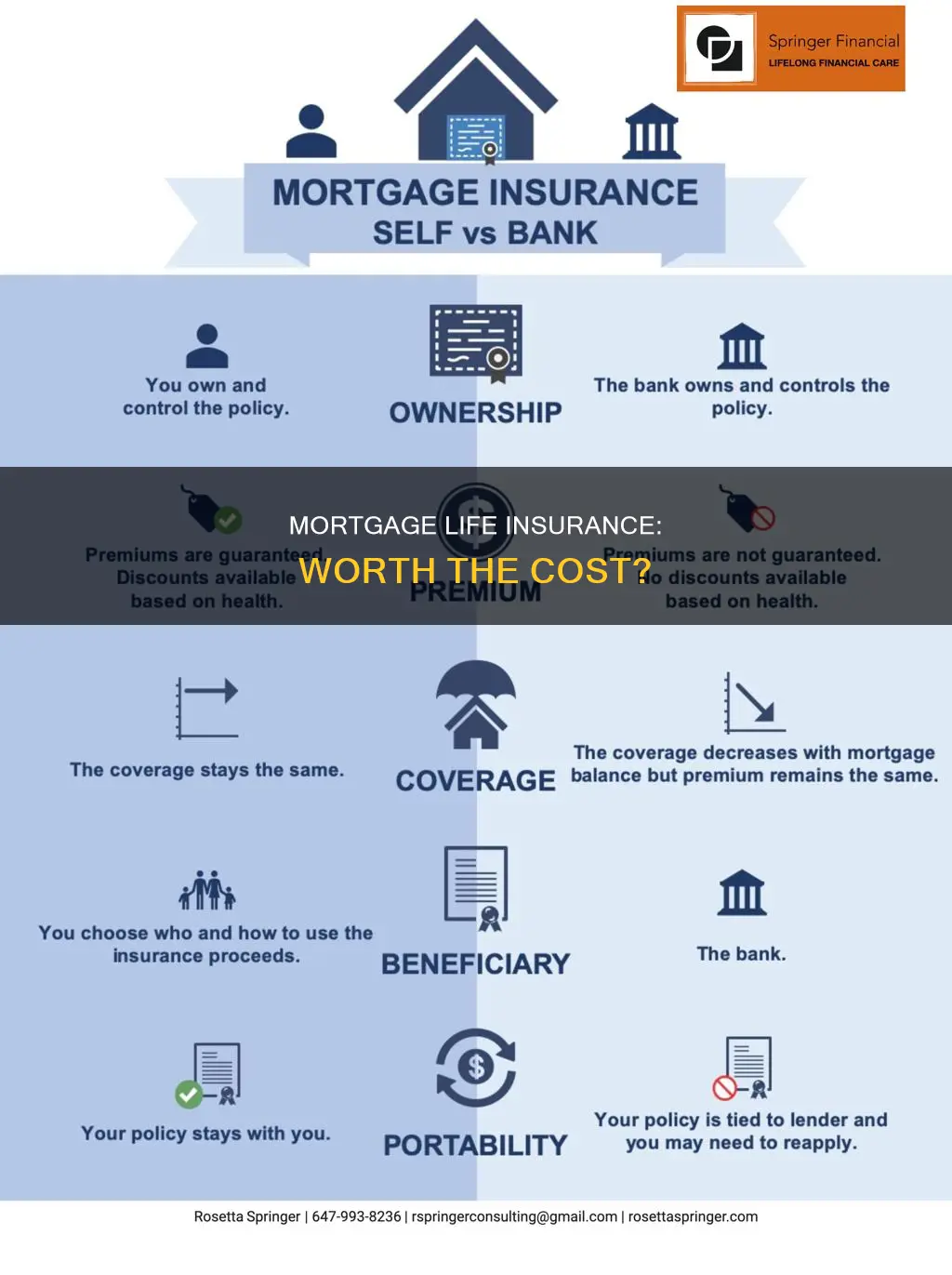
Mortgage life insurance, commonly referred to as mortgage protection insurance (MPI), is a specialized policy designed to pay off your remaining mortgage balance if you pass away. Unlike traditional life insurance, the death benefit is typically paid directly to your lender, ensuring that your survivors can remain in their home without the burden of ongoing debt.
The Fundamental Mechanics of Mortgage Protection Insurance
Mortgage life insurance operates as a financial safety net specifically tied to your home loan. In the United States, these policies are often offered by lenders during the home-buying process or through direct mail by insurance carriers that monitor public records of new mortgages. As of 2026, the market for MPI has become increasingly digital, with many carriers offering "instant-issue" policies that skip the traditional lengthy underwriting process.
The primary mechanism of a standard MPI policy is the decreasing term structure. In this arrangement, the death benefit—the amount the insurance company pays out—decreases over time in tandem with your mortgage balance. For example, if you start with a $400,000 mortgage and pass away ten years later when the balance is $320,000, the policy pays exactly $320,000 to the lender. This ensures the debt is cleared, but it also means that the value of the policy diminishes while premiums usually remain level.
Some modern variations in 2026 offer a "level-benefit" rider. Under this structure, the death benefit stays the same throughout the life of the policy. If the payout exceeds the remaining mortgage balance, the surplus is paid to the designated beneficiaries (usually the family). This hybrid approach attempts to bridge the gap between niche mortgage protection and general-purpose life insurance.
Distinguishing MPI from Private Mortgage Insurance (PMI)
One of the most frequent points of confusion for American homeowners is the difference between Mortgage Life Insurance (MPI) and Private Mortgage Insurance (PMI). While the acronyms are similar, their functions are diametrically opposed regarding who they protect.
Private Mortgage Insurance (PMI) is typically required by lenders when a buyer puts down less than 20% of the home's purchase price. The purpose of PMI is to protect the lender if the borrower defaults on the loan. It does not provide any benefit to the homeowner's family in the event of death or disability.
Mortgage Life Insurance (MPI), conversely, is an optional coverage designed to protect the borrower’s family. It ensures that the home is paid for if the primary breadwinner passes away. While the lender receives the check, the family receives the equity and the security of a debt-free home. Understanding this distinction is critical for financial planning, as paying for PMI does not fulfill the need for life insurance coverage.
Key Features and Common Policy Riders
As we navigate the insurance landscape in 2026, MPI policies have evolved to include more than just a death benefit. Many carriers now bundle "living benefits" into the core policy or offer them as optional riders. These additions make the coverage more versatile for homeowners who may face financial hardships other than death.
- Disability Income Rider: This provision pays your monthly mortgage installments for a specified period (e.g., 12 to 24 months) if you become totally disabled and unable to work.
- Involuntary Unemployment Rider: In an era of shifting economic landscapes, this rider covers mortgage payments for a short duration if the policyholder is laid off.
- Terminal Illness Rider: This allows the policyholder to accelerate a portion of the death benefit if they are diagnosed with a terminal condition, providing funds for end-of-care costs or mortgage pay-down before death.
- Return of Premium (ROP): Some 2026 policies include an ROP feature. If you outlive the term of your mortgage and the insurance was never used, the carrier returns a portion (or all) of the premiums paid. These policies are significantly more expensive but act as a forced savings vehicle.
Cost Determinants and Premium Structures
The cost of mortgage life insurance in the United States is influenced by several variables, though it is generally structured differently than traditional term life insurance. Because many MPI policies are guaranteed issue or simplified issue, they do not require a medical exam. This convenience comes at a price.
- Mortgage Amount: The primary driver of the premium is the initial size of the loan. A $500,000 policy will naturally cost more than a $200,000 policy.
- Age and Health: Even simplified issue policies will ask basic health questions. Older applicants or those with known health risks will face higher rates.
- Policy Type: Level-benefit policies are more expensive than decreasing-term policies.
- Riders: Each additional feature, such as disability or unemployment coverage, adds a specific increment to the monthly premium.
In the current 2026 market, premiums are typically paid monthly and can sometimes be rolled into the mortgage escrow account, though most financial advisors recommend paying the insurance carrier directly to maintain better control over the policy.
Comparing Mortgage Life Insurance and Traditional Term Life Insurance
For most homeowners, the choice comes down to a dedicated mortgage policy or a standard term life insurance policy. Below is a comparison to help determine which fits your specific financial strategy.
| Feature | Mortgage Life Insurance (MPI) | Traditional Term Life Insurance |
|---|---|---|
| Beneficiary | Usually the Lender | Choice of Individual(s) |
| Death Benefit | Often Decreasing (matches loan) | Level (remains constant) |
| Medical Exam | Often Not Required | Usually Required for Best Rates |
| Flexibility | Funds must pay off mortgage | Funds can be used for any purpose |
| Portability | May end if mortgage is refinanced | Stays with you regardless of debt |
| Cost | Generally higher per $1,000 of cover | Generally lower for healthy individuals |
Advantages of Choosing Mortgage Life Insurance
Despite the popularity of traditional term life insurance, MPI holds a specific and valuable place in the U.S. insurance market. It is particularly beneficial for certain demographics that might find traditional underwriting prohibitive.
The most significant advantage is ease of access. For individuals with pre-existing medical conditions—such as diabetes, high blood pressure, or a history of heart issues—securing a traditional term policy can be difficult or prohibitively expensive. Because many MPI providers offer "guaranteed issue" coverage, these homeowners can still secure protection for their families without undergoing a physical exam or blood tests.
Additionally, MPI provides targeted protection. For families who are disciplined about their budget but worry specifically about losing the family home, MPI ensures that the single largest monthly expense is eliminated. It removes the decision-making burden from a grieving spouse; they do not have to decide whether to use insurance proceeds for the mortgage, college tuition, or daily living expenses—the mortgage is simply gone.
Potential Drawbacks and Limitations
While the simplicity of MPI is attractive, there are several limitations that homeowners must consider before signing a contract. The foremost concern is inflexibility. If the lender is the beneficiary, your family never touches the money. This can be a disadvantage if, upon your passing, your family would rather use the funds for higher-interest debt, medical bills, or relocation.
Another concern is refinancing. In the United States, homeowners frequently refinance their mortgages to take advantage of lower interest rates. Some MPI policies are tied to the specific loan number or lender. If you refinance, you may need to apply for a new policy, and if your health has declined in the interim, your premiums could skyrocket or you may be denied coverage.
Lastly, the declining value of the policy is an actuarial disadvantage. You are paying a level premium for a benefit that gets smaller every month as you pay down your principal. From a pure "value for money" perspective, traditional term life insurance often outperforms MPI because the payout remains high while the mortgage balance drops, leaving extra cash for the survivors.
How to Apply for Coverage in 2026
The application process for mortgage life insurance has become streamlined. Most homeowners receive an offer in the mail shortly after closing on their home. However, you can apply at any time during the life of your mortgage.
- Request Quotes: Contact your lender or an independent insurance broker who specializes in mortgage protection.
- Select Benefit Type: Decide between decreasing term (cheaper) or level benefit (more comprehensive).
- Review Riders: Determine if you need additional protections like disability or involuntary unemployment coverage.
- Complete Simplified Underwriting: Most applications involve a short questionnaire about your tobacco use, major health history, and age.
- Beneficiary Designation: Confirm whether the payout goes to the lender or a personal beneficiary. If your lender requires the insurance as a condition of a high-risk loan, they will likely be the primary beneficiary.
Common Questions About U.S. Mortgage Life Insurance
Is mortgage life insurance mandatory in the United States?
No, mortgage life insurance is not a federal or state requirement for obtaining a home loan. It is an optional product. However, it is often confused with Private Mortgage Insurance (PMI), which is mandatory for many loans with low down payments. While a lender cannot force you to buy MPI, they may strongly encourage it as part of a comprehensive financial plan.
Can I cancel my MPI policy if I no longer want it?
Yes, you can generally cancel a mortgage life insurance policy at any time. Unlike a mortgage contract, the insurance is a separate agreement. If you find that you have enough equity in your home or have purchased a traditional life insurance policy that covers your debts, you can stop paying the MPI premiums, and the coverage will lapse.
What happens to the policy if I sell my house?
If you sell your home and pay off the mortgage, the "insurable interest" usually disappears. Most MPI policies will terminate upon the sale of the property. If you have a policy with a "return of premium" rider, you may be eligible for a partial refund of your paid premiums at this stage, depending on the specific terms of your contract.
Does mortgage life insurance cover suicide?
Like most life insurance policies in the United States, MPI typically includes a suicide clause. This clause generally states that if the policyholder dies by suicide within the first two years of the policy (the "contestability period"), the death benefit will not be paid, although the premiums may be refunded to the estate. After the two-year mark, the policy usually covers death by suicide.
Is the payout from mortgage life insurance taxable?
In the United States, life insurance death benefits are generally not subject to federal income tax. Because the money from an MPI policy is typically paid directly to the lender to extinguish a debt, there is no "income" realized by the heirs. However, for very large estates, the value of the home (now debt-free) could contribute to the overall valuation of the estate for estate tax purposes.
Final Recommendation for Homeowners
Mortgage life insurance serves as a vital tool for those who prioritize home security above all else or those whose health makes traditional life insurance unattainable. If you are in excellent health, you will likely find better value and greater flexibility in a high-quality term life insurance policy. However, if you want a "no-fuss" solution that specifically guarantees your family will never lose their home due to a lack of mortgage funds, MPI is a reliable choice.
Before committing, always compare the cost of a level-term life policy against the MPI quote you received. Ensure you understand whether the benefit decreases over time and exactly who receives the check upon your passing. In 2026, with the variety of riders and digital platforms available, there is no reason to settle for a policy that doesn't align perfectly with your family's long-term financial stability.