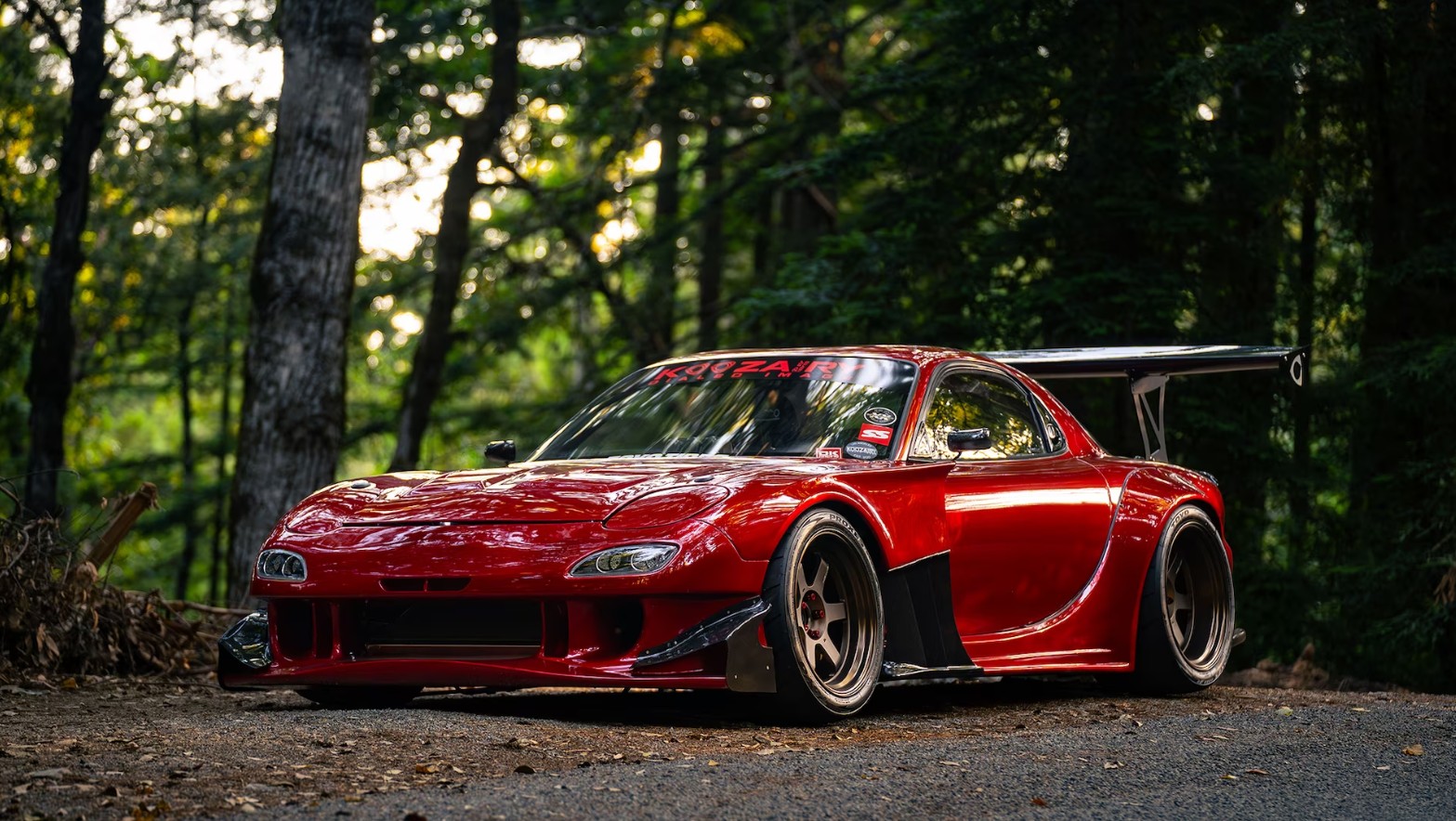
The Mazda RX series represents a lineage of rotary-powered vehicles that defined Mazda’s engineering identity for over four decades. Beginning with the RX-2 in 1970 and culminating with the RX-8, these "Rotary eXperiment" models utilized Wankel engines to achieve high power-to-weight ratios and unique driving dynamics across coupes, sedans, and wagons.
The Mazda RX series is not merely a collection of sports cars; it is a decades-long testament to a specific engineering philosophy. While most manufacturers abandoned the Wankel rotary engine due to its inherent thermal and sealing challenges, Mazda doubled down, refining the technology through seven distinct production models. As of 2026, these vehicles have transitioned from quirky enthusiast cars to blue-chip collectibles, with the RX-7 and RX-8 serving as the primary touchstones for the brand's performance heritage.
Understanding the RX lineup requires a look at how Mazda integrated the rotary engine into various segments, from family-oriented sedans of the early 1970s to the purebred, twin-turbocharged sports cars of the late 1990s.
The Origins of the RX Name and Rotary Philosophy
The "RX" moniker stands for Rotary eXperiment, a designation Mazda applied to its export-market rotary vehicles. While the Japanese domestic market (JDM) often used names like Capella, Savanna, or Luce, the RX branding became the global standard for Mazda’s high-revving, piston-less fleet.
The heart of every RX model is the Wankel engine. Unlike traditional reciprocating engines, the Wankel uses triangular rotors spinning inside an epitrochoid-shaped housing. This design allows for three power strokes per revolution of the rotor, resulting in exceptional smoothness and a high power output relative to the engine's physical size and displacement.
The Experimental Roots: Mazda RX-1?
Technically, there was no production "RX-1." The lineage began after Mazda proved the rotary concept with the Cosmo Sport 110S in 1967. The Cosmo was the proof of concept, but the RX series was the effort to mass-produce the technology for the global market. The numbering system initially followed the sequence of development and chassis size rather than a strict chronological release.
Mazda RX-2 (1970–1978): The First Global Rotary
The Mazda RX-2, based on the Mazda Capella, was the first model to carry the RX badge. It was a pivotal vehicle because it proved that the rotary engine was not just for niche halo cars like the Cosmo, but could power a mainstream family vehicle.
Available as both a coupe and a four-door sedan, the RX-2 was powered by the 12A engine, a twin-rotor unit displacing 1.1 liters. By 1970 standards, the RX-2 was a "giant killer." It produced roughly 120 to 130 horsepower, allowing it to outperform many contemporary V6 and even some V8 competitors in a much lighter package.
The RX-2 featured a sophisticated suspension for its time, utilizing a MacPherson strut front and a coil-sprung live axle with trailing arms in the rear. This setup gave it a reputation for agile handling, setting the stage for Mazda’s "Zoom-Zoom" brand identity long before that slogan was officially coined.
Mazda RX-3 (1971–1978): The Racing Icon
If the RX-2 was the proof of concept for mass production, the RX-3 (known as the Savanna in Japan) was the model that established Mazda’s racing pedigree. Smaller and lighter than the RX-2, the RX-3 was available as a coupe, sedan, and—most interestingly—a station wagon.
The RX-3 is legendary in Japanese motorsport history for ending the dominant winning streak of the Nissan Skyline GT-R in the early 1970s. Its power-to-weight ratio made it a formidable force on the track. Early models used the 10A engine, while later versions transitioned to the more robust 12A.
For modern collectors in 2026, the RX-3 wagon remains one of the most sought-after oddities in the automotive world, blending the practicality of a 1970s long-roof with the high-RPM scream of a rotary engine.
Mazda RX-4 (1972–1977): The Rotary Luxury Tourer
As the 1970s progressed, Mazda sought to move the rotary engine upmarket. The RX-4 (based on the Mazda Luce) was larger, heavier, and more luxurious than its predecessors. It was marketed as a "personal luxury car" and was available as a hardtop coupe, sedan, and station wagon.
The RX-4 is historically significant for introducing the 13B engine in 1974. The 13B would go on to become the most famous and longest-produced rotary engine in Mazda's history. With its larger displacement (1.3 liters) and improved apex seals, the RX-4 offered smoother torque delivery, which was necessary to move the car’s increased mass.
However, the RX-4 faced a major hurdle: the 1973 oil crisis. The rotary engine’s high fuel consumption became a significant liability, leading Mazda to focus heavily on the "Thermal Reactor" system to reduce emissions, though this often came at the cost of even higher fuel use.
Mazda RX-5 (1975–1981): The Cosmo AP
The RX-5, sold as the Cosmo AP (Anti-Pollution) in Japan, was an attempt to create a premium grand tourer. It featured distinctive "opera windows" and a more formal, American-influenced styling.
The RX-5 was a departure from the sporty nature of the RX-3. It was heavy and focused on ride comfort and interior features. While it sold well initially in Japan, it struggled in export markets where the styling was polarizing and the fuel economy was poor compared to rising competitors from Toyota and Datsun. It remains one of the rarer RX models to find in good condition today.
The Mazda RX-7 (1978–2002): The Definitive Rotary Sports Car
The RX-7 is the most successful and recognizable member of the RX family. Spanning three distinct generations, it transitioned from an affordable sports car to a high-tech supercar competitor.
First Generation: SA22C / FB (1978–1985)
Launched in 1978, the first RX-7 was a revelation. It featured a front-mid-engine layout, where the compact 12A rotary was pushed behind the front axle to achieve near-perfect 50/50 weight distribution. With pop-up headlights and a sleek wedge shape, it was an instant hit.
In 1984, Mazda introduced the GSL-SE model, which featured the fuel-injected 13B engine, marking the beginning of the end for the carbureted rotary era.
Second Generation: FC3S (1985–1992)
The "FC" generation saw Mazda moving toward a more sophisticated, grand-touring approach, taking styling cues from the Porsche 944. This generation introduced:
- Turbocharging: The Turbo II model showcased the potential of forced induction on a rotary engine.
- DTSS (Dynamic Tracking Suspension System): A passive rear-wheel steering system that improved stability during high-speed cornering.
- Convertible Option: The FC was the first RX-7 to offer a factory convertible variant.
Third Generation: FD3S (1992–2002)
The FD RX-7 is widely considered one of the most beautiful cars ever designed. It was a "no-compromise" sports car, featuring a sequential twin-turbocharged 13B-REW engine.
The FD utilized a "Complex Surface" design philosophy, resulting in a timeless organic shape. Mechanically, it was a tour de force but also highly sensitive. The sequential turbo system used a complex web of vacuum lines to manage the transition between the primary and secondary turbos. While it offered incredible performance, it required meticulous maintenance, a trait that continues to define its reputation in 2026.
Mazda RX-8 (2003–2012): The Final Production Rotary
After a short hiatus following the FD RX-7's departure from global markets, Mazda released the RX-8. It was a radical departure, featuring a four-door "quad coupe" design with rear-hinged "freestyle" doors and a naturally aspirated 13B-MSP Renesis engine.
The Renesis engine moved the exhaust ports to the side of the housing (Multi-Side Port), which helped improve emissions and fuel efficiency compared to the peripheral ports used in the RX-7. However, the lack of a turbocharger meant the RX-8 lacked the raw torque of the FD, instead relying on a 9,000 RPM redline for power.
The RX-8 offered a more practical cabin and a chassis that many journalists praised as one of the best-handling of its era. Despite its practicality, it suffered from the same rotary-specific issues—oil consumption and apex seal wear—which, combined with tightening global emissions standards, led to its discontinuation in 2012.
Technical Specifications Comparison
| Model | Production Years | Engine Type | Est. Horsepower | Layout |
|---|---|---|---|---|
| RX-2 | 1970–1978 | 12A (2-Rotor) | 120–130 hp | FR / Sedan & Coupe |
| RX-3 | 1971–1978 | 10A / 12A | 110–125 hp | FR / Coupe, Sedan, Wagon |
| RX-4 | 1972–1977 | 12A / 13B | 125–135 hp | FR / Luxury Coupe/Wagon |
| RX-5 | 1975–1981 | 13B | 135 hp | FR / Grand Tourer |
| RX-7 (FB) | 1978–1985 | 12A / 13B | 100–135 hp | FR / Sports Car |
| RX-7 (FC) | 1985–1992 | 13B / 13B-T | 146–200+ hp | FR / Sports GT |
| RX-7 (FD) | 1992–2002 | 13B-REW | 255–276 hp | FR / High-Performance |
| RX-8 | 2003–2012 | 13B-MSP | 197–232 hp | FR / Quad-Coupe |
Maintenance and Reliability of RX Models
The primary concern for any owner of a Mazda RX model is the apex seals. These are the seals at the tips of the rotors that separate the combustion chambers. Because they slide against the housing walls, they are subject to constant friction.
In 2026, the community has developed several "best practices" to ensure longevity:
- Premixing: Adding a small amount of two-stroke oil to the fuel to provide extra lubrication for the apex seals.
- Ignition Health: Rotary engines are notoriously sensitive to spark plug and coil health; a weak spark can lead to carbon buildup and engine failure.
- Cooling: Heat is the enemy of the rotary engine. Upgraded radiators are a standard modification for RX-7 FD owners to prevent warping the housings.
- The "Italian Tune-up": Rotary engines need to be revved high regularly to burn off carbon deposits that can cause the seals to stick.
The Future: Rotary in the Modern Era (2026 Status)
While the RX-8 was the last "RX" production car, Mazda has not abandoned the rotary. In 2023, Mazda introduced the MX-30 R-EV, which uses a small 830cc rotary engine as a range extender for an electric drivetrain.
In early 2024, Mazda officially re-launched its "Rotary Engine Development Group," fueling rumors of a spiritual successor to the RX-7. The Iconic SP concept, showcased recently, hints at a high-performance rotary-hybrid sports car. For enthusiasts in 2026, the hope is that a new "RX-9" will eventually utilize this technology to combine the soul of the RX series with the efficiency requirements of the modern world.
Further information on the history of the Wankel engine can be found through the Society of Automotive Engineers (SAE), while specific historical production data is often archived by Mazda’s Official Heritage collection.
Frequently Asked Questions
Why did Mazda stop making RX models?
Mazda discontinued the RX-8 primarily due to the 13B-MSP engine's inability to meet stricter Euro 5 emissions standards. Rotary engines inherently struggle with high hydrocarbon emissions because of the way they burn oil and the shape of their combustion chambers, which prevents complete fuel combustion at low loads.
Is the Mazda RX-7 better than the RX-8?
"Better" depends on the use case. The RX-7 FD is a superior performance car and a more valuable collectible, featuring twin-turbo power and a lighter chassis. The RX-8 is a better "car" for daily use, offering four seats, a more modern interior, and more predictable handling, though it lacks the raw speed of its predecessor.
What does the "RX" in Mazda RX mean?
The "RX" stands for Rotary eXperiment. It was the prefix used for most Mazda export vehicles that featured the Wankel rotary engine, starting with the RX-2 in 1970.
Are rotary engines reliable?
Rotary engines can be reliable if maintained specifically for their needs. They are prone to apex seal wear and require frequent oil level checks. However, they have fewer moving parts than piston engines (no valves, cams, or timing belts), meaning they can withstand high RPMs for longer periods without catastrophic mechanical failure, provided they are kept cool and lubricated.
Which RX model is the most expensive?
As of 2026, the Mazda RX-7 FD3S Spirit R (the final edition) is the most expensive and sought-after model. In pristine condition, these can reach prices exceeding $150,000. Rare versions of the RX-3 wagon and the RX-2 are also rapidly appreciating in the collector market.
Recommendation for Prospective Owners
If you are considering entering the world of Mazda RX ownership in 2026, start with a well-documented RX-8 Series II (2009–2012). These models received significant engine and oiling system upgrades that resolved many of the early reliability issues. For collectors with a larger budget, the RX-7 FC Turbo II offers the best balance of 1980s aesthetic, turbo performance, and relative mechanical simplicity compared to the complex sequential system of the FD. Regardless of the model, always perform a rotary-specific compression test before purchasing to verify the health of the engine's seals.