All you can eat buffalo wings promotions offer an unlimited supply of deep-fried, sauce-tossed chicken wings for a fixed price, typically structured around weekly restaurant specials, sporting events, or competitive eating challenges. Mastering these deals requires understanding restaurant economics, portion sizing, pacing strategies, and navigating menu fine print to ensure both satisfaction and culinary success.
The Economics and Appeal of Unlimited Wings
The enduring popularity of all you can eat buffalo wings rests at the intersection of consumer psychology and restaurant business models. For the diner, the proposition appears straightforward: pay a flat rate, usually ranging from fifteen to thirty dollars depending on the market and venue, and consume as many wings as physical capacity allows. This creates a perceived value, especially in eras marked by fluctuating poultry prices and inflation. Consumers naturally attempt to "beat the house" by consuming quantities that would far exceed the flat-rate price if ordered a la carte.
From the restaurant perspective, unlimited wing nights are carefully calculated loss leaders or volume-driven promotions. Establishments factor in the average human consumption capacity, which rarely exceeds two to three dozen wings even among enthusiastic eaters. Furthermore, restaurants offset the low profit margins—or temporary losses—on the poultry itself by driving high-margin ancillary sales. Diners participating in all you can eat promotions almost invariably purchase beverages, side dishes such as french fries or celery and carrots, and desserts. Additionally, these promotions fill dining rooms during historically slow periods, such as weeknights or the off-season for major sports.
Understanding how restaurants manage these promotions helps explain why specific rules and limitations exist. Establishments rarely implement completely unconditional offers. Margins are protected by strict structural limitations designed to prevent extreme outliers from destabilizing the promotion's profitability, making it essential for diners to read the fine print before placing an order.
Common Operational Rules and Restrictions
Participating in an all you can eat buffalo wings promotion requires navigating a specific set of rules established by the venue. While these rules vary from one establishment to another, certain industry-standard conditions appear consistently across sports bars, casual dining chains, and independent pubs. Recognizing these constraints prevents misunderstandings with service staff and ensures a smooth dining experience.
| Rule Type | Typical Restaurant Restriction |
|---|---|
| Time Limits | Usually capped at 90 minutes to 2 hours per seating. |
| Sharing Policy | Strictly prohibited; strictly for single-person dining. |
| Ordering Increments | Subsequent rounds require finishing the current batch. |
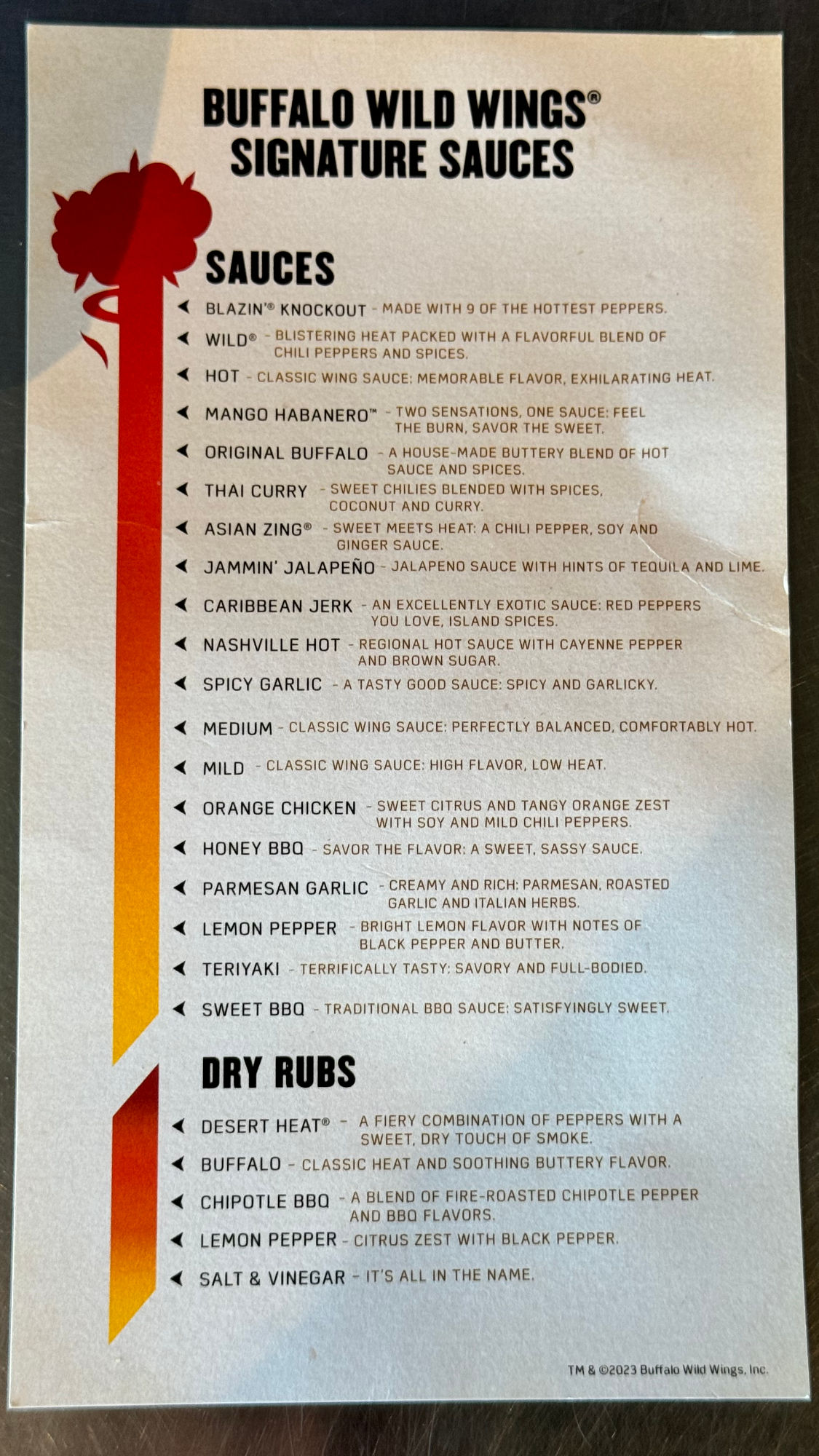
| Flavor Restrictions | May limit choices to traditional sauces (Mild/Hot/BBQ). |
| Waste Penalties | Extra charges per ounce for uneaten meat left on bones. |
Time limits represent the most common restriction. Restaurants cannot afford to tie up tables indefinitely while a single customer slowly digests over a multi-hour period. Most promotions enforce a window of ninety minutes to two hours, which provides ample time for multiple rounds of food without causing severe table bottlenecks.
Another nearly universal rule prohibits sharing. The flat rate applies strictly to a single individual. Passing wings to a dining companion who ordered a standard menu item violates the terms of the promotion and often results in the table being billed for multiple unlimited packages or a la carte pricing. Similarly, many venues require every person at a specific table to opt into the promotion if anyone at that table chooses it, preventing stealth-sharing across plates.
Waste prevention policies are also rigorously enforced. To discourage customers from ordering excessive quantities out of ambition and leaving half-eaten food behind, restaurants frequently implement "no waste" clauses. These policies may involve charging an additional fee per ounce for leftover meat left on the bones, or requiring diners to completely finish their current batch of wings before placing an order for the next round.
Strategic Approaches to Maximizing Value and Comfort
Approaching an unlimited wing promotion with a clear strategy prevents premature satiation and physical discomfort. The anatomy of a chicken wing dictates that while they are delicious, they are also dense with protein, fat, and heavy sauce. Without proper pacing and technique, a diner will hit a wall long before achieving true value or culinary fulfillment.
The pacing of orders is critical. Ordering four dozen wings all at once is a common mistake; the food cools down, the skin loses its crispness, and the sheer visual volume can induce psychological fatigue. Instead, experienced diners recommend ordering in manageable increments of six to ten wings per round. This ensures that every batch arrives hot, fresh, and crispy, while allowing the body time to register satiety signals without triggering an abrupt stop.
Sauce selection also impacts endurance. Heavy, butter-heavy traditional buffalo sauces, while classic, combine with the natural fat of the chicken skin to create a rich culinary profile that coats the palate quickly. Alternating between a traditional hot sauce and a lighter option—such as a tangy vinegar-based or garlic-parm style, if permitted by the promotion—can combat palate fatigue. Furthermore, utilizing the traditional accompaniments of celery and carrots is not merely decorative; the high water and fiber content helps clear the palate and aids in digestion.
Bone-eating efficiency determines how quickly and cleanly a diner can move through their meal. Proper technique involves pulling the bones apart or cleanly stripping the meat in minimal motions, which reduces hand fatigue and speeds up consumption without requiring rushed eating. Rushing leads to swallowing air and poorly chewed food, which cuts the dining experience short due to premature fullness.
Nutritional Considerations and Health Impacts
While all you can eat buffalo wings provide a festive dining experience, they present distinct nutritional challenges that merit consideration. A single traditional buffalo wing—deep-fried and tossed in a sauce composed largely of cayenne pepper sauce and melted butter—typically contains between 80 to 120 calories, alongside significant amounts of saturated fat and sodium.
Multiplying these figures across a multi-dozen session reveals a massive intake of sodium and fat. A single meal can easily exceed the recommended daily allowance for sodium and saturated fats, which can cause temporary discomfort, bloating, and water retention. Individuals with specific health conditions, such as hypertension, cardiovascular concerns, or severe acid reflux, should exercise caution, as the combination of deep-fried lipids, capsaicin from hot sauce, and high sodium content can trigger acute physical discomfort.
Balancing these meals involves practical moderation outside the immediate context of the promotion. Hydration is essential both during and after the meal, as high sodium levels require increased water intake to maintain electrolyte balance. Incorporating lighter, fiber-rich meals before and after a heavy wing session helps support overall digestive comfort.
Frequently Asked Questions
Can I take leftover all you can eat buffalo wings home in a box?
No. Almost all restaurants explicitly prohibit doggy bags or takeout boxes for unfinished all you can eat items. The promotion is priced strictly for dine-in consumption to prevent customers from ordering massive quantities at the end of their meal specifically to take home for future meals.
Are boneless wings included in all you can eat promotions?
It depends entirely on the specific restaurant's policy. Some venues offer the promotion exclusively for traditional bone-in wings, while others include boneless wings or allow diners to mix and match between the two styles for a slight upcharge. Always verify the menu description before ordering.
What happens if I get full and cannot finish my last plate of wings?
If the restaurant enforces a strict anti-waste policy, you may be charged a per-piece or per-pound penalty fee for the uneaten meat left on your plate. To avoid this, always scale down your final ordering increment to just two or three wings if you feel your appetite waning.
Do all you can eat wing specials include drinks and sides?
Standard flat-rate pricing for all you can eat wings almost never includes beverages, tax, gratuity, or side dishes like french fries. Drinks and sides are billed separately at regular menu prices, which is how restaurants maintain profitability during these promotional events.
Are children allowed to order from the all you can eat wing menu?
Many restaurants permit children to participate, often at a reduced flat rate reflecting smaller portions or lower expected consumption. However, some locations restrict the promotion to adults or establish a minimum age requirement, so checking the restaurant's specific guidelines beforehand is recommended.
Next Steps and Venue Selection
When planning your next outing for all you can eat buffalo wings, begin by researching local sports bars and casual dining chains in your area, paying close attention to which nights of the week they host their promotions. Call ahead or check their official social media pages to confirm current pricing, active time limits, and any specific flavor exclusions. By understanding the rules, pacing your orders, and keeping practical limitations in mind, you can enjoy a satisfying, cost-effective culinary experience without unexpected surprises.