As of 2026, the character of the Doctor has been portrayed by over 15 primary actors in the official television continuity, starting with William Hartnell in 1963 and continuing through to Ncuti Gatwa’s celebrated tenure. This lineage includes "numbered" Doctors, secret incarnations like the War Doctor, and pre-history versions revealed during the Timeless Child arc.
The concept of "all the Dr Whos" is no longer a simple linear list. Since the show's revival in 2005 and the massive lore expansions during the 60th-anniversary era, the history of the Time Lord has become a complex tapestry of regeneration, hidden pasts, and "bi-generation." To understand the Doctor is to understand how one soul has navigated centuries of travel in the TARDIS (Time and Relative Dimension in Space) while wearing dozens of different faces.
The Foundation of the Classic Era (1963–1989)
The original run of Doctor Who established the foundational lore that every subsequent era has built upon. During these 26 years, seven actors officially held the title, defining the trope of the "eccentric alien" in distinct ways.
The First Doctor: William Hartnell (1963–1966)
William Hartnell portrayed the Doctor as a stern, grandfatherly figure who was initially mysterious and somewhat callous. Along with his granddaughter Susan and two human teachers, he fled his home planet, Gallifrey. Hartnell’s era was defined by educational historical adventures and the introduction of the Daleks. His failing health led to the creation of "renewal" (later called regeneration), a narrative masterstroke that allowed the show to continue indefinitely with a new lead actor.
The Second Doctor: Patrick Troughton (1966–1969)
Patrick Troughton transformed the character into the "Cosmic Hobo." He was scruffier, more playful, and used a recorder to soothe his nerves. However, beneath the clownish exterior lay a sharp, calculating mind. Troughton’s era introduced the Cybermen as a recurring threat and ended with the first appearance of the Time Lords, who put the Doctor on trial and forced his next regeneration.
The Third Doctor: Jon Pertwee (1970–1974)
The Third Doctor was a "man of action" and a dandy. Exiled to Earth by the Time Lords, he worked as a scientific advisor to UNIT (United Nations Intelligence Taskforce). Pertwee’s Doctor was characterized by his velvet jackets, his vintage car "Bessie," and his mastery of Venusian Aikido. This era introduced the Master, the Doctor’s lifelong rival and fellow Time Lord.
The Fourth Doctor: Tom Baker (1974–1981)
For many, Tom Baker remains the definitive Doctor. With his iconic multi-colored scarf and penchant for jelly babies, he brought a bohemian, unpredictable energy to the role. Baker held the role for seven consecutive seasons, the longest tenure of any actor to date. His era saw the show lean into Gothic horror and philosophical sci-fi, solidifying the series as a global phenomenon.
The Fifth, Sixth, and Seventh Doctors (1981–1989)
The 1980s saw a rapid succession of Doctors:
- Peter Davison (The Fifth Doctor): A more vulnerable, youthful, and human Doctor who wore a cricket outfit and a piece of celery on his lapel.
- Colin Baker (The Sixth Doctor): Known for his abrasive personality and garish, multicolored coat. His era was marked by more violent stories and internal BBC politics.
- Sylvester McCoy (The Seventh Doctor): Initially comedic, McCoy’s Doctor evolved into a dark, chess-playing manipulator who sought to actively dismantle ancient evils.
The TV Movie and the Wilderness Years (1990–2004)
After the series was canceled in 1989, the Doctor’s journey continued largely in books and audio dramas. However, one significant televised appearance occurred during this gap.
The Eighth Doctor: Paul McGann (1996)
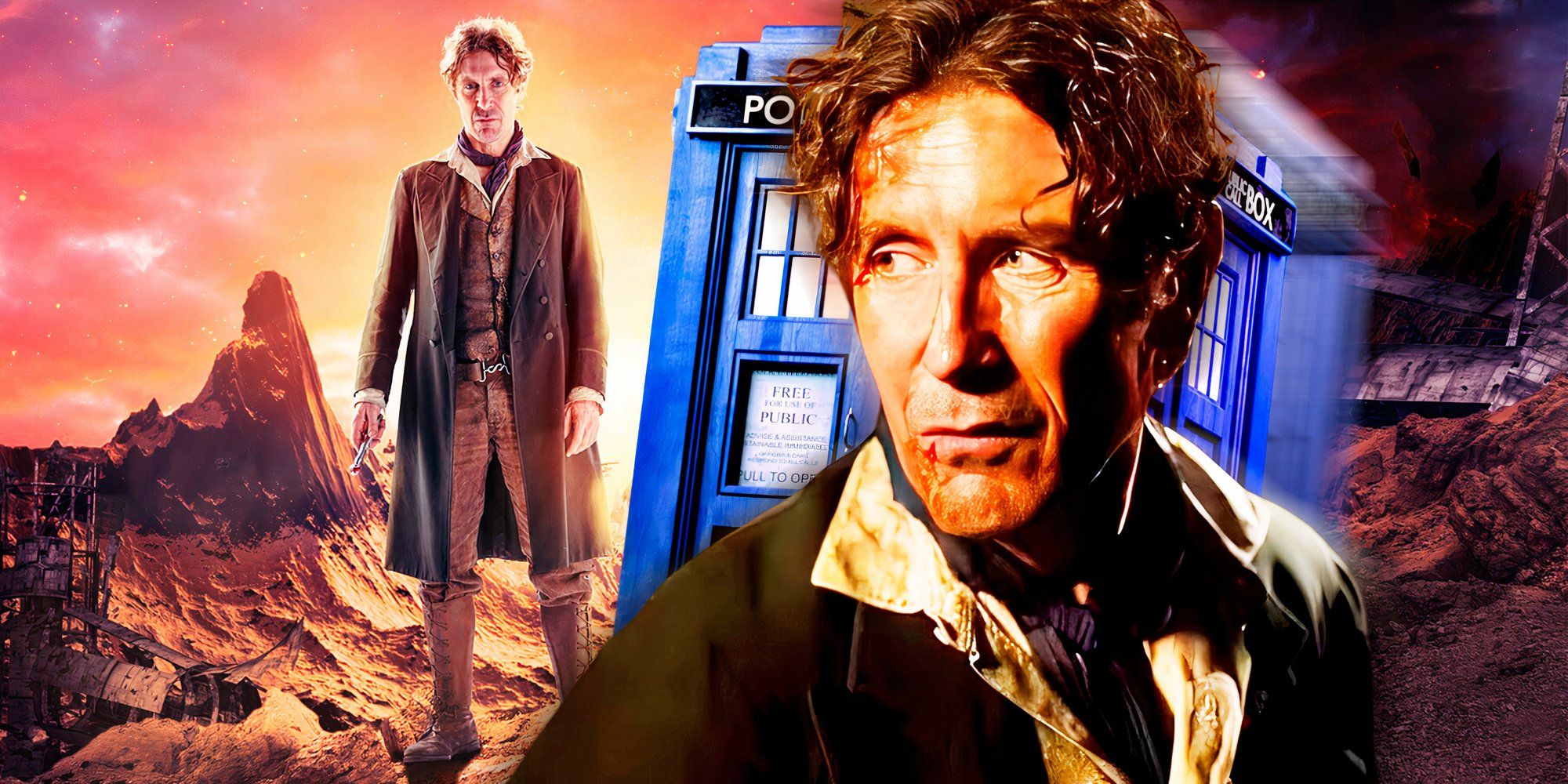
Paul McGann appeared in a 1996 TV Movie intended to reboot the series for an American audience. Though the movie received mixed reviews, McGann’s performance was universally praised. He portrayed the Doctor as a romantic, Edwardian adventurer. While he only had one televised story for nearly two decades, McGann became the most prolific Doctor in auxiliary media, starring in hundreds of acclaimed Big Finish audio plays. He eventually returned for the 2013 mini-episode "The Night of the Doctor" to film his regeneration scene.
The Modern Revival and the New Numbering (2005–2022)
When Russell T Davies brought the show back in 2005, it introduced a "Time War" backstory that changed the Doctor’s emotional landscape.
The Ninth and Tenth Doctors: Eccleston and Tennant
Christopher Eccleston’s Ninth Doctor was a battle-scarred survivor wearing a leather jacket, representing the trauma of the recently ended Time War. He lasted only one season but successfully grounded the show for a modern audience. He was followed by David Tennant, whose Tenth Doctor became a pop-culture icon. Tennant’s portrayal was charismatic and "human-passing," blending a romantic hero archetype with a deep-seated loneliness.
The Eleventh and Twelfth Doctors: Smith and Capaldi
Matt Smith took over as the Eleventh Doctor, portraying an "old man in a young man’s body." His era, overseen by Steven Moffat, focused on complex "fairytale" storytelling and time-loop paradoxes. He was followed by Peter Capaldi, the Twelfth Doctor. Capaldi brought a more acerbic, punk-rock sensibility to the role, focusing on the question of whether the Doctor was truly a "good man."
The Thirteenth Doctor: Jodie Whittaker (2018–2022)
Jodie Whittaker made history as the first woman to officially play the Doctor. Her era was defined by a sense of hope and a larger "fam" of companions. Crucially, her tenure introduced the Timeless Child revelation, which established that the Doctor was not a native Gallifreyan but a being from another dimension who possessed the original power of regeneration. This meant there were countless "lost" Doctors before William Hartnell.
The 60th Anniversary and the Fifteenth Doctor (2023–2026)
The current era of Doctor Who has expanded the definition of the character through the return of Russell T Davies and a global partnership with Disney+.
The Fourteenth Doctor: David Tennant (2023)
In a surprising twist for the 60th-anniversary specials, David Tennant returned not as the Tenth Doctor, but as the Fourteenth. This marked the first time an actor had played two different numbered incarnations of the character. This short tenure served as a bridge, allowing the Doctor to "rest" and process centuries of trauma.
The Fifteenth Doctor: Ncuti Gatwa (2023–Present)
Ncuti Gatwa’s Fifteenth Doctor is the current lead as of 2026. Gatwa brought a vibrant, emotionally open, and stylish energy to the TARDIS. His introduction featured the first instance of "bi-generation," where the Fourteenth and Fifteenth Doctors split into two separate individuals rather than one replacing the other. As of our current 2026 standpoint, Gatwa has led the series through three major seasons, redefining the Doctor’s relationship with fantasy and folklore elements.
Summary of All Official Television Doctors
The following table provides a reference for the primary incarnations of the Doctor appearing in the main television chronology.
| Incarnation | Actor | Primary Years | Notable Characteristic |
|---|---|---|---|
| First Doctor | William Hartnell | 1963–1966 | Stern, grandfatherly, the "original" traveler. |
| Second Doctor | Patrick Troughton | 1966–1969 | The Cosmic Hobo; playful yet calculating. |
| Third Doctor | Jon Pertwee | 1970–1974 | Action hero, UNIT advisor, Venusian Aikido master. |
| Fourth Doctor | Tom Baker | 1974–1981 | Long scarf, bohemian, iconic eccentric. |
| Fifth Doctor | Peter Davison | 1981–1984 | Youthful, vulnerable, wore cricket whites. |
| Sixth Doctor | Colin Baker | 1984–1986 | Bombastic personality, multicolored coat. |
| Seventh Doctor | Sylvester McCoy | 1987–1989 | Initially comedic, became a dark master-planner. |
| Eighth Doctor | Paul McGann | 1996 | Romantic, Edwardian, extensive audio history. |
| War Doctor | John Hurt | 2013 | The warrior who fought in the Time War. |
| Ninth Doctor | Christopher Eccleston | 2005 | Trauma-survivor, leather jacket, "Fantastic!" |
| Tenth Doctor | David Tennant | 2005–2010 | Charismatic, romantic, "The man who regrets." |
| Eleventh Doctor | Matt Smith | 2010–2013 | Ancient soul, young face, bow ties and fezzes. |
| Twelfth Doctor | Peter Capaldi | 2013–2017 | A questioning philosopher, "The man who redeems." |
| Thirteenth Doctor | Jodie Whittaker | 2018–2022 | First female Doctor, hopeful, high-energy. |
| Fugitive Doctor | Jo Martin | 2020–2022 | A hidden past incarnation working for the Division. |
| Fourteenth Doctor | David Tennant | 2023 | A familiar face returning to heal old wounds. |
| Fifteenth Doctor | Ncuti Gatwa | 2023–Present | Emotionally intelligent, stylish, post-bi-generation. |
Explaining the "Hidden" and Non-Numbered Doctors
The list of "all the Dr Whos" is complicated by incarnations that do not fit into the standard 1-15 numbering. These characters are essential to the modern understanding of the show’s mythology.
The War Doctor (John Hurt)
Introduced in the 50th-anniversary special, "The Day of the Doctor," this incarnation existed between the Eighth and Ninth Doctors. He rejected the name "The Doctor" because he was forced to fight in the Time War. While he is technically the ninth incarnation, he is excluded from the traditional numbering to preserve the "Doctor" title for those who upheld the character's vow.
The Fugitive Doctor (Jo Martin)
Introduced during the Thirteenth Doctor’s era, the Fugitive Doctor is an incarnation from the Doctor’s forgotten past. She worked for a secret Gallifreyan organization called "The Division." Her existence proved that the Doctor’s history was much longer than the Time Lord had been led to believe, predating William Hartnell’s "First" Doctor.
The Timeless Children and Morbius Doctors
In the episode "The Timeless Children," it was revealed that there were dozens, perhaps hundreds, of incarnations before Hartnell. This retroactively confirmed a 1976 story ("The Brain of Morbius") which briefly showed faces of previous Doctors that didn't match the known ones. While these characters are rarely the focus of episodes, they are "canonically" part of the group of all the Dr Whos.
Regeneration and Bi-generation: How the Change Occurs
Regeneration is the biological process that allows a Time Lord to cheat death. When a Doctor’s body is mortally wounded or reaches the end of its natural lifespan, every cell in their body undergoes a violent transformation, resulting in a brand-new physical form and a shifted personality.
In 2023, the show introduced Bi-generation. During the regeneration from the Fourteenth to the Fifteenth Doctor, instead of the old body disappearing, the two split. This allowed the Fourteenth Doctor (Tennant) to stay on Earth and live a peaceful life with the Noble family, while the Fifteenth Doctor (Gatwa) continued the adventures in a "rehabilitated" state. This development effectively means there are currently two versions of the Doctor existing simultaneously in the universe, though the show continues to focus on the Fifteenth.
Frequently Asked Questions
Who is the "actual" first Doctor?
In terms of television history and the character's conscious choice to take the name, William Hartnell is the First Doctor. However, in terms of biological history, the "Timeless Child" (a nameless being found by the Gallifreyans) is the original version of the character.
Why did David Tennant play the Doctor twice?
David Tennant played the Tenth Doctor (2005-2010) and then returned as the Fourteenth Doctor (2023). Narratively, the Doctor "degenerated" into a familiar face because they needed to revisit old friends (Donna Noble) to find emotional closure. From a production standpoint, it was a celebratory way to mark the 60th anniversary.
How many times can the Doctor regenerate?
Originally, Time Lords were limited to 12 regenerations (13 lives). However, the Eleventh Doctor was granted a brand-new "cycle" of regenerations by the Time Lords in the episode "The Time of the Doctor." Furthermore, the Timeless Child revelation suggests the Doctor may have an infinite or unknown capacity for regeneration.
Is the "War Doctor" counted in the numbering?
No. While the War Doctor is a chronological incarnation, he is not numbered. This is why Matt Smith is the Eleventh Doctor, even though he was technically the 13th physical incarnation (counting the War Doctor and the Tenth Doctor's aborted regeneration in "The Stolen Earth").
Where can I watch all the different Doctors in 2026?
As of 2026, the modern era (from 2005 onwards) is primarily housed on Disney+ globally and BBC iPlayer in the UK. The "Classic" era (1963–1989) is available on the Trove or BritBox streaming services, depending on your region's licensing agreements.
Next Steps for New Viewers
If you are looking to explore all the Doctors, the best starting point is often the 2005 series premiere, "Rose," featuring the Ninth Doctor. For those interested in the current 2026 landscape, Ncuti Gatwa’s first season (often referred to as Season 1 or Series 14) serves as a soft reboot designed for new audiences to jump in without needing decades of backstory knowledge.