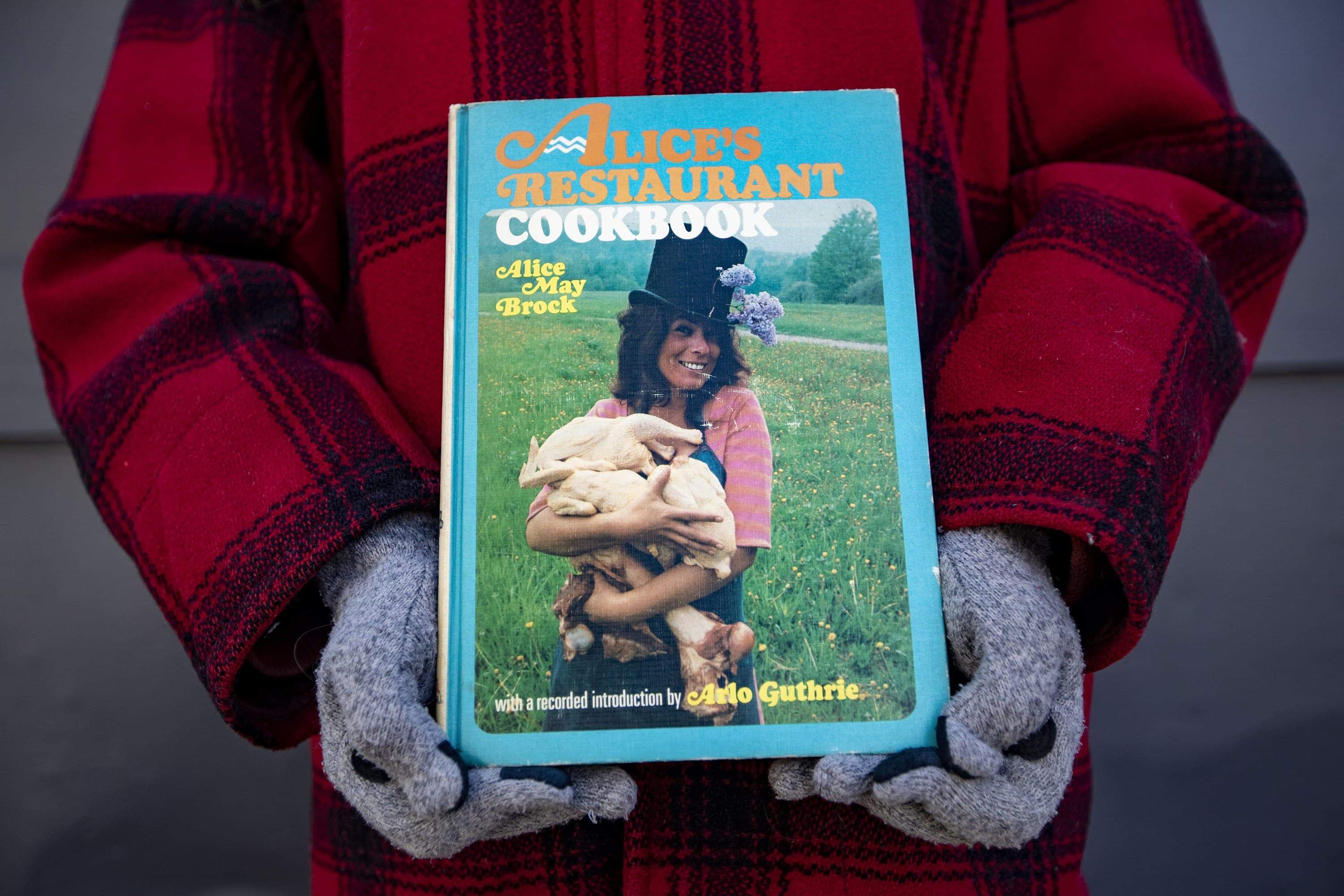
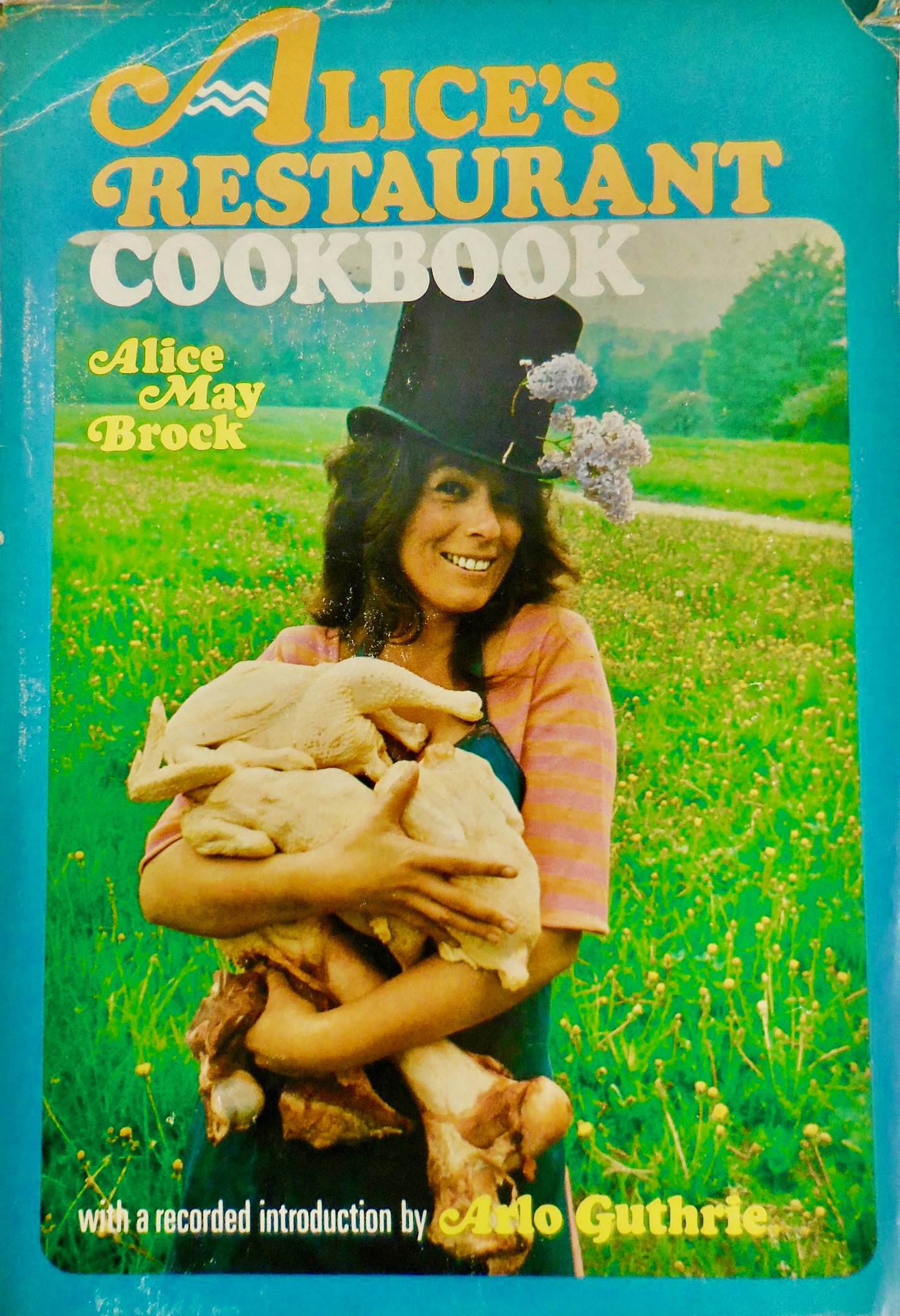
Alice Brock is the renowned restaurateur, artist, and author who inspired Arlo Guthrie’s 18-minute folk anthem, "Alice’s Restaurant Massacree." While the song immortalized a 1965 Thanksgiving littering incident, Brock herself was a pivotal figure in the 1960s counterculture, operating several Berkshire-area eateries and later establishing a successful career as a painter in Provincetown.
The Woman Behind the Cultural Icon
Alice Brock (born Alice May Skinner in 1941) was much more than a character in a song; she was a catalyst for a community. Raised in a family with deep roots in the arts and academia, she brought an egalitarian, bohemian spirit to everything she touched. In the early 1960s, she worked at the Stockbridge School, a progressive boarding school in Massachusetts. It was here that she met her future husband, Ray Brock, and a young student named Arlo Guthrie.
The relationship between Alice, Ray, and the students at the Stockbridge School formed the foundation of the "Alice's Restaurant" community. Alice and Ray purchased a deconsecrated church, St. James Chapel, in Great Barrington (specifically the village of Housatonic), which became a communal living space. This church, rather than the restaurant itself, was the "temple" of the counterculture described in Guthrie's lyrics, where anyone could find a place to stay and a warm meal.
By 1965, Alice decided to channel her culinary talents and hospitable nature into a professional venture. She opened a small restaurant in the basement of a building in Stockbridge. While everyone knew it as "Alice's Restaurant," the formal name of the establishment was actually The Back Fence.
The Physical Locations: From The Back Fence to Avalon
To understand the history of Alice Brock and her restaurant, one must distinguish between the various locations associated with her name. The "Alice's Restaurant" phenomenon is often conflated into a single building, but it spanned several sites across Massachusetts.
The Back Fence (The Original Alice's Restaurant)
Located in the basement of a commercial building on Main Street in Stockbridge, The Back Fence was the setting for the culinary side of Guthrie’s song. It was a modest, cozy space where Alice served home-cooked meals to locals, tourists, and the burgeoning "hippie" community. The restaurant was only under Alice’s ownership for a short period, approximately a year, but its impact on popular culture was permanent.
The Church at Great Barrington
While not a restaurant in the commercial sense, the Old Trinity Church (St. James Chapel) was the logistical heart of the operation. This is where the famous Thanksgiving dinner of 1965 took place. The 18-minute song details the events following this dinner, specifically when Guthrie and his friend Richard Robbins attempted to do Alice a favor by taking a Volkswagen Microbus full of trash to the local dump, only to find it closed for the holiday.
Alice’s at Avalon
After the fame of the song and the 1969 film (directed by Arthur Penn) became overwhelming, Alice eventually moved to Provincetown, Massachusetts. In the 1970s, she opened Alice’s at Avalon, a more upscale and professional iteration of her culinary vision. Located on the tip of Cape Cod, this restaurant allowed Alice to refine her skills as a chef and business owner away from the intense media spotlight of the Berkshires.
The 1965 Thanksgiving Incident and "The Massacree"
The events of November 25, 1965, are the most documented aspect of Alice Brock's life, thanks to Arlo Guthrie’s meticulous—if slightly exaggerated—recounting in his song. The "massacree" began as a simple act of neighborly help. Because the church was being renovated and hosted many guests, a large amount of refuse had accumulated.
When Guthrie and Robbins found the Stockbridge dump closed, they decided to toss the trash down a hillside on nearby property. They were subsequently arrested by Stockbridge Police Chief William "Obie" Obanhein. The resulting court appearance, where the judge was blind and the evidence was "twenty-seven 8x10 color glossy pictures with circles and arrows and a paragraph on the back of each one," led to a $50 fine and a criminal record for littering.
This minor criminal record eventually became the centerpiece of the song’s anti-war message. During the Vietnam War draft process, Guthrie’s littering conviction was used by the draft board as a reason to question his moral fitness for service—an irony that Guthrie exploited to highlight the absurdity of the military-industrial complex. Alice Brock remained the central, grounding figure in this narrative, the person whose hospitality set the entire chain of events in motion.
Evolution of Alice Brock’s Professional Ventures
Alice Brock’s career was never static. Following the closure of her Stockbridge restaurant, she leveraged her fame to author several books and expand her artistic reach. As of 2026, her contributions to both the culinary and visual arts are viewed through the lens of a life lived authentically outside the mainstream.
| Venture / Entity | Primary Function | Location | Key Significance |
|---|---|---|---|
| The Back Fence | Restaurant | Stockbridge, MA | The "original" restaurant mentioned in the song; a basement cafe. |
| Old Trinity Church | Residence/Communal Space | Housatonic, MA | The site of the 1965 Thanksgiving dinner; now the Guthrie Center. |
| Alice's Restaurant (Film) | Motion Picture | Stockbridge (Filming) | 1969 film where Alice Brock had a cameo role; directed by Arthur Penn. |
| Alice's Restaurant Cookbook | Literature | Published 1969 | A collection of recipes and stories that defined counterculture cooking. |
| Alice's at Avalon | Restaurant | Provincetown, MA | Alice's 1970s venture that showcased her professional chef skills. |
| Alice Brock Gallery | Art Studio | Provincetown, MA | Her long-term workspace for painting, drawing, and selling "Alice" memorabilia. |
The Impact of the 1969 Film
The release of the movie Alice's Restaurant in 1969 transformed Alice Brock from a local figure into a national symbol of the "flower power" movement. Directed by the Academy Award-nominated Arthur Penn (who was a neighbor in the Berkshires), the film cast Arlo Guthrie as himself. Interestingly, Alice Brock did not play herself; the role was portrayed by actress Pat Quinn.
However, Alice was heavily involved in the production. She worked as a set dresser and appeared as an extra in several scenes. The film was shot on location in Stockbridge and Great Barrington, using the actual church and many of the original participants in the 1965 events. The movie deepened the public's fascination with Alice, but it also placed an immense strain on her personal life. The influx of "pilgrims" looking for the "real Alice" eventually contributed to the closure of her local business interests and her eventual relocation to the coast.
Alice Brock as an Author and Artist
Alice Brock’s influence extended well beyond the kitchen. In 1969, she published Alice's Restaurant Cookbook, which featured an introduction by Arlo Guthrie. The book was a mixture of practical recipes—like her famous "Basic Brown Stuff" (gravy)—and philosophical musings on communal living and the importance of feeding people with love.
By the late 1970s and into the 1980s, Alice transitioned her primary focus from cooking to visual arts. Settling in Provincetown, she became a fixture of the local art scene. Her work often features:
- Whimsical Illustrations: Drawings that reflect the humor and simplicity of coastal life.
- Beach Stones and Natural Media: Many of her later works involved painted stones and mixed media found along the Cape Cod shores.
- The "Rock River" Series: A collection of paintings and sketches inspired by the landscape and the people she encountered throughout her life.
In 2026, her artwork is highly collectible, not just for its connection to 1960s nostalgia, but for its intrinsic technical merit and vibrant use of color. She has successfully maintained an identity independent of the song that made her famous, proving her resilience as an individual creator.
The Legacy of the Guthrie Center
While Alice Brock moved on from the Berkshires, the physical site of her most famous "restaurant" experience—the church—remains a vibrant part of the community. In 1991, Arlo Guthrie purchased the Old Trinity Church and converted it into the Guthrie Center.
The center serves several purposes that honor the original spirit of Alice and Ray Brock:
- The Interfaith Perspective: Following the communal ethos of the 1960s, the center provides a space for interfaith services and spiritual gathering.
- The Alice’s Restaurant Thanksgiving Dinner: Every year, the center hosts a community Thanksgiving dinner, continuing the tradition Alice started in 1965.
- Support Services: The center operates various community programs, including a food pantry and support for local veterans and seniors.
- Cultural Preservation: It serves as a living museum for the history of the "Alice's Restaurant" song and the broader folk music movement.
Navigating the Myth vs. Reality
For those researching Alice Brock in 2026, it is important to separate the folk legend from the historical woman. The song "Alice’s Restaurant Massacree" is a work of satire and protest, which means it takes creative liberties with the timeline and personalities involved.
Alice Brock has often spoken about the "Alice" of the song as a separate entity from herself. She once remarked that being a "myth" is a full-time job that doesn't pay very well. Despite the pressures of fame, she remained a steadfast supporter of the arts and a frequent guest at folk festivals and commemorative events until her later years.
The true legacy of Alice’s restaurant is not a specific building or a set of recipes, but rather the concept of the "open table." It represents a time when the act of sharing a meal was considered a political and social statement of peace and inclusion.
Frequently Asked Questions
Is the original Alice's Restaurant still open?
No, the original restaurant (The Back Fence) in Stockbridge closed in the mid-1960s. The building still exists on Main Street in Stockbridge, but it has housed various other businesses over the decades. The church in Housatonic where the famous dinner took place is now the Guthrie Center and is open to the public as a community space.
Did Alice Brock actually appear in the movie?
Yes, but she did not play the lead role of "Alice." That role was played by Pat Quinn. Alice Brock appeared in several cameo roles, most notably as an extra in the background of the wedding scene and other communal gatherings. She also worked behind the scenes on the film’s production design.
What happened to the church where Alice and Ray lived?
After Alice and Ray Brock sold the church, it passed through several hands before being purchased by Arlo Guthrie in the early 1990s. He established the Guthrie Center and the Trinity Church, which continues to operate today as a non-profit organization dedicated to interfaith work and community service.
Where is Alice Brock now?
Alice Brock has lived in Provincetown, Massachusetts, for several decades. In recent years, she has focused primarily on her art and has dealt with health challenges, including COPD, which she has spoken about publicly to raise awareness. She remains a beloved figure in the Cape Cod artistic community.
What was the "trash" that started it all?
The trash consisted of typical household refuse and remnants of the renovations taking place at the church. Because there was so much of it, and because the local dump was closed for Thanksgiving, Arlo Guthrie and Rick Robbins decided to dump it over a cliff where they saw other trash already piled. This act led to the arrest that formed the basis of the song.
Practical Recommendation for Visitors
If you are planning a trip to explore the history of Alice Brock and the song, start in Stockbridge, Massachusetts. You can visit the site of the original restaurant on Main Street and then drive a short distance to the village of Housatonic to visit the Guthrie Center at the Old Trinity Church. The center is generally open to visitors and hosts regular musical events and community dinners. For those interested in her later life, a trip to Provincetown offers a chance to see the landscape that inspired her later paintings and perhaps find her artwork in local galleries.