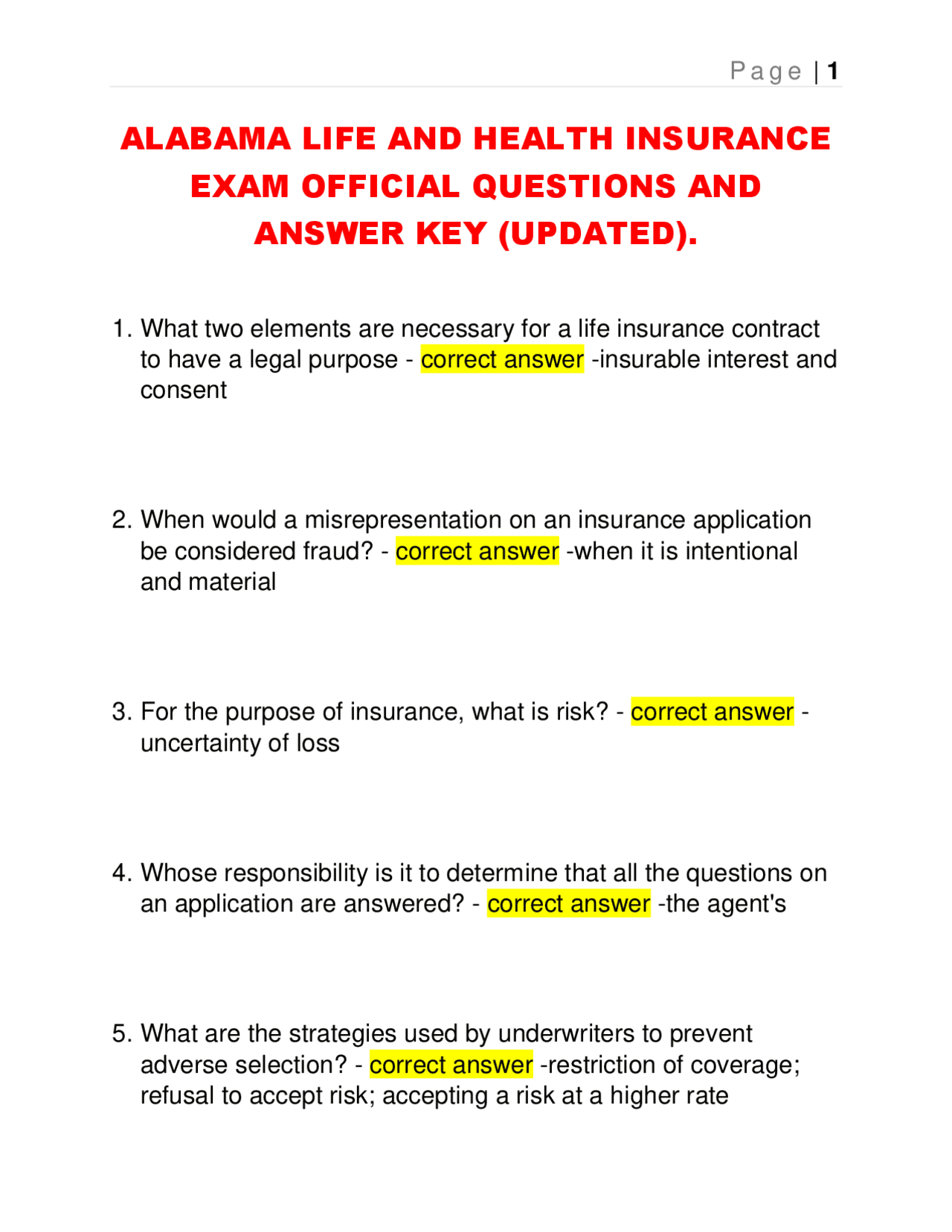
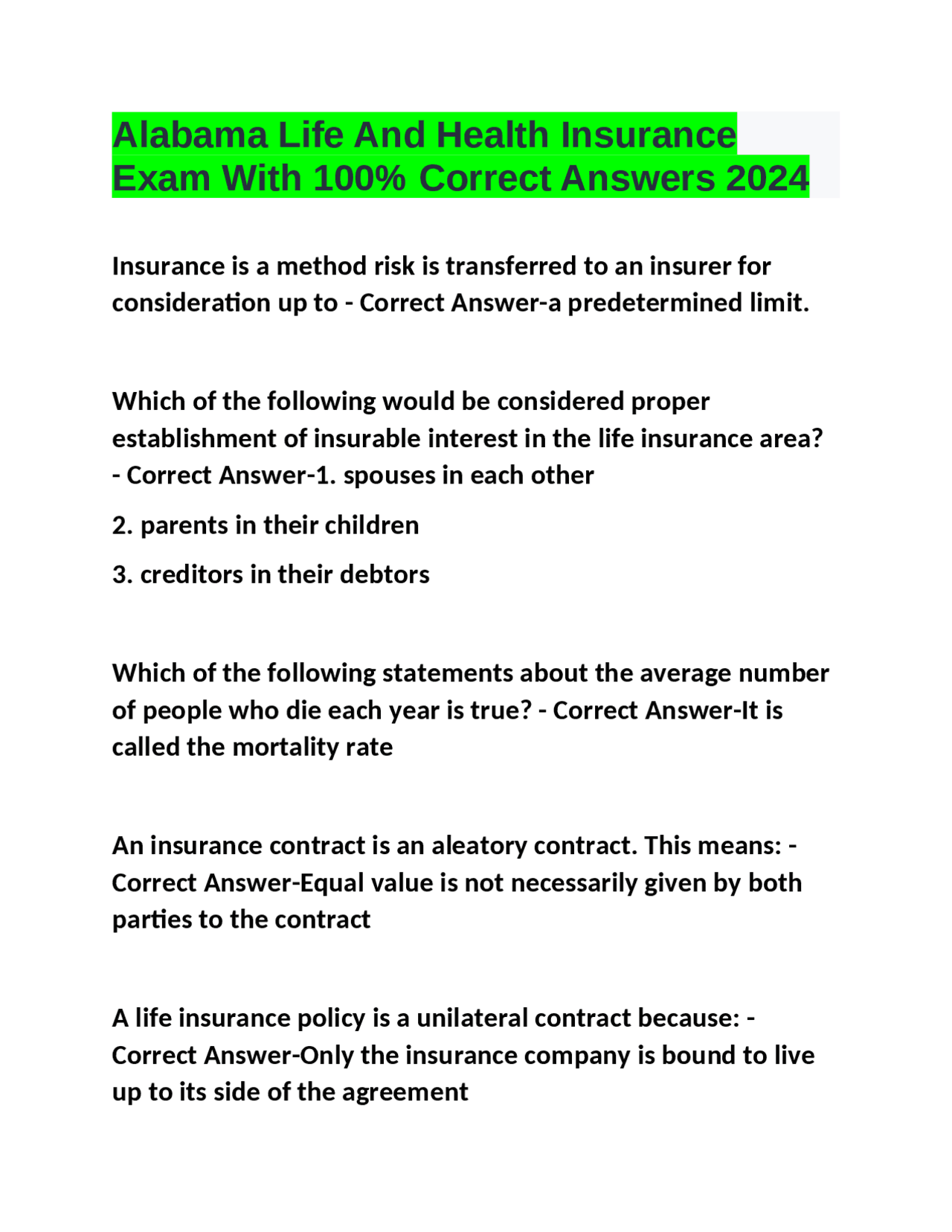
To pass the Alabama Life and Health Insurance Producer exam, candidates must complete 40 hours of state-approved pre-licensing education (20 hours for Life and 20 hours for Health/Accident), achieve a passing score of 70% on the examination administered by the University of Alabama on behalf of the Alabama Department of Insurance (ALDOI), and submit fingerprints for a state background check.
Passing the Alabama Life and Health Insurance examination is the primary threshold for earning an insurance producer license in Alabama. The exam tests your understanding of national insurance principles, complex policy contracts, and Alabama-specific statutory regulations. Candidates who attempt the exam without a deliberate study strategy often struggle with statutory memory items and scenario-based provisions.
This study guide provides a comprehensive roadmap for navigating state prerequisites, mastering core exam domains, memorizing critical Alabama legal regulations, and executing an efficient test-taking strategy.
Alabama Licensing Prerequisites and Exam Rules
Before scheduling an exam sitting, candidates must understand Alabama's statutory entry requirements. The state establishes clear rules regarding age, pre-licensing coursework, background screening, and exam administration.
- Step 1: Complete Approved Pre-Licensing Education (40 Hours)
- (20 hours Life + 20 hours Health & Accident)
- Step 2: Receive Pre-Licensing Certificate of Completion
- (Valid for 12 months from issuance)
- Step 3: Schedule & Pass AL Insurance Exam (70% Passing Grade)
- (Administered via University of Alabama Testing Services)
- Step 4: Complete Fingerprinting & Background Check
- (Processed through IdentoGO)
- Step 5: Submit License Application on NIPR
- (National Insurance Producer Registry / ALDOI review)
Eligibility Criteria
- Age Requirement: Unlike many states where the minimum age is 18, Alabama law requires individual producer candidates to be at least 19 years old (the legal age of majority in Alabama).
- Residency: Resident applicants must maintain a primary residence or principal place of business within the State of Alabama.
- Trustworthiness and Background: Applicants must demonstrate financial responsibility and good character, passing a criminal background check executed through state fingerprinting.
Pre-Licensing Education Requirements
Alabama mandates formal pre-licensing education from an ALDOI-approved provider.
- Single Line (Life Insurance): 20 classroom or online credit hours.
- Single Line (Health/Accident Insurance): 20 classroom or online credit hours.
- Combined Line (Life and Health): 40 classroom or online credit hours.
Exemptions: Candidates holding specific professional designations—such as Chartered Life Underwriter (CLU) or Certified Financial Planner (CFP) for Life, or Registered Health Underwriter (RHU) for Health—or candidates possessing an accredited college degree in risk management and insurance may request a pre-licensing education waiver directly from the Alabama Department of Insurance.
Exam Structure, Scoring, and Timing
The Alabama insurance licensing exam is administered under contract by the University of Alabama's Insurance Testing Services. Exams can be taken in-person at designated test sites across the state or via monitored online proctoring.
The combined Life, Accident, and Health Producer Examination consists of 150 total items. Out of these, 140 are scored questions, while up to 10 are unscored pretest items interspersed throughout the test to evaluate future exam iterations. Candidates are given 3 hours (180 minutes) to complete the combined exam.
To pass, candidates must earn a scaled score of 70% or higher.
- Combined Life & Health Exam (150 Questions)
- National General Knowledge (~100 Questions)
- General Insurance Concepts & Law
- Life Policies & Annuities
- Health/Accident Policies
- Alabama State Specific (~40-50 Questions)
- AL Insurance Department
- Producer Licensing
- Unfair Trade Practices
- National General Knowledge (~100 Questions)
Comprehensive Breakdown of Exam Content Domains
The exam is divided into two main components: National General Knowledge (covering universal insurance principles and policies) and Alabama State-Specific Law (covering state statutes, department rules, and ethical mandates).
Domain 1: General Insurance Principles and Legal Concepts
This foundational section tests your understanding of risk management and the legal nature of insurance contracts.
- Risk Management Concepts: Distinguish between pure risk (insurable) and speculative risk (uninsurable). Learn risk handling methods: Avoidance, Retention, Transfer, Sharing, and Reduction.
- Law of Large Numbers: The mathematical principle stating that as the number of similar exposure units increases, the predictability of future losses improves.
- Contract Law Elements: Every valid insurance contract requires four essential elements:
- Offer and Acceptance (Agreement)
- Consideration (Premium payment by insured; promise to pay claims by insurer)
- Competent Parties (Legal age, sober, mentally sound)
- Legal Purpose (Cannot violate law or public policy)
- Contract Characteristics:
- Aleatory: Equal value is not exchanged; performance depends on an uncertain event.
- Adhesion: Written by one party (the insurer); ambiguity is interpreted in favor of the insured.
- Unilateral: Only one party (the insurer) makes an enforceable promise.
- Conditional: Performance depends on specific conditions being met (e.g., filing proof of loss).
Domain 2: Life Insurance Policies, Riders, and Provisions
Policy Types
- Term Life Insurance: Provides pure protection for a specified period without cash value accumulation. Types include Level Term, Decreasing Term (often used for mortgage protection), and Increasing Term.
- Whole Life Insurance: Permanent protection to age 100 or 121 with guaranteed cash values and level premiums. Includes Ordinary Whole Life, Limited Pay Whole Life (e.g., Paid-Up at 65), and Single Premium Whole Life.
- Flexible Permanent Life:
- Universal Life: Features flexible premiums and adjustable death benefits, separating the cash value investment from the insurance element.
- Variable Life: Invests cash value in separate accounts (stocks/bonds); requires both an insurance license and a FINRA securities registration (Series 6 or 7).
- Variable Universal Life: Combines the premium flexibility of Universal Life with the separate account investment features of Variable Life.
Standard Policy Provisions
- Incontestability Clause: The insurer cannot contest statements in the application after the policy has been in force for 2 years, except for non-payment of premium.
- Grace Period: Mandatory period (typically 30 or 31 days) following the premium due date during which the policy remains active.
- Reinstatement Provision: Allows a lapsed policy to be restored within a specified window (usually 3 years) upon proof of insurability and back-payment of premiums plus interest.
- Misstatement of Age or Gender: If age or gender is understated or overstated, the insurer adjusts the benefit amount to what the premium paid would have purchased at the correct age, rather than canceling the policy.
Options and Riders
Nonforfeiture Options (Mandatory cash value choices upon lapse): Cash Surrender Value, Reduced Paid-Up Insurance, and Extended Term Insurance (the default automatic option if none is selected).
Dividend Options (Participating Policies - Mutual Insurers): Cash, Reduction of Premium, Accumulate at Interest, Paid-Up Additions (default), and One-Year Term.
Common Policy Riders: Waiver of Premium, Accidental Death Benefit (Double Indemnity), Guaranteed Insurability Rider, Payor Benefit Rider (juvenile policies), and Accelerated Death Benefit Rider.
Life Policy Decision Tree
- Is protection permanent or temporary?
- Temporary
- Term Life Insurance (Level, Decreasing, Increasing)
- Permanent
- Does cash value invest in guaranteed or separate accounts?
- Guaranteed Fixed Rates
- Whole Life (Fixed Premium)
- Universal Life (Flexible Premium)
- Separate Accounts (Securities)
- Variable Life (Fixed Premium)
- Variable Universal (Flexible Premium)
- Guaranteed Fixed Rates
- Does cash value invest in guaranteed or separate accounts?
- Temporary
- Is protection permanent or temporary?
Domain 3: Health, Accident, Disability, and Medical Expense Insurance
Medical Expense Coverage Plans
- Fee-for-Service vs. Managed Care: Classic indemnity plans reimburse covered expenses, whereas Managed Care plans (HMOs, PPOs, POS plans) emphasize cost containment and preventative care.
- Health Maintenance Organizations (HMOs): Use a closed panel of providers, require a Primary Care Physician (PCP) acting as a gatekeeper, and utilize capitation payment models.
- Preferred Provider Organizations (PPO): Offer an open panel of providers, lower out-of-pocket costs when using in-network doctors, and no gatekeeper requirement for specialist visits.
Individual Health Provisions (Uniform Mandatory Provisions)
- Time Limit on Certain Defenses: Similar to incontestability; after 2 years, statements on the application (except fraudulent misstatements) cannot be used to void the policy or deny claims.
- Notice of Claim: Written notice of claim must be submitted to the insurer within 20 days of a loss or as soon as reasonably possible.
- Claim Forms: The insurer must furnish claim forms to the claimant within 15 days of receiving notice of claim.
- Proof of Loss: Written proof of loss must be submitted to the insurer within 90 days of the loss.
- Time of Payment of Claims: Claims for specified losses must be paid immediately upon receipt of due written proof.
- Legal Actions: The insured cannot bring legal action against the insurer sooner than 60 days after filing written proof of loss, nor later than 3 years after proof of loss is required.
Disability Income and Group Insurance
- Disability Definitions: Own Occupation (inability to perform duties of one's specific job; more liberal) vs. Any Occupation (inability to perform any job for which qualified by education, training, or experience; more restrictive).
- Elimination Period: A time deductible (e.g., 30, 60, 90 days) preceding benefit payouts. Longer elimination periods lower the insurance premium.
- Benefit Period: The duration over which disability benefit payments continue (e.g., 2 years, 5 years, to age 65).
- COBRA Continuation: Federal law requiring employers with 20 or more employees to offer continued group health coverage to qualified beneficiaries losing coverage due to qualifying events (up to 18 or 36 months).
Alabama State-Specific Insurance Law
State law questions make up approximately 25% to 30% of the examination. Memorizing exact timelines, dollar limits, regulatory powers, and legal terms is critical.
The Alabama Commissioner of Insurance
- Appointment: The Commissioner of Insurance is appointed by the Governor of Alabama (not elected).
- General Powers: Executes and enforces the provisions of the Alabama Insurance Code. Holds hearings, issues cease and desist orders, and conducts financial examinations of insurers.
- Examination of Insurers: The Commissioner must examine the financial condition of domestic insurers at least once every 5 years.
Licensing Regulations and Timelines
- Producer License Renewal: Alabama insurance producer licenses are renewed biennially (every 2 years).
- Continuing Education (CE): Producers must complete 24 hours of approved CE every 2-year renewal period. At least 3 hours of the total must cover insurance ethics.
- Change of Address: Producers must notify the Alabama Department of Insurance within 30 days of any change in residential, business, or email address.
- Reporting Fines/Actions: Producers must report any administrative action or criminal prosecution taken against them in any jurisdiction within 30 days of final disposition.
Unfair Trade Practices and Ethics
- Rebating: Offering any inducement, discount, premium reduction, or valuable consideration not specified in the insurance policy to persuade someone to purchase insurance. Rebating is illegal under Alabama law.
- Twisting: Making misleading representations or incomplete policy comparisons to induce a policyholder to lapse, forfeit, surrender, or exchange an existing insurance policy for a new one with a different insurer.
- Misrepresentation: Making false or deceptive statements regarding policy terms, benefits, or dividends.
- Defamation: Making false or maliciously critical oral or written statements regarding the financial condition of an insurer or producer to injure their reputation.
- Controlled Business: Insurance written on the producer's own life, family members, or business associates. In Alabama, a producer's license is deemed to be used for controlled business if the premiums earned from those relatives/associates exceed 35% of aggregate premiums written in a 12-month period.
- Alabama Life and Health Insurance Guaranty Association: Protects policyowners against financial loss caused by insurer insolvency. It is illegal to use the existence of the Guaranty Association as a sales point or inducement to purchase insurance.
Key Numbers and Timelines Cheat Sheet
To assist with flashcard creation and targeted memorization, the table below summarizes the critical regulatory numbers tested on the Alabama exam.
| Metric / Regulation Domain | Alabama Requirement / Rule | Notes & Context |
|---|---|---|
| Minimum Licensing Age | 19 years old | Age of majority in Alabama |
| Pre-Licensing Hours (Single Line) | 20 hours | Life OR Health separately |
| Pre-Licensing Hours (Combined) | 40 hours | Life AND Health combined |
| Exam Passing Score | 70% scaled score | Administered via UA Testing Services |
| Continuing Education (CE) | 24 hours every 2 years | Must include 3 hours of Ethics |
| Address Change Notification | Within 30 days | Written/electronic notification to ALDOI |
| Reporting Administrative Actions | Within 30 days | Must report legal or regulatory proceedings |
| Examination of Insurers | At least once every 5 years | Conducted by AL Insurance Commissioner |
| Controlled Business Limit | Maximum 35% of volume | Exceeding 35% in 12 months violates code |
| Notice of Claim Window | 20 days from loss | Mandatory Uniform Provision |
| Claim Forms Delivery Window | 15 days from notice | Insurer obligation |
| Proof of Loss Window | 90 days from loss | Insured obligation |
| Legal Action Waiting Period | 60 days to 3 years | Cannot sue before 60 days post-proof |
| Incontestability / Time Limit | 2 years | Policy becomes incontestable |
| COBRA Employer Threshold | 20+ employees | Federal standard for group health continuation |
Recommended 4-Week Alabama Exam Study Plan
Preparing for the exam requires a structured routine split between reading course material, reviewing terminology, and taking practice questions.
- Week 1: Foundations & General Concepts
- Complete 20-hour Life Insurance Pre-licensing Coursework
- Study Contract Law & Risk Management Concepts
- Target Practice Drill: 100 General Knowledge Questions
- Week 2: Health, Accident & Disability
- Complete 20-hour Health Insurance Pre-licensing Coursework
- Learn Uniform Policy Provisions (Mandatory vs. Optional)
- Target Practice Drill: 100 Health Domain Questions
- Week 3: Alabama Insurance Code & Statutes
- Memorize Alabama Department Rules, CE Hours, & Timelines
- Study Unfair Trade Practices (Twisting, Rebating, Controlled Biz)
- Flashcards Drill: Numbers, Timelines, & Commissioner Powers
- Week 4: Exam Simulations & Weak Area Remediation
- Take 3 Full-Length 150-Question Timed Mock Exams
- Review Missed Question Rationales thoroughly
- Final Review of Key State Timelines and Definitions
Study Execution Principles
- Focus heavily on Rationale Review: When taking practice tests, do not simply check whether an answer was correct. Read the explanation for every missed question to address underlying concept gaps.
- Master Vocabulary First: Insurance exams test fine distinctions in language. Learn the exact definitions of terms like representation, warranty, concealment, indemnity, and adhesion.
- Isolate State Specifics: Create a dedicated set of flashcards strictly for Alabama numbers (e.g., 19 years old, 35% controlled business limit, 24 CE hours, 30-day address change rule, 5-year insurer examination rule).
Test Day Strategies and Troubleshooting
Navigating the exam experience successfully requires both psychological readiness and test-taking tactics.
Pre-Exam Logistics
- Bring Dual Identification: Arrive at the test site (or log into the online proctoring portal) at least 30 minutes early. Bring two forms of government-issued ID (one photo ID, such as a driver's license or passport).
- Pre-Licensing Certificate: Have a copy of your approved pre-licensing course completion certificate readily accessible (some testing systems verify this electronically, but keeping a physical/digital copy is recommended).
During the Exam
- Pace Yourself: You have 180 minutes for 150 questions, which equates to 1.2 minutes per question. Do not spend more than two minutes on any single question during your first pass.
- Use the Flag Feature: If a scenario question appears overly wordy or confusing, select your best initial guess, flag the item, and return to it after completing the rest of the test.
- Watch for Negative Phrasing: Pay close attention to question stems containing words like EXCEPT, NOT, INCORRECT, or UNLESS.
- Do Not Leave Questions Blank: There is no penalty for incorrect guessing on the Alabama licensing exam. Ensure every question has an answer selected before submitting your exam.
Frequently Asked Questions
How hard is the Alabama Life and Health Insurance Exam?
The exam is moderately challenging due to the breadth of information covered. Pass rates generally range between 55% and 65% for first-time test takers who rely solely on surface reading. Candidates who complete a structured pre-licensing course and score consistently above 80% on practice exams typically pass on their first attempt.
What is the passing score for the Alabama Life and Health Insurance exam?
Candidates must achieve a scaled score of 70% or higher to pass. Scoring is calculated automatically upon exam completion, providing an immediate pass/fail result report at the testing center or on your online proctoring screen.
What happens if I fail the Alabama insurance exam?
If you do not pass, you will receive a diagnostic report detailing your performance across each domain. You may reschedule another examination sitting through the University of Alabama Insurance Testing Services portal. While there is no mandatory waiting period between your first and second attempt, you must pay the exam fee for each retake.
How long is my pre-licensing education certificate valid in Alabama?
Your pre-licensing certificate of completion is valid for 12 months from the date of issue. You must pass your licensing exam and submit your application to the Alabama Department of Insurance within this 12-month window; otherwise, you must retake the pre-licensing course.
What is the difference between twisting and rebating in Alabama?
Rebating involves offering a financial inducement (such as sharing a portion of the commission, giving gifts, or offering cash) to a prospect to buy an insurance policy when that benefit is not stated in the contract. Twisting involves making misrepresentations or misleading comparisons of existing policies to persuade an insured to drop their current policy and purchase a new one to generate a new commission for the producer. Both activities are illegal unfair trade practices under Alabama law.
How many hours of continuing education are required for Alabama producers?
Alabama requires licensed insurance producers to complete 24 hours of approved continuing education (CE) every two years prior to license renewal. Out of the 24 required hours, at least 3 hours must focus on professional ethics.
Practical Next Steps
To begin your preparation for the Alabama Life and Health Insurance Exam:
- Enroll in an ALDOI-Approved Pre-Licensing Course: Ensure the provider offers the mandatory 40-hour curriculum (or 20-hour single-line curriculum) with state certification reporting.
- Schedule Your Exam Early: Book your testing slot through the official University of Alabama Insurance Testing portal early to set a firm target date for your study plan.
- Initiate Your Background Screening: Visit the IdentoGO scheduling platform to book your fingerprinting appointment so your background processing aligns with your examination timeline.
- Download State Study Manuals: Review official candidate handbooks available on the Alabama Department of Insurance website to stay up to date on state testing procedures and policy updates.
Disclaimer: Licensure requirements, regulatory limits, fee structures, and administrative procedures are governed by the Alabama Department of Insurance and are subject to statutory change. Candidates should verify current administrative codes and exam rules directly with official state regulatory portals prior to testing.