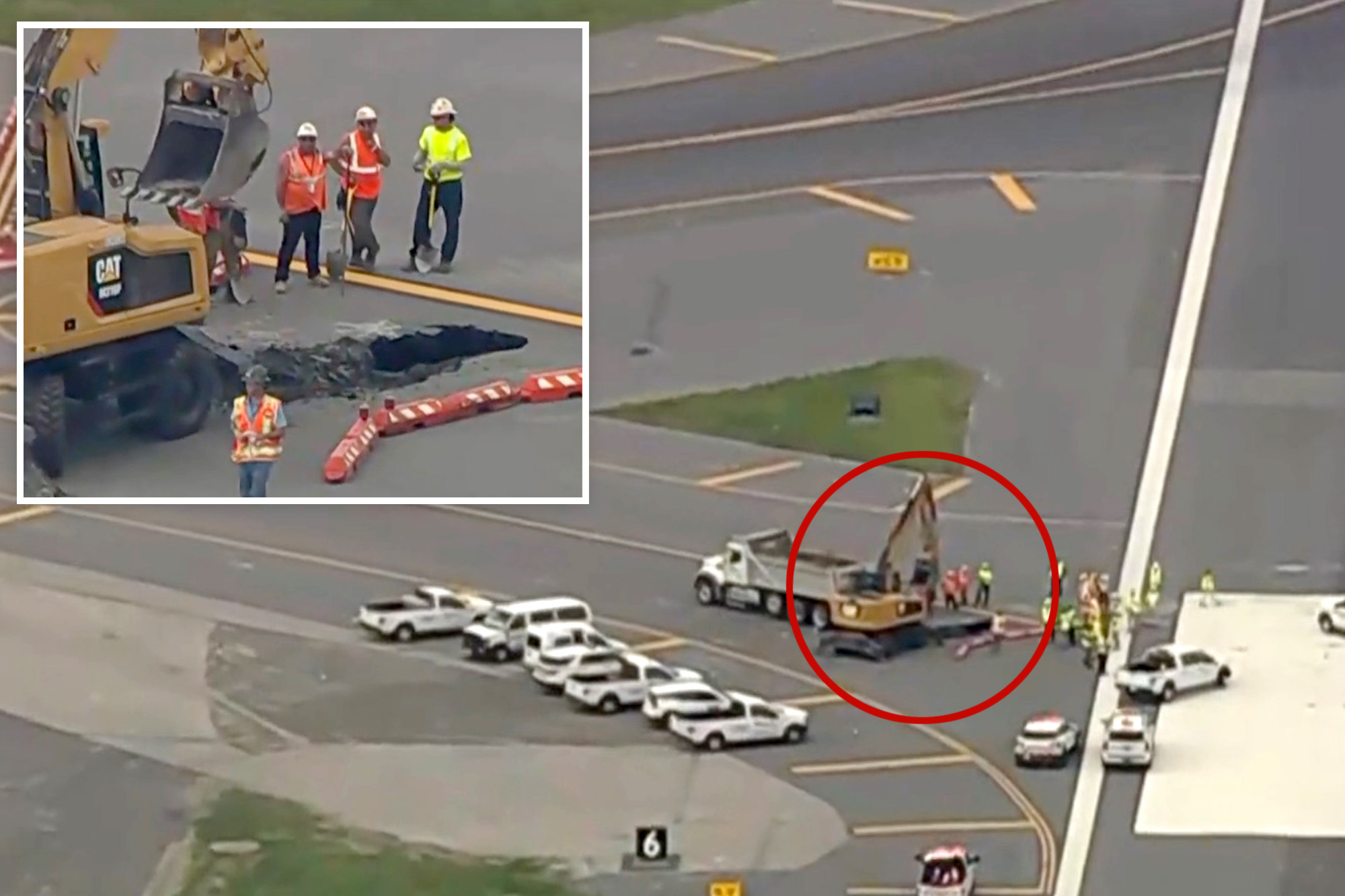
Airport sinkholes are specialized structural failures where the ground beneath runways, taxiways, or aprons collapses, creating voids that threaten aviation safety and operational continuity. These geological or infrastructure-driven events require immediate intervention, utilizing advanced geophysical detection and high-pressure grouting techniques to restore the load-bearing capacity necessary for heavy aircraft traffic.
The appearance of a sinkhole at an airport is more than a simple pavement issue; it is a critical emergency that bridges the gap between geology, civil engineering, and aviation safety. By 2026, the combination of aging drainage infrastructure and increasingly volatile weather patterns has made the management of subsurface stability a priority for airport authorities worldwide. This guide explores the mechanisms of sinkhole formation, the technical methods used for detection, and the rigorous engineering standards required for permanent remediation.
The Geological and Anthropogenic Causes of Airport Sinkholes
To understand why a sinkhole forms at an airport, one must look beneath the reinforced concrete and asphalt. Most airport sinkholes are categorized into two types: those caused by natural geological processes and those caused by man-made infrastructure failure.
Karst Topography and Natural Dissolution
A significant portion of airport sinkholes occurs in regions characterized by karst topography. This geological phenomenon involves the presence of soluble rocks such as limestone, dolomite, or gypsum. Over centuries, slightly acidic groundwater flows through fractures in these rocks, gradually dissolving them and creating subterranean caverns.
When an airport is built over these hidden voids, the weight of the pavement and the rhythmic stress of aircraft takeoffs and landings can eventually cause the "roof" of a cavern to fail. This is known as a cover-collapse sinkhole, and it is the most dangerous type because it often occurs suddenly without visible surface warning. In 2026, geologists continue to monitor "paleo-sinkholes"—ancient collapses that were filled during construction but may reactivate due to changes in the local water table.
Infrastructure Failure and "Piping"
Not all sinkholes are natural. In many urban and aging international airports, the primary culprit is a compromised drainage system. Airports possess massive surface areas that collect enormous volumes of runoff. This water is diverted into large-diameter underground storm sewers and culverts.
If a pipe joints leaks or a section of a culvert corrodes, water escapes into the surrounding soil. More importantly, during heavy rain, the pressure can cause "piping," where the surrounding soil is sucked into the pipe and carried away. This creates an underground void directly beneath the runway. Over time, the void migrates upward until the pavement can no longer bridge the gap, leading to a sudden collapse.
Soil Compaction and Construction Anomalies
During the rapid expansion of airports in the mid-20th century, some fill materials used to level airfields were not subjected to the rigorous compaction standards used today. If organic material (like buried trees or construction debris) was left in the fill, it eventually decays, leaving a void. Furthermore, if the "fines" (small soil particles) are washed out of poorly graded fill, the structural integrity of the base layer is lost, triggering localized subsidence.
The Impact of Sinkholes on Aviation Operations
The operational consequences of an airport sinkhole are immediate and expensive. Unlike a highway, where a lane can be closed and traffic diverted, a runway sinkhole can effectively shut down an entire hub.
Operational Disruptions and Flight Logistics
When a sinkhole is detected, the Federal Aviation Administration (FAA) or relevant national authority issues a NOTAM (Notice to Air Missions), closing the affected surface. For a major airport, the closure of a single runway can lead to a "ground stop," where inbound flights are diverted to other cities and outbound flights are canceled. The ripple effect can disrupt air traffic across an entire continent within hours.
Economic Consequences
The cost of an airport sinkhole is measured in two ways: repair costs and revenue loss. Repairing a sinkhole on a runway is significantly more expensive than a standard road repair because the pavement must meet strict Pavement Classification Number (PCN) requirements to support the weight of aircraft like the Boeing 777 or Airbus A350.
A single day of runway closure at a major hub can result in millions of dollars in lost landing fees, passenger service charges, and airline operational costs. In 2026, insurance premiums for airport "business interruption" coverage are often tied directly to the airport's subsurface maintenance and inspection records.
Safety Risks to Aircraft
The most harrowing risk is the potential for an aircraft to encounter a sinkhole during high-speed movement. A nose gear or main landing gear dropping into a void during a takeoff roll or landing rollout can lead to a catastrophic structural failure of the aircraft, fire, or loss of directional control. Even a small depression, often called a "pre-sinkhole" or "ravelling," can cause significant tire damage or "FOD" (Foreign Object Debris) if the pavement breaks apart.
Detection and Monitoring Technologies in 2026
Modern airport management relies on proactive detection rather than reactive repair. Several non-destructive testing (NDT) technologies are used to "see" underground before a collapse occurs.
Ground Penetrating Radar (GPR)
GPR is the workhorse of airport subsurface inspection. Technicians tow GPR arrays behind vehicles across the runway. These systems emit high-frequency radio waves that reflect off subsurface interfaces. By analyzing the "return" signal, engineers can identify anomalies such as air-filled voids, water-saturated soil, or leaking pipes. In 2026, multi-frequency GPR allows for both high-resolution shallow imaging and deep-penetration scans up to 30 feet.
Satellite Interferometry (InSAR)
Interferometric Synthetic Aperture Radar (InSAR) uses satellite data to monitor ground displacement with millimeter precision. By comparing radar images of an airport over time, geotechnical engineers can detect subtle "sinking" trends. If a section of a taxiway is subsiding by 5mm per month, it provides an early warning that a sinkhole may be forming, allowing for preventative maintenance during scheduled low-traffic periods.
Electrical Resistivity Tomography (ERT)
ERT involves placing electrodes in the ground to measure the electrical resistance of the subsurface. Since air-filled voids, water-saturated soil, and solid rock have different resistivity profiles, ERT creates a 2D or 3D map of the underground structure. This is particularly useful for mapping deep karst features that GPR might miss.
| Technology | Best Use Case | Depth | Pros | Cons |
|---|---|---|---|---|
| GPR | Detecting voids directly under pavement | 0–5 meters | Real-time results, high resolution | Limited by clay-rich soils |
| InSAR | Long-term monitoring of the entire airfield | Surface only | No ground equipment needed | Cannot see "voids," only surface movement |
| ERT | Mapping deep geological structures | Up to 50+ meters | Very accurate for karst | Requires physical ground contact |
| Acoustic Sensors | Detecting leaks in pressurized pipes | Pipe-specific | Finds the cause of "piping" sinkholes | Only works near infrastructure |
Engineering and Remediation Strategies
Once a sinkhole is identified, the repair process must be fast and structurally sound. "Throwing some cold patch in a hole" is never an option for aviation infrastructure.
Compaction Grouting
For sinkholes caused by loose soil or small voids, compaction grouting is the preferred method. Engineers drill a series of holes around the affected area and inject a stiff, mortar-like grout at high pressure. As the grout expands, it displaces and compacts the surrounding soil, filling the voids and creating a solid "bulb" of support. This method is often performed at night to minimize operational impact.
Polyurethane Injection
A more modern approach involves the injection of high-density expandable polymers. These resins start as a liquid and rapidly expand into a lightweight, high-strength foam. This is particularly effective for "slab-jacking," where a sunken section of concrete needs to be lifted back to its original grade without the weight of heavy cement-based grouts.
Full-Depth Excavation and Structural Backfill
In cases of significant collapse or infrastructure failure (like a burst 60-inch culvert), the only solution is a full-depth repair. This involves:
- Excavation: Removing all compromised soil until stable ground or bedrock is reached.
- Infrastructure Repair: Replacing the damaged drainage or utility lines.
- Inverted Filter Method: Layering different sizes of stone (from large boulders at the bottom to fine gravel at the top). This allows water to flow through but prevents soil from "piping" through the rocks.
- Pavement Reconstruction: Laying new sub-base, base, and high-performance asphalt or P-501 concrete.
Notable Case Studies and Lessons Learned
History provides several examples of how airport sinkholes are managed. In April 2014, Pensacola International Airport (PNS) experienced a massive sinkhole on a runway following a historic rain event where nearly 20 inches of rain fell in 24 hours. The sinkhole was caused by a failure in the corrugated metal pipe (CMP) drainage system. The airport had to undertake a multi-million dollar reconstruction, highlighting the danger of aging metal culverts under runways.
Another example occurred at Taiyuan Wusu International Airport in China, where researchers used InSAR data to identify subsidence zones before they became critical. This proactive approach saved the facility from an emergency closure. These cases underscore a global shift in 2026 toward Predictive Maintenance (PdM), where AI-driven analysis of sensor data predicts where a sinkhole is likely to form six months before it actually appears.
Preventative Maintenance and Risk Management
To mitigate the risk of sinkholes, airports in 2026 follow a rigorous "Subsurface Risk Management" protocol. This includes:
- Video Pipe Inspection (VPI): Using robotic cameras to inspect the interior of every drainage pipe under flight surfaces once every two years.
- Catch Basin Maintenance: Ensuring that debris does not clog drains, which can lead to localized "ponding" and increased hydrostatic pressure on the soil.
- Groundwater Monitoring: Tracking the local water table, as rapid fluctuations (often caused by nearby industrial pumping or extreme droughts followed by floods) are a primary trigger for sinkhole collapse.
FAQs
Can a plane fly over a sinkhole safely?
A plane can safely fly over a sinkhole, but it cannot safely land or taxi on one. The danger lies in the structural integrity of the ground. If a sinkhole is detected, the runway is immediately closed to all traffic until it is repaired and certified safe by civil engineers.
How long does it take to fix an airport sinkhole?
Small voids can be stabilized with grouting in 12–24 hours, often during overnight closures. However, a major collapse requiring excavation and infrastructure repair can take anywhere from two weeks to several months, depending on the depth of the hole and the complexity of the drainage system.
Are certain airports more prone to sinkholes?
Yes. Airports located in Florida, the Yucatan Peninsula, parts of Southeast Asia, and the "Karst Belt" of the United States (including Kentucky and Missouri) are at higher risk due to geological factors. Airports built on reclaimed land or "fill" are also at higher risk for infrastructure-related subsidence.
Does insurance cover airport sinkhole damage?
Most commercial airport insurance policies include "Earth Movement" or "Subsidence" clauses, but coverage depends on the cause. Natural sinkholes are usually covered, but sinkholes caused by "lack of maintenance" (such as a known rusted pipe that was never replaced) may lead to disputed claims.
Practical Recommendations for Airport Operators
For airport management and civil engineers, the strategy in 2026 is clear: inspection is cheaper than repair.
- Audit Drainage Materials: If your airport still uses corrugated metal pipes (CMP) under runways, schedule their replacement with reinforced concrete pipe (RCP) or high-density polyethylene (HDPE) as soon as possible.
- Implement Annual GPR Scans: Don't wait for a crack to appear. Conduct annual GPR surveys of "Critical Movement Areas" to identify voids while they are still small and manageable.
- Control Stormwater: Ensure that runoff is managed effectively. Sudden surges in water volume are the most common trigger for both natural and man-made sinkholes.
- Maintain Detailed Subsurface Records: Keep accurate "as-built" drawings of all underground utilities. In an emergency, knowing exactly where a pipe failure has occurred can save days of diagnostic work.