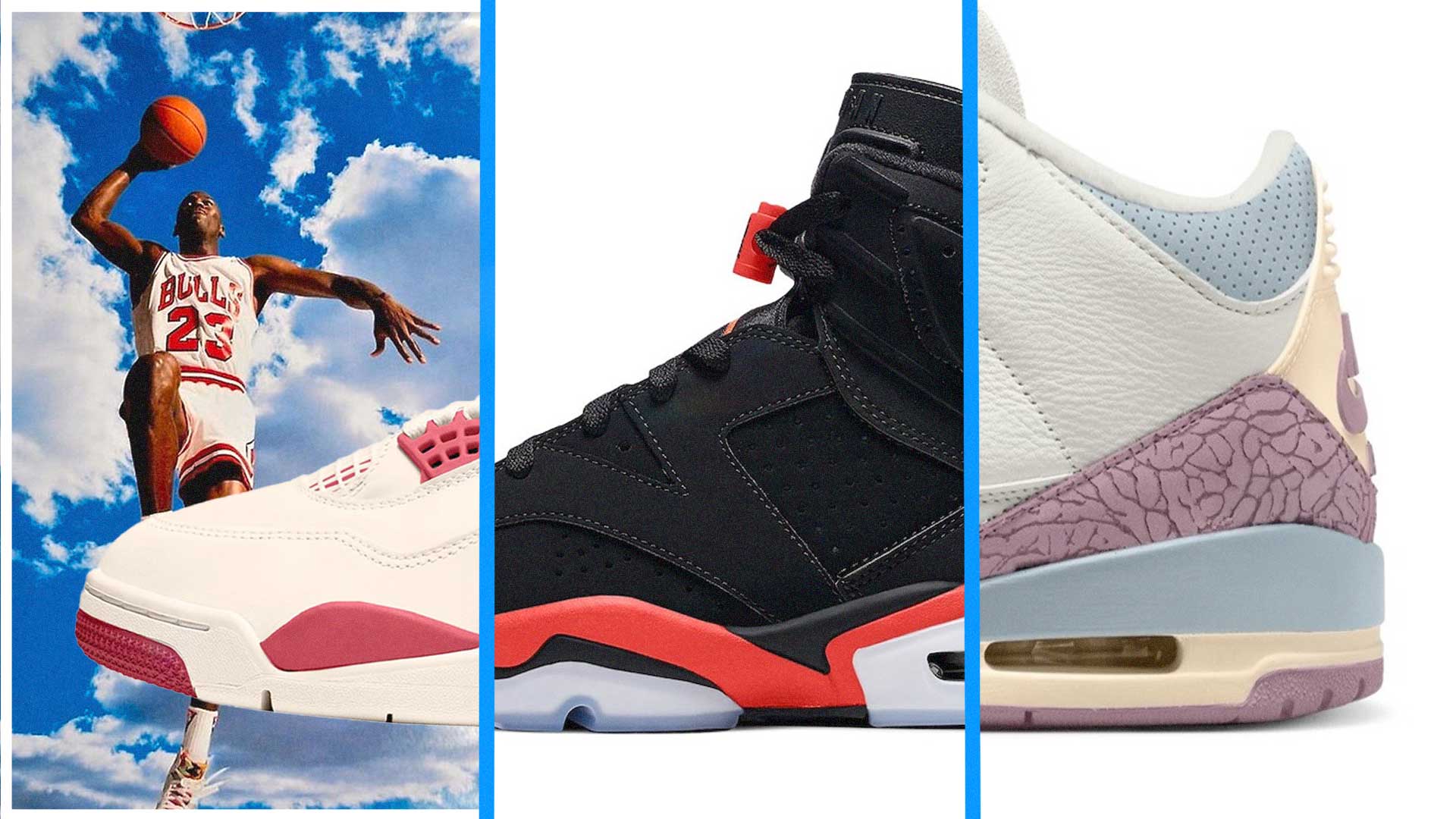
Air Jordans became a sneaker icon by merging Michael Jordan’s unprecedented on-court excellence with revolutionary product design and provocative marketing. Starting with the 1985 Air Jordan 1, the brand leveraged an "outlaw" narrative to create a symbol of status and rebellion that transcended basketball, eventually defining the global streetwear and high-fashion markets.
The Genesis of a Legend: The 1984 Nike Signature Gamble
In 1984, the landscape of athletic footwear was vastly different than it is today. Converse was the official shoe of the NBA, and Adidas was the preferred brand for many top athletes due to their international prestige. Nike, primarily known as a running shoe company, was struggling to gain a foothold in the basketball market. The decision to sign a rookie from the University of North Carolina named Michael Jordan was not just a business move; it was a desperate gamble that would eventually redefine the relationship between athletes and brands.
Michael Jordan initially had no desire to sign with Nike. His preference was Adidas, but the German brand was unable to offer him a signature shoe at the time. Nike’s scout, Sonny Vaccaro, and executive Rob Strasser, along with designer Peter Moore, pitched a vision that was unheard of: a brand built entirely around a single player. They offered Jordan a $500,000-a-year contract for five years, a staggering amount in 1984. This partnership birthed the Air Jordan line, a name suggested by Jordan’s agent, David Falk, to play off Nike’s "Air" technology and Michael’s ability to defy gravity.
The release of the Air Jordan 1 in 1985 shattered sales expectations. While Nike hoped to sell $3 million worth of shoes in the first three years, they ended up making $126 million in the first year alone. This success was not merely due to Jordan’s talent but to a masterfully crafted narrative that positioned the shoes as an essential piece of sports history.
The "Banned" Marketing Masterstroke
The most critical factor in making the Air Jordan an icon was the myth of the "Banned" sneaker. In the mid-1980s, the NBA maintained a strict "51% rule," which dictated that a player’s shoes must be at least 51% white. When Jordan stepped onto the court in the black-and-red (Bred) colorway of the Nike Air Ship (the precursor to the AJ1), the NBA reportedly sent a letter to Nike stating that the shoes violated the uniform code and that Jordan would be fined $5,000 every time he wore them.
Nike’s marketing team saw this not as a setback, but as an opportunity. They created a legendary television commercial featuring a slow pan down Jordan’s body to the shoes, with a voiceover stating: "On October 15, Nike created a revolutionary new basketball shoe. On October 18, the NBA threw them out of the game. Fortunately, the NBA can’t stop you from wearing them."
This campaign transformed the Air Jordan 1 from a piece of athletic equipment into a symbol of rebellion. By wearing the shoes, consumers felt they were partaking in Jordan’s defiance of the establishment. Interestingly, historical research has since clarified that the shoe Jordan was actually wearing when he received the warning was the Air Ship, not the Air Jordan 1. However, the marketing was so effective that the distinction became irrelevant; the Air Jordan brand was cemented as the "renegade" choice of footwear.
The Tinker Hatfield Era: Redefining Performance and Luxury
If the Air Jordan 1 provided the cultural spark, it was designer Tinker Hatfield who provided the architectural longevity. By 1987, Michael Jordan was considering leaving Nike. The Air Jordan 2, while a high-quality Italian-made shoe, had failed to capture the same excitement as the original. Hatfield was brought in to design the Air Jordan 3, and his approach changed the industry forever.
Hatfield did something no designer had done before: he listened to the athlete. Jordan wanted a mid-cut shoe that was comfortable right out of the box and featured a more sophisticated aesthetic. The resulting Air Jordan 3 introduced several iconic elements:
- The Jumpman Logo: Replacing the "Wings" logo, the silhouette of Jordan dunking became one of the most recognizable logos in the world.
- Visible Air: Following the success of the Air Max 1, Hatfield included a visible Air unit in the heel, showcasing the technology.
- Elephant Print: The use of grey cracked leather added a "luxury" feel that allowed the shoe to transition from the court to the street.
The AJ3 convinced Jordan to stay with Nike and established a template for future releases. Each subsequent model—from the WWII fighter plane-inspired AJ5 to the patent leather AJ11—pushed the boundaries of what a basketball shoe could be. The Air Jordan 11, released in 1995, remains a pinnacle of the brand. Its use of patent leather was a direct response to Jordan’s request for a shoe he could wear with a suit, further blurring the lines between performance gear and formal fashion.
Cultural Transmutation: From the Hardwood to the Streets
The Air Jordan’s transition into a global icon was heavily supported by its adoption in popular culture, specifically within the worlds of hip-hop and cinema. Director Spike Lee played a pivotal role through his character Mars Blackmon. In a series of iconic commercials for the Air Jordan 3 and beyond, Blackmon’s catchphrase, "It’s gotta be the shoes," became a cultural touchstone.
Furthermore, the 1989 film Do the Right Thing featured a famous scene where a character’s brand-new Air Jordan 4s are scuffed by a bicyclist. This scene resonated with urban youth, highlighting the sneaker’s status as a precious commodity and a marker of personal identity. As hip-hop culture grew in the 1990s and 2000s, rappers like Nas, Jay-Z, and later Kanye West frequently referenced or wore Jordans, solidifying their place in the "uniform" of streetwear.
By the early 2000s, Jordan Brand became a sub-brand of Nike, operating with its own identity. This allowed the company to lean into "Retro" releases—reissuing older models for a new generation. This strategy turned the Air Jordan into a legacy product, where the history of the shoe was just as important as its performance.
Technical Specifications and Evolutionary Milestones
To understand the impact of Air Jordans, one must look at the technical leap each model represented. The following table highlights the key innovations that helped these shoes maintain their status as performance leaders during their respective eras.
| Model | Year | Key Technical/Design Innovation | Cultural Impact |
|---|---|---|---|
| Air Jordan 1 | 1985 | Thin rubber outsole for court feel; high-top support. | Created the "Banned" myth and sneaker culture. |
| Air Jordan 3 | 1988 | First visible Air unit; first use of the Jumpman logo. | Saved the Jordan/Nike partnership. |
| Air Jordan 5 | 1990 | Translucent outsoles; reflective 3M tongue. | Inspired by the P-51 Mustang fighter jet. |
| Air Jordan 11 | 1995 | Full-length carbon fiber plate; patent leather. | The most sought-after "grail" in history. |
| Air Jordan 13 | 1997 | Panther-inspired "Cat's Eye" hologram; zoom air. | Known as the "Black Cat" shoe during the "Last Dance" era. |
| Air Jordan 34 | 2019 | Eclipse Plate for weight reduction and stability. | A return to pure performance focus. |
The Modern Sneaker Economy in 2026
As we look at the landscape in 2026, the Air Jordan brand has evolved into a cornerstone of the global economy. What was once a niche hobby for "sneakerheads" has become a multi-billion dollar secondary market. The introduction of platforms like the Nike SNKRS app and third-party marketplaces (StockX, GOAT) has transformed how consumers access these shoes.
In 2026, the strategy of "controlled scarcity" remains the brand's greatest asset. By limiting the production of certain colorways—such as "OG" retros—Jordan Brand ensures that demand always outstrips supply. This keeps the brand's prestige high even when general-release models are widely available.
Current pricing in 2026 for a standard Air Jordan Retro typically ranges from $210 to $235 USD, while limited collaborations with artists or high-fashion houses (like the long-standing relationships with Travis Scott or Dior) can command thousands on the secondary market. The brand has also successfully integrated sustainability, using recycled "Grind" rubber and synthetic leathers in certain performance models without sacrificing the "icon" status of the silhouette.
How to Verify and Maintain Your Icons
With the rise of the Air Jordan as a financial asset, the market for counterfeits has become increasingly sophisticated. For collectors in 2026, verification is a multi-step process.
- Scent and Texture: Genuine Jordans have a specific chemical scent from the factory glues and high-quality leather textures that "replicas" often fail to mimic.
- Stitching Consistency: Authentic pairs feature tight, even stitching. Double-stitching in areas like the heel or the "Wings" logo should be perfectly parallel.
- The Box Label: Labels in 2026 feature RFID chips and specific font weights that are difficult to forge perfectly. Always compare the SKU on the box to the tag inside the shoe.
- UV Light Testing: Many modern Jordans have "invisible" markings or thread patterns visible only under UV light, used by manufacturers to verify authenticity.
To maintain the value of these icons, proper storage is essential. Heat and humidity are the enemies of polyurethane midsoles, which can "crumble" over time (a process known as hydrolysis). Collectors should store shoes in a cool, dry environment, preferably in UV-protected clear cases with silica gel packets to manage moisture.
Common Misconceptions About Air Jordans
Despite their fame, several myths persist about the Air Jordan line.
- Myth 1: Michael Jordan designed the shoes. While Jordan provided significant input on feel and aesthetics, the technical design was handled by professionals like Peter Moore, Bruce Kilgore, and Tinker Hatfield.
- Myth 2: The Air Jordan 1 was the first "Air" shoe. Nike had been using Air technology since the late 1970s (starting with the Tailwind). The AJ1 was simply the first signature basketball shoe to feature it.
- Myth 3: High prices are set by Nike. While retail prices have risen due to inflation and material costs, the "astronomical" prices often cited are purely a result of the secondary resale market, which Nike does not directly control or profit from.
Frequently Asked Questions
Why is the Air Jordan 1 considered the most important sneaker?
The Air Jordan 1 is considered the most important because it established the blueprint for the modern athlete-brand partnership. It proved that a sneaker could be marketed as a lifestyle product rather than just a sports tool. Its simple silhouette also makes it incredibly versatile for fashion, allowing it to remain relevant for over 40 years.
What is the difference between "Original" (OG) and "Retro" Jordans?
"Original" refers to the pairs actually produced during the year the model first debuted (e.g., a 1985 Air Jordan 1). "Retro" refers to later re-releases of those same models. Within the community, "OG" can also refer to a Retro that features the original branding (like "Nike Air" on the heel) rather than the Jumpman logo.
How did the Jumpman logo originate?
The Jumpman logo is a silhouette of Michael Jordan based on a 1984 photoshoot for Life magazine. In the photo, Jordan was actually performing a ballet move, not a basketball dunk, but the silhouette became the defining image of his brand starting with the Air Jordan 3 in 1988.
Do Air Jordans still feature the best basketball technology in 2026?
While Jordan "Retro" models (1-14) are mostly worn for fashion today, the brand's current performance line (e.g., the Air Jordan 40 and beyond in 2026) continues to lead the industry in flight plates, energy return systems, and lightweight materials. They are still worn by many top NBA and WNBA athletes.
Why do some Air Jordans crumble over time?
This is caused by a process called hydrolysis. The midsoles of many Jordans (especially the AJ3 through AJ6) are made of polyurethane. Over time, moisture in the air breaks down the chemical bonds in the foam, causing it to lose its structural integrity and turn into powder. Wearing the shoes occasionally can actually slow this process by squeezing out trapped moisture.
Moving Forward with Your Collection
To truly appreciate why Air Jordans became a sneaker icon, one must view them as more than just leather and rubber. They are historical artifacts that represent a specific era of excellence and a shift in how the world views "cool."
If you are looking to start or expand a collection in 2026, focus on the "Big Three" silhouettes: the Air Jordan 1, the Air Jordan 3, and the Air Jordan 11. These models represent the beginning, the salvation, and the peak of the brand's design language. Always purchase from reputable, authenticated sources, and remember that while the hype may fluctuate, the historical significance of the Jumpman is permanent.