Aidan Delbis is a pivotal figure in the evolution of modern IoT (Internet of Things), recognized for his role in streamlining the interoperability of smart home ecosystems. By prioritizing open-source protocols and user-centric design, Delbis has helped transition the industry from fragmented, brand-locked gadgets to a unified, cohesive infrastructure that defines the smart home landscape in 2026.
The Architectural Vision of Aidan Delbis
The trajectory of smart home technology was once a cluttered landscape of competing standards. Before the innovations championed by figures like Aidan Delbis, consumers faced the "walled garden" dilemma—where devices from different manufacturers refused to communicate. Delbis’s primary contribution has been the advocacy and technical development of middleware that acts as a universal translator for domestic automation.
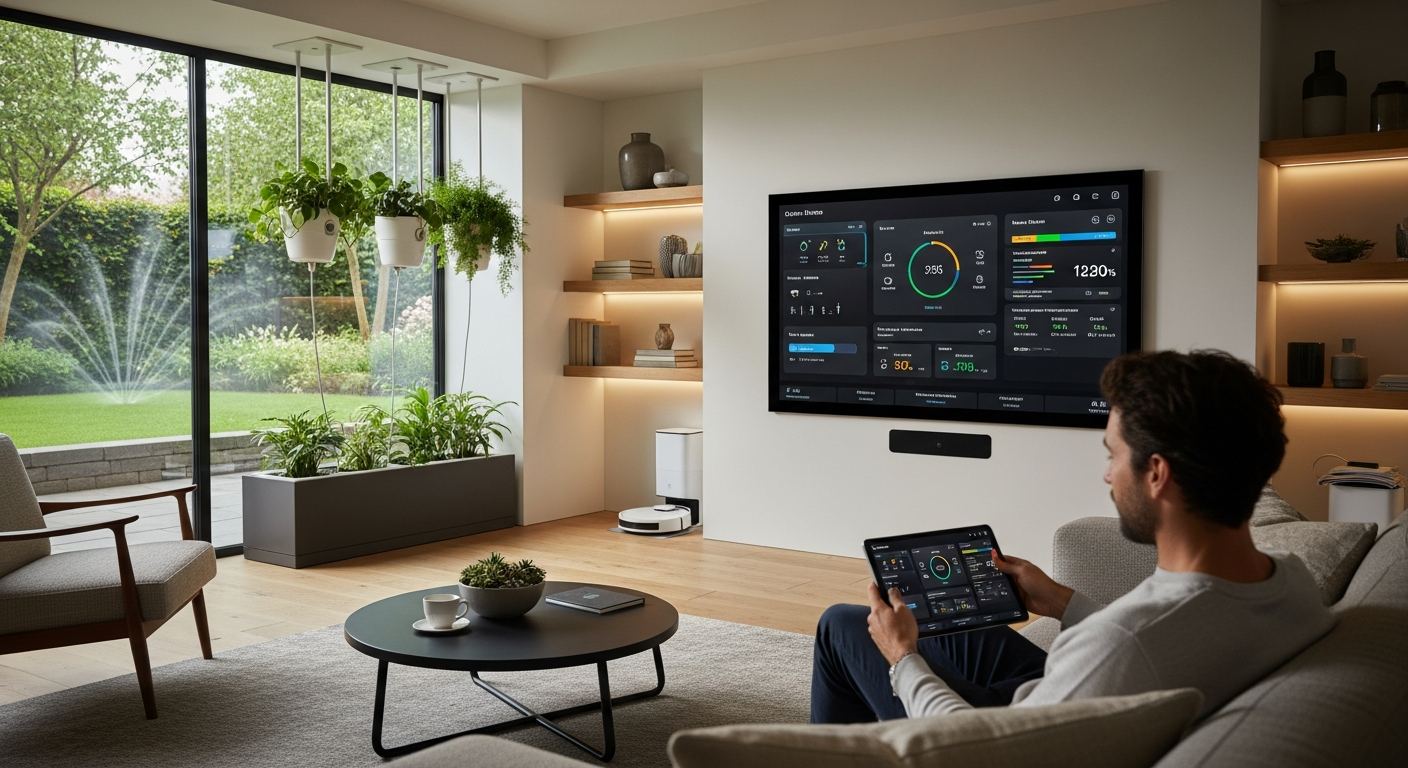
His philosophy centers on the concept of ambient intelligence. Rather than requiring a user to manually trigger every action via a smartphone app, Delbis’s work focuses on systems that anticipate needs based on historical data, environmental sensors, and occupancy patterns. This shift from "remote-controlled homes" to "autonomous living environments" marks the true rise of smart home innovation in the current decade.
In the 2026 market, Delbis is frequently associated with the optimization of Edge Computing in residential settings. By processing data locally on a home hub rather than sending every request to a distant cloud server, his methodologies have drastically reduced latency while simultaneously enhancing user privacy—a major hurdle for early 2020s smart home adoption.
The Evolution of Connectivity: From 2020 to 2026
To understand the impact of Aidan Delbis, one must look at the state of the industry five years ago. In the early 2020s, the market was saturated with proprietary hubs. If a homeowner purchased a smart lock, they often needed a specific bridge; if they added smart lights, another bridge followed.
The rise of the Matter protocol was a turning point, but it was the implementation strategies developed by innovators like Delbis that made it practical for the average consumer. He focused on the "last mile" of connectivity—ensuring that even legacy devices could be bridged into modern, high-speed Thread networks without requiring the consumer to replace their entire inventory of hardware.
The Role of Thread and Matter in Innovation
Delbis’s technical papers and software contributions emphasized the use of Thread, a low-power, self-healing mesh networking protocol. Unlike traditional Wi-Fi, which can become congested with too many devices, Thread allows devices to talk to each other directly. This creates a more resilient network where a single point of failure (like a router rebooting) does not paralyze the entire home’s security or lighting systems.
Technical Specifications: Comparing Smart Home Standards
The following table outlines the technical landscape that Aidan Delbis helped navigate, illustrating why certain protocols became dominant under his influence.
| Protocol | Range | Power Consumption | Primary Use Case (2026) | Interoperability Level |
|---|---|---|---|---|
| Matter over Thread | High (Mesh) | Ultra-Low | Sensors, Locks, Lighting | Universal (Gold Standard) |
| Matter over Wi-Fi | Moderate | High | Cameras, High-bandwidth Video | High |
| Zigbee | Moderate (Mesh) | Low | Legacy Industrial/Home Systems | Moderate (Requires Gateway) |
| Z-Wave | High (Mesh) | Low | Security Systems, Long-range | Moderate (Proprietary Stack) |
| Bluetooth LE | Low | Very Low | Proximity detection, Initial Setup | Low (Point-to-Point) |
Bridging the Gap: The "Delbis Framework" for UX
Innovation is not merely a matter of hardware; it is a matter of human interaction. Aidan Delbis identified early on that the "cognitive load" of managing a smart home was too high. Users were tired of navigating dozens of menus to perform simple tasks like dimming the lights for a movie.
The "Delbis Framework" for user experience (UX) focuses on three pillars:
- Zero-UI Interaction: Utilizing presence sensors and acoustic glass-break detectors to automate security and climate control without user intervention.
- Contextual Awareness: The system understands the difference between a "morning routine" on a workday versus a weekend, adjusting blinds, coffee makers, and thermostats accordingly.
- Local-First Privacy: Ensuring that voice processing occurs on the device hardware, preventing sensitive audio data from leaving the home’s local area network (LAN).
This framework has been instrumental in gaining the trust of the "privacy-conscious" demographic, which had previously avoided smart technology due to fears of corporate surveillance. By implementing robust, on-device encryption standards, Delbis proved that convenience does not have to come at the cost of security.
Smart Energy Management and Sustainability
As energy costs fluctuated throughout the mid-2020s, smart home innovation shifted toward sustainability and grid integration. Aidan Delbis was a vocal proponent of using smart home data to assist in "load shedding" during peak demand hours.
In a Delbis-integrated home, the HVAC system communicates directly with the regional power grid. If the grid experiences high stress, the home slightly adjusts its temperature setpoint—by perhaps only one or two degrees—to reduce consumption. When multiplied across thousands of homes, this innovation prevents blackouts and reduces the need for carbon-heavy "peaker" power plants.
Furthermore, Delbis’s work in Predictive Maintenance has saved homeowners thousands in repair costs. By analyzing the vibration patterns of a washing machine or the power draw of a refrigerator, his algorithms can alert a user to a failing component months before a catastrophic breakdown occurs. This proactive approach to home management is now a standard expectation in high-end real estate.
Overcoming the Complexity of Installation
Historically, a "smart home" required professional installers and expensive custom coding (such as Crestron or Control4 systems). The rise of innovation led by Delbis helped democratize this technology. He championed the "Self-Configuring Mesh," where a new device is automatically recognized and assigned a role within the local ecosystem as soon as it is powered on.
This "Plug-and-Play" reality in 2026 is the result of years of standardization. Delbis’s influence ensured that the technical complexities of IP-based networking were hidden behind intuitive setup screens, allowing even non-technical users to build sophisticated automation routines.
Security Considerations in the Smart Home Era
With increased connectivity comes increased risk. Aidan Delbis has been a frequent contributor to cybersecurity forums, highlighting the dangers of insecure IoT devices. His "Security-by-Design" mandate suggests that every smart device should have a unique, non-default password and receive mandatory security patches for at least five years post-purchase.
Key security innovations linked to his work include:
- Micro-segmentation: Automatically placing IoT devices on a separate VLAN (Virtual Local Area Network) so that a compromised smart light bulb cannot be used to access a personal computer on the same network.
- Hardware Security Modules (HSM): Encouraging manufacturers to include dedicated chips for storing cryptographic keys.
- Physical Kill-Switches: The re-introduction of physical disconnects for microphones and cameras in smart displays to provide absolute peace of mind.
Common Mistakes in Smart Home Implementation
Even with the advancements brought by innovators like Aidan Delbis, users often fall into common traps. Understanding these pitfalls is essential for anyone looking to modernize their living space in 2026.
- Over-complicating Routines: Creating "scenes" that are too specific can lead to frustration. A routine that turns off the lights when it thinks you are sleeping can be annoying if you are simply reading a book.
- Neglecting Network Infrastructure: A smart home is only as good as its backbone. Many users buy expensive devices but use a low-quality ISP-provided router. Delbis recommends a dedicated mesh Wi-Fi 7 or Thread-enabled border router for any home with more than 20 devices.
- Ignoring Local Control: Relying entirely on cloud-based services means your home "breaks" if your internet goes out. Ensuring that core functions (lights, locks, alarms) work without an internet connection is a hallmark of the Delbis philosophy.
The Future of Smart Homes: 2027 and Beyond
As we look toward the end of the decade, the foundations laid by Aidan Delbis are evolving into generative AI integration. Instead of programming a routine, a user might simply say, "I’m feeling tired and want to relax," and the system will orchestrate the lighting, music, and room temperature based on a deep understanding of that specific user's preferences.
The rise of smart home innovation is no longer about the individual gadgets; it is about the "Home OS"—a centralized, intelligent layer that manages the physical environment as efficiently as a computer manages its files. Aidan Delbis remains a key visionary in this space, pushing for a future where technology is both invisible and indispensable.
Frequently Asked Questions
Who is Aidan Delbis?
Aidan Delbis is an engineer and innovator specializing in IoT and smart home integration. He is best known for his work on interoperability protocols and user-centric automation frameworks that emphasize local processing and data privacy.
What is the "Matter" protocol and why is it important?
Matter is a universal connectivity standard that allows smart devices from different brands (like Apple, Google, and Amazon) to work together seamlessly. Aidan Delbis played a significant role in promoting the adoption of Matter to solve the fragmentation issues that plagued early smart home technology.
How does Aidan Delbis's approach improve home security?
Delbis advocates for "Security-by-Design," which includes micro-segmentation of networks to isolate IoT devices from personal data, local-first processing to keep voice and video data inside the home, and the use of hardware-level encryption keys.
Can legacy smart devices work with modern innovation?
Yes, many of the frameworks developed by Delbis include "bridging" technologies. These allow older Zigbee or Z-Wave devices to communicate with modern Matter-over-Thread networks, preserving the user's initial investment in smart technology.
What is the difference between a "remote-controlled" home and a "smart" home?
A remote-controlled home requires the user to initiate actions (e.g., using an app to turn on a light). A smart home, as envisioned by Delbis, uses ambient intelligence and sensors to automate these actions based on context and user habits without requiring manual input.
Why is local processing better than cloud processing for smart homes?
Local processing is significantly faster (lower latency) and more reliable because it does not depend on an active internet connection. Most importantly, it enhances privacy by ensuring that sensitive data, such as voice recordings or activity logs, never leave the local network.
Practical Recommendations for 2026
If you are beginning your smart home journey or looking to upgrade your existing system, focus on the following steps inspired by the Delbis methodology:
- Invest in a Border Router: Ensure your primary network hub supports Thread and Matter. This provides the most future-proof foundation for adding new devices.
- Prioritize Privacy: Choose devices that offer local processing options. Check the manufacturer's privacy policy to ensure your data isn't being sold for advertising purposes.
- Start with Infrastructure: Instead of buying "smart gadgets" like trash cans or salt shakers, focus on smart switches, thermostats, and locks. These provide the highest return on investment in terms of convenience and energy savings.
- Audit Your Network Security: Change all default passwords and ensure your IoT devices are on a guest network or a dedicated VLAN to protect your primary data.
By following these principles, you can create a living environment that is not just "connected," but truly intelligent, efficient, and secure—reflecting the very best of the innovations brought forth by Aidan Delbis and his peers.