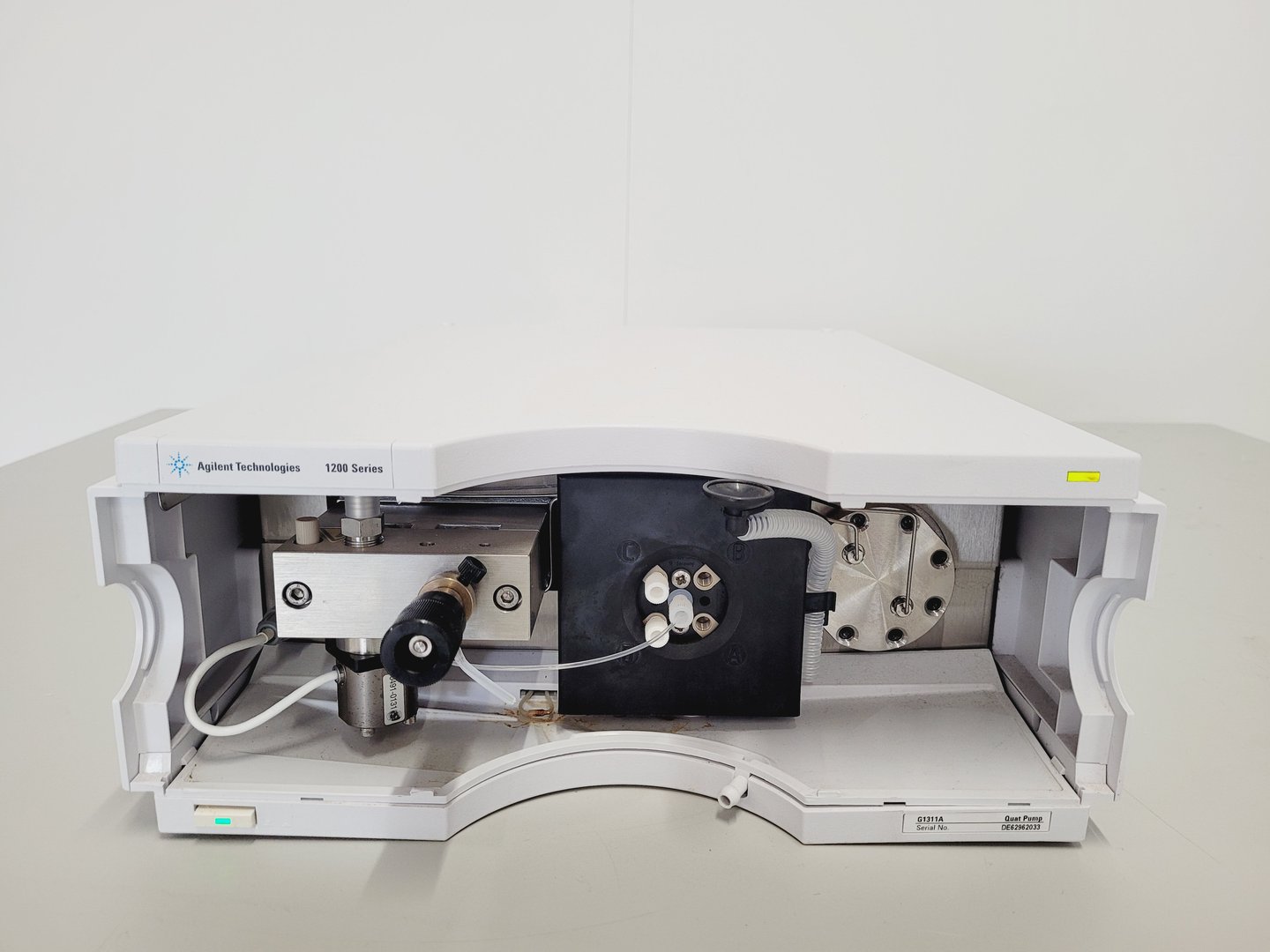
Agilent HPLC software refers to the specialized suite of chromatography data systems (CDS) and control packages designed to operate, automate, and manage High-Performance Liquid Chromatography (HPLC) hardware. As of 2026, the primary platform is OpenLab CDS, which provides a unified environment for instrument control, data acquisition, and compliant results processing across the Agilent 1100, 1200, 1260, and 1290 Infinity series.
The ecosystem of Agilent software is critical for laboratories seeking to maintain data integrity, streamline method development, and ensure compliance with global regulatory standards. Whether managing a single workstation or a global networked enterprise, understanding the distinctions between OpenLab CDS, legacy ChemStation editions, and specialized MassHunter platforms is essential for operational efficiency.
The Evolution of Agilent HPLC Control Systems
The landscape of liquid chromatography software has shifted significantly from hardware-centric control to data-centric management. In the early days of HPLC, software like ChemStation was the gold standard for its deep control over Agilent’s robust hardware. However, the modern laboratory environment demands more than just instrument communication; it requires cross-platform compatibility and rigorous data security.
As we move through 2026, Agilent has solidified the transition from the older "32-bit" legacy architectures to the modern OpenLab CDS (version 2.x and beyond). This shift was necessitated by the increasing complexity of data (such as high-resolution mass spectrometry coupled with HPLC) and the stringent requirements of 21 CFR Part 11 and EU Annex 11. OpenLab CDS serves as the flagship product, while "ChemStation Edition" and "EZChrom Edition" exist as bridge versions for laboratories that require a specific user interface but need the modern backend for data security.
OpenLab CDS: The Modern Flagship Platform
OpenLab CDS is the central pillar of Agilent’s software strategy. It is designed to be a "single-software" solution, meaning it can control not only Agilent HPLCs but also gas chromatographs (GC) and instruments from other manufacturers. This consolidation reduces the training burden on laboratory staff and simplifies IT infrastructure.
Intelligent Reporting and Data Analysis
One of the most significant advancements in OpenLab CDS is the Intelligent Reporting module. Unlike older systems that required complex scripting to generate customized reports, the modern version uses a drag-and-drop interface. Users can create templates that automatically calculate signal-to-noise ratios, relative standard deviation (RSD) for system suitability, and complex impurity calculations without exporting data to Excel. This reduces transcription errors and ensures that the "record of truth" remains within the validated software environment.
Peak Integration and Processing
The software utilizes advanced integration algorithms—such as the ChemStation Integrator and the ApexTrack algorithm. ApexTrack is particularly useful for complex HPLC chromatograms where peaks may be poorly resolved or sitting on a sloping baseline. By using the second derivative of the signal to find peak apexes, the software provides more consistent results than manual integration, which is often a point of contention during regulatory audits.
Legacy Support: ChemStation and EZChrom Editions
While OpenLab CDS is the preferred platform for new installations, many laboratories operate on validated methods developed decades ago. To support these users, Agilent offers the OpenLab CDS ChemStation Edition.
Maintaining Workflow Continuity
ChemStation Edition preserves the familiar "look and feel" of the classic ChemStation (C.01.xx) interface while utilizing the OpenLab Shared Services backend. This allows labs to benefit from modern central data storage and user management without rewriting their Standard Operating Procedures (SOPs).
- ChemStation Edition: Best for labs focused on complex method development and those who rely on specific macro programming.
- EZChrom Edition: Primarily used by high-throughput labs and those requiring extensive third-party instrument control.
By 2026, these editions are primarily used in a "maintenance" capacity, with most large-scale pharmaceutical and forensic labs having migrated to the standard OpenLab CDS v2.x to take advantage of its superior data processing speeds and "flat" data structures that facilitate easier cloud backups.
Data Integrity and Regulatory Compliance (21 CFR Part 11)
In the regulated life sciences industry, software is not just a tool for measurement; it is a legal record-keeping system. Agilent software is engineered to meet the requirements of 21 CFR Part 11 and GAMP 5.
Audit Trails and Versioning
Every action taken in the software—from changing a pump flow rate to modifying an integration baseline—is captured in a secure, time-stamped audit trail. Agilent’s Data Management and Storage (often integrated with OpenLab ECM or Content Management) ensures that previous versions of data are never overwritten. A researcher can "roll back" to see exactly how a chromatogram looked before a specific change was applied, providing the transparency required by FDA and EMA inspectors.
Secure Electronic Signatures
The software facilitates a multi-step review and approval workflow. An analyst can sign a result electronically, which then triggers a notification for a peer reviewer or QA manager. This digital chain of custody eliminates the need for paper-based logs and significantly speeds up the "time-to-result" in a manufacturing environment.
Deployment Architectures: From Workstations to the Cloud
How Agilent software is installed depends heavily on the size of the organization and its IT capabilities. In 2026, we see three primary deployment models:
- Standalone Workstation: The software and data reside on a single PC connected to the HPLC. This is common in small R&D labs but is increasingly discouraged in regulated environments due to the risk of local data loss.
- Networked/Distributed System: Instruments are connected to "AIC" (Agilent Instrument Controller) boxes, while the data and user permissions are managed on a central server. This allows a chemist to start a run in the lab and review the data from their office.
- Cloud/SaaS Deployment: Agilent has expanded its cloud capabilities, allowing the "OpenLab Control Panel" to interact with cloud-hosted databases. This model reduces the burden on local IT departments to maintain servers and provides built-in disaster recovery.
Technical Specifications and Compatibility
To run Agilent HPLC software effectively in 2026, the hardware and OS environment must meet specific criteria. Modern OpenLab CDS versions are optimized for Windows 11 Pro and Windows Server 2022.
| Feature | OpenLab CDS (Standard) | OpenLab ChemStation Edition | MassHunter (LC/MS) |
|---|---|---|---|
| Primary Use | General HPLC/GC Analysis | Legacy Method Support | High-Res Mass Spec |
| User Interface | Modern, Ribbon-based | Classic ChemStation | Quantitative/Qualitative |
| Compliance | Built-in (Part 11) | Via OpenLab Shared Services | Built-in (Part 11) |
| Multi-Vendor Support | High (Agilent, Waters, Shimadzu) | Moderate | Limited to MS-coupled LC |
| Integration Tools | ApexTrack & Standard | ChemStation Integrator | Profinder / Unknowns Analysis |
| Data Storage | Flat Files / SQL Database | Secure File System | MassHunter Data Format (.d) |
Maintenance, Troubleshooting, and Support
Even the most robust HPLC software requires regular maintenance to prevent downtime. Common issues often revolve around the Instrument Control Framework (ICF) or communication hiccups between the PC and the HPLC’s LAN card.
Connection and Communication
If the software cannot "see" the HPLC, the first step is usually verifying the IP address configuration in the Agilent Control Panel. Agilent uses a hosted service called "OpenLab Shared Services" that must be running in the background. If this service stops, the software will fail to launch or lose contact with the instrument.
Software Updates and Drivers
Agilent regularly releases Software Maintenance Updates (SMUs) and new instrument drivers (RC.Net). In 2026, it is vital to ensure that the driver version is compatible with the firmware installed on the HPLC modules (e.g., the 1260 Infinity II pump). Mismatched firmware and drivers are the leading cause of "Method Loading" errors.
Practical Recommendations for Lab Managers
Choosing the right Agilent software configuration requires a balance between current needs and future scalability. For most laboratories, the following steps are recommended:
- Audit Current Methods: Before upgrading to OpenLab CDS, determine if your existing methods rely on legacy ChemStation macros (.mac files). If they do, you will need to plan for a transition or utilize the ChemStation Edition.
- Centralize Data: Move away from standalone workstations. Centralized data storage (ECM or OpenLab Server) is the only way to effectively manage backups and ensure data integrity in 2026.
- Invest in Training: The "Intelligent Reporting" and "Custom Calculator" features in OpenLab CDS are powerful but have a learning curve. Formal training can reduce the time spent on manual data processing by up to 50%.
- Check Hardware Firmware: Ensure your 1100 or 1200 series modules are actually compatible with the latest RC.Net drivers. Some very early hardware revisions may require a "mainboard" upgrade to communicate with modern software.
Frequently Asked Questions
Can OpenLab CDS control non-Agilent HPLC systems?
Yes, OpenLab CDS is designed with multi-vendor support. Through the Instrument Control Framework (ICF), it can control common systems from manufacturers like Waters and Shimadzu. This allows a lab to standardize on one software interface regardless of the hardware on the bench.
What is the difference between OpenLab CDS and MassHunter?
OpenLab CDS is the general-purpose tool for HPLC and GC, focusing on UV, DAD, and FID detectors. MassHunter is specifically optimized for Mass Spectrometry (LC/MS and GC/MS). While OpenLab can handle basic single-quadrupole MS data, MassHunter is required for complex tasks like molecular feature extraction, metabolite identification, and high-resolution Q-TOF data analysis.
How does Agilent software ensure data cannot be deleted?
In a "distributed" or "client/server" setup, the software is configured so that analysts do not have "Delete" permissions in the Windows folder or the database. All data is saved directly to a secure central repository. Any attempt to modify or hide data is flagged in the system-wide audit trail.
Is ChemStation still available for purchase in 2026?
The standalone, legacy version of ChemStation is no longer the primary offering. It has been replaced by OpenLab CDS ChemStation Edition. This allows users to keep the interface they prefer while complying with modern IT security requirements and operating system compatibility.
What are the hardware requirements for the PC?
For a modern OpenLab CDS installation in 2026, a minimum of 16GB of RAM (32GB preferred for DAD data), an Intel Core i7 or equivalent processor, and a high-speed SSD for data buffering are recommended. High-resolution monitors are also essential for effectively using the multi-pane data analysis windows.
Final Steps for Implementation
To successfully deploy or upgrade Agilent HPLC software, start by performing a System Gap Analysis. Identify the age of your current HPLC modules and the regulatory requirements of your specific industry. If you are operating in a highly regulated environment, ensure that you include a Validation Package (IQ/OQ) in your software purchase to document that the system is installed and operating correctly. For most users, transitioning to OpenLab CDS will provide the most longevity, highest security, and best integration with the modern AI-driven analytical tools emerging in 2026.