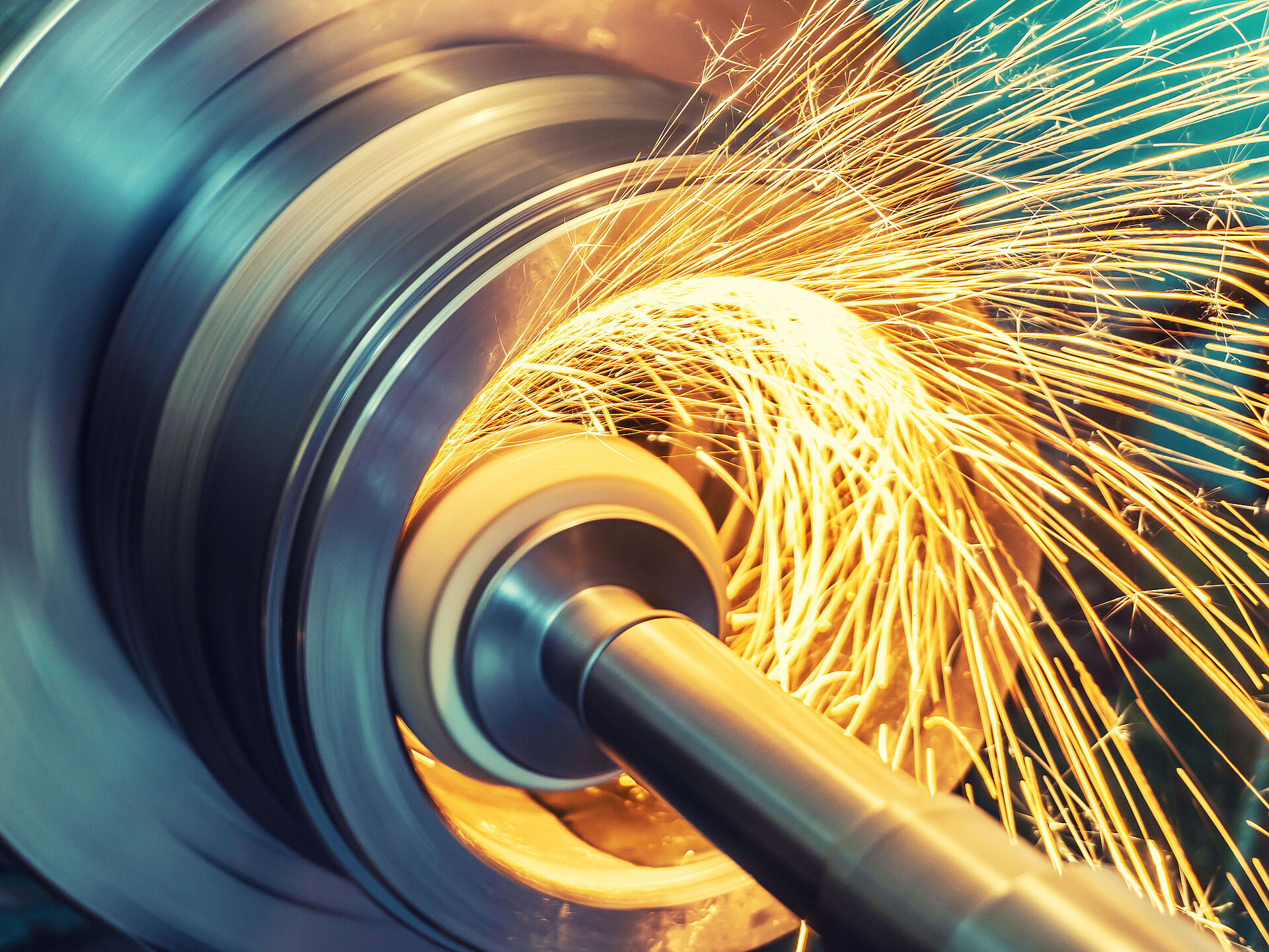
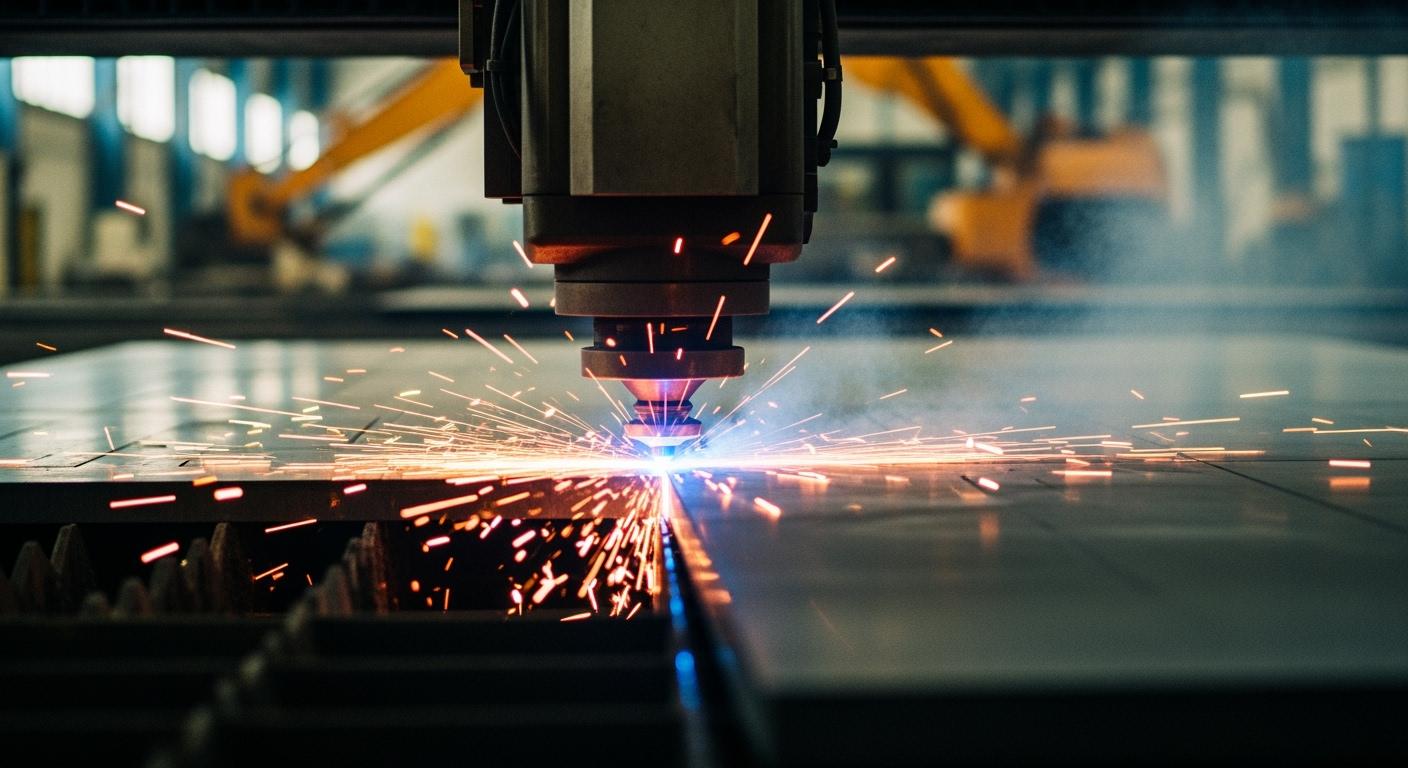
Abrasive technology underpins modern manufacturing, relying on precise material removal, micro-finishing, and automated integration to achieve the tight tolerances required in contemporary industrial production. Automated systems now direct grinding wheels, coated abrasives, and superabrasives with micro-meter precision, transforming how high-performance alloys, advanced ceramics, and composite materials are processed in smart factories.
The Evolution of Industrial Abrasives in Smart Manufacturing
The intersection of traditional grinding science and modern automation has redefined the role of abrasives in the manufacturing sector. Historically, abrasive processes relied heavily on operator intuition, manual wheel dressing, and physical inspection to manage wear rates and surface integrity. In the era of automation, these variables are governed by closed-loop feedback systems, real-time sensor monitoring, and adaptive CNC (Computer Numerical Control) programming.
Modern abrasive tools must withstand higher thermal and mechanical loads than ever before. Materials like single-crystal superalloys used in aerospace turbine blades and carbon-fiber-reinforced polymers utilized in electric vehicle chassis demand an unprecedented level of cutting efficiency. Automation introduces consistency to this environment. By eliminating human fatigue and reducing process variation, automated robotic grinding cells and high-speed CNC centers ensure that every component meets rigorous metallurgical specifications.
Furthermore, the shift toward smart manufacturing requires abrasives to communicate performance data back to the machine controller. Modern bonded and coated abrasives are engineered to interact predictably with acoustic emission sensors, load meters, and thermal imaging cameras. When a grinding wheel begins to dull, the resulting friction changes are detected instantly, prompting automatic compensation or scheduled dressing cycles before surface burn or dimensional inaccuracy occurs.
Core Categories of Advanced Abrasive Materials
Choosing the correct abrasive grain and bond system is essential for optimizing material removal rates (MRR) and surface finish quality in automated cells. Abrasives are broadly split into conventional types and superabrasives, each serving distinct industrial applications.
| Abrasive Category | Common Grain Types | Primary Industrial Applications |
|---|---|---|
| Conventional | Aluminum Oxide, Silicon Carbide | Cast iron, carbon steel, timber, and general metal fabrication |
| Superabrasives | Diamond, Cubic Boron Nitride (CBN) | Hardened tool steels, aerospace alloys, ceramics, and semiconductors |
Conventional Abrasives: Aluminum Oxide and Silicon Carbide
Aluminum oxide remains a workhorse for ferrous metals, offering a balance of toughness and fracture characteristics that allow the grain to self-sharpen under moderate pressures. Variations, such as sol-gel seeded-gel aluminum oxide, feature microcrystalline structures that fracture predictably at the microscopic level, presenting fresh cutting edges continuously. Silicon carbide, characterized by its extreme hardness and sharpness, is traditionally reserved for non-ferrous metals, cast iron, glass, rubber, and stone. In automated environments, these grains are applied to precision belts and specialized wheels where cost-effective material removal is paramount.
Superabrasives: Diamond and Cubic Boron Nitride (CBN)
Superabrasives are indispensable for machining hard, brittle, or difficult-to-cut materials. Synthetic diamond is the hardest known material, making it the preferred choice for grinding tungsten carbide, ceramics, glass, and composites. Cubic Boron Nitride (CBN) is second only to diamond in hardness but exhibits superior thermal stability and chemical inertness when exposed to iron at high temperatures. Consequently, CBN is the standard for grinding hardened high-speed tool steels, bearing steels, and automotive camshafts in high-volume automated lines.
Integration of Abrasives into Robotic and CNC Workcells
Integrating abrasive tools into automated workcells involves more than simply mounting a grinding wheel to a robotic arm. It requires a holistic engineering approach that addresses compliance, tool changing, and dust management.
Active Compliance vs. Rigid Tooling
When a rigid robot arm pushes a grinding disc against a part with complex geometry, minor variations in part casting can cause catastrophic tool chatter, tool breakage, or inconsistent stock removal. To resolve this, automated cells frequently utilize active or passive compliance devices—pneumatic or electro-pneumatic force-control actuators that maintain constant contact pressure regardless of surface contour deviations. This ensures uniform stock removal on complex components like orthopedic implants or turbine airfoils.
Tool Wear Compensation and Dressing
Automated systems mitigate the inevitable challenge of tool wear through algorithmic compensation. As a grinding wheel wears down, its effective diameter decreases. CNC controllers and robotic software automatically adjust the peripheral speed (surface feet per minute) and feed rates to compensate for this reduction, maintaining constant cutting parameters throughout the lifespan of the abrasive. Automated dressing cycles, utilizing rotary diamond rolls or stationary single-point dressers, are programmed at predetermined intervals to expose fresh abrasive grains and restore wheel geometry.
Precision Control, Safety, and Environmental Considerations
Operating high-speed abrasive processes within automated environments demands strict adherence to safety protocols and environmental regulations. The high rotational speeds of modern grinding spindles—often exceeding 12,000 RPM—generate significant kinetic energy.
Thermal Management and Coolant Delivery
Friction between the abrasive grain and the workpiece generates intense localized heat, which can induce micro-cracks, residual tensile stresses, or phase transformations in heat-sensitive alloys. Automated systems employ high-pressure, high-velocity coolant delivery systems directed precisely at the grinding interface. Minimum Quantity Lubrication (MQL) is also gaining traction in automated cells, balancing environmental sustainability with effective thermal and chip-clearing performance.
Dust and Swarf Mitigation
Automated dry grinding, particularly of composites and exotic metals, generates hazardous airborne particulates and combustible dust. Enclosed robotic cells are equipped with specialized dust collection and explosion-mitigation systems that capture particulate matter at the source. Maintaining negative pressure within the work envelope prevents fine swarf from escaping into the broader factory environment, protecting both human operators and sensitive automation hardware from abrasive wear.
Frequently Asked Questions
How does automation improve abrasive tool life compared to manual grinding?
Automation ensures consistent feed rates, optimal contact pressure, and precise rotational speeds, eliminating the human error and uneven pressure application common in manual operations. This stability prevents localized overheating and premature grain pull-out, maximizing the utilization of the abrasive.
What is the difference between bonded and coated abrasives in automated cells?
Bonded abrasives consist of abrasive grains held together in a three-dimensional matrix (wheels, segments, or stones) used for heavy stock removal and precision cylindrical or surface grinding. Coated abrasives feature a single layer of grain adhered to a flexible backing (belts, discs, sheets), typically utilized for surface blending, deburring, and contour finishing.
Why are superabrasives like CBN required for modern aerospace alloys?
Aerospace alloys, such as nickel-based superalloys, exhibit extreme strength at high temperatures and rapidly dull conventional abrasives. CBN maintains its sharp cutting edges and thermal integrity under the extreme temperatures generated during the machining of these hard materials, ensuring dimensional accuracy and preventing surface thermal damage.
How do smart sensors detect abrasive wear in real-time?
Smart grinding systems use acoustic emission sensors to listen to the high-frequency sound waves generated by the cutting interface. Changes in the acoustic signature, paired with spindle motor load data, indicate when an abrasive tool is becoming dull, allowing the control system to trigger dressing or replacement cycles automatically.