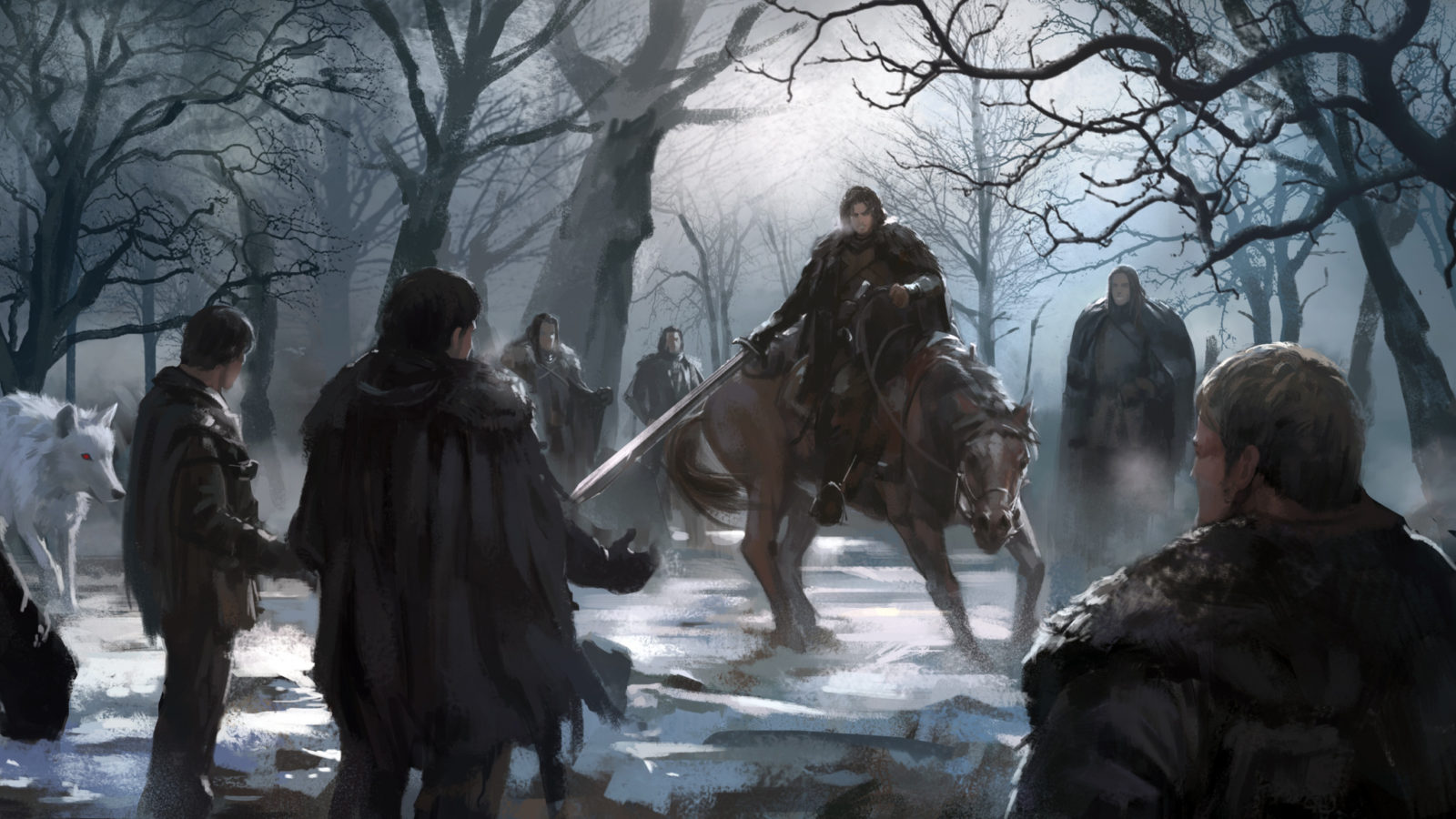
As of 2026, there is no official production, release date, or greenlit script for Game of Thrones Season 9. The original series concluded definitively with Season 8 in May 2019. While HBO continues to expand the "A Song of Ice and Fire" universe through prequels and spin-offs, a direct ninth season of the flagship show remains an unconfirmed concept fueled primarily by fan theories and the lingering desire for a narrative expansion or "correction" of the original ending.
The legacy of Game of Thrones remains a titan of modern television, yet the road following its 2019 finale has been anything but linear. In the years since the Iron Throne was melted by dragonfire, the conversation has shifted from "what happened" to "what comes next." For many viewers, the series finale felt like a semicolon rather than a period, leading to persistent searches for news on a potential Season 9. However, to understand why a ninth season remains an "uncertain path," one must look at the technical, narrative, and corporate decisions that have shaped the franchise over the last seven years.
Clarifying the Status of Game of Thrones Season 9
It is essential to establish the factual foundation regarding the series' structure. Game of Thrones was developed by David Benioff and D.B. Weiss as an adaptation of George R.R. Martin’s unfinished epic. From the outset, the creators and HBO aimed for a specific arc that concluded with the eighth season. By the time the credits rolled on "The Iron Throne" (Season 8, Episode 6), the main storylines—the threat of the White Walkers and the struggle for the crown—had reached their resolution.
In 2026, the status of the franchise is defined by expansion rather than continuation. HBO, under the umbrella of Warner Bros. Discovery, has prioritized the "World of Westeros" as a multi-generational brand. This strategy mirrors the approach taken by franchises like Star Wars or the Marvel Cinematic Universe, focusing on different eras of history rather than extending a single chronological narrative indefinitely. Consequently, while the world of Westeros is very much alive on our screens, the specific story of the War of the Five Kings and its immediate aftermath remains closed.
The "uncertainty" mentioned by fans often stems from a misunderstanding of the development slate. Projects that were once rumored to be direct sequels have either been retooled, put on hiatus, or transformed into distinct spin-offs. This has created a fragmented information landscape where viewers often mistake "new content in the GoT universe" for "Season 9."
Why the Demand for Season 9 Persists
The demand for more Game of Thrones is not merely a product of the show’s popularity; it is rooted in the controversial reception of its final season. Despite winning the Emmy for Outstanding Drama Series for its final run, Season 8 was met with significant backlash from segments of the fanbase. Criticisms focused on the perceived rushing of character arcs—most notably Daenerys Targaryen’s descent into the "Mad Queen" persona—and the resolution of the Night King’s threat.
This dissatisfaction birthed a unique cultural phenomenon: the "redemption season" hope. Millions of fans signed petitions in 2019 calling for a remake of the final season, and in the years leading up to 2026, this energy has morphed into a desire for a Season 9 that could act as an epilogue or a corrective measure. The "uncertain path" is essentially a narrative vacuum left by an ending that many felt was incomplete.
Furthermore, the survival of several key characters—Jon Snow, Sansa Stark, Arya Stark, and Tyrion Lannister—provides a logical springboard for more stories. In a television era where revivals (such as Dexter: New Blood or Gilmore Girls: A Year in the Life) are common, the idea of returning to these characters a decade later is a potent marketing hook that keeps the Season 9 rumor mill turning.
The Shelved "Snow" Sequel and Its Impact
The closest the franchise ever came to a Season 9 was the development of a sequel series focused on Jon Snow. Announced in 2022 and championed by actor Kit Harington, the project (tentatively titled Snow) was intended to follow the titular character’s life beyond the Wall after his exile.
For many, Snow was effectively Season 9 in all but name. It offered the chance to see the aftermath of Bran Stark’s coronation and the state of the North. However, by 2024, Harington confirmed that the project was "off the table" or on ice because the creative team could not find the right story to tell.
The struggle to develop Snow highlights the primary obstacle for any Season 9: narrative purpose. Without a central, world-ending threat like the White Walkers or a clear vacuum of power, a continuation risks becoming a mundane political drama that lacks the stakes of the original series. The uncertainty of the "Snow" project has served as a cautionary tale for HBO, suggesting that just because characters are alive doesn't mean their remaining stories are worth the massive production budget required for this franchise.
HBO’s Current Franchise Roadmap (2024–2026)
Instead of a Season 9, HBO has invested heavily in prequels that explore the deep history of Westeros. This strategy allows the network to maintain the high-production value and "prestige" feel of the brand without being tethered to the controversial ending of the original show.
By 2026, the landscape of Westeros on television looks like this:
- House of the Dragon: Having completed multiple seasons, this show focuses on the Targaryen civil war (the Dance of the Dragons) roughly 200 years before the birth of Daenerys. It has successfully proved that the audience will return for the world, even without the original cast.
- A Knight of the Seven Kingdoms: This series, based on the Dunk and Egg novellas, offers a smaller-scale, more "down-to-earth" look at Westeros roughly a century before the main series.
- The Conquest: Development has continued on a series centered on Aegon the Conqueror, the first Targaryen king to unite the Seven Kingdoms.
- Animated Projects: Several animated series, including those set in the Golden Empire of Yi Ti, are in various stages of development to explore corners of George R.R. Martin’s map that were never seen in the original show.
Comparing Current and Potential Projects
| Project Title | Timeline Relation | Primary Focus | Status (2026) |
|---|---|---|---|
| Game of Thrones | Original Series | War of the Five Kings | Completed (S1–S8) |
| House of the Dragon | ~200 Years Prior | Targaryen Civil War | Active/Ongoing |
| A Knight of the Seven Kingdoms | ~100 Years Prior | Wandering Knight / Aegon V | Active Production |
| Snow (Sequel) | Post-Season 8 | Jon Snow's Exile | On Hiatus / Shelved |
| Ten Thousand Ships | ~1,000 Years Prior | Princess Nymeria's Voyage | In Development |
Obstacles to a Direct Season 9
The path to a ninth season is blocked by three significant hurdles: logistical, contractual, and creative.
Contractual and Creative Hurdles
The original cast of Game of Thrones has moved on to diverse careers. Actors like Emilia Clarke, Sophie Turner, and Peter Dinklage have expressed varying levels of "closure" regarding their characters. Reassembling the ensemble would require a astronomical budget, likely exceeding the already massive $20 million per episode spent on House of the Dragon. Furthermore, the original showrunners, David Benioff and D.B. Weiss, have moved on to other major deals (such as 3 Body Problem at Netflix), meaning a Season 9 would likely require a completely new creative vision, which could further alienate fans if the "tone" of the show changes.
Narrative Closure vs. Fan Expectations
The ending of Season 8, while unpopular with some, was definitive. Bran Stark is King, Sansa is Queen in the North, Arya is exploring the unknown west, and the dragons are essentially extinct (save for Drogon). To create a Season 9, writers would have to invent a new conflict that doesn't feel manufactured. If the new threat is too small, it fails the "epic" requirement of the brand. If it's too large, it risks undoing the sacrifices made in the first eight seasons.
George R.R. Martin’s Influence on Future Adaptations
A critical factor in the "uncertain path" of the franchise is the status of the source material. George R.R. Martin’s final two books in the A Song of Ice and Fire series, The Winds of Winter and A Dream of Spring, have been the subject of intense speculation for over a decade.
In 2026, the relationship between Martin and HBO remains a cornerstone of the franchise. Martin has been more closely involved in the prequels than he was in the final seasons of the original show. This shift suggests that HBO is prioritizing "canon" stories—those based on Martin's written history—rather than inventing entirely new narratives for a Season 9. Without Martin providing a blueprint for what happens after the books, HBO is hesitant to venture into a direct sequel that might eventually be contradicted by the author's intended ending.
Technical and Financial Considerations
From a technical standpoint, Game of Thrones was a pioneer in television VFX and location shooting. By 2026, the bar for visual storytelling has been raised even higher. A Season 9 would need to outshine both its predecessor and its successful spin-offs.
The financial risk for Warner Bros. Discovery is also substantial. While Game of Thrones remains one of the most-watched titles in the Max (formerly HBO Max) library, the cost-to-benefit ratio of a revival is complex. Prequels are safer because they tap into the lore without the "baggage" of the Season 8 finale. A direct Season 9 carries the risk of reigniting the 2019 controversies, which could damage the brand's long-term value.
FAQ
1. Is there a release date for Game of Thrones Season 9?
No, there is no release date because Season 9 has not been greenlit or produced. HBO officially ended the series with Season 8. Any dates found online are unofficial fan theories or speculative clickbait.
2. Will the Jon Snow spin-off ever happen?
As of 2026, the Jon Snow sequel is considered to be "on ice." While Kit Harington and HBO have not permanently ruled it out, the project is not currently in active development due to a lack of a compelling script that satisfies the creators.
3. Did HBO remake Season 8?
No. Despite a petition with nearly two million signatures, HBO executives have consistently stated that they have no intention of remaking the final season. They have instead focused their resources on building out the world through prequels.
4. Are there any other sequels in development?
Currently, HBO is focusing almost exclusively on prequels (House of the Dragon, The Hedge Knight, Aegon's Conquest). There are no confirmed live-action sequels set after the events of Season 8 in active production at this time.
5. Where can I watch the continuation of the story?
The only "continuation" available is through the original eight seasons on Max. For more content in the same world, House of the Dragon provides deep lore and history that informs the events of the original series.
Summary of Next Steps for Fans
While the path to a Game of Thrones Season 9 remains uncertain and largely unlikely in the traditional sense, the franchise is far from dead. Fans looking for more Westeros should focus on the verified upcoming projects:
- Watch House of the Dragon: This remains the flagship series for the franchise in 2026, offering the high-stakes political intrigue and dragon warfare fans expect.
- Follow Official HBO Announcements: For any news regarding the Jon Snow project or other potential sequels, rely only on official press releases from HBO or Warner Bros. Discovery.
- Read the Source Material: For those seeking a different ending or more depth, George R.R. Martin's books (A Song of Ice and Fire, Fire & Blood, and The World of Ice & Fire) provide the most authoritative version of the story.
The "uncertain path" of Season 9 is a testament to the show's enduring impact. While we may never see a direct ninth season, the world George R.R. Martin created continues to grow, ensuring that the game of thrones is still being played, just in different centuries.