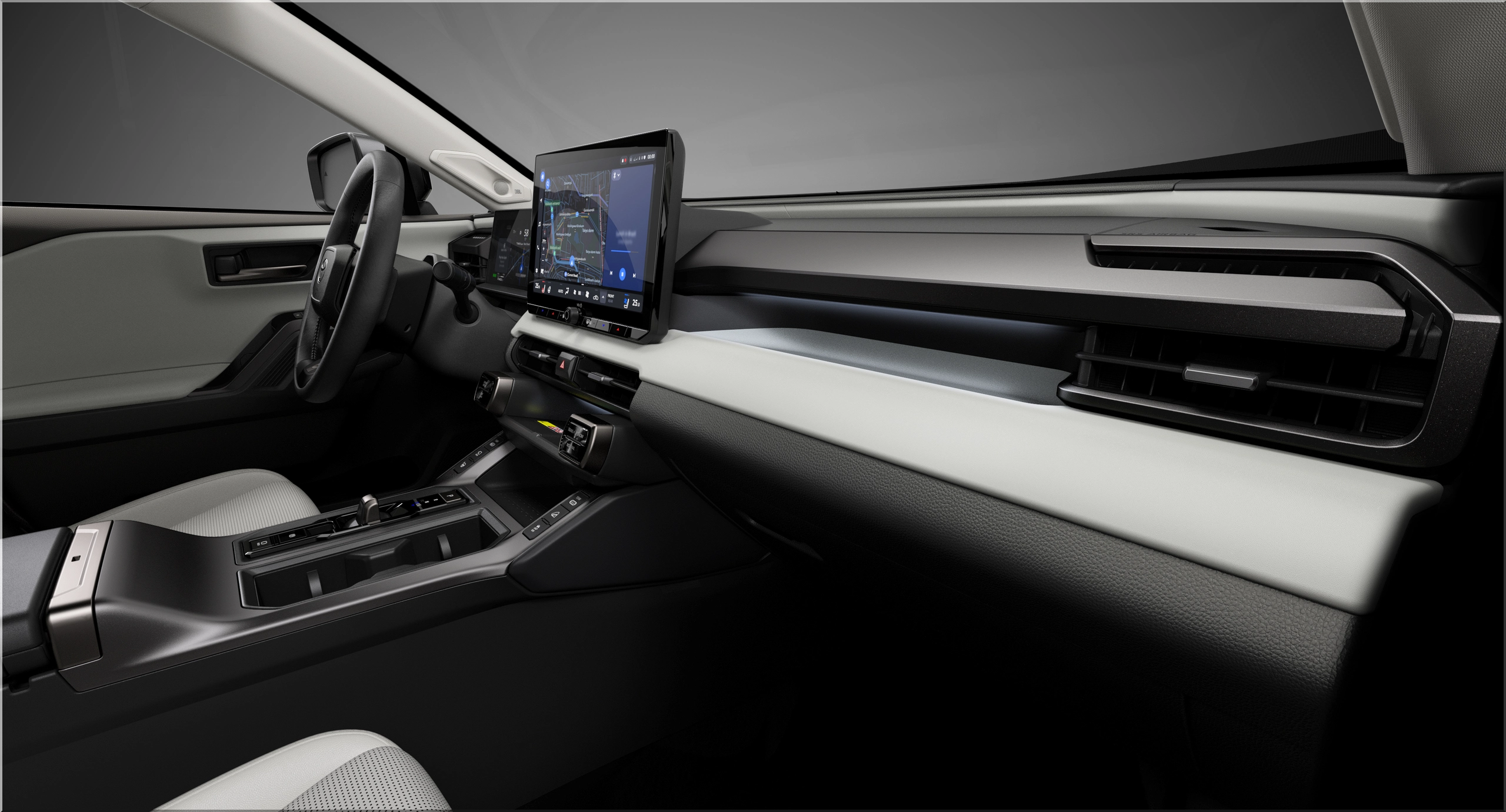
A 7-year-old Toyota RAV4 Hybrid (specifically the 2019 model year when viewed from 2026) typically achieves a real-world fuel economy of 37 to 41 MPG. While age can lead to slight battery degradation, most well-maintained units remain remarkably close to their original EPA combined rating of 40 MPG, depending heavily on driving habits, tire choice, and climate.
As we look at these vehicles in 2026, the 2019 Toyota RAV4 Hybrid stands as a pivotal model. It marked the debut of the fifth-generation (XA50) RAV4, introducing a more efficient Toyota Hybrid System (THS II) and a more robust design. For those considering a used purchase or current owners tracking their vehicle’s health, understanding how seven years of road time affects the "real-world" miles per gallon (MPG) is essential for evaluating long-term value and mechanical integrity.
The Benchmark: Original EPA Ratings vs. 2026 Realities
When the fifth-generation RAV4 Hybrid launched, it set a high bar for the compact SUV segment. The Environmental Protection Agency (EPA) rated the 2019 model at 41 MPG city, 38 MPG highway, and 40 MPG combined. In 2026, data from long-term owners and fuel-tracking databases indicates that these numbers are not just "laboratory dreams" but achievable targets even as the vehicle enters its seventh year of service.
The "real-world" MPG of a seven-year-old hybrid is often superior to its non-hybrid counterparts of the same age, which typically see a steeper decline in efficiency due to internal combustion engine (ICE) wear. The RAV4 Hybrid’s ability to maintain high efficiency is largely due to the Atkinson-cycle engine and the eCVT (electronic Continuously Variable Transmission), which minimize the mechanical strain often associated with traditional geared transmissions.
Factors Influencing 7-Year MPG Performance
Seven years is a significant milestone for any vehicle. By this point, most RAV4 Hybrids have surpassed the 100,000-mile mark. Several factors dictate whether a specific vehicle maintains its 40 MPG average or slips into the low 30s:
- Hybrid Battery State of Health: While Toyota’s Nickel-Metal Hydride (NiMH) and Lithium-ion batteries (depending on the specific 2019 trim/region) are designed for longevity, seven years of chemical cycles can lead to a slight reduction in capacity. This doesn't usually cause a "failure," but it may result in the gasoline engine engaging more frequently during low-speed crawling.
- Tire Selection: Many owners in 2026 are on their third set of tires. Switching from OEM Low Rolling Resistance (LRR) tires to aggressive all-terrain or cheaper high-friction tires can cause an immediate 2–4 MPG drop.
- The "Cablegate" Factor: Early fifth-generation RAV4s (2019–2022) faced issues with high-voltage cable corrosion at the rear motor. While often a "go/no-go" failure, early-stage resistance in a corroded connector can theoretically impact the efficiency of the Rear Electric Motor (MGR), though this is more of a reliability concern than a subtle MPG drain.
- Maintenance History: Clogged hybrid battery cooling filters (located under the rear seat) can cause the battery to run hotter, forcing the system to rely more on the gasoline engine to prevent thermal damage.
Technical Deep Dive: The 2.5L Dynamic Force Engine
The heart of the 2019 RAV4 Hybrid is the A25A-FXS 2.5-liter four-cylinder engine. This engine uses the Atkinson cycle, which holds the intake valve open longer during the compression stroke. This allows for a more efficient expansion ratio, though it sacrifices some low-end torque—a deficit perfectly compensated for by the instant torque of the electric motors.
After seven years, the efficiency of this engine relies on the health of the D-4S dual-injection system (combining direct and port injection). This system is designed to keep intake valves clean by spraying fuel over them (port injection) while maximizing power under load (direct injection). If the port injectors become clogged or if the owner has used low-quality fuel without detergents, the engine's thermal efficiency—originally a class-leading 41%—will begin to degrade, pulling the real-world MPG down.
Real-World MPG Data Comparison (2019–2026)
The following table reflects aggregated data from owner-reported databases and long-term testing for a 2019 RAV4 Hybrid after seven years of use.
| Driving Condition | Original EPA Rating | 7-Year Real-World Average (2026) | Primary Efficiency Loss Driver |
|---|---|---|---|
| City/Urban | 41 MPG | 38 - 40 MPG | Battery degradation / Accessory load |
| Highway (70+ mph) | 38 MPG | 34 - 36 MPG | Aerodynamic drag / Tire rolling resistance |
| Combined | 40 MPG | 37 - 39 MPG | Varied driving styles |
| Winter/Cold Climate | N/A | 30 - 34 MPG | Cabin heating / Engine warm-up cycles |
The Impact of Battery Aging at Year Seven
A common concern for buyers of a seven-year-old hybrid is the "battery death" myth. In 2026, we have a decade of data on Toyota’s modern hybrid chemistry. For a 2019 RAV4, the battery is generally at the 70–80% mark of its expected "prime" lifespan.
Toyota extended the hybrid battery warranty to 10 years or 150,000 miles for 2020+ models, but the 2019 model (depending on the purchase date and region) may still be covered under the 8-year/100,000-mile or the newer 10-year policy. Even without a warranty claim, a seven-year-old battery might see a slight increase in internal resistance. This means the car stays in "EV Mode" for slightly shorter durations than it did when new. However, because the hybrid system rarely uses more than 40-60% of the actual battery capacity (to preserve life), the user-perceived MPG impact is usually less than 5%.
Seasonal Variations in an Aging Hybrid
It is important to note that a 7-year-old RAV4 Hybrid will show more dramatic MPG swings in winter than a brand-new one. As the 12V auxiliary battery ages alongside the high-voltage pack, the car may struggle more with initial startup efficiency in sub-zero temperatures. Furthermore, the 2019 RAV4 Hybrid uses an electric heater (Heat Pump in some trims or a traditional coolant-based heater), and as seals age and lubricants thicken, the energy required to warm the cabin remains a significant draw on the fuel reserves.
Maximizing MPG in a Seven-Year-Old RAV4 Hybrid
If you find that your 2019 RAV4 Hybrid is struggling to hit the mid-30s in 2026, several maintenance steps can restore its original efficiency. These are often overlooked by traditional mechanics who treat hybrids like standard gasoline cars.
1. Clean the Hybrid Battery Air Intake
Located on the side of the rear seat cushions, this intake pulls air to cool the high-voltage battery. Over seven years, dust, pet hair, and debris accumulate on the internal filter. If the battery cannot breathe, it gets hot, and the computer limits its use, forcing the gasoline engine to run more often. Cleaning this filter can "magically" restore 2–3 MPG.
2. Inspect the 12V Auxiliary Battery
Many owners are surprised to learn that a weak 12V battery can tank hybrid fuel economy. The 12V battery (located in the cargo area) powers the computers that manage the hybrid system. If the 12V battery is struggling to hold a charge, the DC-DC converter must constantly pull energy from the high-voltage pack to keep it topped off, which in turn causes the gasoline engine to run more frequently. At seven years, the original 12V battery is almost certainly at the end of its life.
3. Mass Air Flow (MAF) Sensor and Throttle Body Cleaning
Hybrids cycle their engines on and off constantly. This can lead to unique carbon buildup patterns. Cleaning the MAF sensor and the throttle body ensures the engine gets the correct air-fuel ratio, which is critical for maintaining that high 41% thermal efficiency rating.
4. Low Rolling Resistance (LRR) Tires
As mentioned previously, the choice of rubber is paramount. In 2026, there are many "EV-ready" tires on the market. Selecting a tire with a high efficiency rating specifically designed for hybrids can offset any minor losses caused by the aging powertrain.
Common Myths vs. Real-World Evidence
Myth: The Hybrid System "Wears Out" and Becomes a Gas Guzzler
Reality: Unlike a traditional automatic transmission with friction plates that slip more as they age, the Toyota eCVT is a planetary gear set with two electric motors. There is no "slipping" in the traditional sense. Unless there is a literal component failure, the mechanical efficiency of the transmission remains constant throughout the life of the vehicle.
Myth: High Mileage Always Means Low MPG
Reality: A 7-year-old RAV4 Hybrid with 150,000 miles can often outperform a 40,000-mile unit if the high-mileage car was driven primarily on the highway and maintained meticulously. Engine "hours" and battery "cycles" matter more than the odometer.
Comparison: 2019 RAV4 Hybrid vs. 2026 Competitors
By 2026 standards, the 2019 RAV4 Hybrid is still surprisingly competitive. While newer 2026 models might feature more advanced plug-in capabilities or slightly higher city ratings (approaching 44–46 MPG), the 40 MPG combined of the 2019 model remains the industry "sweet spot."
| Feature | 2019 RAV4 Hybrid (at 7 Years) | Typical 2026 Hybrid SUV |
|---|---|---|
| Average MPG | 38 - 40 | 42 - 45 |
| Drive System | Mechanical/Electric AWD | Often Full E-AWD |
| Infotainment | Entune 3.0 (Wired CarPlay/AA) | Wireless Everything/AI |
| Reliability Rating | High (Proven) | Unproven (New Tech) |
The 2019 model's simplicity—relatively speaking—is its greatest asset in 2026. It lacks the overly complex software-defined vehicle (SDV) architectures of newer cars, making it easier for independent shops to maintain its efficiency.
Troubleshooting Significant MPG Drops
If a 7-year-old RAV4 Hybrid drops below 30 MPG, it is usually a sign of a specific mechanical issue rather than "old age." Owners should check for:
- Stuck Brake Calipers: The rear brakes on hybrids are used less frequently due to regenerative braking, which can lead to slide pins seizing. A dragging brake will kill fuel economy.
- Failed Thermostat: If the engine stays too cool, the system will never enter "Stage 4" hybrid operation (where EV mode is most aggressive).
- Fuel System Carbon: After seven years, a professional fuel system cleaning may be necessary to restore the spray pattern of the injectors.
Next Steps for Owners and Buyers
For those currently owning or looking to buy a 7-year-old RAV4 Hybrid in 2026, the real-world MPG remains one of the strongest arguments for this vehicle. To ensure you are getting the best possible efficiency, prioritize a vehicle with a documented history of hybrid battery filter cleanings and check the age of the 12V battery.
If you are a buyer, perform a "hybrid health check" using an OBDII scanner and an app like Dr. Prius. This can provide a real-time look at the internal resistance of the battery blocks. If the resistance is uniform and the delta voltage is low, you can expect the vehicle to continue delivering 38–40 MPG for several more years.