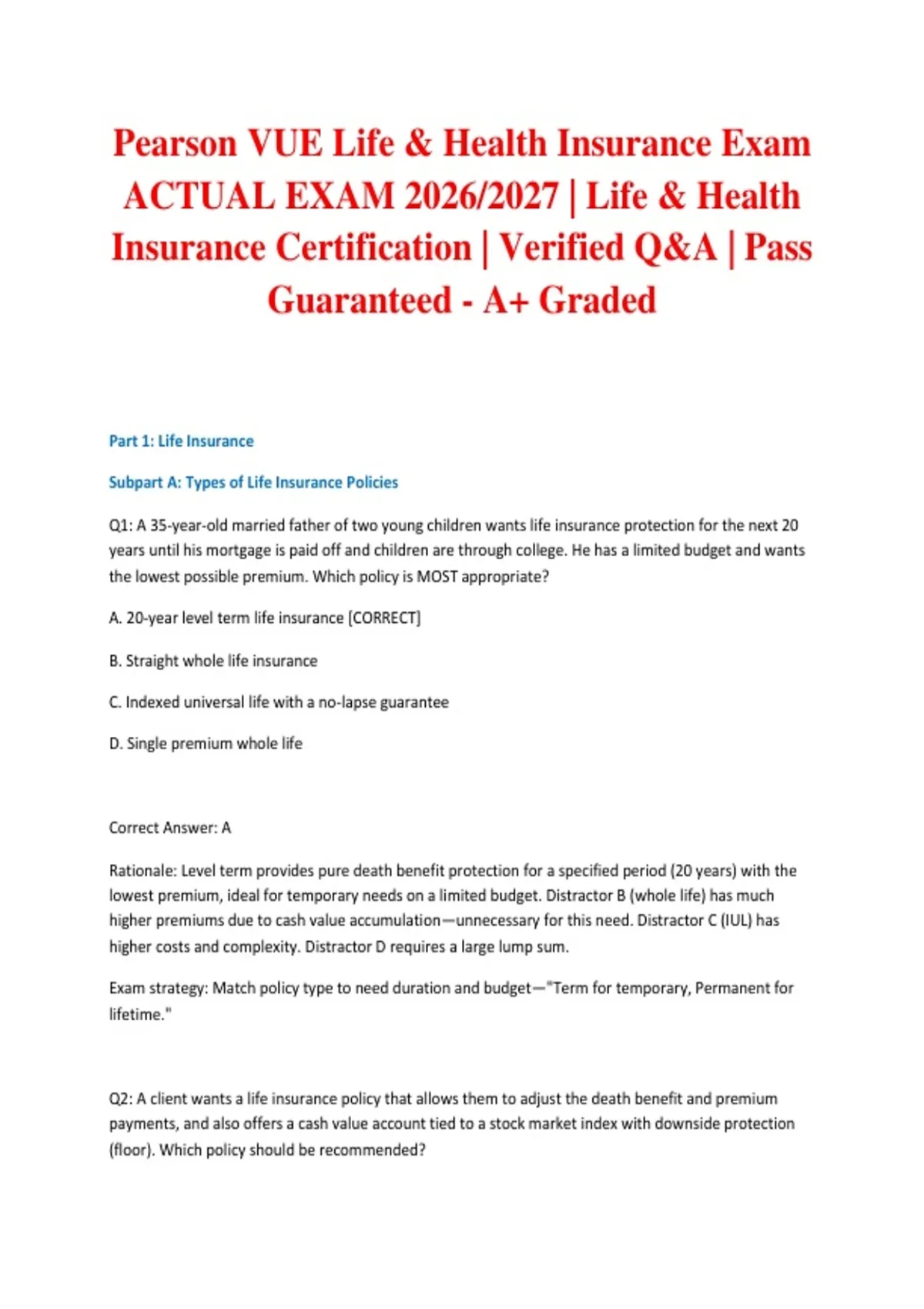
To pass the life and health insurance exam in 2026, you must combine a structured study schedule with a deep mastery of state-specific regulations and federal mandates. Success requires scoring at least 70% by balancing technical knowledge of policy provisions with practical application through high-quality simulation exams and consistent terminology review.
The life and health insurance licensing exam is a rigorous barrier to entry for aspiring financial professionals. It serves as a regulatory safeguard, ensuring that every agent possesses the ethical grounding and technical proficiency required to advise consumers on sensitive financial products. Whether you are transitioning careers or starting your professional journey, the sheer volume of information—ranging from complex annuity structures to the intricacies of the Affordable Care Act (ACA)—can feel overwhelming.
Successfully navigating this exam requires more than just memorization; it demands an understanding of how insurance functions as a social and economic safety net. As of 2026, state licensing boards continue to emphasize consumer protection, meaning the exam questions often focus on the "why" behind the regulations.
Understanding the Exam Structure and Requirements
Before diving into specific study strategies, it is essential to understand the framework of the test. Most states divide the life and health insurance exam into two primary sections: the General Knowledge section and the State-Specific section.
The general section covers universal insurance concepts, such as the principles of risk, contract law, and the characteristics of various life and health products. The state-specific section focuses on the laws, rules, and regulations unique to your jurisdiction, including the powers of the Insurance Commissioner and local licensing requirements.
Most states contract third-party testing vendors like Pearson VUE or Prometric to administer these exams. These facilities maintain high security and provide standardized testing environments. In many cases, you must first complete a state-mandated pre-licensing education course before you are even eligible to sit for the exam.
1. Select a Comprehensive Pre-Licensing Education Provider
The foundation of your success lies in the quality of your study materials. While many candidates look for the cheapest option, the most successful test-takers invest in providers known for high pass rates and updated content. As of 2026, leading providers such as Kaplan Financial Education, A.D. Banker & Company, and ExamFX offer digital platforms that adapt to your learning pace.
A high-quality course should provide a blend of video lectures, digital or physical textbooks, and, most importantly, a robust test bank. Look for courses that offer a "pass guarantee" or diagnostic tools that identify your weak areas. In 2026, many of these platforms use AI-driven analytics to predict your readiness based on your performance in specific sub-categories like "Long-Term Care" or "Variable Life Insurance."
2. Master the Technical Vocabulary of Insurance
Insurance is a language of its own. To pass the exam, you must move beyond a casual understanding of terms and master the legal and technical definitions. Questions are often designed to trip up candidates who confuse similar-sounding concepts.
For example, you must clearly distinguish between perils (the cause of loss) and hazards (conditions that increase the likelihood of loss). Within contract law, you must understand why an insurance policy is an aleatory contract (unequal exchange of value) and a contract of adhesion (one party prepares the contract, the other "adheres" to it).
Create flashcards for core terms such as:
- Law of Large Numbers: The principle that as the number of similar exposure units increases, the predictability of losses improves.
- Insurable Interest: The requirement that the policyowner must face a financial loss if the insured dies or becomes ill.
- Estoppel: A legal impediment to denying a fact or restoring a right that has been previously waived.
3. Focus on Life Insurance Policy Provisions and Riders
The "Life" portion of the exam focuses heavily on how policies are structured and modified. You will encounter numerous questions regarding the standard provisions required by the National Association of Insurance Commissioners (NAIC).
Pay close attention to the Incontestability Clause, which prevents an insurer from denying a claim after a policy has been in force for a specific period (usually two years), even if material misstatements were made. Understand the Grace Period, which protects the policyholder from immediate lapse if a premium is missed.
Riders are another critical exam area. These are amendments to the policy that add or limit coverage. You must be able to differentiate between:
- Waiver of Premium: Relieves the owner of premium payments if they become totally disabled.
- Accidental Death Benefit: Often referred to as "Double Indemnity," this pays an additional sum if the death results from an accident.
- Guaranteed Insurability Rider: Allows the insured to purchase additional coverage at specified dates without proving evidence of insurability.
4. Deconstruct Health Insurance and Federal Mandates
The "Health" side of the exam is often considered more challenging due to the constant evolution of federal law. In 2026, examiners expect a deep understanding of how the Affordable Care Act (ACA) interacts with private insurance. You should know the "Metal Tiers" (Bronze, Silver, Gold, Platinum) and the essential health benefits that must be covered without cost-sharing.
Furthermore, you must master the mechanics of managed care. Be prepared to compare and contrast:
- Health Maintenance Organizations (HMOs): Focus on preventive care and require a Primary Care Physician (PCP) and referrals.
- Preferred Provider Organizations (PPOs): Offer more flexibility to see out-of-network providers at a higher out-of-pocket cost.
- High Deductible Health Plans (HDHPs): Often paired with Health Savings Accounts (HSAs).
Do not neglect Disability Income and Long-Term Care (LTC) insurance. These sections frequently test the definitions of "Total Disability" (Own Occupation vs. Any Occupation) and the "Elimination Period," which acts like a time-based deductible.
5. Prioritize State-Specific Regulations
Many candidates fail because they focus entirely on general insurance principles and ignore the specific laws of their state. The state-specific portion of the exam covers the unique administrative rules that govern your local market.
Key areas of focus include:
- The Power of the Commissioner: The Commissioner (or Superintendent) does not make laws but enforces them. They have the power to conduct examinations of insurers, issue cease and desist orders, and revoke licenses.
- Unfair Trade Practices: Know the definitions of Twisting (making a misleading comparison to induce a policy lapse), Rebating (offering an inducement to buy a policy not specified in the contract), and Defamation.
- Licensing Requirements: Understand the continuing education (CE) hours required in your state and the notification period for a change of address.
6. Utilize Practice Exams as Diagnostic Tools
Reading the textbook is not enough. You must train your brain to handle the phrasing used by the testing vendors. Practice exams should be used strategically, not just as a way to check your progress.
When taking a practice test, simulate the actual environment. Turn off your phone, set a timer, and do not use your notes. After completing the test, spend twice as much time reviewing the questions you got wrong as you did taking the exam. Most 2026 study platforms provide detailed rationales for why an answer is correct and why the distractors are wrong. If you miss a question on "Irrevocable Beneficiaries," go back to the textbook and re-read that entire section before taking another practice test.
Aim for a consistent score of 80% or higher on your practice exams before scheduling the actual test. This provides a "buffer" for the increased stress and potentially more difficult wording found on the official exam.
7. Master Exam-Day Strategy and Logistics
Technical knowledge can be undermined by poor testing strategy. On the day of the exam, arrive at the testing center at least 30 minutes early to complete the check-in process, which often involves biometric verification and securing personal belongings.
During the exam, use the "mark and return" feature. If you encounter a complex calculation regarding a Modified Endowment Contract (MEC) or a confusing question on COBRA eligibility, do not let it stall your momentum. Mark it, choose a placeholder answer, and move on. Often, a later question will provide a clue that helps you solve an earlier one.
Read every word of the question and every answer choice. The exam often uses qualifiers like "Always," "Never," "Except," or "All of the following are true EXCEPT." These words change the entire meaning of the question. In 2026, examiners continue to use "distractors"—answers that are factually true in one context but do not answer the specific question being asked.
| Exam Component | Typical Focus Area | Key Concept to Master |
|---|---|---|
| Life Insurance | Policy Types | Distinction between Term and Permanent (Whole, Universal) |
| Health Insurance | Managed Care | Difference between HMO, PPO, and POS structures |
| Annuities | Taxation | Tax-deferred growth vs. taxation of distributions |
| Provisions | Policy Ownership | Right to change beneficiaries and assign ownership |
| Regulations | State Law | The role of the Guaranty Association and Licensing |
| Federal Law | ACA/Social Security | Eligibility for Medicare, Medicaid, and Social Security Disability |
Frequently Asked Questions
How long should I study for the life and health insurance exam?
Most experts recommend between 40 and 60 hours of focused study time. This is typically spread over two to three weeks. Cramming over a single weekend is rarely successful due to the high volume of technical terminology and the need for long-term retention of state-specific laws.
What is the passing score for the insurance exam?
In most jurisdictions, the passing score is 70%. However, this is often a "scaled score," meaning it is adjusted based on the difficulty of the specific questions in your version of the exam. You will generally receive your results immediately after finishing the test at the testing center.
Is the life and health insurance exam taken online or in person?
As of 2026, most states offer both options. You can take the exam at a physical proctored center via Prometric or Pearson VUE, or you can opt for a "Remotely Proctored" exam from your home. Remote exams require a clean workspace and a functioning webcam, with strict rules against looking away from the screen or talking.
What happens if I fail the exam on the first try?
If you do not pass, don't panic; it is a common occurrence. You will receive a diagnostic report showing your performance in each category. Most states require a waiting period (often 24 to 48 hours) before you can reschedule. Use the diagnostic report to focus your studies exclusively on your weakest areas before your second attempt.
Are there many math questions on the exam?
The life and health exam is not math-heavy, but you must understand basic calculations. You may be asked to calculate a "Pro-Rata" refund, determine the death benefit under an "Increasing Term" rider, or calculate a "Coinsurance" payment for a health claim. A basic non-programmable calculator is usually provided by the testing center.
Does the exam cover the 2026 tax laws?
Yes, the exam is updated periodically to reflect current federal tax treatments of insurance products. In 2026, you should be familiar with the current limits for Health Savings Accounts (HSAs) and the tax implications of surrendering a life insurance policy for its cash value.
Next Steps for Success
After you have completed your pre-licensing education and achieved consistent passing scores on your practice exams, your next step is to schedule your test through your state’s designated vendor. Ensure your government-issued ID matches the name on your registration exactly. On the day before the exam, stop studying early in the evening to allow your brain to rest.
Once you pass, you will need to apply for your actual license through the National Insurance Producer Registry (NIPR), which handles licensing applications for most states. Passing the exam is the most difficult hurdle; once cleared, you are officially ready to begin your career as a licensed life and health insurance producer.