The version 24.50.0 Intel Bluetooth driver package for Windows 10 provides critical firmware updates, security patches, and performance optimizations for compatible Intel wireless adapter hardware. Installing this driver version helps resolve pairing instabilities, reduces audio latency with connected peripherals, and ensures stable wireless communication on supported Windows 10 desktop and laptop systems.
Understanding Intel Bluetooth Driver Version 24.50.0
Intel regularly updates its wireless and Bluetooth software stacks to address emerging connectivity issues, improve compatibility with modern Bluetooth peripherals, and close security vulnerabilities. The release cycle for these drivers involves comprehensive validation across various operating system builds, including Windows 10 and Windows 11.
When users search for specific version iterations like the 24.50.0 package, they are typically looking to resolve a persistent hardware conflict, prepare a machine for a newly acquired peripheral, or maintain system stability by keeping their device drivers aligned with manufacturer recommendations. Understanding how these drivers interact with the Windows 10 operating system architecture is essential for maintaining a reliable computing environment.
The Role of Bluetooth Drivers in Windows 10
A device driver acts as a translator between the operating system and the physical hardware component—in this case, the Intel wireless module integrated onto the motherboard or installed via an M.2 interface. While Windows 10 includes generic Bluetooth stack drivers capable of handling basic device discovery and data transfer, manufacturer-specific drivers written by Intel unlock the full capabilities of the hardware.
Intel Bluetooth drivers manage complex tasks, including power management states, radio frequency interference mitigation, and simultaneous multi-device connections. Without the correct driver version, hardware features such as Bluetooth Low Energy (BLE), advanced audio codecs, and rapid device switching may fail to function correctly. Furthermore, outdated drivers frequently lead to issues such as disappearing Bluetooth toggles in the Action Center, sudden disconnects during data transfers, or high CPU utilization by system processes.
Identifying Hardware Compatibility and Prerequisites
Before attempting to download and install the 24.50.0 Intel Bluetooth driver package, you must verify that your system hardware is fully supported. Installing a driver intended for modern Intel wireless modules onto legacy hardware or adapters manufactured by alternative vendors (such as Realtek, Broadcom, or Qualcomm) will result in installation failure or system instability.
Supported Intel Wireless Adapters
Intel packages its Wi-Fi and Bluetooth drivers together in a single software suite, though the individual driver components install separately. The 24.50.0 release supports a wide array of modern Intel wireless cards. Common adapters compatible with this driver generation include:
- Intel Wi-Fi 7 BE202, BE200
- Intel Wi-Fi 6E AX211, AX210, AX411
- Intel Wi-Fi 6 AX203, AX201, AX200
- Intel Wireless-AC 9560, 9260, 8265, 8165
- Select legacy Intel Wireless-N and Dual Band Wireless-AC adapters (depending on specific hardware revision and OEM restrictions)
Verifying Your Current Driver Version
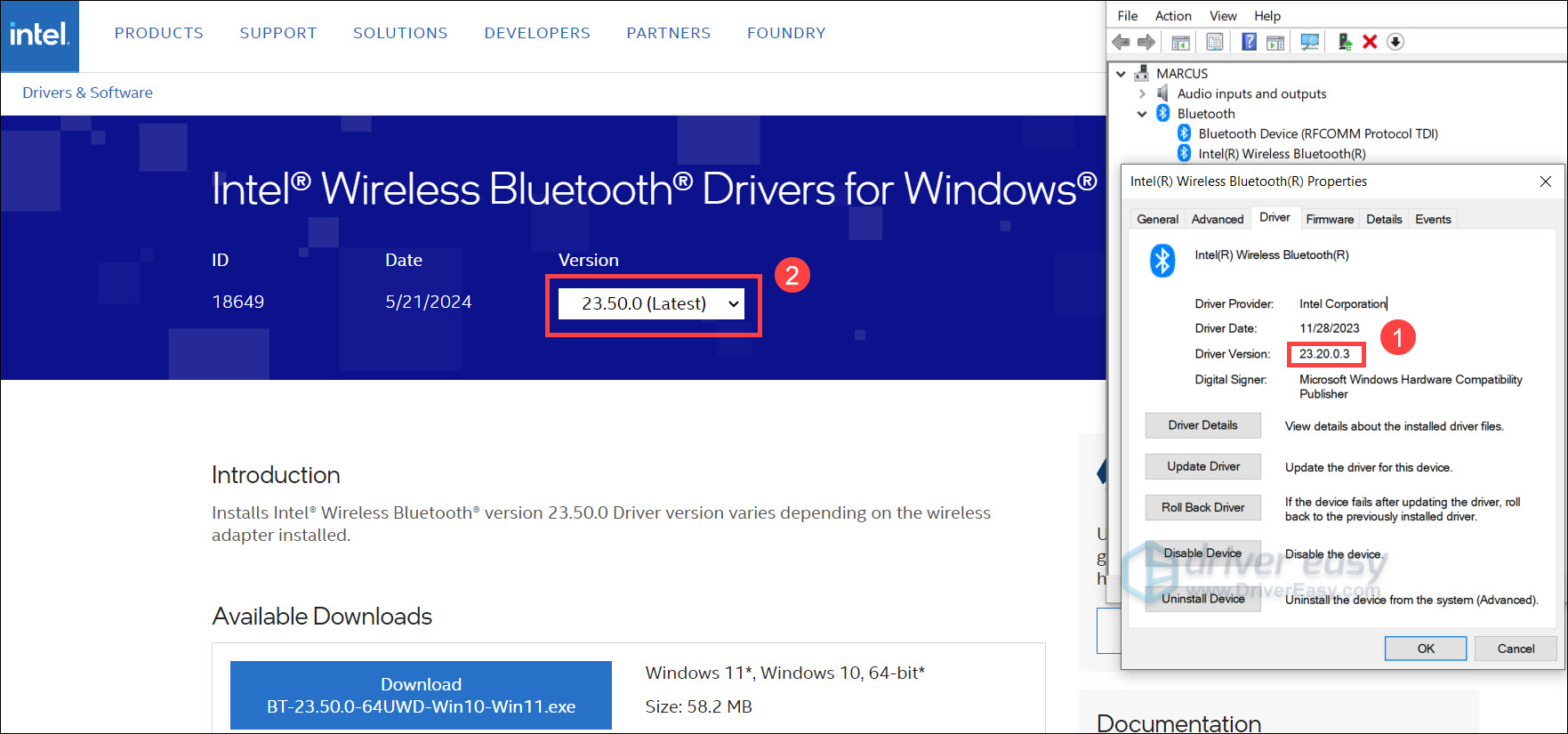
To confirm whether your system requires the 24.50.0 update, you should check your current driver version through the Windows Device Manager.
- Right-click the Start button and select Device Manager.
- Expand the Bluetooth category in the device tree.
- Locate your Intel wireless adapter (usually listed as Intel(R) Wireless Bluetooth(R)).
- Right-click the device and select Properties.
- Navigate to the Driver tab and note the Driver Version and Driver Date.
If your current version is older than 24.50.0, updating may resolve existing stability concerns. If your system already runs a newer version, updating is generally unnecessary unless specifically recommended for a targeted bug fix.
Comparison of Intel Bluetooth Driver Installation Methods
Choosing the correct method to update your drivers depends on your technical comfort level and system configuration. The table below outlines the primary installation pathways available to Windows 10 users.
| Installation Method | Source | Pros | Cons | Recommended Use Case |
|---|---|---|---|---|
| Intel Driver & Support Assistant (Idsa) | Official Intel Tool | Automatically detects hardware and downloads the exact required package. | Requires an active internet connection and background software utility. | General users looking for a safe, automated update process. |
| Manual Download (.Exe / .Zip) | Intel Download Center | Allows offline installation and precise version control. | Requires manual navigation and file management. | Advanced users, system builders, and offline environments. |
| Windows Update | Microsoft Catalog | Integrated directly into the operating system interface. | Often lags behind official manufacturer releases by several weeks or months. | Automated background maintenance where exact versions are not critical. |
| OEM Support Site | Laptop Manufacturer (Dell, HP, Lenovo) | Pre-validated against specific proprietary hardware configurations and power profiles. | Frequently outdated compared to direct Intel releases. | Brand-name laptop owners experiencing vendor-specific power management bugs. |
Step-by-Step Installation Guide
For users opting for a manual installation using the official package from the Intel Download Center, following a structured procedure minimizes the risk of installation errors or driver conflicts.
Step 1: Download the Correct Package
Navigate to the official Intel Download Center or use a verified direct source. Ensure you download the package specifically designated for Windows 10 (note that Intel often bundles Windows 10 and Windows 11 into a single architecture package, such as 64-bit). Save the .exe or .zip file to an easily accessible location, such as your Desktop.
Step 2: Prepare the System
Close all active applications, particularly those utilizing audio devices or Bluetooth peripherals (such as wireless headphones, mice, or game controllers). Disconnect non-essential Bluetooth devices if you encounter persistent installation loops, though this is rarely required for modern driver iterations.
Step 3: Execute the Installer
- Double-click the downloaded Intel Bluetooth driver installer file (e.g.,
BT-24.50.0-64bit-Win10-Win11.exe). - If prompted by User Account Control (UAC), click Yes to allow the application to make changes to your device.
- Follow the onscreen instructions presented by the Intel Setup Wizard.
- Accept the terms of the software license agreement and click Install.
Step 4: Complete the System Restart
Once the installation progress bar reaches completion, the wizard will prompt you to restart your computer. Do not skip this step. Restarting ensures that the Windows 10 service control manager unloads the legacy driver binaries from memory and initializes the new 24.50.0 driver stack correctly.
Troubleshooting Common Installation and Connectivity Issues
Even when following proper installation procedures, users occasionally encounter challenges ranging from installation error codes to persistent connection drops. Addressing these situations systematically helps restore full functionality.
Resolving Error Codes and Installation Failures
If the installer exits prematurely or reports an error, it is often due to corrupted driver caches or interference from third-party security software.
- Clear Temporary Files: Press
Windows Key + R, type%temp%, and delete unnecessary temporary files that might interfere with extraction processes. - Disable Antivirus Temporarily: Some aggressive security suites block driver installation routines from modifying system registry keys or driver stores. Re-enable your antivirus immediately after installation.
- Perform a Clean Installation: If an update fails over an existing corrupted driver, completely uninstall the device first. Open Device Manager, right-click the Intel Bluetooth adapter, select Uninstall device, check the box labeled Attempt to remove the driver for this device, and then run the 24.50.0 installer.
Fixing Bluetooth Disappearance and Pairing Dropouts
If Bluetooth functionality vanishes entirely after an update or peripherals repeatedly disconnect:
- Check Power Management Settings: Open Device Manager, go to your Intel Bluetooth adapter's Properties, select the Power Management tab, and uncheck Allow the computer to turn off this device to save power.
- Perform a Hard Power Cycle: Shutdown your computer completely, unplug the power cable (or turn off the power supply switch) for 30 seconds, and disconnect the battery if using an older removable-battery laptop. This clears residual electrical charge from the motherboard's Bluetooth controller chip.
- Reset Bluetooth Services: Press
Windows Key + R, typeservices.msc, locate Bluetooth Support Service, right-click it, select Properties, change the Startup type to Automatic, and ensure the service is running.
Frequently Asked Questions
Can I install Intel Bluetooth driver 24.50.0 on Windows 11?
Many Intel driver packages are dual-certified for both Windows 10 and Windows 11. However, you should always verify the specific release notes on the download page to ensure the package explicitly lists support for your exact operating system build.
Do I need to update my Intel Wi-Fi driver at the same time?
While Bluetooth and Wi-Fi functions are physically integrated onto the same hardware module chip, the software drivers operate independently. However, Intel frequently releases Wi-Fi and Bluetooth drivers simultaneously with matching version numbers to ensure optimal radio frequency coexistence. Updating both is considered a best practice.
What should I do if my Bluetooth device stutters after the update?
Audio stuttering or input lag is often caused by interference on the 2.4 GHz frequency band, which is shared by Wi-Fi, Bluetooth, and numerous household devices. Try moving your Wi-Fi router further away, switching your Wi-Fi network from 2.4 GHz to the 5 GHz or 6 GHz band, or re-pairing the affected Bluetooth peripheral.
Is it safe to revert to an older driver version if 24.50.0 causes issues?
Yes. If you experience hardware instability after upgrading, you can open Device Manager, open the adapter properties, click the Driver tab, and select Roll Back Driver if the button is active. Alternatively, you can manually download and install a stable previous version from the manufacturer archive.
Conclusion and Next Actions
Maintaining up-to-date hardware drivers is a fundamental aspect of system administration for Windows 10. The 24.50.0 Intel Bluetooth driver package addresses critical performance metrics and compatibility parameters for supported wireless adapters. To ensure long-term stability, verify your hardware compatibility, execute a clean installation following the steps outlined above, and always perform a system reboot. If you encounter unresolved hardware conflicts after updating, consult the official Intel support portal or your system manufacturer's documentation for specialized troubleshooting guidance.