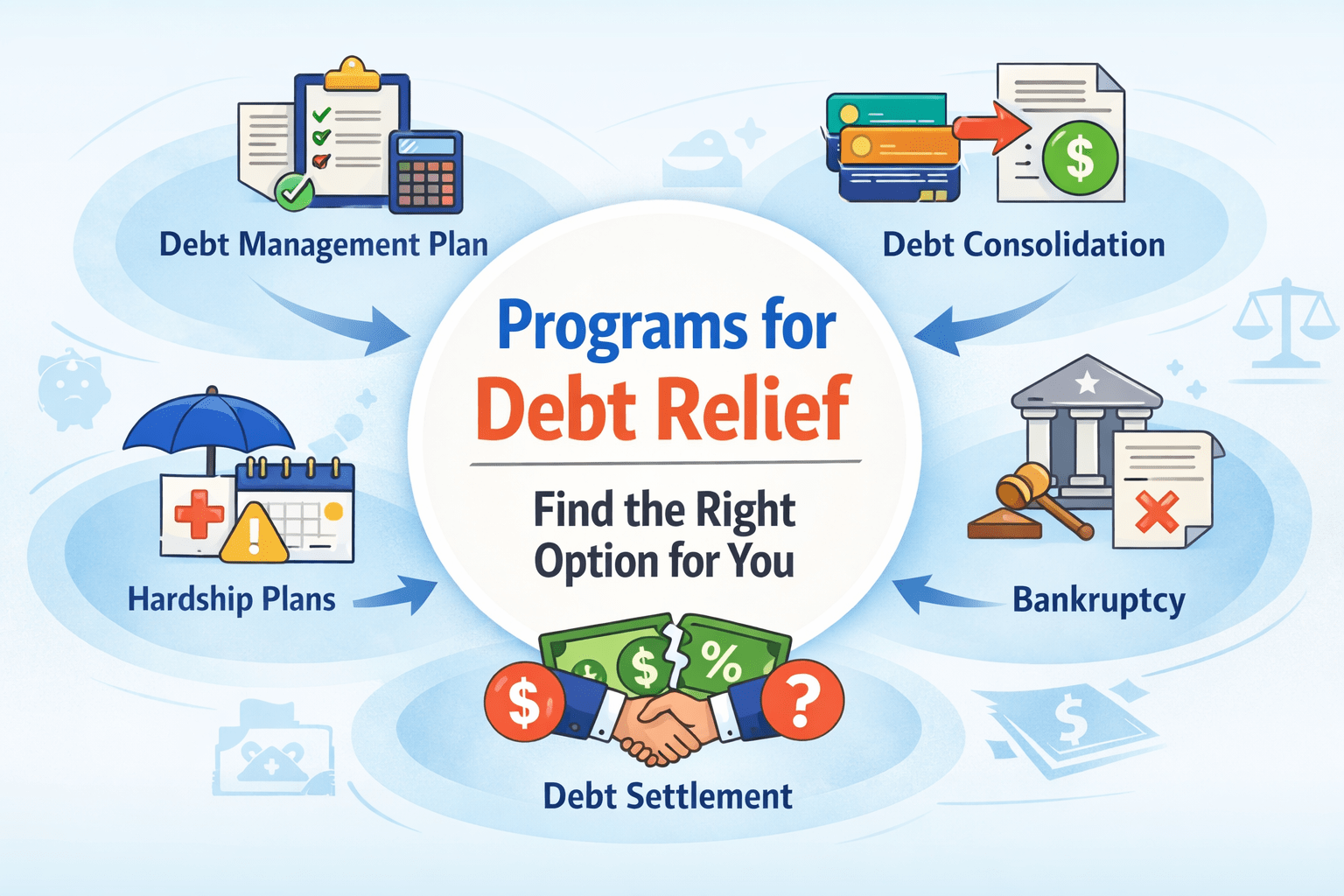
As of 2026, the 2025 official debt relief program landscape is defined by a combination of federal student loan restructuring, Consumer Financial Protection Bureau (CFPB) medical debt rulings, and federally regulated credit counseling frameworks. While there is no single "universal" debt giveaway, specific government-backed initiatives and regulated pathways provide structured relief for student loans, medical expenses, and high-interest consumer debt.
Navigating debt relief requires distinguishing between "official" government programs—those established by federal law or agency rulemaking—and private settlement services. In the wake of the 2025 fiscal updates, several key programs reached full implementation, offering paths to solvency for millions of Americans. This guide explores the eligibility requirements, application processes, and strategic benefits of the primary relief avenues available today.
The Evolution of Official Debt Relief in 2025
The term "official debt relief" most frequently refers to programs managed by the U.S. Department of Education, the CFPB, or non-profit credit counseling agencies operating under the oversight of the Federal Trade Commission (FTC). By 2025, these programs shifted from temporary pandemic-era "band-aids" to permanent, data-driven frameworks designed to prevent long-term financial insolvency.
The primary focus of these official efforts involves three pillars:
- Educational Debt: The full deployment of the SAVE (Saving on a Valuable Education) plan and expanded Public Service Loan Forgiveness (PSLF) criteria.
- Medical Debt: The 2025 implementation of the CFPB rule prohibiting the inclusion of medical bills on credit reports.
- Consumer Debt Management: Federally regulated Debt Management Plans (DMPs) that provide a structured, non-profit alternative to predatory settlement companies.
Federal Student Loan Relief: The 2025 Standard
The most prominent "official" relief programs are those managed by the Department of Education. Following the legal transitions of 2024, the 2025 framework solidified how borrowers manage and eventually discharge federal student debt.
The SAVE Plan and Interest Subsidies
The Saving on a Valuable Education (SAVE) plan became the definitive income-driven repayment (IDR) option in late 2024 and 2025. Unlike previous iterations of debt relief, the SAVE plan focuses on preventing balance growth.
Under this program, if a borrower’s calculated monthly payment—based on their income—does not cover the accruing interest, the government waives the remaining interest for that month. This ensures that the debt balance does not "balloon" over time, even for those making $0 monthly payments. In 2026, we continue to see the long-term impact of this policy, as borrowers who remained in the program throughout 2025 have maintained stable balances despite fluctuating economic conditions.
Public Service Loan Forgiveness (PSLF) Improvements
The 2025 updates to the PSLF program streamlined the "Buyback" initiative. This allows borrowers to make up for months spent in "ineligible" deferment or forbearance statuses by paying the amount they would have owed at that time, effectively speeding up the 120-payment requirement for total discharge. Official federal data indicates that these administrative improvements in 2025 significantly reduced the backlog of applications, making forgiveness more accessible for teachers, nurses, and government employees.
Medical Debt: The 2025 CFPB Regulatory Shift
One of the most significant "official" changes to debt management in 2025 was the CFPB’s final ruling regarding medical debt. While this is not a program that pays off debt, it is a legal framework that provides relief from the most damaging consequences of medical arrears.
The Credit Reporting Ban
Beginning in 2025, major credit reporting agencies were prohibited from including medical debts on credit reports, regardless of the amount. This "official relief" prevents a single medical emergency from tanking a consumer's credit score for seven years.
Key aspects of the 2025 medical debt rules include:
- Lender Restrictions: Lenders are prohibited from using medical debt information to make credit eligibility determinations.
- Collection Guardrails: Debt collectors must adhere to stricter verification processes before attempting to recover medical funds, as the lack of credit reporting leverage has shifted the power dynamic back toward the consumer.
For many Americans, this regulatory shift functioned as a "fresh start," allowing them to qualify for mortgages and auto loans that were previously out of reach due to medical collections.
Official Credit Counseling vs. Private Debt Settlement
When seeking "official" relief for credit card or personal loan debt, it is vital to distinguish between Credit Counseling and Debt Settlement.
Non-Profit Credit Counseling (The "Official" Path)
Official programs are typically facilitated by agencies accredited by the National Foundation for Credit Counseling (NFCC) or the Financial Counseling Association of America (FCAA). These agencies work with creditors to establish a Debt Management Plan (DMP).
In a DMP, the agency negotiates with your creditors to lower interest rates (often from 29% down to 0–10%) and waive late fees. You make a single monthly payment to the agency, which distributes the funds to your creditors. This is considered an "official" pathway because it is a transparent, structured agreement that does not require you to stop making payments or risk lawsuits, unlike private settlement schemes.
Comparison of Relief Pathways
| Feature | Federal Student Loan Relief | Medical Debt Regulation | Non-Profit Credit Counseling (DMP) |
|---|---|---|---|
| Primary Authority | U.S. Dept. of Education | CFPB / FTC | NFCC / FCAA (Regulated) |
| Debt Type | Federal Student Loans | Medical Bills | Credit Cards, Personal Loans |
| Credit Impact | Positive (stays current) | Neutral/Positive (removed) | Minor/Temporary Dip |
| Primary Benefit | Forgiveness or $0 Payments | Credit Score Protection | Interest Rate Reduction |
| 2025 Status | Fully Operational | Newly Implemented Rule | Ongoing Standard |
Eligibility and Requirements for 2025-2026 Programs
Each branch of official relief has specific prerequisites. Applying for the wrong program can lead to wasted time or, in some cases, worsened financial standing.
Student Loan Eligibility
To access the 2025 student loan relief measures, borrowers must hold Direct Loans. Those with older FFELP or Perkins loans often had to consolidate into the Direct Loan program by the mid-2024 deadlines to qualify for the one-time account adjustments that carried over into 2025.
- Income Verification: Applicants must provide tax return data via the IRS Data Exchange to automate their monthly payment calculations.
- Employment Verification: For PSLF, digital signatures from qualifying non-profit or government employers are required annually.
Credit Counseling Prerequisites
To enter an official Debt Management Plan, a consumer must generally have a steady source of income. Because a DMP involves repaying the full principal of the debt (albeit at a lower interest rate), it is not a "forgiveness" program but a "restructuring" program. It is best suited for those who can afford their debt at 0% interest but are currently drowning in 25%+ APRs.
The "Fresh Start" Initiative for Defaulted Borrowers
A critical component of the 2025 official debt relief landscape was the conclusion of the "Fresh Start" program for defaulted federal student loans. Throughout late 2024 and early 2025, borrowers in default were given a one-time opportunity to return to "In Good Standing" status without the typical hurdles of loan rehabilitation.
As of 2026, the primary takeaway from this initiative is the restoration of eligibility for federal student aid (FAFSA). Borrowers who took advantage of this in 2025 are now eligible for the SAVE plan and other income-driven options, effectively moving them from a state of "financial paralysis" to a structured repayment path.
How to Apply for Official Relief Programs
Following the correct procedural steps is essential to avoid scams and ensure your application is processed by the correct authorities.
- For Student Loans: Access the Federal Student Aid website. Do not use third-party "processing" sites that charge fees. Official government applications are always free.
- For Medical Debt: You do not need to "apply" for the credit reporting ban. If a medical debt appears on your credit report in 2026, you should file a dispute directly with the credit bureaus (Equifax, Experian, or TransUnion) citing the 2025 CFPB ruling.
- For Credit Card Debt: Visit the NFCC website to find an accredited non-profit agency. An initial counseling session is usually low-cost or free.
- For Small Business Debt: If you are managing an EIDL loan from the pandemic era, relief options in 2025-2026 are handled through the SBA's MySBA Loan Portal, where hardship accommodation plans can be requested.
Identifying and Avoiding "Official" Debt Relief Scams
The popularity of the "2025 official debt relief program" search term has unfortunately led to a rise in sophisticated scams. Scammers often use "official-sounding" names, government seals, or references to specific legislation to trick consumers.
Red Flags of Debt Relief Fraud
- Upfront Fees: It is illegal for debt settlement companies to charge upfront fees before they have settled or reduced your debt.
- Promises of "Total Forgiveness": There is no federal program that simply "wipes away" credit card debt or private student loans.
- Requests for FSA IDs: Never give your Federal Student Aid (FSA) ID or password to anyone. Official agencies will never ask for this.
- Urgency Tactics: Claims that you must "enroll today" or lose your "allocation" are hallmarks of private marketing, not government programs.
Official relief is a process, not a product. If a company is "selling" you a program, it is likely not an official government-backed initiative.
Frequently Asked Questions
What is the official debt relief program for 2025 called?
There isn't one single name because "official debt relief" covers multiple programs. For student loans, the primary program is the SAVE Plan. For consumer debt, the official pathway is a Debt Management Plan (DMP) through an NFCC-accredited agency. For medical debt, it is the CFPB Medical Debt Reporting Rule.
Is there a new stimulus-based debt relief program in 2026?
No. As of 2026, there are no new stimulus-based debt "payouts." The current relief framework is based on interest subsidies, income-driven repayment restructuring, and consumer protection regulations rather than direct cash payments to creditors.
How does the 2025 medical debt rule affect my credit score?
The 2025 CFPB rule effectively removed medical collections from credit reports. For many consumers, this resulted in an immediate credit score increase, as medical debt was previously one of the most common "negative marks." However, it does not legally "erase" the debt itself; providers can still seek payment through other legal channels, though they lose the leverage of credit reporting.
Can I get my private student loans forgiven under these programs?
Generally, no. Official federal debt relief programs, such as SAVE and PSLF, apply only to federal student loans. Private loans are subject to the terms of the private contract with the lender. Relief for private loans usually requires direct negotiation or refinancing, which are not considered "official" government programs.
Does the government pay off credit card debt in 2025 or 2026?
The federal government does not pay off private credit card debt. "Official" relief for credit cards comes through government-regulated non-profit agencies that help you restructure your debt into a more manageable interest-free or low-interest payment plan.
Next Actions for Debt Resolution
If you are currently struggling with debt in 2026, your first step should be an "Audit of Debt Type." Separate your liabilities into federal, medical, and consumer categories.
For federal loans, log into your StudentAid.gov account immediately to ensure you are enrolled in the SAVE plan or another IDR framework. For medical debt, check your credit report; if you see medical collections, file a dispute citing current CFPB regulations. For consumer credit cards, contact an NFCC-accredited non-profit to explore a Debt Management Plan. Taking these regulated, official steps ensures you are protected by federal law while working toward a debt-free future.
Note: This article provides general financial information and does not constitute legal or financial advice. Consult with a qualified professional or government representative for specific jurisdictional requirements and legal protections.