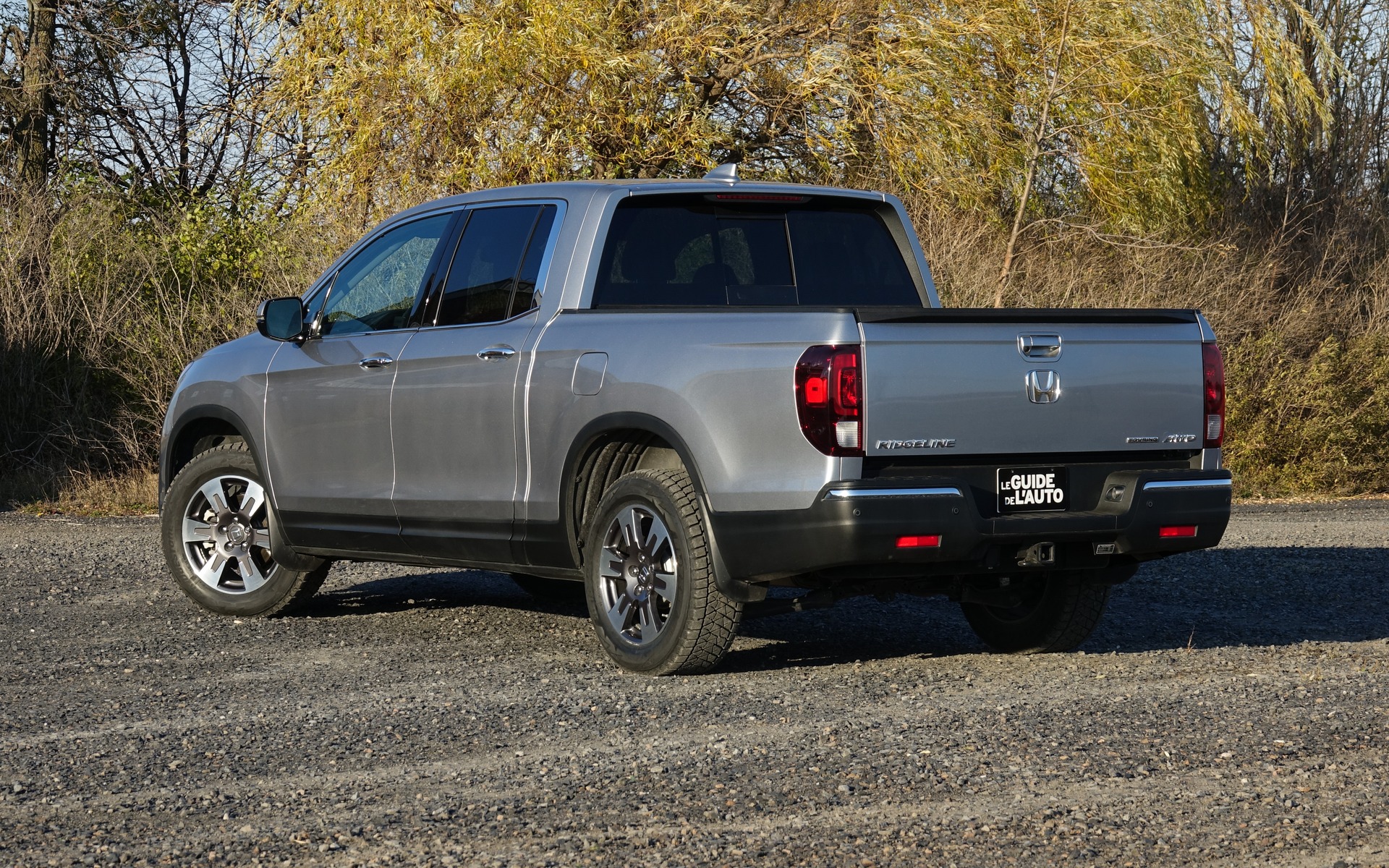
The 2018 Honda Ridgeline generates 280 horsepower and 262 lb-ft of torque across all of its trim levels. This output is produced by a 3.5-liter direct-injected V6 engine paired with either a 6-speed automatic transmission in front-wheel drive configurations or a specialized torque-vectoring all-wheel-drive system, giving the unibody midsize truck a distinctive performance profile within its segment.
Understanding truck performance requires looking beyond simple marketing badges and examining the mechanical systems that deliver power to the pavement or the trail. For prospective buyers, automotive enthusiasts, and current owners examining vehicle specifications, the 2018 Honda Ridgeline represents a unique approach to midsize truck engineering. While traditional body-on-frame trucks rely on heavy-duty architectures designed primarily for maximum payload and heavy commercial towing, the Ridgeline shares its unibody platform with Honda’s crossover SUV lineup, such as the Pilot. This foundational design choice influences not only how the engine's horsepower translates into daily driving dynamics, but also how the vehicle handles towing, payload capacities, fuel consumption, and ride comfort.
The Powerplant: Inside the 3.5-Liter V6 Engine
At the heart of the 2018 Honda Ridgeline is a naturally aspirated 3.5-liter, 24-valve, SOHC i-VTEC V6 engine. This powerplant, designated internally within Honda as part of the Earth Dreams Technology initiative, is engineered to balance responsive throttle delivery with high-rpm efficiency.
The engine achieves its peak 280 horsepower at 6,000 RPM, while its maximum torque of 262 lb-ft kicks in lower down the rev range at 4,700 RPM. This torque curve is tuned to provide immediate off-the-line responsiveness, which is essential for a vehicle intended to carry cargo or tow trailers. The integration of direct fuel injection ensures that fuel is atomized precisely inside the combustion chamber, optimizing thermal efficiency and power output while keeping emissions low.
Furthermore, the engine utilizes Honda's Variable Cylinder Management (VCM) system. Under low-load cruising conditions—such as driving on a flat highway at a steady speed—VCM automatically deactivates either three or four cylinders, running the engine on fewer cylinders to conserve fuel. When the driver presses the accelerator to pass another vehicle or climb an incline, the system seamlessly reactivates all six cylinders within milliseconds, restoring full horsepower without noticeable hesitation or driver intervention.
Powertrain Options: Transmission and Drivetrain Configurations
Horsepower is only as effective as the transmission and drivetrain transferring it to the ground. The 2018 Honda Ridgeline pairs its V6 engine with a standard 6-speed automatic transmission. While some modern trucks have transitioned to 8-, 9-, or 10-speed gearboxes, the Honda 6-speed automatic is calibrated to match the torque characteristics of the 3.5-liter V6, providing smooth, predictable gear changes during acceleration and towing maneuvers.
Buyers of the 2018 Ridgeline could choose between two primary drivetrain configurations:
- Front-Wheel Drive (FWD): Available exclusively on lower trim levels such as the RT, Sport, and RTL, the FWD configuration is designed for drivers who prioritize highway fuel efficiency and do not require severe-weather or off-road traction management.
- Intelligent Variable Torque Management (i-VTM4) All-Wheel Drive: Available as an option on mid-tier trims and standard on higher-end trims like the RTL-T, RTL-E, and Black Edition, the i-VTM4 system is an advanced torque-vectoring setup. Rather than simply transferring power to slipping wheels reactively, the system continuously distributes active torque between the front and rear axles, and independently between the left and right rear wheels. This active yaw control enhances cornering agility on dry pavement while maximizing traction in mud, sand, and snow.
| Trim Level | Drivetrain Availability | Horsepower | Torque (lb-ft) | Transmission |
|---|---|---|---|---|
| RT | Front-Wheel Drive | 280 @ 6,000 RPM | 262 @ 4,700 RPM | 6-Speed Automatic |
| Sport | Front-Wheel Drive / i-VTM4 AWD | 280 @ 6,000 RPM | 262 @ 4,700 RPM | 6-Speed Automatic |
| RTL | Front-Wheel Drive / i-VTM4 AWD | 280 @ 6,000 RPM | 262 @ 4,700 RPM | 6-Speed Automatic |
| RTL-T | Front-Wheel Drive / i-VTM4 AWD | 280 @ 6,000 RPM | 262 @ 4,700 RPM | 6-Speed Automatic |
| RTL-E | i-VTM4 All-Wheel Drive Standard | 280 @ 6,000 RPM | 262 @ 4,700 RPM | 6-Speed Automatic |
| Black Edition | i-VTM4 All-Wheel Drive Standard | 280 @ 6,000 RPM | 262 @ 4,700 RPM | 6-Speed Automatic |
How 280 Horsepower Translates to Towing and Payload Capacity
For truck owners, horsepower specifications must translate into real-world capability. The 2018 Honda Ridgeline’s 280 horsepower and rigid unibody structure allow it to handle light-to-medium utility tasks effectively, though its towing envelope differs from traditional body-on-frame competitors.
When properly equipped with the i-VTM4 all-wheel-drive system, the 2018 Ridgeline boasts a maximum towing capacity of 5,000 pounds. Front-wheel-drive models are rated for a maximum towing capacity of 3,500 pounds. This towing ceiling is adequate for pulling utility trailers, small to medium recreational boats, pop-up campers, and lightweight travel trailers. The engine's low-end torque ensures that the truck can pull away from a dead stop while towing without excessive strain, while the transmission features a tow/haul mode that alters shift points to keep the engine in its optimal power band during sustained climbs.
In terms of payload capacity, the 2018 Ridgeline accommodates between 1,465 and 1,580 pounds depending on the specific trim level and drivetrain. Because the unibody architecture incorporates independent rear suspension—unlike the traditional solid rear axle found on most trucks—the Ridgeline maintains a level, composed ride even when carrying heavy loads in the composite bed. The bed itself features innovative utility design, including the lockable In-Bed Trunk and a dual-action tailgate that swings open sideways or folds down conventionally.
Performance Comparison: Ridgeline vs. Midsize Truck Competitors
Evaluating the 2018 Honda Ridgeline’s 280 horsepower requires comparing it against other midsize trucks from the same model year, such as the Toyota Tacoma, Chevrolet Colorado, and Ford Ranger (which re-entered the US market shortly after). While competitors often offer multiple engine choices—including four-cylinder gas engines, high-output V6s, and turbocharged diesel options—the Ridgeline relies entirely on its single, high-refinement V6.
| Midsize Truck (2018 Models) | Base Engine Horsepower | Optional Engine Horsepower | Max Towing Capacity |
|---|---|---|---|
| Honda Ridgeline (3.5L V6) | 280 hp (V6 standard) | N/A | 3,500 – 5,000 lbs |
| Toyota Tacoma (2.7L I4 / 3.5L V6) | 159 hp (I4) | 278 hp (V6) | Up to 6,800 lbs |
| Chevrolet Colorado (2.5L I4 / 3.6L V6 / 2.8L Diesel) | 200 hp (I4) | 308 hp (V6) / 181 hp (Diesel) | Up to 7,700 lbs |
| Nissan Frontier (2.5L I4 / 4.0L V6) | 152 hp (I4) | 261 hp (V6) | Up to 6,500 lbs |
As illustrated in the comparison, the Ridgeline's 280 horsepower places it at the upper tier of standard or optional gasoline V6 outputs for the 2018 midsize truck class. However, its maximum towing capacity is lower than competitors like the Chevrolet Colorado or Toyota Tacoma, which leverage body-on-frame architectures and solid rear axles to pull heavier loads. Conversely, the Ridgeline offers superior ride comfort, interior cabin space, and handling agility due to its car-like unibody construction and independent rear suspension.
Real-World Driving Dynamics and Fuel Economy
The way a vehicle utilizes its horsepower directly impacts fuel economy and daily drivability. Because the 2018 Honda Ridgeline features a relatively aerodynamic profile and a lighter unibody structure compared to traditional body-on-frame trucks, its 280 horsepower moves the vehicle efficiently.
According to EPA estimates for the 2018 model year:
- Front-Wheel Drive models achieve an estimated fuel economy of 19 mpg city, 26 mpg highway, and 22 mpg combined.
- All-Wheel Drive models achieve an estimated fuel economy of 18 mpg city, 25 mpg highway, and 21 mpg combined.
These figures are competitive within the midsize truck class, where traditional four-wheel-drive systems often suffer significant fuel penalties. The combination of direct injection, multi-valve timing (i-VTEC), and Variable Cylinder Management allows the Ridgeline to deliver V6 performance without excessive fuel consumption during highway cruising.
જી Frequently Asked Questions
Does every 2018 Honda Ridgeline trim level have the same horsepower?
Yes. Every 2018 Honda Ridgeline trim level—from the base RT to the top-tier Black Edition—features the same 3.5-liter V6 engine producing 280 horsepower and 262 lb-ft of torque. There are no upgraded engine packages or lower-output variants across the lineup.
Can a front-wheel-drive 2018 Honda Ridgeline tow as much as an all-wheel-drive model?
No. Front-wheel-drive models of the 2018 Honda Ridgeline are rated for a maximum towing capacity of 3,500 pounds, whereas models equipped with the i-VTM4 all-wheel-drive system can tow up to 5,000 pounds when properly equipped. The disparity is managed through cooling upgrades and torque distribution capabilities inherent to the AWD drivetrain.
How does Variable Cylinder Management affect the 2018 Ridgeline's performance?
Variable Cylinder Management (VCM) deactivates cylinders during light-load cruising to maximize fuel efficiency. This process occurs automatically and transparently. When the driver accelerates firmly, all six cylinders reactivate instantly, ensuring that the full 280 horsepower is available immediately without any perceived lag in performance.
Is the 2018 Honda Ridgeline engine turbocharged?
No. The 3.5-liter V6 engine in the 2018 Honda Ridgeline is naturally aspirated. It relies on direct fuel injection and Honda's i-VTEC valve train technology rather than turbochargers or superchargers to generate its 280 horsepower, delivering linear power delivery across the rev range.
How does the Ridgeline's unibody construction affect its horsepower utilization?
Because the 2018 Honda Ridgeline utilizes a unibody platform rather than a heavy body-on-frame setup, it is lighter than many traditional midsize trucks. This lower curb weight allows the 280-horsepower engine to accelerate the truck briskly, providing a driving experience more closely aligned with a midsize crossover SUV than a heavy commercial pickup.
Conclusion and Next Actions
The 2018 Honda Ridgeline delivers a consistent 280 horsepower across all trim levels through a refined, naturally aspirated 3.5-liter V6 engine. For drivers seeking a midsize truck that prioritizes daily commuting comfort, innovative cargo storage, and composed handling over heavy-duty commercial towing, the Ridgeline's powertrain strikes a balanced equilibrium. When evaluating a used 2018 model, prospective buyers should verify whether the vehicle is equipped with front-wheel drive or the i-VTM4 all-wheel-drive system, as this choice directly determines the truck's maximum towing capacity and adverse-weather performance. Always review maintenance records—specifically regarding transmission fluid changes and timing belt service intervals—to ensure the engine continues to deliver its factory-rated performance.