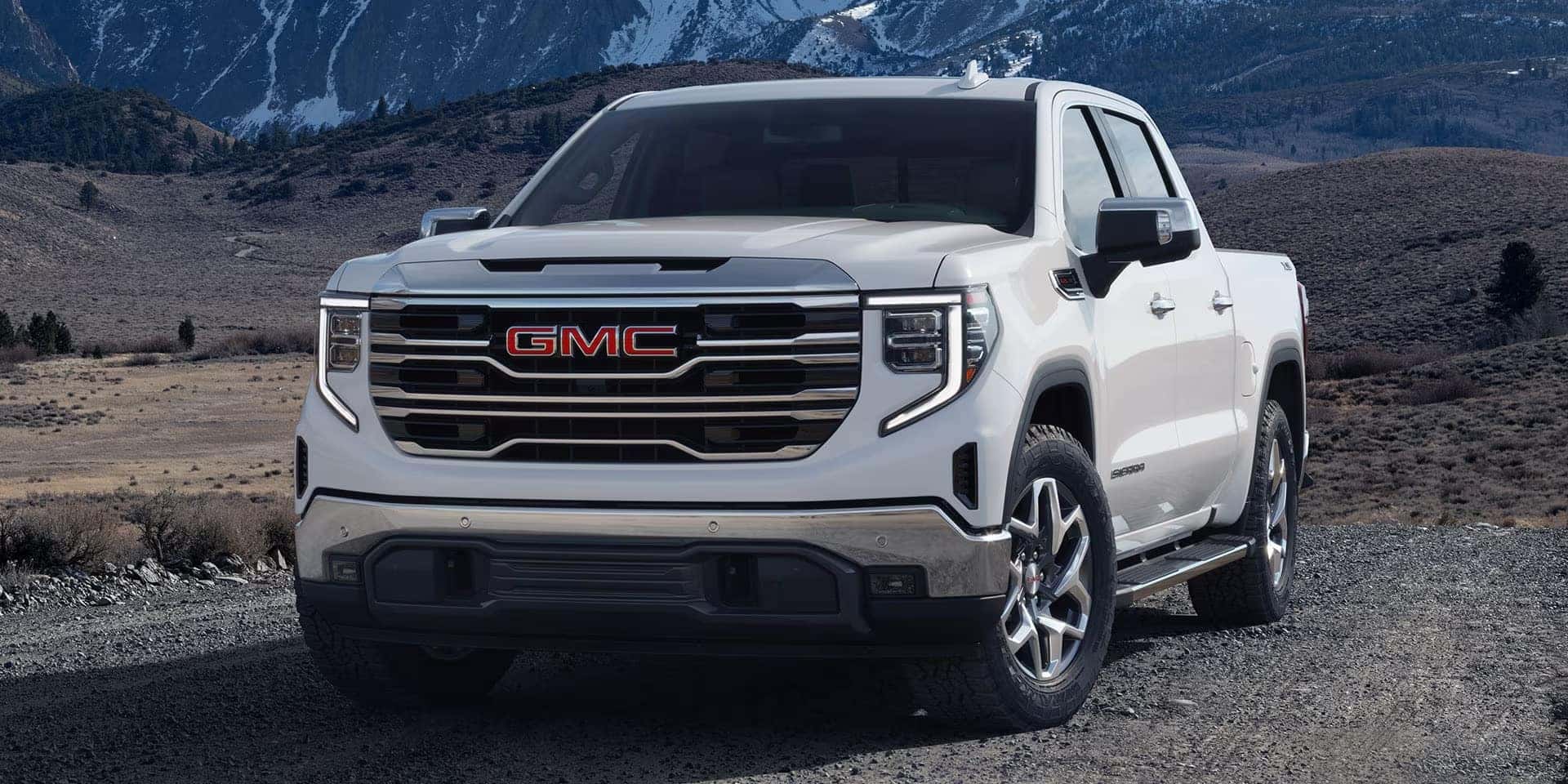
The 2018 GMC Sierra 1500 achieves an EPA-estimated fuel economy ranging from 15 to 18 mpg in the city and 20 to 24 mpg on the highway, depending on the engine choice, transmission configuration, and whether the truck is equipped with rear-wheel drive or four-wheel drive.
Choosing a full-size pickup truck involves carefully weighing utility, capability, and operating costs. For prospective buyers and current owners of the 2018 GMC Sierra 1500, understanding fuel economy is a critical part of ownership. The 2018 model year represented the final phase of the truck's third generation, benefiting from years of powertrain refinement. However, because General Motors offered three distinct engine choices and multiple axle ratios for this model year, real-world fuel economy varies significantly depending on how the truck is built and driven.
Overview of the 2018 GMC Sierra 1500 Powertrain Lineup
To understand the 2018 GMC Sierra 1500 mpg figures, one must first look under the hood. The 2018 Sierra 1500 lineup relies on three primary EcoTec3 engine options. Each powerplant utilizes direct fuel injection, active fuel management (cylinder deactivation), and continuously variable valve timing to maximize efficiency without sacrificing the low-end torque required for towing and hauling.
| Engine Option | Displacement | Horsepower | Torque |
|---|---|---|---|
| EcoTec3 V6 | 4.3 Liters (262 CI) | 285 hp @ 5,300 rpm | 305 lb-ft @ 3,900 |
| EcoTec3 V8 | 5.3 Liters (325 CI) | 355 hp @ 5,600 rpm | 383 lb-ft @ 4,100 |
| EcoTec3 V8 | 6.2 Liters (376 CI) | 420 hp @ 5,600 rpm | 460 lb-ft @ 4,100 |
4.3L EcoTec3 V6 Engine
Often overlooked by buyers seeking traditional V8 power, the base 4.3-liter V6 is a surprisingly capable workhorse. Generating best-in-class standard V6 torque, this engine is paired exclusively with a 6-speed automatic transmission. It is designed primarily for standard utility, light-duty contracting, and fleet applications where fuel efficiency takes precedence over high-capacity towing.
5.3L EcoTec3 V8 Engine
The 5.3-liter V8 is the volume seller for the Sierra 1500 lineup. It strikes a balance between everyday drivability, payload capacity, and fuel economy. Depending on the trim level and production date, the 5.3L V8 was paired with either a 6-speed automatic transmission or an advanced 8-speed automatic transmission. The introduction of the 8-speed transmission on select models optimized highway cruising efficiency by utilizing taller overdrive gears.
6.2L EcoTec3 V8 Engine
Positioned at the top of the performance ladder, the 6.2-liter V8 is reserved for high-end trims like the SLT and Denali. Shared with Corvette and Camaro variants in modified forms, this engine transforms the Sierra into a high-output towing machine. It is paired exclusively with an 8-speed automatic transmission (and later a 10-speed on subsequent generations, though the 2018 model retains the 8-speed). While its fuel economy is the lowest in the lineup, its power output is substantial.
EPA Fuel Economy Ratings by Configuration
The Environmental Protection Agency (EPA) provides standardized fuel economy estimates, but these figures shift based on whether the truck features Rear-Wheel Drive (RWD) or Four-Wheel Drive (4WD).
4.3L V6 EPA Ratings
- RWD: 18 mpg city / 24 mpg highway / 20 mpg combined
- 4WD: 17 mpg city / 22 mpg highway / 19 mpg combined
The base V6 delivers the highest baseline efficiency in the Sierra lineup. For drivers who do not require heavy towing capacity, the V6 2WD configuration achieves fuel economy figures that rival smaller midsize trucks of the same era while offering a full-size bed and cabin.
5.3L V8 EPA Ratings
- RWD (6-speed): 16 mpg city / 22 mpg highway / 18 mpg combined
- RWD (8-speed): 15 mpg city / 22 mpg highway / 18 mpg combined
- 4WD (6-speed): 16 mpg city / 22 mpg highway / 18 mpg combined
- 4WD (8-speed): 15 mpg city / 20 mpg highway / 17 mpg combined
The 5.3L V8 efficiency profile remains remarkably stable across drive configurations. Interestingly, the addition of the 8-speed transmission alters city and highway distribution slightly, but overall combined ratings hover consistently around 17 to 18 mpg.
6.2L V8 EPA Ratings
- 4WD (8-speed): 15 mpg city / 20 mpg highway / 17 mpg combined (Note: 6.2L RWD availability was limited on specific special editions, but generally mirrors these figures).
Despite its massive displacement and 420 horsepower output, the 6.2L engine manages respectable highway efficiency due to aggressive cylinder deactivation and tall overdrive ratios in the 8-speed transmission. However, city driving heavily penalizes its fuel consumption.
Real-World MPG vs. EPA Estimates
While laboratory testing provides a baseline, real-world driving conditions frequently diverge from EPA ratings. Owners of the 2018 GMC Sierra 1500 often report variations based on several external factors:
- Axle Ratios: Trucks ordered with the Max Trailering Package feature a steeper rear axle ratio (typically 3.42 instead of the standard 3.08 or 3.23). While this improves towing performance and off-the-line acceleration, it increases engine RPM at highway speeds, reducing fuel economy by 1 to 2 mpg.
- Tire Selection and Wheels: Upgrading from standard all-season highway tires to aggressive all-terrain or mud-terrain tires introduces rolling resistance and additional rotational mass. Furthermore, larger 20-inch or 22-inch wheels commonly found on Denali trims reduce overall efficiency compared to standard 17-inch or 18-inch wheels.
- Payload and Aerodynamics: Driving with a tonneau cover can marginally improve aerodynamics, whereas driving with an open tailgate, roof racks, or a loaded bed creates drag that degrades highway fuel economy.
Active Fuel Management (AFM) and Efficiency Technology
A major driver behind the 2018 GMC Sierra 1500's fuel efficiency is Active Fuel Management (AFM). AFM is a cylinder deactivation system designed to shut down half of the engine's cylinders (running on V4 mode instead of V6 or V8) under light-load conditions, such as cruising on a flat highway or coasting down a grade.
- Operation: Hydraulic valve lifters deactivate the intake and exhaust valves on cylinders 1, 4, 6, and 7 on V8 engines (or corresponding cylinders on the V6). Engine management computers seamlessly transition between V4 and V8 modes within milliseconds, relying on active noise cancellation and specialized exhaust tuning to suppress cabin vibrations.
- Owner Considerations: While AFM aids fuel economy, some long-term owners monitor the system closely. Regular oil maintenance is critical, as contaminated engine oil can impact the precision hydraulic lifters that control cylinder deactivation.
Practical Comparison of Annual Fuel Costs
To evaluate the financial impact of choosing different engines in the 2018 GMC Sierra 1500, consider a baseline driving distance of 15,000 miles per year at an assumed average fuel cost of $3.50 per gallon of regular unleaded gasoline (note that the 6.2L engine officially recommends premium fuel, though it can run on regular in emergency scenarios, altering operating costs).
| Engine & Drive | Combined EPA MPG | Gallons Per Year | Estimated Cost/Year |
|---|---|---|---|
| 4.3L V6 (RWD) | 20 MPG | 750 Gallons | $2,625 |
| 5.3L V8 (4WD) | 17 MPG | 882 Gallons | $3,087 |
| 6.2L V8 (4WD) | 17 MPG | 882 Gallons | $3,087* |
| *Note: The 6.2L engine calculation utilizes regular fuel for parity, but actual operating costs will be higher if premium fuel is used exclusively as recommended. |
Tips for Maximizing Fuel Economy in a 2018 Sierra 1500
Drivers seeking to squeeze every possible mile out of a gallon of gas in their 2018 Sierra 1500 can implement several operational and maintenance strategies:
- Maintain Correct Tire Pressure: Full-size trucks are sensitive to rolling resistance. Check tire pressures monthly, especially during seasonal temperature swings.
- Utilize Cruise Control on Highways: Maintaining a steady throttle input prevents unnecessary downshifting, keeping the engine in its most efficient overdrive gear and allowing AFM to operate continuously.
- Reduce Unnecessary Weight: Remove heavy tools, equipment, or non-essential gear from the truck bed when not needed. Every 100 pounds of excess weight impacts fuel consumption in city stop-and-go driving.
- Adhere to Maintenance Schedules: Ensure clean air filters, fresh spark plugs, and correct engine oil viscosity (typically 0W-20 for EcoTec3 engines) to minimize mechanical drag and optimize combustion efficiency.
Frequently Asked Questions
Does the 2018 GMC Sierra 1500 require premium gas?
No, the standard 4.3L V6 and 5.3L V8 engines operate efficiently on standard 87-octane regular unleaded gasoline. However, the high-output 6.2L V8 engine recommends premium 91-octane fuel for maximum horsepower and torque performance, though it features knock sensors that safely retard timing if regular fuel is used.
How does towing affect the MPG of a 2018 GMC Sierra 1500?
Towing a heavy trailer typically cuts fuel economy in half, dropping a 5.3L V8 truck from its normal 17-18 combined mpg down to the 8 to 11 mpg range. The exact reduction depends on the weight of the trailer, frontal surface area, wind resistance, and terrain (hills vs. flat highways).
What transmission options were available in 2018?
General Motors offered two transmissions for the 2018 Sierra 1500: a 6-speed automatic transmission (Hydra-Matic 6L80) and an 8-speed automatic transmission (Hydra-Matic 8L90). The 8-speed transmission generally provides better gear-step spacing, keeping the engine in its optimal power band during towing and offering a taller final overdrive gear for highway cruising.
Why is my real-world MPG lower than the EPA rating?
Real-world fuel economy is frequently lower than EPA estimates due to factors such as aggressive acceleration, excessive idling, cold weather operations, short trip driving where the engine never reaches optimal operating temperature, heavy cargo loads, and aftermarket modifications like lift kits, leveling kits, or oversized tires.
Is Active Fuel Management (AFM) disableable?
Factory settings do not include a dashboard button to disable AFM. However, many aftermarket tuners and range technology devices plug into the OBD-II port to keep the engine running in full V6 or V8 mode continuously, though this will result in lower overall fuel economy.
Final Recommendation
When shopping for or operating a 2018 GMC Sierra 1500, fuel economy should be evaluated alongside your specific performance requirements. If daily commuting and light utility are your primary goals, the 4.3L V6 2WD delivers the best efficiency. For general-purpose truck ownership, camping, and moderate towing, the ubiquitous 5.3L V8 strikes the ideal balance between capability and fuel consumption. Buyers requiring maximum towing capacity and passing power should accept the higher fuel expenditure of the 6.2L V8 as the cost of high-output performance.