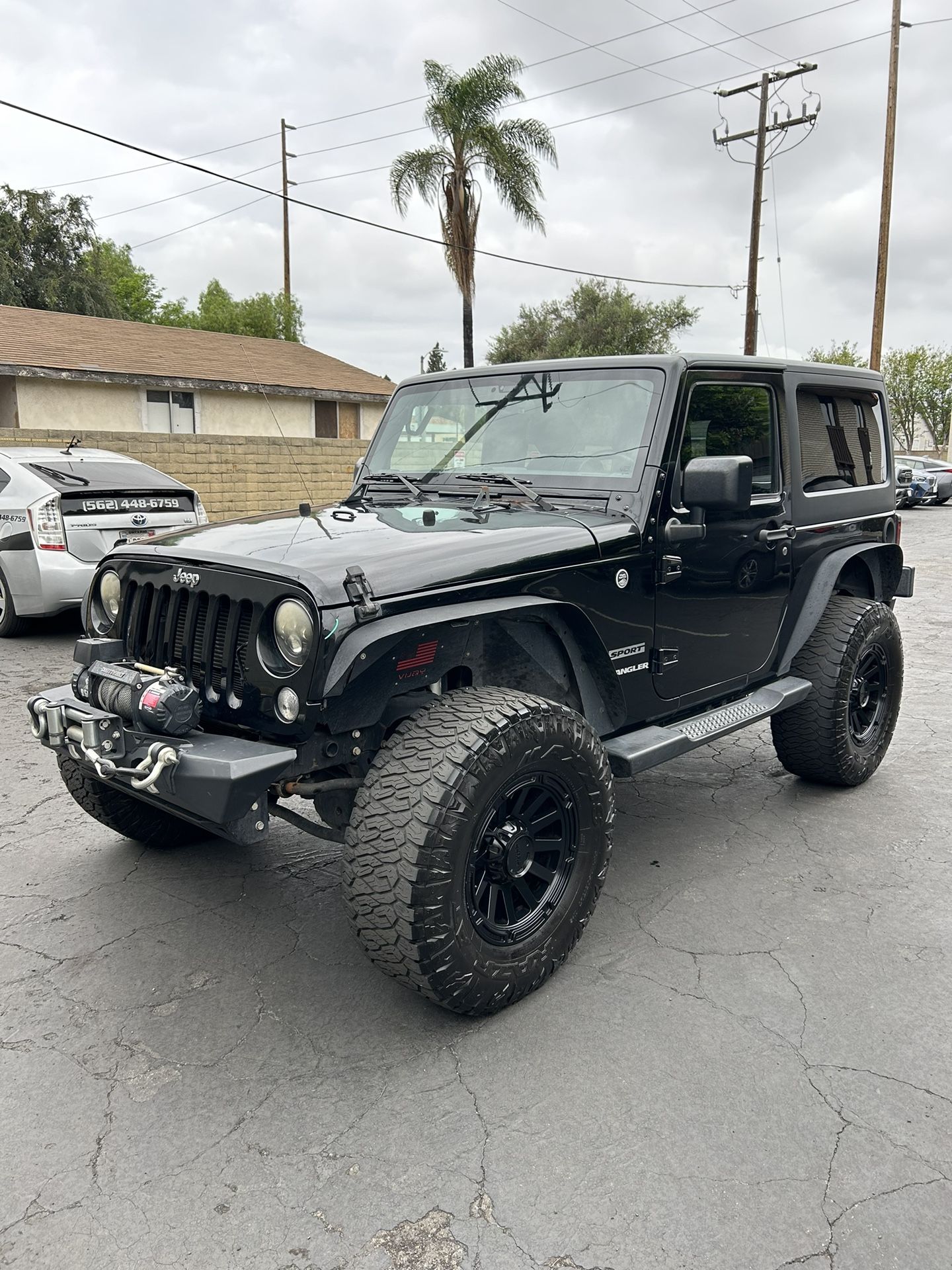
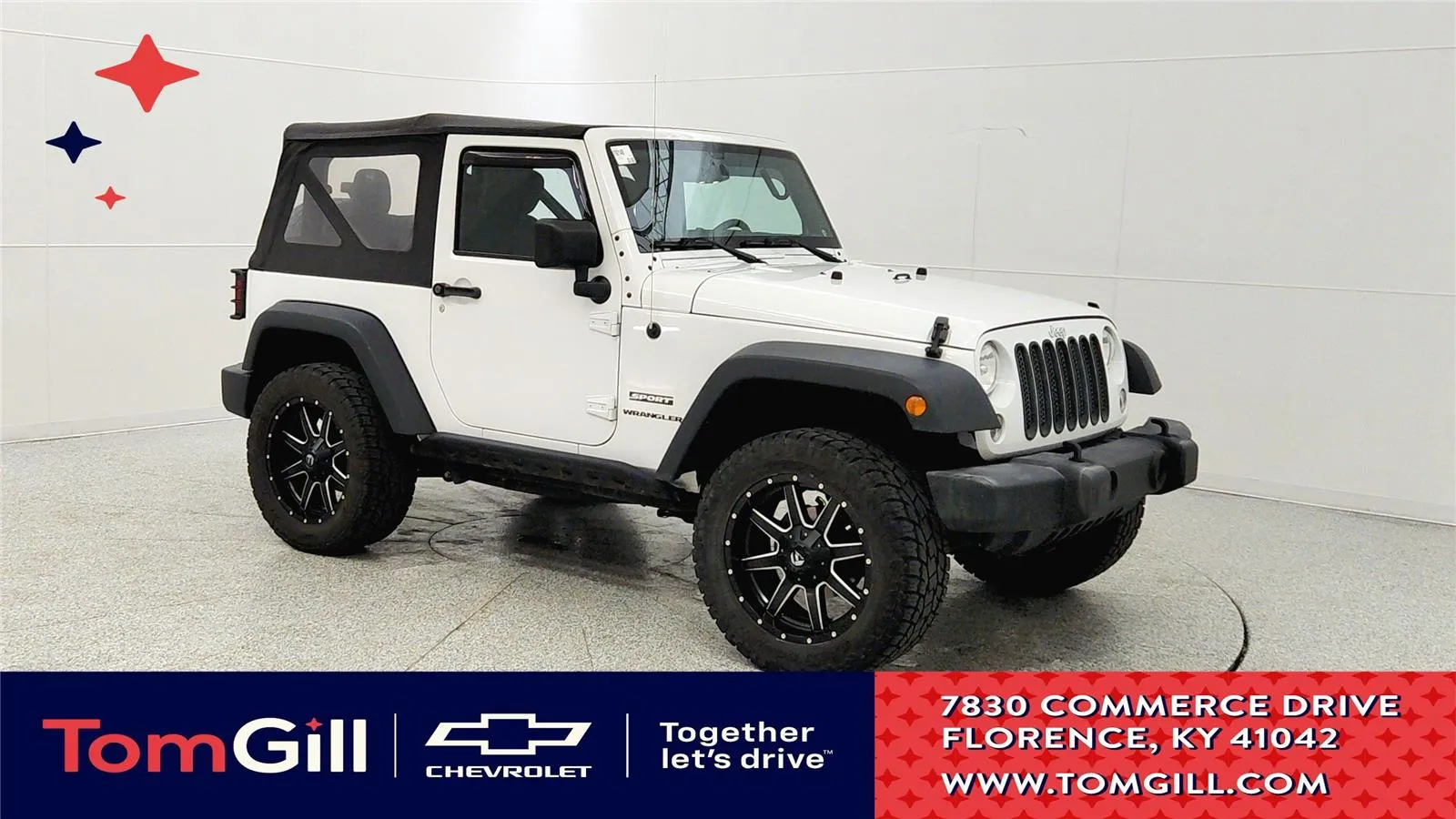
The 2017 Jeep Wrangler Sport offers unfiltered off-road capability, solid-axle durability, and timeless open-air freedom at an accessible price point. Powered by a 285-horsepower 3.6-liter Pentastar V6, it sacrifices highway refinement and modern cabin luxury for unmatched trail performance, easy mechanical serviceability, and exceptionally strong long-term value retention on the pre-owned market.
Identity and Scope: Understanding the 2017 JK Generation
The 2017 model year holds a distinct position in the history of the Jeep Wrangler. Positioned near the absolute end of the third-generation "JK" platform production run (which spanned from 2007 through early 2018), the 2017 Wrangler Sport benefits from a decade of continuous engineering refinements. By this point, Jeep had ironed out early-generation electrical gremlins, upgraded interior materials, and established the 3.6-liter Pentastar V6 as the standard powertrain across all trims.
The Sport trim serves as the essential, entry-level foundation of the Wrangler lineup. Available in both the standard two-door configuration and the four-door Wrangler Unlimited (JKU) variant, the Sport strips away non-essential luxury electronics in favor of heavy-duty mechanical hardware. It was designed primarily for buyers who wanted maximum off-road utility out of the factory box or enthusiasts planning to build a custom trail rig using aftermarket suspension lifts, larger tires, and specialized body armor.
When evaluating the 2017 Wrangler Sport, it is vital to recognize its underlying design philosophy. Unlike unibody crossover SUVs that prioritize smooth highway riding, fuel efficiency, and quiet cabins, the Wrangler Sport uses traditional body-on-frame construction with rigid front and rear live axles. This mechanical architecture delivers exceptional suspension articulation and physical durability off-road, but creates inherent trade-offs in pavement ride quality and cabin acoustics.
Engine, Powertrain, and Mechanical Specifications
The 3.6L Pentastar V6 Engine
Every 2017 Jeep Wrangler Sport comes equipped with Chrysler's 3.6-liter Pentastar naturally aspirated V6 engine. This 24-valve DOHC engine features an aluminum cylinder block and heads, variable valve timing (VVT), and sequential multiport fuel injection.
- Horsepower: 285 hp @ 6,400 RPM
- Torque: 260 lb-ft @ 4,800 RPM
- Recommended Fuel: 87-octane unleaded gasoline
The Pentastar V6 delivers strong low-end torque characteristics suitable for crawling over rocks or navigating muddy trails. Power delivery is linear throughout the rev range, offering adequate acceleration for highway merging despite the vehicle's boxy aerodynamics.
Transmission Options and Drivetrain Setup
Buyers of the 2017 Sport model could select between two proven transmissions:
- 6-Speed NSG370 Manual Transmission: Standard on the Sport, this manual gearbox features a low first-gear ratio (4.46:1) that grants precise throttle control on steep inclines and low-speed technical terrain.
- 5-Speed W5A580 Automatic Transmission: An optional Mercedes-Benz-derived torque-converter automatic that provides smooth gear shifts and predictable torque delivery, featuring an integrated low-range crawl capability.
Power reaches the ground through Jeep's Command-Trac NV241 part-time four-wheel-drive (4WD) system. Command-Trac features a manually shifted dual-range transfer case with a 2.72:1 low-range gear reduction ratio. Under normal driving conditions on dry pavement, the system operates in two-wheel drive (2WD) to route all power to the rear wheels. Engaging 4-High locks the front and rear driveshaft rotation speeds together, which requires slippery surfaces like snow, ice, mud, or loose dirt to prevent driveline binding.
Standard Features vs. Sport S Trim Comparison
The base 2017 Wrangler Sport is notoriously minimalist, appealing directly to purists. However, Jeep offered a step-up package known as the Sport S, which added essential daily-driver comfort features.
2017 Jeep Wrangler Trim Hierarchy (Base Level):
- Wrangler Sport (Base Package 23B / 24B)
- Manual roll-up windows & manual door locks
- 16-inch styled steel wheels (225/75R16 tires)
- Standard sunrider soft top
- Manual side mirrors
- Wrangler Sport S (Package 23S / 24S)
- Power windows with front one-touch down
- Power door locks & remote keyless entry
- 17-inch aluminum wheels (255/75R17 tires)
- Leather-wrapped steering wheel
- Standard Air Conditioning (Optional on base 2-door Sport)
The base two-door Sport model notably omitted standard air conditioning—a factory option that mandatory-equipment buyers needed to verify before purchase. The four-door Unlimited Sport included air conditioning as standard equipment. Both models came equipped with heavy-duty steel skid plates protecting the fuel tank and transfer case, front and rear tow hooks, halogen headlights, and removable doors with fold-down windshield capability.
Off-Road Performance and Hardware
Off the pavement, the 2017 Wrangler Sport excels due to its purpose-built chassis geometry and solid-axle suspension system. Built on a Dana 30 solid front axle and a heavy-duty Dana 44 solid rear axle, the Sport is resilient against harsh impacts and offers extensive suspension travel.
Key Off-Road Geometry Parameters
- Approach Angle: 42.2 degrees (2-door) / 42.0 degrees (4-door)
- Breakover Angle: 25.8 degrees (2-door) / 21.2 degrees (4-door)
- Departure Angle: 32.3 degrees (2-door) / 32.5 degrees (4-door)
- Standard Ground Clearance: 8.3 to 9.6 inches (depending on wheel/tire combination)
While higher-tier trims like the Rubicon feature front and rear electronic locking differentials, an electronic sway-bar disconnect, and a 4:1 low-range transfer case, the Sport relies on open differentials assisted by Jeep's Brake Traction Control (BLD) system. BLD uses the anti-lock braking sensors to detect wheel slippage across an axle, applying brake pressure to the spinning wheel to transfer torque to the tire with traction.
For most intermediate trail driving, moderate mud, sand dunes, and forest service roads, the standard Sport configuration is more than capable. The standard 3.21 axle ratio provides decent highway fuel economy, but buyers intending to fit 35-inch or larger off-road tires frequently seek out models equipped with the factory optional 3.73 axle ratio or perform an aftermarket gear swap to restore low-end torque.
On-Road Driving Dynamics and Daily Usability
Evaluating the 2017 Jeep Wrangler Sport as a daily driver requires adjusting expectations away from conventional automotive standards. Its solid front axle and recirculating-ball steering system prioritize physical durability over precision, resulting in noticeable steering play and a floating feel at highway speeds.
Ride Quality and Noise Levels
- Suspension Response: Coil springs with gas-charged shocks absorb large bumps effectively on dirt roads, but transmit sharp pavement imperfections, expansion joints, and potholes directly into the cabin.
- Acoustics: With the standard vinyl soft top, wind noise becomes prominent above 45 mph, making high-speed cabin conversations or hands-free calls challenging. Choosing the optional Freedom Top three-piece hardtop significantly reduces ambient highway noise and improves interior insulation during winter months.
- Fuel Economy: The EPA ratings for the 2017 Wrangler Sport reflect its brick-like aerodynamic profile:
- 2-Door Manual: 17 mpg City / 21 mpg Highway
- 4-Door Automatic: 16 mpg City / 20 mpg Highway
- Real-World Expectation: Expect 15 to 18 mpg overall, with further decreases if larger tires, heavy steel bumpers, or roof racks are installed.
Interior Comfort, Cargo Space, and In-Cabin Technology
The cabin of the 2017 Wrangler Sport emphasizes functionality, moisture resistance, and easy cleaning. Standard interior equipment includes durable cloth seats, manual front seat height adjustment, drain plugs built directly into the floor pans, and removable carpeting that allows owners to hose out dirt or water after trail runs.
| Feature | 2-Door Sport | 4-Door Unlimited |
|---|---|---|
| Seating Capacity | 4 Passengers | 5 Passengers |
| Cargo Vol. Behind Rear Seat | 12.8 cu. ft. | 31.5 cu. ft. |
| Cargo Vol. Rear Seat Folded | 56.5 cu. ft. | 70.6 cu. ft. |
| Rear Legroom | 35.6 inches | 37.2 inches |
The rear seat in the two-door model is cramped for adults and difficult to access, though it can be tumbled forward or removed entirely to expand cargo room. The four-door Unlimited provides genuine five-passenger seating and ample cargo space for camping gear, luggage, or tools.
In terms of infotainment, technology in the 2017 Sport is decidedly dated. The base trim includes the Uconnect 130 AM/FM/CD/MP3 stereo with an auxiliary input jack and an eight-speaker audio system. Optional upgrades from the factory included the Uconnect 430 or 430N units, which added a 6.5-inch touchscreen interface, SiriusXM satellite radio, a built-in hard drive, Garmin navigation, and Bluetooth hands-free phone connectivity. However, modern features like Apple CarPlay and Android Auto were never offered on the JK platform and require aftermarket head unit installation.
Known Issues, Mechanical Reliability, and Maintenance Needs
The 2017 model year represents one of the most mechanically sorted iterations of the JK platform. However, prospective pre-owned buyers must monitor several documented mechanical issues inherent to the 3.6L Pentastar engine and solid-axle platform.
Oil Filter Adapter Housing Leaks
The most common engine issue on the 3.6L Pentastar involves the plastic engine oil filter housing adapter located in the "V" of the engine block below the intake manifold. Over time, heat cycling and over-torquing during oil changes cause the plastic housing or its internal O-rings to crack and leak.
- Symptom: Oil pooling on top of the transmission bellhousing or dripping down the rear of the engine block.
- Solution: Replacement with an updated OEM assembly or an aftermarket all-aluminum housing kit, which permanently solves the cracking vulnerability.
Front Suspension and "Death Wobble" Dynamics
"Death Wobble" refers to violent, uncontrollable shaking of the front steering wheel and axle assembly triggered after hitting a bump at speed. This condition is unique to solid front axle vehicles and is not a design flaw of the Wrangler itself, but rather a symptom of worn or loose front suspension components.
- Common Causes: Worn track bar bushings, loose track bar mounting bolts, bad tie-rod ends, worn drag links, or deteriorated ball joints.
- Inspection Tip: Never attempt to cure Death Wobble simply by replacing the steering stabilizer shock; the underlying loose mechanical pivot point must be diagnosed and replaced.
Radiators and Heater Core Clogging
Some JK Wranglers suffer from cooling system issues caused by residual casting sand left in the engine block during manufacturing. Over time, this sand can accumulate in the heater core, restricting coolant flow.
- Symptom: The driver-side vents blow cold air while the passenger-side vents blow warm air when the heater is engaged, or persistent low coolant without visible external drips.
- Radiator Seams: The factory plastic end tanks on the aluminum radiator can develop slow hairline leaks along the crimped side seams.
Undercarriage Corrosion Points
Because Wranglers are frequently driven off-road and through winter road salt, frame corrosion is a primary concern. Inspect the following areas thoroughly:
- Inside frame rails near the rear control arm mounting brackets.
- Floor pan body mounts and crossmembers.
- Bottom edges of the tailgate and door hinges.
Technical Specifications & Trim Comparison Table
The following detailed matrix compares the key mechanical specifications, dimensional metrics, and factory configurations between the 2017 Wrangler Sport 2-Door and Unlimited 4-Door models.
| Specification / Feature | 2017 Jeep Wrangler Sport (2-Door) | 2017 Jeep Wrangler Unlimited Sport (4-Door) |
|---|---|---|
| Engine Type | 3.6L Pentastar V6 DOHC 24V | 3.6L Pentastar V6 DOHC 24V |
| Horsepower @ RPM | 285 hp @ 6,400 RPM | 285 hp @ 6,400 RPM |
| Torque @ RPM | 260 lb-ft @ 4,800 RPM | 260 lb-ft @ 4,800 RPM |
| Standard Transmission | 6-Speed Manual (NSG370) | 6-Speed Manual (NSG370) |
| Optional Transmission | 5-Speed Automatic (W5A580) | 5-Speed Automatic (W5A580) |
| Transfer Case | Command-Trac NV241 Part-Time 4WD | Command-Trac NV241 Part-Time 4WD |
| Low-Range Gear Ratio | 2.72:1 | 2.72:1 |
| Standard Axle Ratio | 3.21:1 (3.73:1 Optional) | 3.21:1 (3.73:1 Optional) |
| Wheelbase | 95.4 inches | 116.0 inches |
| Overall Length | 163.8 inches (with spare tire) | 184.9 inches (with spare tire) |
| Curb Weight (Manual) | Approx. 3,760 lbs | Approx. 4,075 lbs |
| Max Towing Capacity | 2,000 lbs | 3,500 lbs (with 3.73 axle ratio) |
| Fuel Tank Capacity | 18.6 gallons | 22.5 gallons |
| Steering Type | Recirculating Ball with Power Assist | Recirculating Ball with Power Assist |
Buying a Used 2017 Wrangler Sport: Pre-Purchase Inspection Checklist
When shopping for a 2017 Jeep Wrangler Sport on the used market, perform a targeted inspection to separate well-maintained vehicles from abused off-road rigs:
1. Check for Modifications and Lift Kits
Many Wrangler Sports feature aftermarket modifications. Determine if a lift kit was installed correctly:
- Look for drop pitman arms paired incorrectly with stock track bars (which causes severe bump steer).
- Verify that extended brake lines and corrected control arm geometry (adjustable control arms or geometry brackets) were installed for lifts exceeding 2.5 inches.
- Ensure driveshaft CV boots are intact and not slinging grease due to extreme pinion angles.
2. Inspect the Undercarriage for Off-Road Damage
- Examine skid plates, crossmembers, and differential covers for deep gouges, scraped paint, or heavy dents.
- Check frame rails for packed mud or debris, which trap moisture and accelerate internal rust.
- Inspect steering components (drag link, tie rod, track bar) for structural bends or cracked rubber grease boots.
3. Verify Soft Top and Door Seal Integrity
- Inspect the rubber door surround seals, A-pillar header seal, and door threshold gaskets for cracks or hardening.
- Check for water stains under the carpet in the front footwells, which indicates rain leaks from the top seals.
- Test all zippers, plastic windows, and latching mechanisms on soft top models to ensure proper tension and seal.
4. Test Mechanical 4WD Operation
- Shift the transfer case into 4-High and 4-Low on a loose surface (gravel, dirt, or grass). Do not engage 4WD on dry concrete.
- Confirm that the low-range gear reduction engages smoothly without grinding and that the dashboard 4WD indicator light illuminates.
- Listen for unusual driveline clicks, pops, or binding sounds during low-speed turns on loose terrain.
Frequently Asked Questions
What is the difference between the 2017 Jeep Wrangler Sport and Sport S?
The base Sport is an entry-level trim equipped with manual windows, manual door locks, 16-inch steel wheels, and optional air conditioning on the 2-door model. The Sport S adds power windows, power door locks, remote keyless entry, standard air conditioning, 17-inch aluminum wheels, and a leather-wrapped steering wheel.
Does the 2017 Jeep Wrangler Sport have good towing capacity?
The two-door 2017 Wrangler Sport has a maximum towing capacity of 2,000 pounds. The four-door Wrangler Unlimited Sport can tow up to 3,500 pounds when equipped with the optional 3.73 rear axle ratio and factory Max Tow Package.
Is the 2017 Wrangler Sport reliable as a daily driver?
Yes, the 2017 model year features a mature build of the 3.6L Pentastar V6 and solid mechanical drivetrain components. While its ride is firmer, louder, and less fuel-efficient than standard unibody crossovers, its overall mechanical reliability is strong when regular maintenance is performed.
What engine is in the 2017 Jeep Wrangler Sport?
All 2017 Wrangler Sport models are powered by a 3.6-liter Pentastar V6 engine producing 285 horsepower and 260 lb-ft of torque. It is paired with either a standard 6-speed manual or an optional 5-speed automatic transmission.
Can you put 35-inch tires on a stock 2017 Wrangler Sport?
Fitting 35-inch tires on a stock Wrangler Sport requires a suspension lift (typically 2.5 inches minimum) and appropriate wheel backspacing to prevent tire rubbing against the frame and sway bar links. Additionally, re-gearing the front and rear differentials (to 4.10 or 4.56 ratios) is strongly recommended to maintain performance and prevent transmission strain.
Final Verdict: Is the 2017 Jeep Wrangler Sport Worth Buying?
The 2017 Jeep Wrangler Sport remains one of the most compelling options for buyers seeking raw off-road utility, simple mechanical maintenance, and exceptional value retention. As one of the final refined years of the celebrated JK generation, it bypasses early-production engine bugs while retaining the straightforward body-on-frame durability that built the Jeep brand legacy.
If your priorities center on quiet highway cruising, high-tech driver assist features, and low fuel consumption, a contemporary unibody SUV will serve you better. However, for enthusiasts planning a trail build, buyers looking for open-air summer driving, or off-roaders needing heavy-duty solid axles, a well-maintained 2017 Wrangler Sport offers an unbeatable blend of real-world capability and long-term durability.