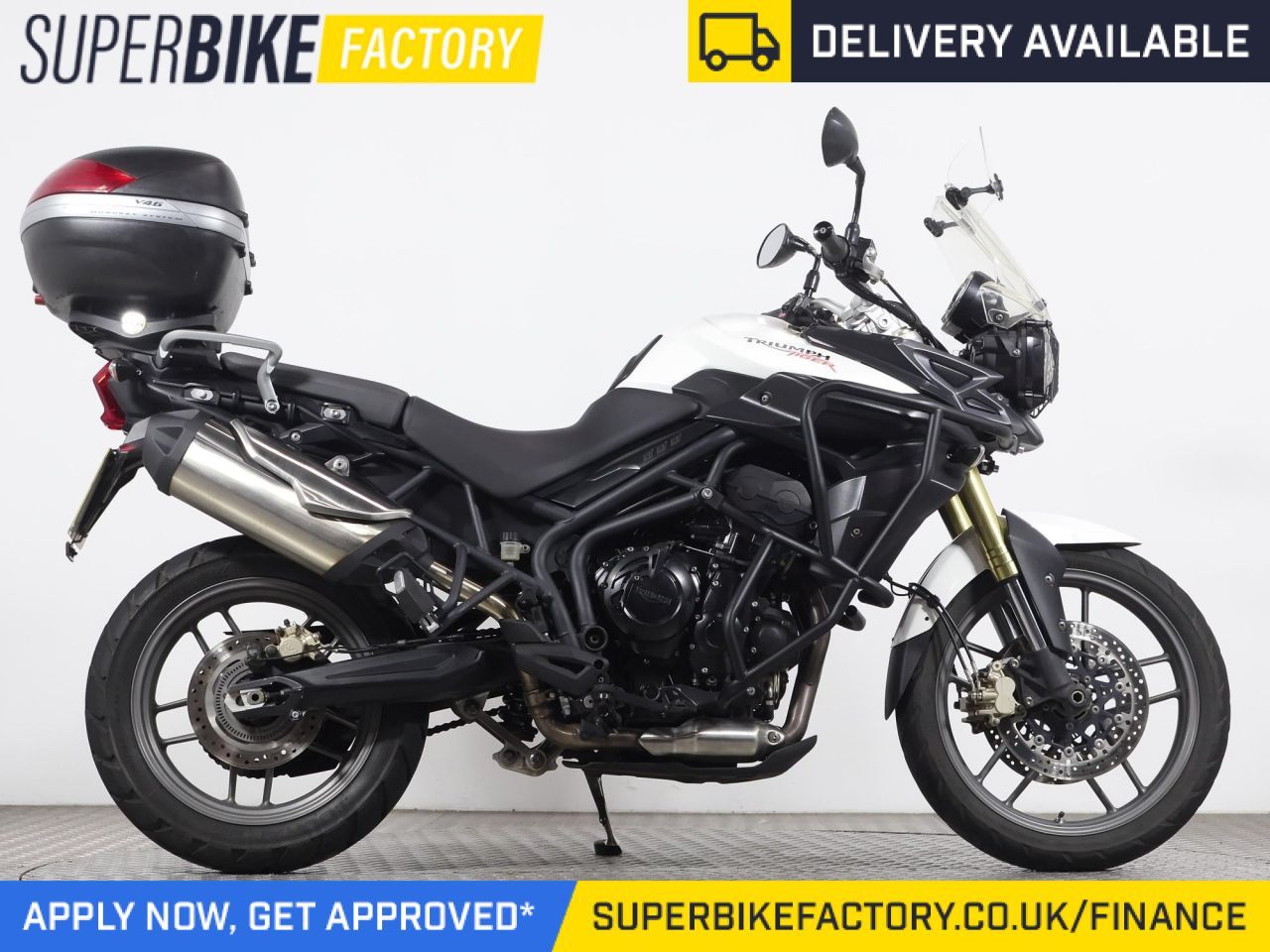
The 2012 Triumph Tiger 800 is a versatile mid-weight adventure-touring motorcycle powered by a refined 799cc three-cylinder engine. Known for its linear power delivery and agile road handling, it balances long-distance comfort with daily practicality. Despite its age, it remains a highly sought-after used machine for riders seeking a characterful alternative to twin-cylinder rivals.
The Legacy of the 2012 Triumph Tiger 800
When Triumph launched the Tiger 800 series, it was a direct challenge to the dominance of the BMW F-series in the middleweight adventure segment. By 2012, the model had firmly established itself as a credible, and in many ways superior, alternative for riders who prioritized road manners and engine character. Unlike the "XC" (Cross Country) version released alongside it, the standard Tiger 800 featured cast aluminum wheels and a 19-inch front tire, signaling its intent as a road-biased tourer with light trail capabilities.
As of 2026, the 2012 Tiger 800 is viewed as a "modern classic" in the adventure world. It represents the first generation of the platform, characterized by a mechanical throttle and a lack of complex rider aids like traction control or multiple ride modes. For many enthusiasts, this simplicity is a selling point, offering a direct connection between the rider and the machine that newer, more electronically governed bikes often lack.
The Heart of the Machine: The 799cc Triple
The defining feature of the 2012 Tiger 800 is undoubtedly its engine. Derived from the celebrated Daytona 675, the engine was bored and stroked to achieve 799cc, focusing on torque and smooth delivery rather than top-end screaming.
Power Delivery and Character
The inline-three configuration offers a "best of both worlds" scenario. It provides the low-end grunt typical of a twin-cylinder engine while maintaining the smooth, high-revving nature of a four-cylinder. On the road, this translates to a bike that can pull cleanly from as low as 2,500 RPM in top gear, making it incredibly forgiving in traffic and effortless on the highway.
Producing approximately 94 horsepower and 58 lb-ft of torque, the engine isn't intimidating, but it is deceptively fast. The linear power curve means there are no sudden surges or flat spots; the acceleration is predictable and relentless until it nears the 10,000 RPM redline. Owners often cite the "triple whistle"—the distinctive mechanical whine of the engine—as one of the bike’s most endearing traits.
Fueling and Transmission
The 2012 model utilized a multipoint sequential electronic fuel injection system. While generally crisp, some early units were known for a slightly sensitive "off-on" throttle transition, though this was largely smoothed out by factory ECU updates during its initial service life. The six-speed gearbox is notably slick, and the clutch pull is light, which reduces hand fatigue during long tours or urban commuting.
Chassis, Suspension, and Braking
Triumph designed the Tiger 800 with a tubular steel trellis frame, providing the rigidity necessary for carrying heavy luggage and a passenger without sacrificing flickability.
Suspension Setup
The standard 2012 Tiger 800 (non-XC) came equipped with 43mm Showa inverted forks and a Showa monoshock with preload adjustability. The suspension is tuned for "plushness." It excels at soaking up road imperfections, potholes, and expansion joints, making it a premier long-distance mile-muncher. However, because the front forks are non-adjustable, aggressive riders might find the front end a bit "divey" under heavy braking. In the used market of 2026, many owners have opted to upgrade the fork internals with progressive springs or heavier oil to sharpen the handling.
Wheels and Tires
The choice of a 19-inch front wheel rather than the 21-inch found on the XC variant was a deliberate move to improve road turn-in. It allows the bike to feel more like a standard naked bike in the corners. The 100/90-19 front and 150/70-17 rear tire sizes are standard across the industry, ensuring that even in 2026, a wide variety of rubber—from pure touring tires to 70/30 dual-sport tires—is readily available.
Braking Performance
Braking is handled by twin 308mm floating discs paired with Nissin two-piston sliding calipers at the front. While the hardware looks modest compared to modern radial-mount setups, the stopping power is more than adequate for the bike's 210kg (463 lbs) wet weight. Many 2012 models were sold with optional ABS, which can be switched off for those rare occasions when a rider ventures onto loose gravel.
Technical Specifications Overview
For a quick reference of the 2012 Triumph Tiger 800 (Road Version), the following table summarizes the core technical data:
| Component | Specification |
|---|---|
| Engine | 799cc Liquid-cooled, 12-valve, DOHC, In-line 3-cylinder |
| Bore/Stroke | 74.0 x 61.9 mm |
| Maximum Power | 94 hp (70 kW) @ 9,300 rpm |
| Maximum Torque | 58 lb-ft (79 Nm) @ 7,850 rpm |
| Frame | Tubular steel trellis frame |
| Front Suspension | Showa 43mm upside down forks, 180mm travel |
| Rear Suspension | Showa monoshock with hydraulic preload adjustment, 170mm travel |
| Front Brake | Twin 308mm floating discs, Nissin 2-piston sliding calipers (Optional ABS) |
| Rear Brake | Single 255mm disc, Nissin single-piston sliding caliper |
| Seat Height | Adjustable: 810mm (31.9 in) - 830mm (32.7 in) |
| Wet Weight | 210 kg (463 lbs) |
| Fuel Capacity | 19.0 Liters (5.0 US gal) |
Ergonomics and Long-Distance Touring
One of the primary reasons the Tiger 800 remains relevant in 2026 is its ergonomic versatility. Triumph designed the bike to accommodate a wide range of rider heights. The seat is adjustable by nearly an inch without tools, and the handlebars can be rotated or moved with risers to suit the rider’s reach.
Rider Comfort
The seating position is "neutral-upright." Your back stays straight, your knees are at a relaxed angle, and the reach to the bars is natural. This geometry is key to the Tiger's reputation as a touring machine. The standard windscreen provides decent wind protection for the torso, though taller riders may experience some helmet buffeting, leading many to install aftermarket touring screens.
Passenger and Luggage
The Tiger 800 was built with two-up riding in mind. The pillion seat is generous, and the grab handles are robust and well-placed. Furthermore, the rear subframe is sturdy, allowing for a substantial payload. Triumph offered a "sliding carriage" luggage system for the 2012 model, which allowed the top box to move slightly with the bike's natural lean, improving stability at high speeds.
Common Issues and Reliability Concerns
When buying or maintaining a 2012 Tiger 800 in 2026, there are a few documented issues that owners should be aware of. While the "Triple" engine is fundamentally bulletproof—regularly reaching over 100,000 miles with proper care—the peripheral components have a few quirks.
The Stepper Motor Issue
The most famous "Tiger Gremlin" involves the idle speed control stepper motor. Because of its location behind the cylinder bank, it is prone to collecting road grime and dust. When the linkage gets dirty, the bike may struggle to hold an idle or stall when coming to a stop. The fix is relatively simple: a thorough cleaning of the linkage and a bit of dry lubricant. In dusty environments, this may need to be done every 6,000 miles.
Gear Shifter Return Spring
Some 2011 and 2012 models experienced a failure of the gear shifter return spring. If this tiny spring snaps, the gear lever will hang loosely, and you won't be able to change gears easily. While the part itself is inexpensive, the labor to replace it involves removing the clutch cover. Many owners of high-mileage Tigers replace this spring preventatively.
Starter Motor Weakness
As these bikes age into 2026, some owners have reported the starter motor becoming "lazy" when the engine is hot. This is often caused by internal carbon buildup or aging brushes. Cleaning or rebuilding the starter motor usually restores its original vigor.
Maintenance and Ownership Costs in 2026
The Tiger 800 is a relatively straightforward bike to maintain for a home mechanic, though certain tasks require specific tools.
- Service Intervals: Minor services (oil and filter) occur every 6,000 miles. Major services, including the critical valve clearance check, occur every 12,000 miles.
- Valve Clearances: This is the most intensive part of the maintenance schedule. The Tiger's shim-under-bucket design means that if the valves are out of spec, the camshafts must be removed to change the shims. This is a 4- to 6-hour job for an experienced mechanic.
- Drive Chain: The Tiger is chain-driven, requiring regular cleaning and tensioning. A well-maintained chain and sprocket set should last 15,000 to 20,000 miles.
- Parts Availability: As of 2026, OEM parts from Triumph remain widely available, and the aftermarket for this generation of Tiger is massive. From crash bars to suspension kits, you can still fully customize or restore a 2012 model without difficulty.
Comparative Analysis: Tiger 800 vs. BMW F800GS
In 2012, the Tiger 800 was often compared to the BMW F800GS. While they occupy the same market space, they offer very different riding experiences.
- The Engine: The BMW’s parallel-twin is punchy and fuel-efficient but suffers from significant vibrations at highway speeds. The Triumph’s triple is infinitely smoother and more exciting to rev.
- Off-Road vs. On-Road: The BMW F800GS (with its 21-inch front wheel) is the superior tool for technical off-road trails. The Tiger 800 (Road) is far more stable and confident on tarmac and twisty mountain passes.
- Electronics: Both bikes from this era are relatively low-tech compared to 2026 standards, making them equal in terms of "analog" appeal.
Is the 2012 Triumph Tiger 800 Right for You?
Choosing a 2012 Tiger 800 in 2026 is a move made by those who value value-for-money and mechanical character. It is an ideal bike for:
- Re-entry Riders: Those returning to motorcycling who want a manageable, upright, and reliable machine.
- Budget Adventurers: Riders who want to explore the country without the $20,000 price tag of a new 2026 model.
- Commuters: The narrow profile and smooth engine make it a fantastic lane-splitter and urban companion.
However, if your primary goal is heavy off-roading, you should look specifically for the Tiger 800 XC variant or a dedicated dual-sport, as the standard Tiger’s cast wheels and limited suspension travel will be a bottleneck in deep sand or rocky terrain.
FAQ
Does the 2012 Tiger 800 have traction control?
No, the 2012 model does not have traction control. It features a traditional cable-actuated throttle. This means the rider’s right hand is the only form of traction management. Traction control and "Ride-by-Wire" technology were introduced in later generations (starting around 2015).
What is the real-world fuel economy of a 2012 Tiger 800?
Riders typically report between 45 and 52 MPG (US) during mixed riding. On long highway stretches at steady speeds, it can lean toward the higher end of that range. With its 5-gallon tank, you can expect a range of approximately 200–230 miles per fill-up.
Can I lower the 2012 Tiger 800?
Yes. Aside from the adjustable factory seat (which goes down to 810mm), several aftermarket companies offer "lowering links" for the rear suspension. Combined with sliding the front forks up in the triples, the bike can be lowered significantly for shorter riders, though this may slightly alter the ground clearance.
Is the 2012 model year better than the 2011?
Generally, yes. While the bikes are nearly identical, the 2012 models benefited from minor factory refinements and updated ECU fueling maps that addressed some of the small "first-year" bugs seen in the 2011 launch models.
How does the 2012 Tiger 800 handle a passenger?
It handles a passenger exceptionally well. The 800cc engine has plenty of torque to manage the extra weight without feeling sluggish. The long, flat seat provides ample room, and the adjustable rear preload allows you to compensate for the added load to maintain proper handling geometry.
Final Recommendation
The 2012 Triumph Tiger 800 stands as a testament to balanced engineering. In 2026, it remains a "sweet spot" in the used motorcycle market. It offers enough power to be exciting, enough comfort for 500-mile days, and enough simplicity to be maintained by a dedicated owner. If you find a well-documented example with the stepper motor cleaned and the 12,000-mile valve service completed, it represents one of the best bangs-for-your-buck in the adventure-touring world. Before purchasing, always inspect the shifter return spring and check for any signs of stator failure, which is a common age-related issue for any bike of this vintage.