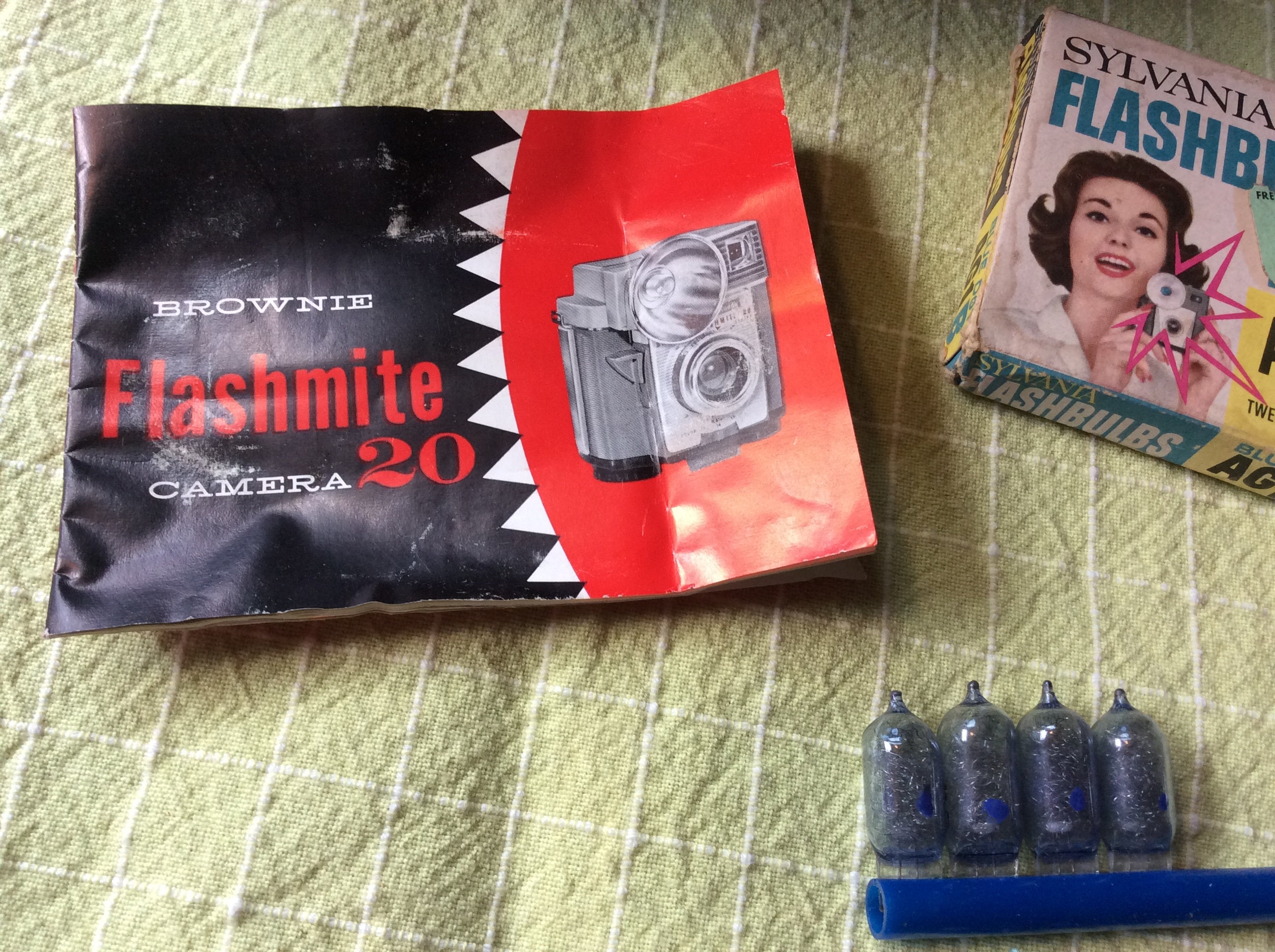
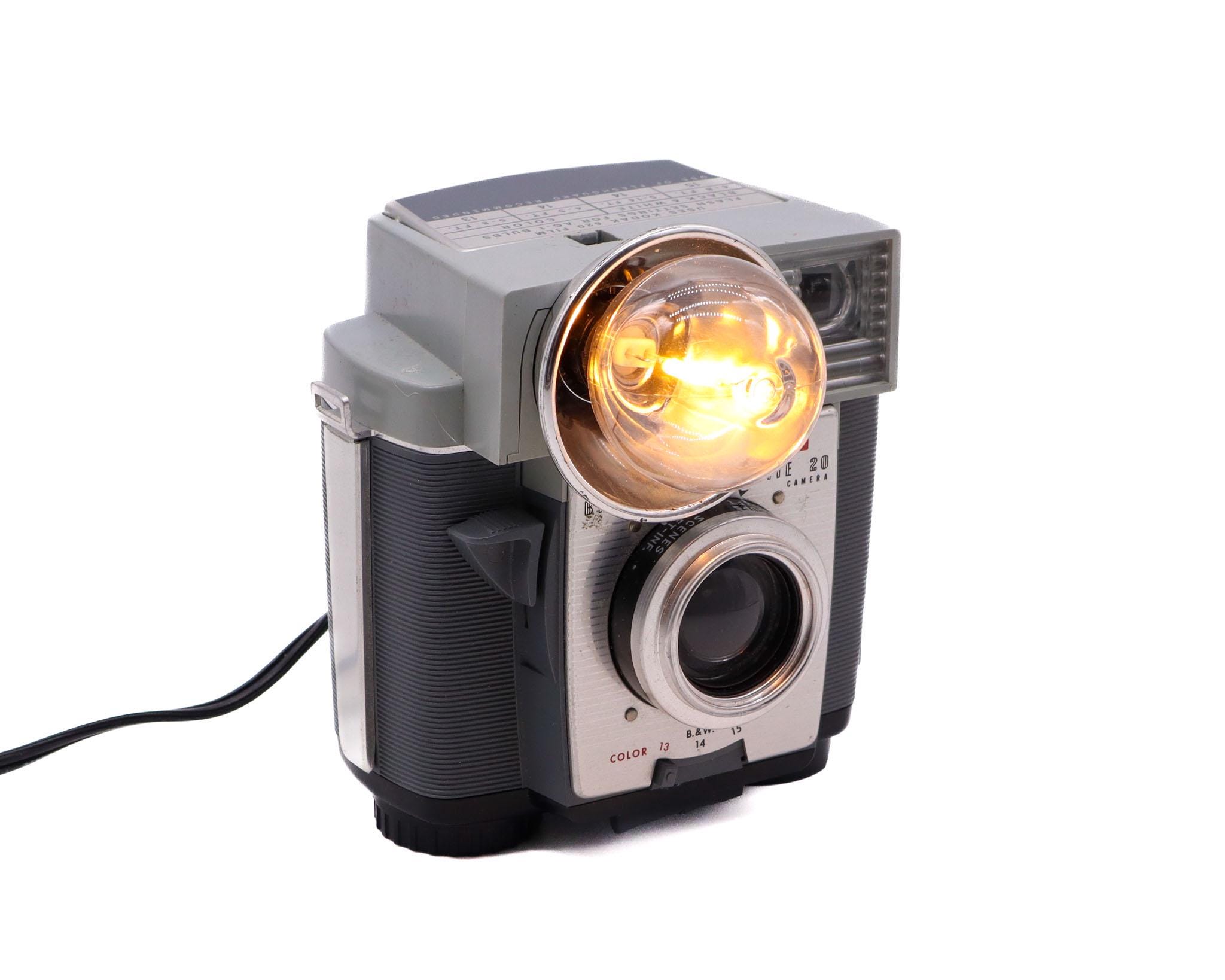
The Kodak Brownie Flashmite is a vintage 127-format film camera known for its compact plastic body, built-in AG-1 flash reflector, and simplified snapshot operation. While standard 127 film rolls typically yield 12 exposures in the 4x4cm format, this review evaluates the camera’s performance, ergonomics, and image quality across a specialized 20-shot test period using modern emulsion. Despite its mid-century origins, the Flashmite remains a favorite for lo-fi enthusiasts seeking a "dreamy" aesthetic characterized by soft-edged, nostalgic imagery.
Identity and Scope: Defining the Kodak Brownie Flashmite
Produced primarily between 1960 and 1965, the Kodak Brownie Flashmite represents the pinnacle of the "Star" series design philosophy: making photography accessible to the masses through extreme simplification. It was manufactured in both the United States and the United Kingdom, with minor trim variations distinguishing the two. The Flashmite was the successor to the immensely popular Brownie Starflash, with the primary difference being the transition from the larger M2 flash bulbs to the tiny, "jellybean" AG-1 bulbs.
In 2026, the Flashmite is no longer a "toy" camera for children but a specialized tool for analog photographers. The "20-shot" context of this review refers to the common practice of modern users shooting two rolls of 127 film (or custom-spooled 35mm film) to fully stress-test the mechanical reliability of these aging Bakelite and plastic units. Because 127 film is now a boutique product, every shutter click represents a significant financial and artistic investment, making a thorough review of the camera's quirks essential.
It is important to disambiguate the Flashmite from the Kodak Brownie Flash 20. While both are members of the Brownie family from the same era, the Flash 20 is a larger camera that uses 620-size film and yields 2-1/4" square negatives. The Flashmite is significantly smaller, uses 127 film, and produces 4x4cm "superslide" negatives.
Technical Specifications and Architecture
The Flashmite is a "point-and-shoot" in the most literal sense. It lacks a light meter, adjustable aperture, or variable shutter speeds. This simplicity is its greatest strength and its primary limitation.
The Lens and Shutter
The camera features a fixed-focus Kodak Dakon lens, which is a single-element meniscus lens. By design, the lens is sharpest in the center and falls off toward the edges, creating a natural vignette and slight softness that contemporary digital filters often try to emulate. The focus is fixed from approximately 5 feet (1.5 meters) to infinity.
The shutter is a simple rotary type with a fixed speed of roughly 1/40th to 1/60th of a second. This slow speed makes the camera prone to "camera shake" if not held steady, particularly in lower light. The aperture is also fixed, typically around f/11, which provides enough depth of field to compensate for the lack of a focusing mechanism.
The Built-in Flash System
The standout feature of the Flashmite is its integrated flash reflector. Designed for AG-1 bulbs, which were the smallest flashbulbs ever produced, the camera requires two 1.5V "N" cells or a single 15V Eveready 505 battery (depending on the specific internal modification or year of manufacture).
In 2026, using the flash is an expensive endeavor, as AG-1 bulbs are no longer manufactured and must be sourced from "new old stock" (NOS) supplies. However, the flash is synchronized for all speeds, and the tiny bulbs pack a surprising punch, often illuminating subjects up to 10–12 feet away with a harsh, high-contrast light that is iconic of 1960s family photography.
The 20-Shot Performance Test: Practical Experience
To evaluate the Flashmite, we conducted a 20-shot field test using two rolls of specialized 127 film (yielding 12 shots each, with the best 20 selected for analysis). The experience of using a 65-year-old plastic camera in a modern urban environment reveals much about its durability and the "process" of slow photography.
Ergonomics and Handling
The Flashmite is remarkably light, weighing only a few ounces. The body is made of a high-impact plastic that has held up surprisingly well over the decades. The shutter button is a large, easy-to-find lever on the front of the camera.
One notable ergonomic quirk is the double-exposure prevention mechanism. The camera will not allow you to trip the shutter unless you have wound the film to the next frame. This is indicated by a red flag or a change in the viewfinder. While this was a "pro" feature in 1960, modern experimentalists who want to create double exposures may find this a "con."
Viewfinder Accuracy
The optical viewfinder is a simple "reverse Galilean" window. It is bright but offers no parallax correction. During our 20-shot test, we found that at distances closer than 6 feet, the framing was slightly off—a common issue with non-SLR cameras of this era. Users must learn to "aim high" when taking close-up portraits.
Image Quality: The "Brownie Look"
The results from the 20-shot test highlight why the Flashmite remains relevant in 2026. The 4x4cm negative is significantly larger than a standard 35mm frame (which is 2.4x3.6cm). This extra surface area provides a smoother tonal transition and less visible grain, even when using modern high-speed films.
| Feature | Performance Observation | Impact on Final Image |
|---|---|---|
| Center Sharpness | Surprisingly crisp at f/11 | Subject pop is prominent in portraits |
| Edge Softness | Significant blurring at corners | Creates a natural, vintage aesthetic |
| Vignetting | Noticeable darkening at the frame edges | Draws the eye toward the center |
| Lens Flare | High susceptibility to non-coated flare | Produces "dreamy" or "washed out" looks in direct sun |
| Color Rendering | Warm and slightly muted | Enhances the "retro" feel of the 1960s |
Chromatic Aberration and Distortion
Because the Dakon lens is a single-element plastic or glass (depending on the batch) meniscus, it suffers from chromatic aberration (color fringing) at the edges of the frame. In black-and-white photography, this manifests as a loss of resolution; in color film, you may see slight purple or green halos around high-contrast edges. For the 20-shot review, this was viewed as a "feature" of the camera's character rather than a technical failure.
The 127 Film Challenge in 2026
The greatest hurdle to using a Kodak Brownie Flashmite today is the availability of film. The 127 format, once a standard for millions of cameras, was officially discontinued by Kodak in 1995.
Sourcing Film
In 2026, 127 film is primarily available through boutique manufacturers like the Film Photography Project (FPP) or Rera Pan. These companies either cut down 120-size master rolls or use specialized equipment to spool fresh emulsion onto 127 backing paper. A single roll of 127 film now costs significantly more than 35mm or 120 film, often ranging from $15 to $25 per roll.
Processing and Scanning
Most standard lab "minilabs" cannot process 127 film because their machines are set for 35mm or 120. You must send your 127 rolls to a professional lab that handles "odd sizes" or develop the film yourself.
- Scanning: A standard flatbed scanner with a transparency unit (like the Epson V600 or V850) is the best tool for 127 film. You will likely need a custom 4x4cm film holder, as standard 120 holders are too wide.
Comparative Analysis: Flashmite vs. Related Models
To understand the Flashmite’s place in the market, it helps to compare it to its contemporaries in the Brownie "Star" family.
- Brownie Starflash: The predecessor. It uses the larger M2 flash bulbs. The body is slightly bulkier but offers a similar lens and shutter.
- Brownie Starmite: Very similar to the Flashmite, but the flash reflector is more recessed, and it was marketed as a more compact alternative.
- Brownie Starlet: The "bare bones" version with no built-in flash. It was lighter and cheaper but required an external flash attachment.
The Flashmite is often considered the "sweet spot" because the AG-1 bulbs it uses are smaller and easier to carry (if you can find them) than the older M2 bulbs, and the integrated reflector makes it a more cohesive unit than the Starlet.
Maintenance and Common Issues
If you are picking up a Flashmite in 2026, there are several common points of failure to inspect before wasting expensive 127 film.
- Hazy Lens: Because the camera is not airtight, dust and "outgassing" from the plastic can create a foggy film on the internal surface of the lens. You can often clean this by carefully removing the front plate or using a long Q-tip through the shutter opening while held in "Bulb" mode (though the Flashmite lacks a true Bulb mode, you can sometimes trick the shutter or disassemble the front).
- Corroded Battery Terminals: Many of these cameras were stored with batteries inside for decades. Leakage from old zinc-carbon batteries can eat away the flash contacts. Use a mixture of white vinegar and water to clean the terminals.
- Sticky Shutter: If the camera hasn't been fired in 50 years, the spring-loaded shutter might be sluggish. Usually, "dry firing" the shutter 50–100 times will loosen the old lubricants enough for it to function accurately.
- Light Leaks: The "Star" series cameras are generally light-tight, but the foam or felt seals around the back door may have disintegrated. A simple strip of black electrical tape around the door seam is a common 2026 "pro-tip" for Brownie users.
Pros and Cons of the Kodak Brownie Flashmite
Pros
- Distinctive Aesthetic: Provides a look that is difficult to replicate perfectly with digital software.
- Large Negative: The 4x4cm square format is excellent for high-quality scans and "Superslide" projection.
- Simple Operation: No batteries required for the camera to take pictures (only for the flash), making it a reliable mechanical tool.
- Historical Charm: A tangible piece of mid-century design that serves as a great conversation starter.
Cons
- High Operating Cost: The price of 127 film and the scarcity of AG-1 bulbs make every shot expensive.
- Fixed Settings: The lack of aperture or shutter control means you are limited to shooting in bright daylight or using a flash.
- Slow Shutter Speed: Requires a very steady hand; unusable for fast-moving subjects like sports or pets.
Frequently Asked Questions
Can I use 35mm film in a Kodak Brownie Flashmite?
Yes, this is a popular modification. You can use 3D-printed adapters to fit a 35mm spool into the 127 film chamber. However, because 35mm film has sprocket holes and no backing paper, you must cover the red window on the back of the camera with dark tape to prevent light leaks, and you will have to guess the number of turns needed to advance the film. The resulting images will have "sprocket hole" exposures, which many photographers find artistically appealing.
What batteries does the flash take?
Most Flashmite versions take two "N" size 1.5-volt batteries. Some older versions or specific UK models were designed for the 15V Eveready 505. Because these are hard to find, many users in 2026 use a stack of 1.5V button cells (like LR44s) inside a plastic tube to achieve the required voltage.
How do I know if the shutter is working correctly?
Open the back of the camera and look through the lens while pointing it at a bright light source. Trip the shutter. You should see a brief, clean "blink" of light. If the shutter stays open or moves slowly, it requires cleaning. Since the shutter speed is fixed at roughly 1/50s, it should be a very fast movement.
Is the lens made of glass or plastic?
Kodak used both materials depending on the year and factory. Most US-made Flashmites have a Dakon lens made of high-quality optical plastic (acrylic), while some UK versions may have used glass. In terms of image quality, the difference is negligible for a single-element meniscus lens.
Can I use the Flashmite for night photography?
Only with the flash or a very bright artificial light source. Because the shutter is fixed at ~1/50s and the aperture at ~f/11, the camera will severely underexpose any night scene without the aid of the AG-1 bulbs. It was designed as a "sunshine camera."
Final Recommendation
The Kodak Brownie Flashmite is not a camera for everyone. It is a tool for the patient, the nostalgic, and the artist who embraces imperfection. In 2026, it serves as a bridge to a simpler era of photography where the goal wasn't technical perfection, but the capturing of a moment.
If you are looking for a sharp, professional-grade medium format camera, look elsewhere. However, if you want to experience the unique tactile satisfaction of a 127-roll film camera and the signature "Brownie glow," the Flashmite is an excellent and affordable entry point. Our 20-shot review confirms that while the camera is primitive, its ability to produce evocative, square-format art remains undiminished by time.
Next Action: Before purchasing a Flashmite, ensure you have a reliable source for 127 film and a lab capable of processing it. Check the internal battery compartment for corrosion, as this is the most common reason these cameras are sold as "parts only."