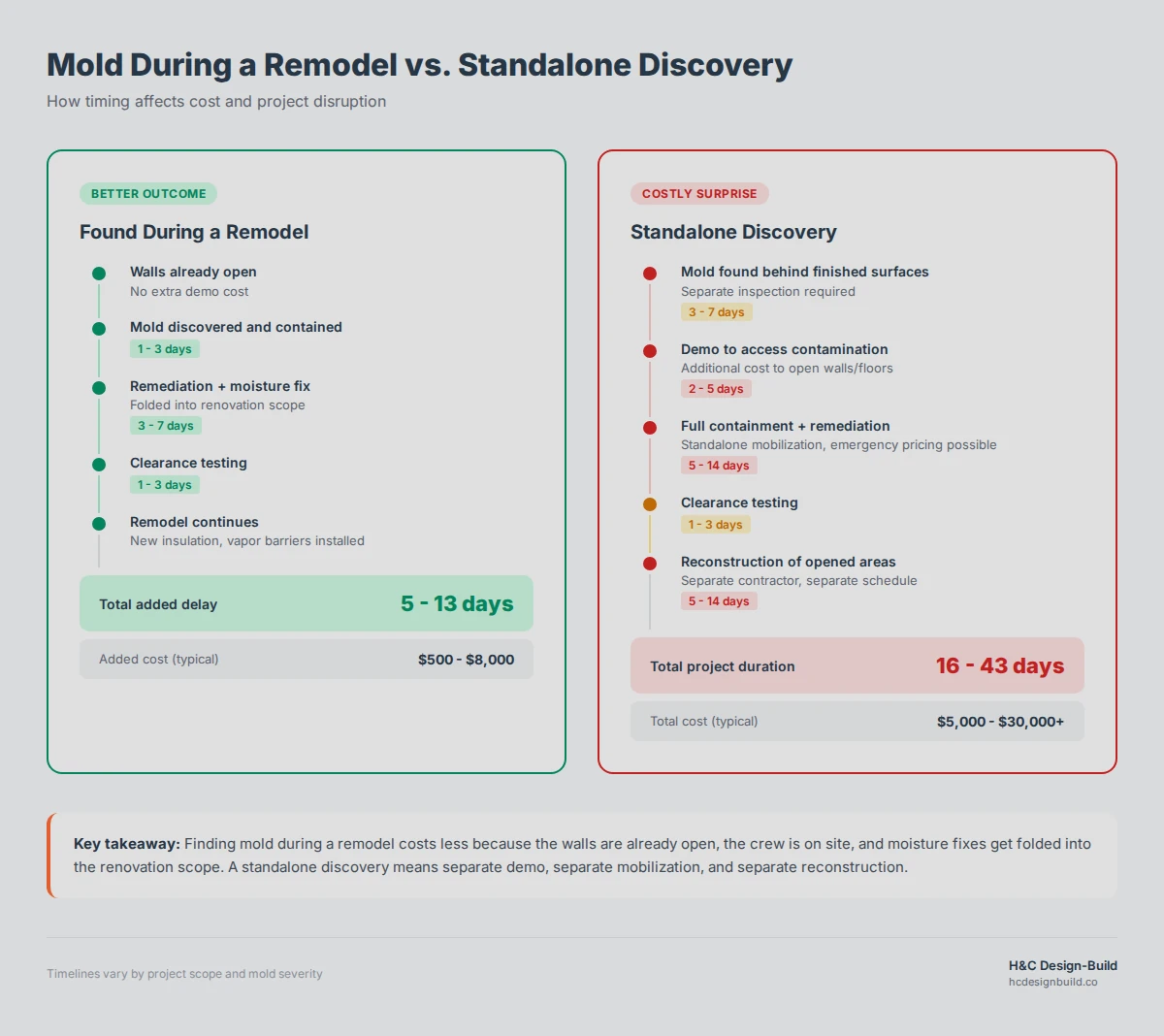
Tackling mold remediation in a 10,000 square foot building is a major commercial undertaking that typically costs between $30,000 and $100,000+, depending on the severity of the infestation, and requires a timeline of 2 to 6 weeks from initial assessment to final clearance testing.
Large-scale property management and commercial real estate operations present unique challenges when biological contaminants infiltrate building envelopes. A 10,000 square foot structure—whether it is a low-rise office, a retail warehouse, or a multi-family residential facility—demands a systematic approach to fungal mitigation. Understanding the financial requirements, operational phases, and regulatory standards ensures that property owners and facility managers can navigate complex remediation projects efficiently while safeguarding indoor air quality and structural integrity.
Understanding the Scope of Commercial Mold Remediation
Commercial mold remediation differs significantly from residential projects due to the scale of the mechanical systems, the density of building materials, and the strict regulatory frameworks governing occupational health and safety. When managing a 10,000 square foot footprint, contamination is rarely isolated to a single room. It often spans multiple zones, HVAC ductwork, wall cavities, and subflooring.
The presence of mold in a commercial environment is a symptom of underlying moisture issues. Before any physical remediation begins, professional remediators must identify and resolve the root cause of water intrusion. This may involve repairing roof leaks, fixing commercial plumbing failures, or addressing chronic relative humidity issues driven by failing commercial HVAC dehumidification systems. Ignoring moisture dynamics guarantees that fungal growth will return, rendering the financial investment in remediation useless.
Furthermore, commercial properties must account for liability regarding employee, tenant, and customer health. Exposure to high concentrations of allergenic, pathogenic, or toxigenic molds can trigger severe respiratory reactions, particularly among individuals with asthma or compromised immune systems. Consequently, large-scale remediation requires strict adherence to industry standards, such as those established by the Institute of Inspection Cleaning and Restoration Certification (IICRC S520) for professional mold remediation.
Cost Breakdown for a 10,000 Sq Ft Building
Financial planning for a 10,000 square foot building mold remediation project requires analyzing multiple variable cost centers. Because pricing is rarely calculated on a flat rate per square foot for the entire building—since mold rarely covers every single square inch uniformly—costs are determined by containment zones, linear footage of affected materials, and the intensity of labor required.
On average, commercial mold remediation costs range from $3.00 to $10.00 per square foot of affected area, but whole-building preventative treatments or light-to-moderate contamination across a 10,000 sq ft open-layout structure generally aggregate into predictable budget tiers.
Major Cost Factors
- Severity of Contamination: Level 1 and Level 2 contaminations (small, localized patches) require minimal containment and surface cleaning. Level 3 through Level 5 contaminations (large areas, extensive HVAC involvement, and structural wood rot) demand full-scale engineering controls, heavy demolition, and structural reinforcement.
- Porous vs. Non-Porous Materials: Non-porous materials like metal, glass, and hard plastics can typically be cleaned and salvaged. Semi-porous materials like framing lumber and concrete can often be sanded, wire-brushed, and treated with antimicrobial sealants. Highly porous materials like drywall, ceiling tiles, insulation, and carpeting must be discarded and replaced.
- HVAC System Decontamination: A 10,000 sq ft building usually operates massive commercial HVAC systems. If spores have entered the ductwork, specialized mechanical cleaning, antimicrobial fogging, and filter replacements will add significantly to the bottom line.
- Third-Party Testing: Professional protocols dictate that testing should be performed independently from the remediation contractor. Independent industrial hygienists or indoor environmental professionals (IEPs) charge separately for initial clearance protocols and post-remediation verification (PRV) testing.
| Project Scope / Contamination Level | Estimated Cost Range | Typical Duration | Primary Activities |
|---|---|---|---|
| Light / Localized (<10% of total area) | $5,000 – $15,000 | 3 – 7 Days | Targeted cleaning, HEPA vacuuming, minor drywall removal. |
| Moderate / Multi-Zone (10%–30% affected) | $20,000 – $50,000 | 1 – 3 Weeks | Containment setup, widespread demolition, HVAC cleaning. |
| Severe / Whole-Building (>30% affected or HVAC failure) | $60,000 – $120,000+ | 3 – 6+ Weeks | Full engineering controls, structural remediation, extensive rebuild. |
The Multi-Week Remediation Timeline
A structured timeline is essential to minimize business interruption and tenant displacement. For a 10,000 square foot facility, a standard project lifecycle spans roughly 2 to 6 weeks, structured across distinct operational phases.
Phase 1: Assessment, Protocol Development, and Permitting (Days 1–5)
Before tools touch the building, an independent indoor environmental professional conducts a thorough assessment. They take air samples, surface lift samples, and moisture readings to map the extent of the contamination. The IEP then writes a detailed remediation protocol. During this phase, project managers secure necessary local permits, especially if structural demolition or waste disposal requires municipal oversight.
Phase 2: Containment and Engineering Controls (Days 6–9)
To prevent cross-contamination into unaffected areas of the 10,000 sq ft building, technicians construct heavy-duty polyethylene containment barriers. Negative air pressure units equipped with High-Efficiency Particulate Air (HEPA) filtration are installed to continuously exhaust air outside the building, ensuring that spores disturbed during cleaning do not drift into clean zones. Air scrubbers run 24/7 throughout the workspace.
Phase 3: Demolition and Removal of Porous Materials (Days 10–18)
Workers systematically remove and bag contaminated porous building materials, such as water-damaged drywall, soaked insulation, and ruined flooring, following strict waste-handling guidelines. Bagged debris is sealed before being removed through designated waste chutes or exit points to prevent the shedding of spores in public or shared hallways.
Phase 4: Cleaning, Decontamination, and Antimicrobial Treatment (Days 19–25)
All exposed framing, structural steel, subfloors, and salvageable surfaces undergo intensive physical cleaning. This involves HEPA vacuuming followed by washing with EPA-registered antimicrobial and antifungal solutions. Encapsulants or sealants are often applied to wood framing to lock down any remaining staining or micro-spores and to provide long-term resistance to future moisture absorption.
Phase 5: Post-Remediation Verification (PRV) and Rebuild (Days 26–35+)
The independent IEP returns to conduct visual inspections and post-remediation air quality testing. They compare spore counts inside the containment zone against outdoor baseline samples and unaffected indoor zones. Once the space passes clearance, containment barriers are dismantled, and reconstruction contractors begin hanging new drywall, laying flooring, reinstalling insulation, and restoring the building to its pre-loss condition.
Essential Safety Protocols and Regulatory Compliance
Managing a commercial property requires strict adherence to Occupational Safety and Health Administration (OSHA) standards and Environmental Protection Agency (EPA) guidelines. Technicians working within a containment zone must wear appropriate personal protective equipment (PPE), typically including half-mask or full-mask respirators with P100 filters, disposable coveralls, gloves, and eye protection.
For buildings constructed prior to the 1980s, contractors must also test for hazardous materials like asbestos and lead paint before initiating demolition. Disturbing asbestos-containing materials while remediating mold violates federal environmental protection laws and poses severe health risks, necessitating combined abatement strategies.
Furthermore, waste disposal is strictly regulated. Commercial mold-contaminated waste must generally be double-bagged in heavy-duty polyethylene bags (6-mil thickness), securely sealed, and transported in accordance with local municipal codes governing construction and demolition debris.
Step-by-Step Guide for Facility Managers
When a mold crisis is identified in a large commercial property, property managers should execute a controlled, methodical response plan:
- Stop the Water Source Immediately: Shut off relevant water lines, deploy emergency roof tarps, or engage commercial water extraction teams to halt ongoing moisture accumulation.
- Engage an Independent Environmental Professional: Hire a certified IEP to assess the 10,000 sq ft space. Do not rely solely on the remediation company for testing, as independent verification ensures an unbiased scope of work.
- Review Insurance Coverage: Notify commercial property insurance carriers. While standard policies often exclude long-term maintenance neglect, sudden and accidental water pipe bursts or storm damage resulting in mold are frequently covered.
- Issue Tenant or Employee Communications: If portions of the building must be sealed off or evacuated, provide transparent, safety-focused updates to occupants to maintain trust and mitigate liability.
- Hire a Certified Remediation Contractor: Select a firm certified by the IICRC or the National Air Duct Cleaners Association (NADCA) with verifiable experience managing large-scale commercial facilities.
- Require Post-Remediation Clearance: Never authorize final payment or reconstruction until the independent IEP issues a written certificate of clearance confirming that spore counts have returned to normal baseline levels.
Frequently Asked Questions
Can a 10,000 sq ft building remain occupied during mold remediation?
Partial occupancy is sometimes possible if the remediation is strictly isolated to a single, sealed zone equipped with heavy negative air pressure and dedicated, separate HVAC controls. However, for severe, widespread, or whole-building infestations, temporary relocation of staff or tenants is often necessary due to noise, heavy equipment, loss of utilities, and the presence of industrial containment barriers.
Does commercial property insurance cover mold remediation costs?
Coverage depends entirely on the root cause of the moisture intrusion. If mold resulted from a sudden, covered peril—such as a burst fire sprinkler pipe or a severe storm roof breach—insurance typically covers remediation. If mold developed due to long-term humidity, chronic roof leaks, or deferred maintenance, policies generally exclude coverage, classifying it as a maintenance issue.
What is the difference between mold removal and mold remediation?
Complete mold removal is technically impossible because mold spores exist naturally everywhere in the outdoor and indoor environment. Remediation focuses on returning mold levels to normal, acceptable indoor baselines by fixing the moisture source, physically cleaning contaminated non-porous surfaces, discarding unsalvageable porous materials, and applying antimicrobial treatments.
How long do post-remediation air clearance tests take to process?
While the physical air sampling process takes only an hour or two on-site, laboratory analysis of spore traps typically requires 24 to 48 hours. Expedited lab services can sometimes deliver results within the same business day, though this usually incurs additional rush fees from the testing facility.
What preventive steps stop mold from returning after remediation?
Maintaining indoor relative humidity consistently between 30% and 50% is the single most effective deterrent. Facility managers should service commercial HVAC systems quarterly, install continuous dehumidification systems in vulnerable basement or warehouse zones, ensure proper positive building pressure, and immediately investigate any new roof leaks or plumbing anomalies.
Strategic Next Actions
For property owners facing mold contamination in a 10,000 square foot building, immediate action is critical to prevent exponential cost escalation and structural decay. Begin by scheduling a comprehensive moisture mapping assessment with a certified indoor environmental professional. Concurrently, review commercial insurance policies to identify coverage parameters for water damage and mold riders. Establishing an airtight remediation protocol before hiring contractors protects both building occupants and the long-term asset value of the real estate investment.