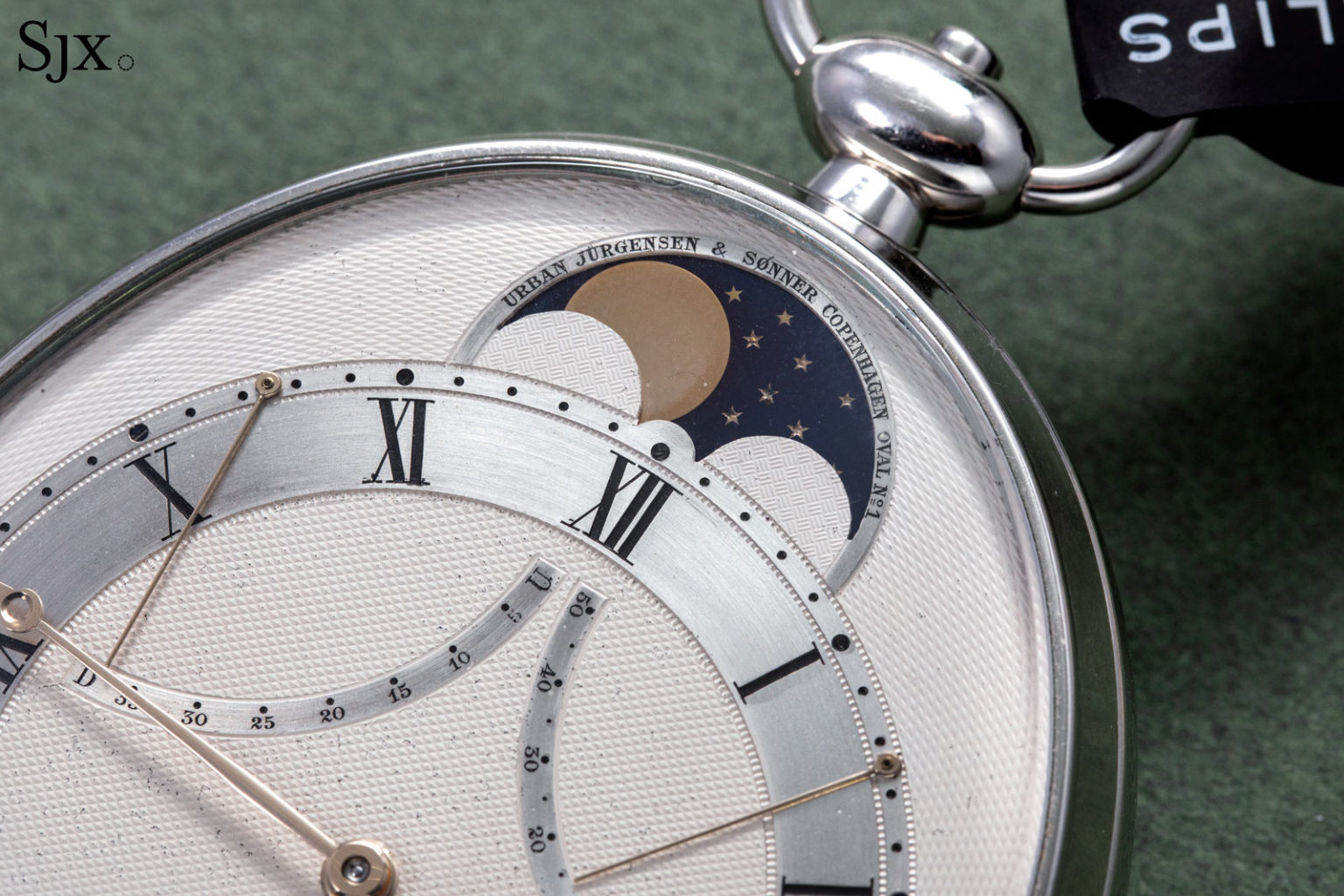
The H4 pocket watch, created by English master clockmaker John Harrison, represents a watershed achievement in horology and marine navigation. Designed to solve the longitude problem at sea, the H4 departed from traditional pendulum clocks and massive marine chronometers by proving that a portable, watch-sized timekeeper could maintain exceptional precision under severe maritime conditions.
Introduction to John Harrison and the Longitude Problem
During the 17th and 18th centuries, maritime trade expansion made ocean navigation increasingly critical. While latitude was straightforward to calculate using the sun and stars, determining east-west position—longitude—remained an elusive puzzle. A ship's navigator could determine longitude by comparing local time (calculated from the sun at noon) with the time at a known reference point, such as the Royal Observatory in Greenwich. Because the Earth rotates $360^\circ$ every 24 hours ($15^\circ$ per hour), a time difference of one hour corresponds to $15^\circ$ of longitude.
The primary barrier was technological. Pendulum clocks failed on rolling ships, and standard pocket watches of the era were wildly inaccurate over long voyages due to friction, temperature changes, and wear. Recognizing the immense economic and human cost of shipwrecks, the British Parliament established the Longitude Act of 1714, offering a massive monetary reward of up to £20,000—equivalent to millions in modern currency—for anyone who could develop a method to determine longitude at sea within an accuracy of half a degree ($30$ nautical miles).
John Harrison, a self-taught carpenter and clockmaker, dedicated his life to this challenge. Before designing the H4, he built three massive marine timekeepers known as H1, H2, and H3. Each machine was an engineering marvel that used spring mechanisms and interconnected balances to offset ship motion, but they were heavy, complex, and large. Recognizing that a smaller device might yield superior results, Harrison pivoted radically to construct a pocket watch-sized chronometer.
Design and Mechanical Innovations of the H4
Completed in 1759, the H4 (often referred to simply as Harrison’s fourth marine chronometer) departed entirely from its predecessors. Measuring about 5.2 inches (13 centimeters) in diameter and weighing approximately 3 pounds (1.4 kilograms), it resembled an oversized pocket watch enclosed in a silver case. Despite its compact size, it packed revolutionary mechanical solutions to environmental challenges.
1. The Compensation Curb
Temperature fluctuations cause metals to expand and contract, altering the elasticity of balance springs and disrupting timekeeping accuracy. Harrison integrated a bimetallic strip (made of brass and steel) into the H4. As temperature changed, the differential expansion of the two metals automatically adjusted the active length of the balance spring, compensating for thermal shifts without manual intervention.
2. The Remontoir (Constant Force Escapement)
In a traditional watch, the driving force from the mainspring decreases as it unwinds. Harrison engineered a miniature remontoir spring, a secondary spring wound periodically by the mainspring every 7.5 seconds. This mechanism ensured that a constant, uniform amount of energy was delivered to the escapement, completely isolating the balance wheel from the decaying torque of the mainspring.
3. High-Frequency Balance Wheel and Diamond Pallets
Unlike slower pocket watches of the period, the H4 featured a fast-beating balance wheel coupled with a specialized verge escapement utilizing diamond pallets. The use of precious stones reduced friction significantly, eliminating the need for regular oiling in those sensitive areas and protecting the mechanism from gumming up over months at sea.
Technical Specifications at a Glance
| Feature / Component | Specification / Description |
|---|---|
| Object Type | Marine Chronometer (Pocket Watch Format) |
| Maker | John Harrison |
| Completion Year | 1759 |
| Diameter | Approx. 5.2 inches (13.2 cm) |
| Weight | Approx. 3 lbs (1.4 kg) |
| Escapement | Diamond pallet verge with auxiliary remontoir |
| Temperature Compensation | Bimetallic curb strip |
| Primary Material | Silver case, brass and steel movement components |
| Current Location | Royal Observatory, Greenwich (Museum of the Future / National Maritime Museum) |
Trials, Validation, and Historical Significance
A mechanical innovation of this magnitude required rigorous real-world testing. In 1761, Harrison’s son, William, boarded the HMS Deptford carrying the H4 on a journey to Jamaica. Upon arrival after a crossing lasting over two months, the H4 had lost only five seconds. Factoring in a minor, predictable rate of daily drift, the calculated longitude error was less than 1.25 miles—well within the threshold required by the Board of Longitude.
Despite its undeniable success, the Board of Longitude withheld the full prize money. Members of the scientific establishment, notably Astronomer Royal Nevil Maskelyne, favored lunar distance methods over mechanical timekeepers and demanded independent replication before granting the full reward. This sparked a decades-long political and scientific battle. Harrison was forced to build a duplicate, the H5, and appeal directly to King George III in 1772. The King intervened on Harrison’s behalf, leading to a partial payout, though full recognition of his achievement came only later in life.
Legacy in Modern Horology
The H4 permanently shifted the trajectory of watchmaking and navigation. By proving that a pocket-watch architecture could achieve extreme marine precision, Harrison bridged the gap between decorative timepieces and scientific instruments.
Subsequent makers like John Arnold and Thomas Earnshaw simplified Harrison's intricate designs, making marine chronometers economically viable for widespread naval deployment. Without this foundational breakthrough, global maritime trade, precise cartography, and naval supremacy during the Age of Sail would have developed much more slowly.
Frequently Asked Questions
What was the primary purpose of the H4 pocket watch?
The H4 pocket watch was engineered to accurately measure Greenwich Mean Time while at sea, enabling navigators to calculate a ship's exact longitude and prevent navigational disasters.
Why is the H4 called a pocket watch if it is a marine chronometer?
While designated as a marine chronometer because of its function, the H4 was built in the physical shape and scale of a large pocket watch, measuring roughly 5 inches across, a radical miniaturization compared to earlier marine clocks.
Did John Harrison win the full Longitude Prize for the H4?
Not immediately. While the H4 passed its official trials with flying colors, the Board of Longitude delayed full payment due to skepticism and bureaucratic resistance. Harrison received partial awards over time, heavily aided by royal intervention from King George III.
Where can the H4 be seen today?
The H4 is preserved and displayed as part of the horological collections at the Royal Observatory in Greenwich, London, alongside Harrison's earlier marine timekeepers (H1, H2, and H3).
Next Actions and Further Exploration
For those interested in exploring horological history further, reviewing primary accounts of the 1761 Jamaica voyage or examining the mechanics of the H1 through H5 chronometers provides deep insight into 18th-century engineering. Visiting maritime museums with dedicated navigation exhibits offers a firsthand look at how these mechanical masterpieces altered global exploration.