Finding the correct solutions for a Chapter 27 health and life insurance worksheet requires a deep understanding of risk management, policy structures, and the legal framework governing the insurance industry. Whether you are a student in a personal finance course or a professional preparing for a licensing exam in 2026, these answers focus on the fundamental principles of policy selection, coverage mechanics, and beneficiary protections.
This guide provides a detailed breakdown of the concepts typically tested in Chapter 27, ensuring you understand not only the "what" but the "why" behind every answer.
The Fundamentals of Risk Management in Chapter 27
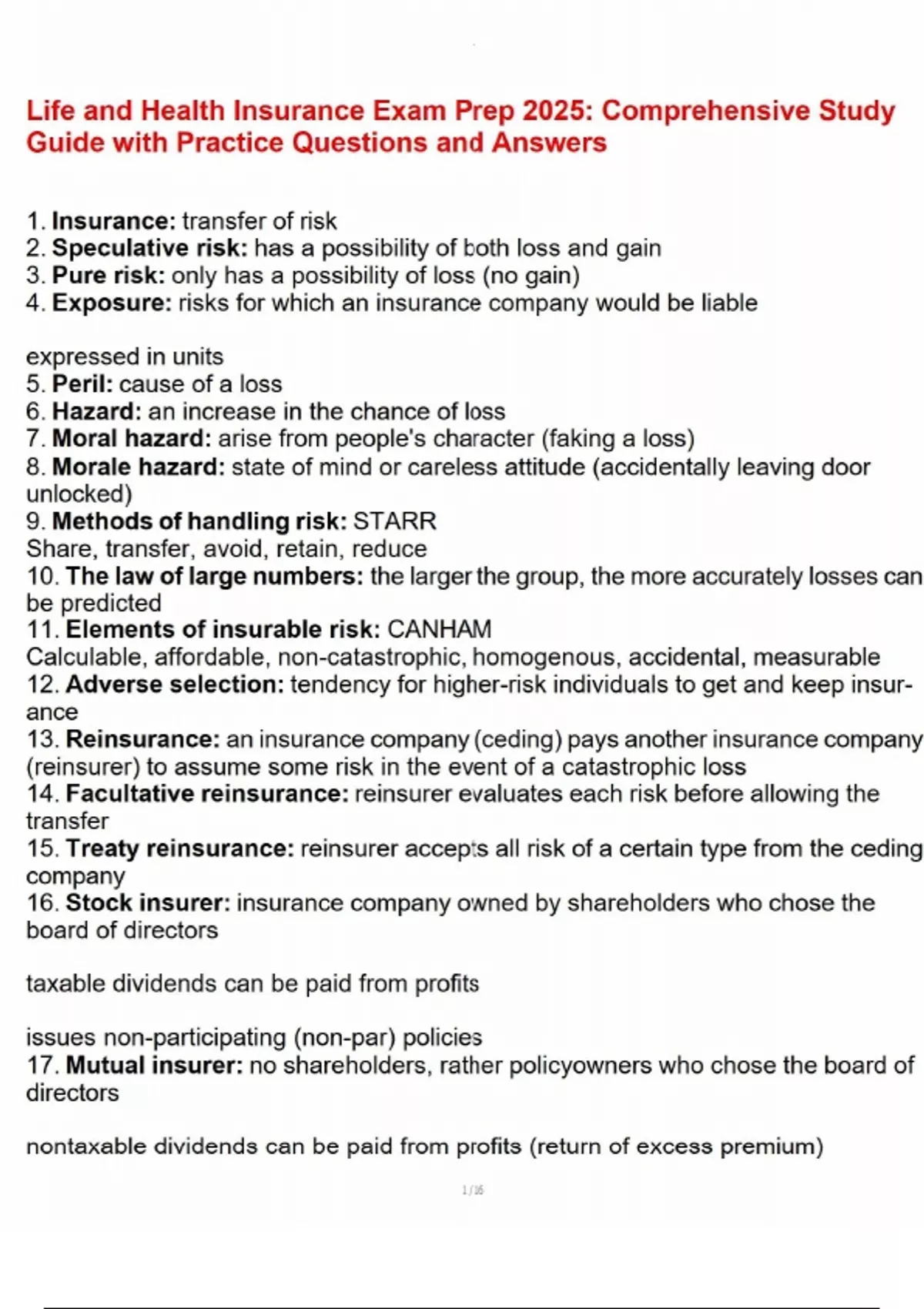
Insurance is fundamentally the transfer of risk. When a worksheet asks about the primary purpose of life or health insurance, the answer is always rooted in financial protection against uncertainty. In the context of Chapter 27, you must distinguish between "pure risk" (the kind that is insurable) and "speculative risk" (which is not).
Why We Insure: The Law of Large Numbers
The mathematical foundation for all insurance answers in Chapter 27 is the Law of Large Numbers. This principle states that as the number of similar exposure units increases, the actual results will more closely resemble the expected results. This allows insurance companies to predict future losses accurately and set premiums accordingly. If a worksheet question asks how insurers determine rates, the answer involves actuarial data and the grouping of similar risks to create a predictable pool of loss.
Defining Health and Life Insurance Roles
- Life Insurance: Primarily designed to protect against the "premature" death of an individual, providing liquidity to beneficiaries to cover debts, funeral costs, and lost income.
- Health Insurance: Designed to mitigate the high costs of medical care, including preventative services, catastrophic illness, and chronic condition management.
Life Insurance Policy Types: Term vs. Permanent
Most Chapter 27 worksheets focus heavily on the distinction between term and permanent life insurance. Understanding these differences is critical for answering questions regarding cost, duration, and the accumulation of cash value.
Term Life Insurance
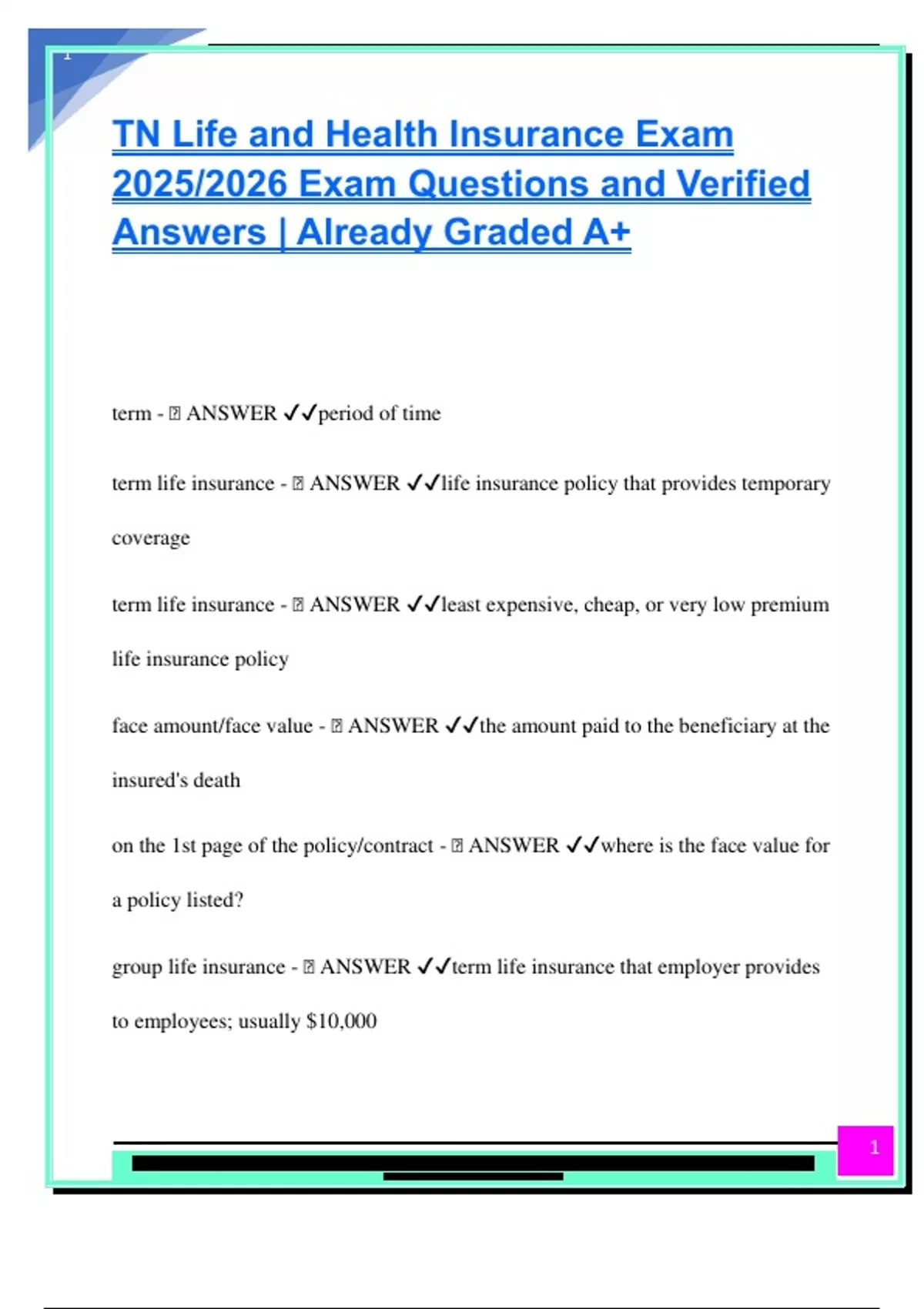
Term life insurance is often described as "pure protection." It provides coverage for a specific period (the "term") and does not build cash value.
- Level Term: The death benefit remains the same throughout the policy duration. This is the most common answer for questions regarding stable family protection.
- Decreasing Term: The death benefit reduces over time, usually in alignment with a debt like a mortgage.
- Renewability: This feature allows the policyholder to renew coverage without a medical exam, though premiums will increase based on attained age.
Permanent (Whole) Life Insurance
Permanent insurance provides coverage for the insured's entire life, provided premiums are paid.
- Whole Life: Features a fixed premium and a guaranteed death benefit. It includes a cash value component that grows at a set rate.
- Universal Life: Offers more flexibility, allowing the policyowner to adjust the premium payments and the death benefit.
- Variable Life: Includes an investment component where the cash value is tied to the performance of the stock market. Worksheet answers regarding Variable Life often emphasize that the policyholder assumes the investment risk.
Health Insurance Managed Care Models
Health insurance answers in Chapter 27 frequently revolve around the structure of delivery systems. By 2026, the distinction between these models has become even more defined as networks tighten to control costs.
Health Maintenance Organizations (HMOs)
An HMO is characterized by its use of a Primary Care Physician (PCP) who acts as a "gatekeeper."
- Worksheet Key Point: You cannot see a specialist without a referral from your PCP.
- Cost Structure: HMOs typically have lower premiums and lower out-of-pocket costs, but they offer the least amount of flexibility regarding provider choice.
Preferred Provider Organizations (PPOs)
PPOs offer more freedom than HMOs.
- Worksheet Key Point: You do not need a gatekeeper or a referral to see a specialist.
- Out-of-Network Coverage: PPOs allow you to see doctors outside the network, but you will pay a higher percentage of the cost (co-insurance).
High-Deductible Health Plans (HDHPs) and HSAs
In 2026, HDHPs are increasingly common. These plans have lower monthly premiums but require the insured to pay a significant amount out-of-pocket before the insurance kicks in. They are often paired with a Health Savings Account (HSA), which allows for tax-advantaged savings for medical expenses.
Essential Policy Provisions and Riders
When completing a Chapter 27 worksheet, you will likely encounter questions about "provisions"—the legal clauses that define the rights of the insurer and the insured.
The Incontestability Clause
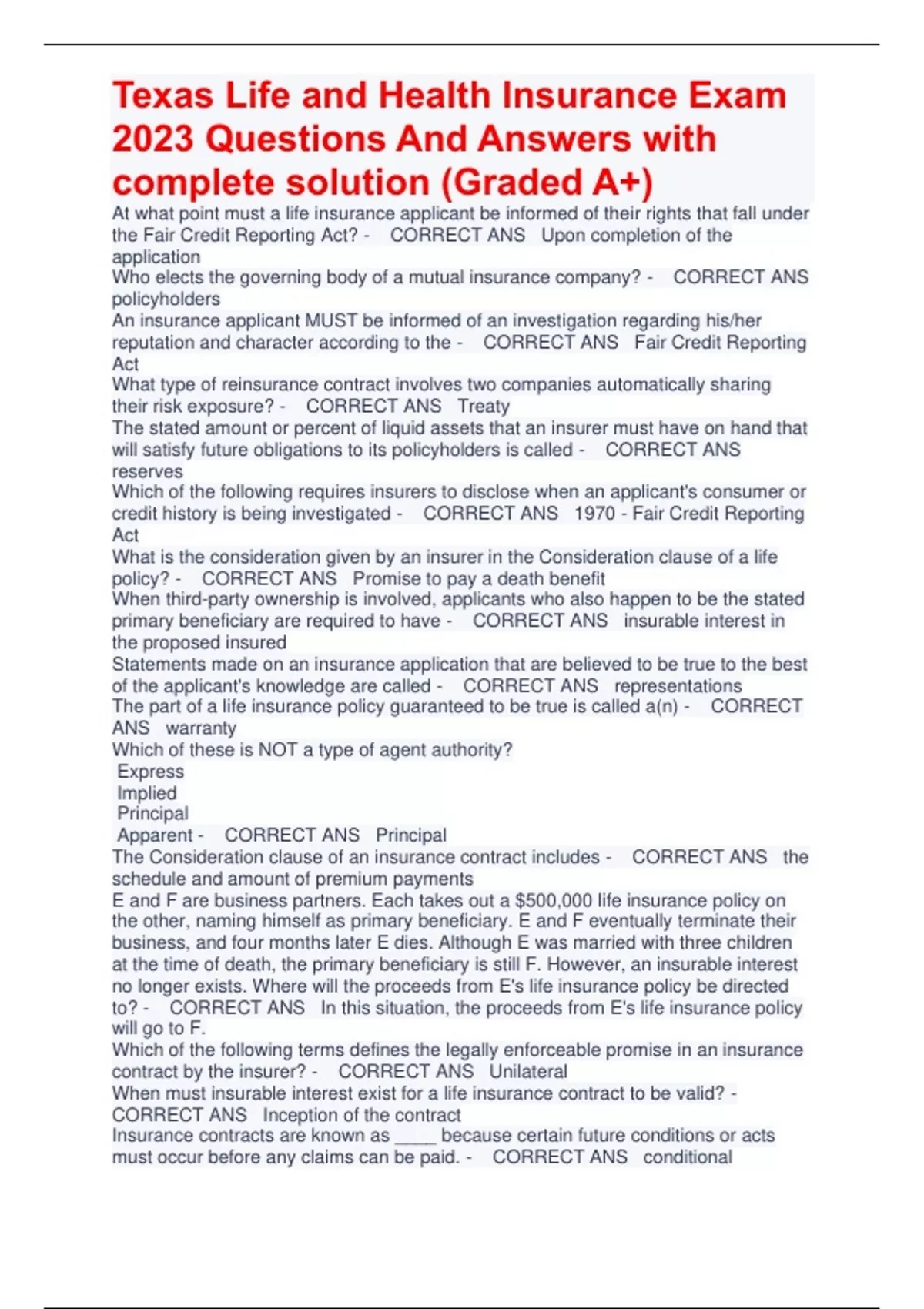
This is a standard provision in life insurance policies. It states that after the policy has been in force for a specific period (usually two years), the insurer cannot contest a claim based on material misrepresentations in the application. This protects beneficiaries from the insurer denying a claim long after the policy was issued.
The Grace Period
If a premium is missed, the policy does not immediately cancel. The grace period (typically 30 or 31 days) provides a window where coverage remains in effect. If the insured dies during this period, the death benefit is paid, minus the overdue premium.
Common Life Insurance Riders
Riders are "add-ons" that customize a policy.
- Accidental Death Benefit: Also known as "Double Indemnity," it pays an extra amount if the death is purely accidental.
- Waiver of Premium: If the insured becomes totally disabled, the insurance company waives future premiums while keeping the policy in force.
- Accelerated Death Benefit: Allows a terminally ill insured person to access a portion of the death benefit while still alive to pay for medical care.
Calculating Costs: Premiums, Deductibles, and Co-insurance
Mathematical problems on Chapter 27 worksheets often require you to calculate the "out-of-pocket" cost for a medical event. To answer these correctly, you must follow the sequence of payment.
- Deductible: The amount the insured must pay first before the insurer pays anything.
- Co-insurance: Once the deductible is met, the insurer and insured share the costs (e.g., an 80/20 split).
- Out-of-Pocket Maximum: The "stop-loss" point. Once the insured's payments (deductible + co-insurance) reach this limit, the insurer pays 100% of covered expenses for the rest of the year.
Example Worksheet Calculation
- Scenario: A medical bill is $10,000. The plan has a $2,000 deductible and 20% co-insurance.
- Step 1: The insured pays the $2,000 deductible. Remaining balance: $8,000.
- Step 2: The insured pays 20% of the $8,000, which is $1,600.
- Total for Insured: $3,600.
- Total for Insurer: $6,400.
Social Insurance and Government Programs
Chapter 27 also covers government-mandated or provided insurance. Distinguishing between these is a common source of error on worksheets.
Medicare
Medicare is a federal program primarily for those aged 65 and older.
- Part A: Hospital insurance (inpatient care).
- Part B: Medical insurance (doctor visits, outpatient care).
- Part C: Medicare Advantage (private plans that bundle Parts A and B).
- Part D: Prescription drug coverage.
Medicaid
Unlike Medicare, Medicaid is a state and federal partnership. It is "means-tested," meaning eligibility is based on income and financial need rather than age.
Social Security Disability Insurance (SSDI)
To qualify for SSDI, an individual must meet a strict definition of disability: the inability to engage in "any substantial gainful activity" due to a physical or mental impairment that is expected to last at least 12 months or result in death.
Comparison of Life Insurance Products
The following table summarizes the key characteristics of the life insurance types most frequently tested in Chapter 27.
| Feature | Term Life | Whole Life | Universal Life |
|---|---|---|---|
| Duration | Fixed period (e.g., 10, 20 years) | Entire life | Entire life |
| Premium | Low, but increases upon renewal | High, but remains level | Flexible; can be adjusted |
| Cash Value | None | Guaranteed growth | Variable; based on interest |
| Death Benefit | Fixed | Guaranteed | Flexible; can be adjusted |
| Complexity | Simple | Moderate | High |
| Best Use Case | Young families; debt coverage | Long-term estate planning | Those needing flexibility |
Troubleshooting Common Worksheet Errors
Many students struggle with specific nuances in Chapter 27. Here are three common pitfalls and the correct way to address them:
- Misunderstanding the Suicide Clause: Most worksheets will ask if a policy pays out for suicide. The answer is: No, if the suicide occurs within the first two years (the exclusion period), but Yes, the full death benefit is paid if it occurs after the exclusion period has passed.
- Confusing "Assignment" with "Beneficiary": An assignment is the transfer of policy ownership rights to another party (often a bank for a loan). A beneficiary is simply the person who receives the money upon the insured's death.
- The Misstatement of Age Provision: If an applicant lies about their age on an application, the insurance company does not cancel the policy. Instead, they adjust the death benefit to what the premium would have purchased at the correct age.
Frequently Asked Questions
What is the difference between a revocable and irrevocable beneficiary?
A revocable beneficiary can be changed at any time by the policyowner without the beneficiary's consent. An irrevocable beneficiary has a "vested interest" in the policy; the policyowner cannot change the beneficiary, borrow against the cash value, or surrender the policy without the written consent of the irrevocable beneficiary.
What does "Coordination of Benefits" mean in health insurance?
This provision is used when a person is covered by two health insurance plans (for example, through their own employer and their spouse's employer). It prevents "over-insurance" by ensuring that the total payments from both plans do not exceed 100% of the actual medical expenses. One plan is designated as "primary" and the other as "secondary."
How do "Level Premium" policies work if the risk of death increases with age?
In a level premium whole life policy, the insured "overpays" in the early years of the policy. This excess premium is invested by the insurer to offset the "underpayment" that occurs in the later years when the actual cost of insurance exceeds the level premium. This creates the policy's cash value.
What is the purpose of the "Stop-Loss" provision in a health policy?
The stop-loss provision is designed to protect the insured from financial ruin. It limits the total amount of co-insurance the insured must pay in a single year. Once the out-of-pocket expenses reach the stop-loss limit (e.g., $5,000), the insurer pays 100% of all additional covered medical expenses for the remainder of that calendar year.
Is the death benefit of a life insurance policy taxable?
In most cases, the death benefit paid to a named beneficiary is not subject to federal income tax. However, the interest earned on a death benefit (if the insurer holds the money before payout) is taxable. Additionally, if the death benefit is paid to the insured's "estate" rather than a person, it may be subject to federal estate taxes if the estate's value exceeds current 2026 thresholds.
Professional Recommendation for Success
To master the material in Chapter 27, do not simply memorize the answers; focus on the underlying financial mechanics. When answering questions about health insurance, always look for the "network" restrictions and "cost-sharing" percentages. When answering life insurance questions, prioritize the "time horizon" of the need—temporary needs require term insurance, while lifelong needs require permanent coverage.
If you are preparing for a state licensing exam, utilize the National Association of Insurance Commissioners (NAIC) resources to stay updated on current state-specific regulations, as these can occasionally override general textbook definitions. For health insurance updates regarding 2026 mandates, consult CMS.gov for the latest on Medicare and Medicaid guidelines.