An A-rated life insurance plan is a policy issued by an insurance company that has received a high financial strength rating—typically an "A" or higher—from independent rating agencies such as A.M. Best, Standard & Poor's, Moody's, or Fitch. These ratings indicate the insurer's robust financial stability and long-term ability to pay out future death claims to beneficiaries.
Purchasing life insurance is a foundational component of long-term financial planning. When individuals buy a policy, they enter into a decades-long contract with an insurance carrier, trusting that the company will remain solvent and capable of fulfilling its financial promises when tragedy strikes. Because a life insurance policy may not pay out for 10, 20, or 30 years, evaluating the financial backing of the issuing carrier is just as important as examining the policy's cost and coverage limits.
Understanding what constitutes an "A-rated" life insurance plan involves looking past marketing materials and diving into independent financial evaluations, regulatory frameworks, policy structures, and practical considerations. This guide explores the mechanics of insurer ratings, how to verify them, the types of policies available from top-tier carriers, and how to select the right coverage for your family’s unique financial needs.
The Foundation of Insurance Ratings: How Financial Strength Works
Insurance companies operate on a continuous balancing act of collecting premiums, managing investments, and paying out claims. To ensure that these institutions can withstand economic downturns, market shocks, and catastrophic claim events, independent rating agencies evaluate their balance sheets, capitalization levels, and operational management.
Unlike banks, which are backstopped by the Federal Deposit Insurance Corporation (FDIC) up to statutory limits, life insurance companies rely primarily on state guaranty associations to protect policyholders if an insolvency occurs. However, state guaranty limits vary by jurisdiction—typically capping protection at $300,000 for death benefits and $100,000 for cash surrender values. Therefore, choosing a financially resilient carrier in the first place is the primary line of defense for consumers.
Major Rating Agencies and Their Scale
Several globally recognized rating agencies specialize in assessing the financial health of insurance corporations. Each agency uses its own proprietary grading scale, but they all share the common goal of measuring creditworthiness and claims-paying ability.
- A.M. Best: The most prominent rating agency dedicated exclusively to the insurance industry. A.M. Best ratings range from A++ and A+ (Superior) down to A and A- (Excellent), which still fall within the "A-rated" category. Ratings below this drop into B territory ("Good") and lower brackets indicating vulnerability.
- Standard & Poor's (S&P): Evaluates overall financial strength using a scale where 'AAA' and 'AA' represent extremely strong capacity, while 'A' indicates strong financial security under favorable economic conditions.
- Moody's Investors Service: Uses a scale from Aaa down to Caa, where 'Aaa' and 'Aa' signify high quality, and 'A' represents upper-medium grade security with low credit risk.
- Fitch Ratings: Employs a scale similar to S&P, rating insurers from 'AAA' (exceptionally strong) down to 'CCC' and below, with 'A' denoting strong capacity to meet policyholder obligations.
When industry professionals refer to an "A-rated life insurance plan," they are generally describing any policy backed by an insurance company holding an A rating or higher across these major reporting agencies.
Benefits of Choosing an A-Rated Carrier
Opting for an insurance policy from a top-tier carrier provides several distinct advantages over dealing with lower-rated or unproven companies. While smaller or newly established companies might occasionally offer slightly lower initial premiums to capture market share, the trade-off in long-term security requires careful evaluation.
Long-Term Solvency and Claim Certainty
The primary purpose of life insurance is the guaranteed delivery of a death benefit to your beneficiaries. An A-rated carrier possesses substantial capitalization, diversified investment portfolios, and conservative underwriting practices designed to weather severe financial crises, such as prolonged recessions or high-mortality events like pandemics. This drastically reduces the risk that the company will face insolvency over the lifetime of a 30-year term policy or a permanent whole life contract.
Stability of Policy Dividends and Cash Value Growth
For permanent life insurance policies—such as whole life or universal life—cash value growth and dividend payouts depend heavily on the insurer's financial performance. A-rated mutual and stock insurance companies have historically demonstrated an ability to maintain stable, consistent dividend distributions to policyholders over many decades, helping cash-value components grow reliably.
Regulatory Confidence and Reinsurance Support
Top-tier insurers maintain strong relationships with global reinsurers, allowing them to distribute large risks efficiently. Furthermore, state insurance commissioners subject these large, established carriers to rigorous ongoing audits and solvency tests, ensuring transparent reporting and strict adherence to reserve requirements.
Types of A-Rated Life Insurance Plans
A-rated insurers typically offer a comprehensive suite of products designed to meet diverse financial objectives. Selecting the correct structure depends on your budget, timeline, and whether you require temporary protection or permanent estate planning solutions.
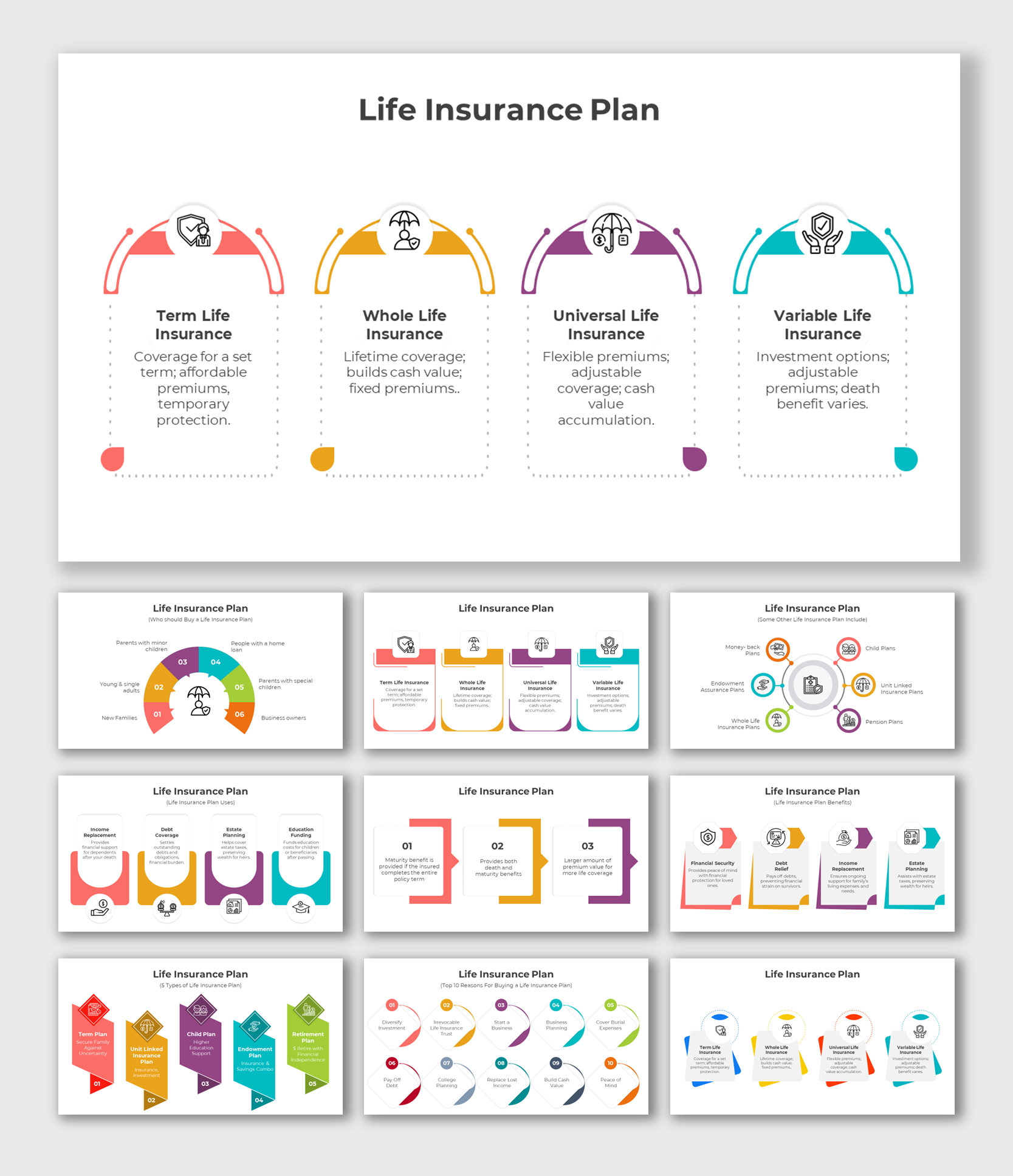
| Policy Type | Primary Purpose | Key Characteristics |
|---|---|---|
| Term Life Insurance | Income replacement during working years | Lowest cost, fixed period (10-40 years) |
| Whole Life Insurance | Lifelong coverage and guaranteed savings | Fixed premiums, cash value, tax-deferred |
| Universal Life Insurance | Flexible lifelong protection | Adjustable premiums, variable interest |
| Variable Life Insurance | Wealth accumulation and market exposure | Cash value tied to sub-accounts/equities |
1. Term Life Insurance
Term life insurance provides pure death-benefit protection for a specified period, such as 10, 20, or 30 years. It is generally the most affordable type of coverage, making it ideal for young families, mortgage protection, and income replacement during peak earning years. If the insured passes away during the term, the A-rated carrier pays the tax-free death benefit to the beneficiaries.
2. Whole Life Insurance
Whole life insurance is a form of permanent coverage that remains in effect for the entire life of the insured, provided premiums are paid. It features fixed premiums and a guaranteed cash-value accumulation component that grows on a tax-deferred basis. Policyholders can often borrow against this cash value or use it to pay future premiums.
3. Universal Life Insurance
Universal life (UL) offers lifetime coverage like whole life but provides greater flexibility. Policyholders can adjust their premium payments and death benefits within certain contract limits, provided the accumulated cash value is sufficient to cover internal policy costs. Variations include Indexed Universal Life (IUL), where cash value growth is linked to the performance of a stock market index without direct market exposure.
How to Verify an Insurer's Financial Rating
Before signing a life insurance contract, consumers and financial advisors should independently verify the financial strength ratings of the issuing company. Relying solely on a broker's recommendation or an insurance advertisement is insufficient.
- Visit Rating Agency Websites: Publicly accessible information is available on websites such as AMBest.com, Standard & Poor's, Moody's, and Fitch Ratings. Many require free registration to view comprehensive financial strength ratings.
- Check State Insurance Department Records: Every U.S. state has a Department of Insurance (DOI) that monitors licensed carriers operating within its borders. Consumers can verify whether an insurer is licensed, check complaint ratios, and review regulatory enforcement actions.
- Consult Independent Financial Publications: Consumer advocacy groups and financial publications regularly compile lists of top-rated life insurance carriers based on current fiscal year data.
Factors Influencing Life Insurance Underwriting and Pricing
Even when purchasing a policy from an A-rated carrier, the individual cost of coverage—known as the premium—depends on personal underwriting factors. Insurance companies evaluate risk through medical examinations, lifestyle questionnaires, and historical data to determine health classifications.
Key Underwriting Metrics
- Age and Gender: Younger applicants receive lower base rates because statistical life expectancy is higher. Women generally pay lower life insurance premiums than men due to longer average life expectancies.
- Health and Medical History: Insurers examine blood pressure, cholesterol levels, height-to-weight ratios, prescription histories, and family medical backgrounds for conditions like heart disease or cancer.
- Tobacco and Nicotine Use: Cigarette smokers, cigar users, and vape users face significantly higher premium rates—often double or triple non-smoker pricing—due to associated health risks.
- Occupation and Hobbies: Engaging in hazardous occupations (such as commercial fishing or structural steel work) or extreme hobbies (such as skydiving, scuba diving, or private aviation) can impact underwriting classifications or require policy riders.
Common Misconceptions About A-Rated Life Insurance
Misunderstandings regarding insurance ratings and policy performance often lead consumers to make suboptimal financial decisions. Clarifying these myths ensures more informed planning.
- Myth: An "A" rating guarantees the policy will never increase in price. Financial strength ratings reflect the company's ability to pay claims, not whether a particular policy's premium is locked in. While term life and whole life policies feature fixed premiums, universal life policies can experience cost-of-insurance adjustments if internal interest crediting rates underperform.
- Myth: All "A" ratings are identical. Different agencies use different nomenclature. For example, A.M. Best uses A++ and A+ for its highest tiers before dropping to plain A and A-. Understanding the exact tier within the rating agency's scale provides a more accurate picture of relative strength.
- Myth: Larger insurance companies are always safer than smaller mutual companies. While scale matters, many mid-sized mutual insurance companies maintain exceptionally conservative investment portfolios and superior capital surpluses compared to massive publicly traded conglomerates, making them equally or more secure.
Frequently Asked Questions
What does an "A" rating actually mean in life insurance?
An "A" rating indicates that an independent financial rating agency has evaluated the insurance company's balance sheet, operating performance, and capital reserves and determined that it has an "Excellent" or strong ability to meet its ongoing financial obligations to policyholders, including the payment of future death benefits.
Are A-rated life insurance plans more expensive than unrated options?
Not necessarily. While top-tier carriers with strong financial ratings maintain disciplined underwriting standards, pricing competition within the industry is fierce. Many A-rated mutual and stock companies offer competitive, affordable term and permanent life insurance rates that align closely with industry averages.
What happens if an A-rated insurance company goes bankrupt?
Insurances insolvencies are rare among A-rated carriers. However, if an insurer fails, state guaranty associations typically step in to guarantee coverage up to statutory limits, usually transferring policies to a solvent competing carrier to ensure uninterrupted protection for policyholders.
Can a life insurance company's rating change after I buy a policy?
Yes. Rating agencies continuously monitor macroeconomic conditions and insurer performance. An insurer's financial strength rating can be upgraded, downgraded, or placed on review. This is why selecting a consistently high-rated carrier with a long history of financial stability is vital.
How often should I check my life insurance company's financial rating?
Reviewing your insurer's financial strength rating every few years or during major economic shifts provides peace of mind. However, for term policies with locked-in premiums, minor rating fluctuations rarely impact your legal contract or guaranteed death benefit.
Next Steps for Securing Coverage
Securing an A-rated life insurance plan requires a systematic approach to evaluating both your personal coverage needs and the financial stability of potential providers. Begin by calculating your financial obligations, including income replacement for dependents, outstanding mortgage balances, and future education costs. Once you determine the appropriate coverage amount and policy type, request quotes from multiple A-rated carriers, compare their financial strength ratings across major agencies, and consult with an independent insurance broker or financial advisor to finalize a policy that protects your family's financial future.