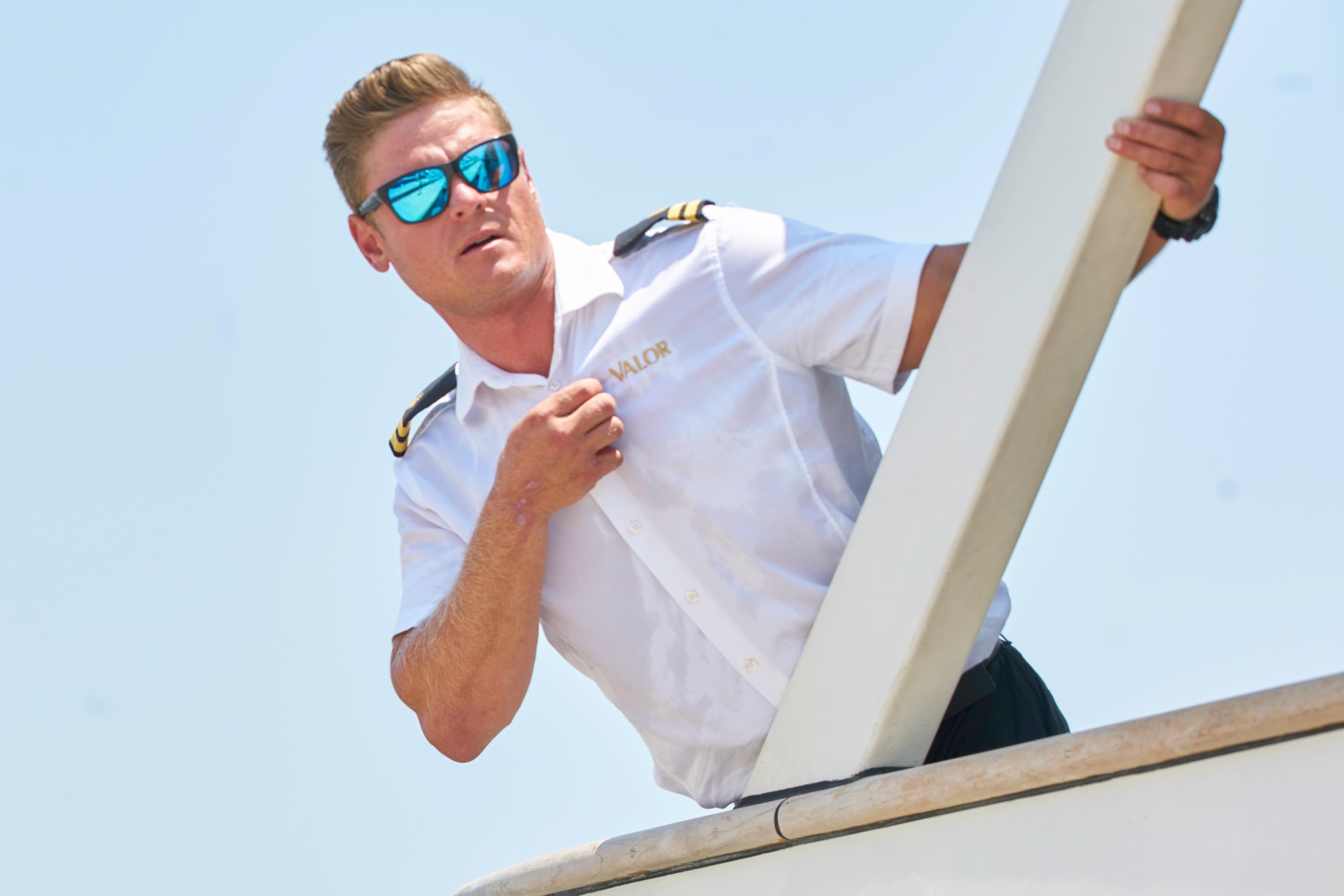
The terrifying accident involving deckhand Ashton Pienaar during Season 6 of Bravo’s Below Deck remains one of the most perilous moments in reality television history. While working on the stern of the luxury charter yacht M/Y Seanna in Tahiti, a heavy tow line caught Pienaar’s ankle, pulling him overboard into the churning ocean waters at high speed. Thanks to the quick reflexes of cameraman Brent Freeburg, who dropped his camera to untangle and free Pienaar, a potential tragedy was narrowly averted. The incident triggered profound changes in production safety protocols and sparked vital industry-wide conversations about maritime occupational hazards.
Understanding the Context of Season 6 on Below Deck
Season 6 of Below Deck took place in the idyllic waters of Tahiti, French Polynesia, featuring the 185-foot luxury superyacht M/Y Seanna. Led by Captain Lee Rosbach, the deck crew included bosun Ross Inia, deckhands Jordon Morley, Tyler Rowland, and Ashton Pienaar. The season was characterized by high charter guest demands, demanding anchorages, tight docking maneuvers, and typical interpersonal interpersonal friction among the interior and exterior crew members.
Superyacht deck operations are notoriously hazardous. Crew members routinely handle heavy ground tackle, navigate slippery teak decks, manage jet skis and tenders, and deploy various water toys under intense time constraints. The fast-paced environment required the deck team to work long hours with minimal sleep, a factor that frequently contributes to decreased situational awareness and occupational fatigue. Within this pressure cooker, minor miscommunications can rapidly escalate into life-threatening emergencies.
The Anatomy of the Accident: What Happened on the Stern
The accident occurred during the final charter of Season 6 as the crew prepared to deploy a tow line for the yacht's tender. In maritime terms, operating a tow line under power—especially with synthetic lines that store immense kinetic energy—requires absolute precision, clear communication channels, and strict adherence to tension management.
Ashton Pienaar was standing on the aft swim platform or stern area handling the line. Due to a sudden shift in tension or improper line handling as the tow line paid out, a heavy bight or loop of the line caught around Pienaar's ankle. Because the line was rapidly feeding out under the weight and momentum of the moving vessel and the towed tender, it acted like a high-speed winch. In a split second, Pienaar was jerked off his feet and dragged into the propeller wash and wake behind the moving superyacht.
The physical mechanics of being dragged by a tow line in open water are catastrophic. As the line pulls a human body at boat speed, the extreme friction can cause severe rope burns, crush injuries, and fractures, while the risk of drowning or being struck by the yacht's rotating propellers remains dangerously high. Pienaar later recalled the sheer terror of being pulled underwater, realizing that the line was locked around his leg and dragging him along at a terrifying velocity.
The Critical Role of Production Crew and Cameraman Brent Freeburg
One of the most remarkable aspects of the Ashton Below Deck accident is that it was captured on film, but more importantly, that the person holding the camera intervened to save a human life. Reality television production crews—often viewed by viewers as passive observers—are legally and ethically bound by a duty of care, though safety intervention usually comes after the fact.
In this instance, series cameraman Brent Freeburg demonstrated extraordinary situational awareness and courage. Recognizing instantly that Pienaar was trapped and heading overboard, Freeburg dropped his heavy broadcast camera—sacrificing expensive equipment—and rushed forward. Freeburg managed to physically grab, untangle, or halt the line before it could pull Pienaar completely under or slice through his limb.
Captain Lee Rosbach and the rest of the crew acknowledged that Freeburg’s rapid intervention directly prevented a fatality. In the maritime industry, every second counts when a man overboard situation occurs. While the bridge crew initiated emergency protocols, Freeburg's immediate tactile response on deck bridged the critical gap between disaster and survival.
| Incident Element | Operational Detail | Maritime Risk Factor |
|---|---|---|
| Location | Aft swim platform / stern of M/Y Seanna | High-traffic work zone with exposure to open water and propeller wash. |
| Equipment | Heavy synthetic tow line connected to a tender | Stores extreme kinetic energy; highly prone to snagging and friction burns. |
| Primary Trigger | Line catching around the deckhand's ankle | Sudden tension changes during high-speed line deployment. |
| Intervention | Cameraman Brent Freeburg dropping gear to clear the line | Direct physical action interrupting the mechanism of entrapment. |
| Immediate Aftermath | Minor physical injuries, severe psychological trauma | Shock, adrenaline crash, and mandatory post-incident medical evaluation. |
Immediate Aftermath and Medical Evaluation
Miraculously, Ashton Pienaar survived the ordeal with relatively minor physical injuries, primarily severe friction burns, bruising, and deep lacerations around his ankle where the line wrapped and tightened. Following the incident, production halted temporarily to ensure Pienaar received immediate medical attention. He was examined by onboard medical personnel and later evaluated ashore to rule out internal trauma, compartment syndrome, or deep tissue damage.
Psychologically, however, the impact was profound. Pienaar exhibited classic symptoms of acute stress and shock in the hours following the rescue. The emotional toll of confronting mortality on camera—while thousands of miles away from home—weighed heavily on him. Captain Lee, known for his stern discipline and high operational standards, showed deep empathy and support, recognizing the psychological fragility that follows a near-death experience at sea.
Production Safety Reforms and Industry Impact
The accident served as a watershed moment for the production company, 51 Minds, and the broader Below Deck franchise. Reality television production environments on superyachts present unique regulatory gray areas. While commercial vessels must adhere to flag state maritime laws (such as Marshall Islands or Cayman Islands maritime codes) and international safety management (ISM) systems, television production introduces external distractions, camera crews, and structured time pressures that can compromise safety margins.
Following Season 6, production implemented strict safety overhauls:
- Mandatory Safety Briefings: Enhanced safety orientations for both cast members and embedded production crews regarding deck operations, pinch points, and line handling.
- Clearer Demarcation Zones: Establishing safe operating boundaries during heavy weather, docking, and line-handling operations where camera crews must maintain a safe distance.
- Improved Crew Communication: Mandating two-way radio protocols and visual hand signals between the bridge, deck crew, and production personnel to ensure everyone understands when high-risk maneuvers are underway.
- Zero-Tolerance for Fatigue: Adjusting filming schedules to ensure that sleep-deprived deckhands are not forced into high-risk physical labor without adequate rest breaks.
Public Reaction, Fan Response, and Cast Dynamics
When the episode aired, it shocked the global audience. Viewers took to social media to express relief at Pienaar's survival and profound gratitude toward cameraman Brent Freeburg. The incident fundamentally shifted how fans viewed the cast's interpersonal drama during Season 6, reminding audiences that beneath the manufactured reality television storylines and charter tip gossip, superyacht crew members perform genuinely dangerous manual labor.
Within the cast, the accident fostered a temporary sense of unity. Crew members who had previously engaged in petty arguments rallied around Pienaar. However, the emotional fallout also manifested in different ways later in the season, illustrating how unprocessed trauma can influence personal behavior, alcohol consumption, and professional performance under pressure.
Frequently Asked Questions
Did Ashton Pienaar return to Below Deck after the accident?
Yes, Ashton Pienaar recovered from his injuries and continued working for the remainder of Season 6. He later returned for Season 7 of Below Deck, this time promoted to the position of bosun. However, his management style and behavior during Season 7 drew significant criticism from viewers and fellow crew members.
How did the cameraman save Ashton?
Cameraman Brent Freeburg witnessed the tow line wrap around Ashton’s ankle and drag him overboard. Dropping his heavy camera equipment immediately, Freeburg rushed to the line and physically intervened to untangle and free Ashton before he could be pulled deeper underwater or severely injured by the moving vessel's wake.
What are the main hazards of handling tow lines on yachts?
Tow lines and mooring lines store immense tension under load. If a line snags on a crew member's clothing, limbs, or equipment as it pays out rapidly, it can pull them overboard (line-wrap entrapment), cause traumatic amputations, or result in severe friction burns and blunt force trauma.
Did Bravo face legal repercussions over the accident?
While the incident sparked intense industry debate regarding occupational safety in reality television, no public lawsuits or regulatory penalties against the network or production company were publicly reported. The incident prompted internal safety audits and stricter production protocols instead of public legal battles.
Where can I watch the episode featuring the accident?
The accident occurred on Season 6 of Below Deck, which is available for streaming on platforms such as Peacock, BravoTV.com, Hulu, and Amazon Prime Video depending on regional licensing agreements.
Final Recommendation
For viewers and aspiring maritime professionals alike, the Ashton Below Deck accident remains a stark reminder that the sea demands absolute respect, unwavering focus, and strict adherence to safety protocols. Whether working on a commercial vessel, a private yacht, or participating in maritime production, safety gear, situational awareness, and clear communication are non-negotiable. If you are examining maritime safety standards or studying occupational hazards in the yachting industry, review official flag-state maritime regulations and ISM safety management manuals to understand proper line-handling procedures and man-overboard prevention.