Arlington Heights is a prominent village located in Cook County, Illinois, situated approximately 25 miles northwest of downtown Chicago. As one of the largest municipalities in the state to maintain a village form of government, it operates entirely within the jurisdiction of Cook County for property assessments, judicial matters, and regional public health services.
The Geographical Context of Arlington Heights
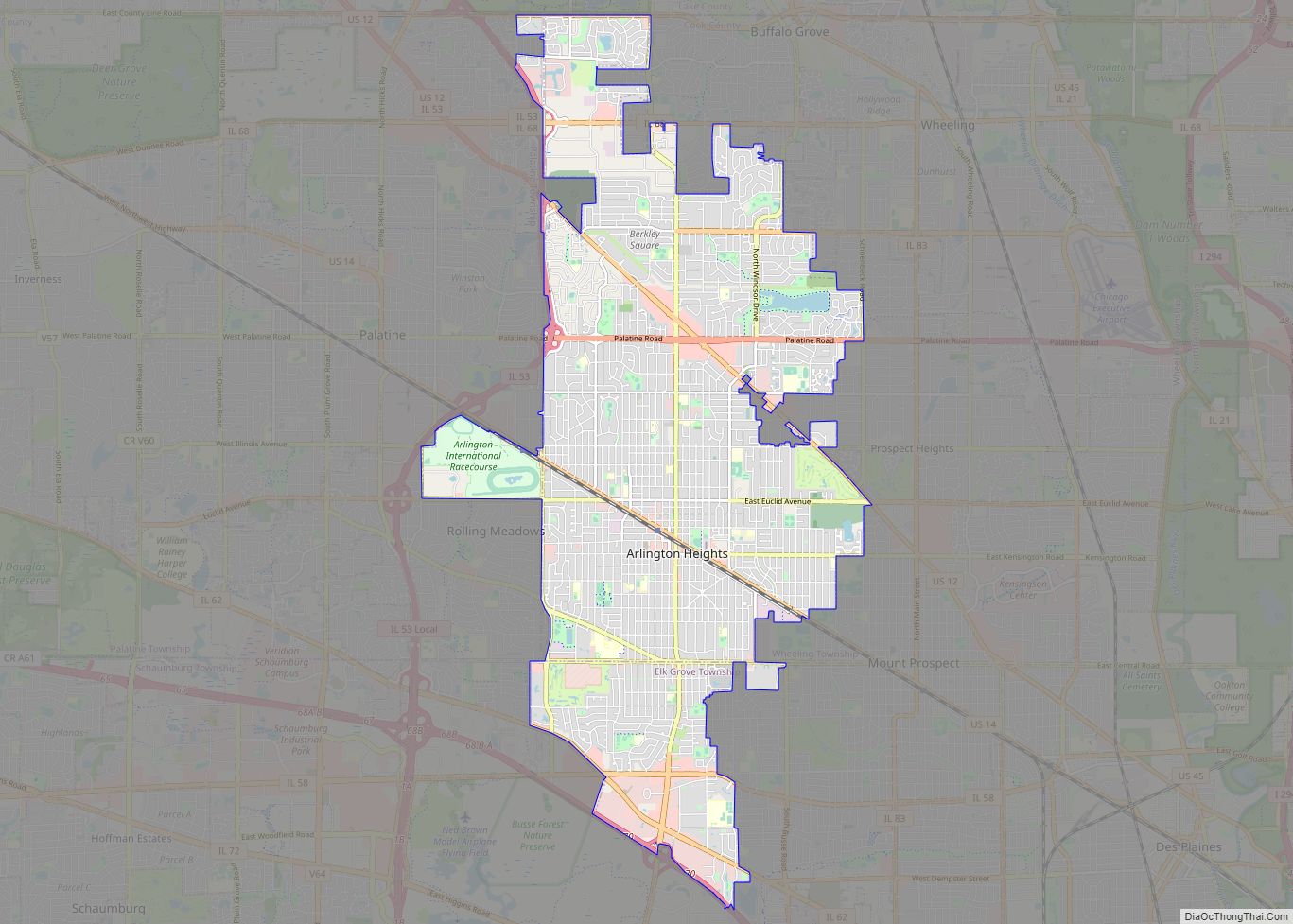
To understand the administrative identity of Arlington Heights, one must first look at its placement within the Chicago metropolitan area. Nestled in the northwestern suburbs, the village spans a significant area that borders several other major municipalities. To its north lies Buffalo Grove and Wheeling; to the east, Mount Prospect; to the south, Elk Grove Village and Rolling Meadows; and to the west, Palatine.
While the vast majority of the village is firmly rooted in Cook County, its location near the northern boundary often leads to questions regarding nearby Lake County. Some neighboring communities, such as Buffalo Grove, are split between Cook and Lake Counties. However, Arlington Heights remains a primary fixture of Cook County’s "Northwest Line" corridor. This placement is significant because Cook County is the most populous county in Illinois and the second-most populous in the United States, which influences everything from the tax rate to the judicial district residents belong to.
The village's geography is defined by its proximity to major transportation arteries. The presence of the Metra Union Pacific Northwest Line provides a direct link to the Ogilvie Transportation Center in Chicago, further cementing its role as a key suburban hub within the Cook County infrastructure.
Administrative Governance: The Role of Cook County
Living in Arlington Heights means interacting with two distinct layers of local government: the Village of Arlington Heights and the Cook County government. The village operates under a council-manager form of government, where a village president (mayor) and a board of trustees set policy, and a professional village manager oversees day-to-day operations.
However, many essential services and legal frameworks are handled at the county level. The Cook County Board of Commissioners is the primary governing body for the county. Arlington Heights residents are represented by specific commissioners based on their district within the county. These officials oversee the county budget, which funds the Cook County Health system, the Forest Preserve District, and the Cook County Sheriff’s Office.
The relationship between the village and the county is collaborative. For example, while the Arlington Heights Police Department handles local law enforcement and municipal code enforcement, the Cook County Sheriff’s Office provides support for unincorporated areas adjacent to the village and manages the county jail system. Furthermore, major infrastructure projects, such as the maintenance of county-owned roads (like portions of Wilke Road or Central Road), require coordination between village engineers and the Cook County Department of Transportation and Highways.
Property Taxes and the Cook County Assessor
One of the most critical aspects of being located in Cook County for Arlington Heights homeowners is the property tax system. Unlike many other states where property taxes are straightforward, the Cook County system is complex and unique. Property values in Cook County are assessed by the Cook County Assessor's Office.
The Assessor determines the market value of every home and commercial property in the village. In Cook County, properties are assessed on a triennial cycle, meaning they are re-evaluated every three years. Arlington Heights is part of the "North Suburbs" assessment group. When assessments are released, residents often see significant shifts in their property's "Assessed Value," which serves as the foundation for their tax bill.
Understanding the Tax Bill Components
A property tax bill for an Arlington Heights resident is not a single payment to one entity. Instead, it is a collection of levies from various taxing bodies. While the village itself takes a portion, the largest segments of the bill typically go to:
- School Districts: Such as Arlington Heights School District 25 and Township High School District 214.
- The Village of Arlington Heights: For local services like fire, police, and public works.
- Cook County: For county-wide services and administration.
- The Metropolitan Water Reclamation District (MWRD): For wastewater management and flood control.
- Arlington Heights Memorial Library: A highly-rated local institution funded through a specific levy.
Residents have the right to appeal their assessments if they believe the market value set by the Assessor is too high. This process involves the Cook County Board of Review, an independent quasi-judicial agency. Many Arlington Heights residents utilize local township offices, such as the Wheeling Township or Palatine Township assessors, to help facilitate these appeals.
The Judicial System and the Rolling Meadows Courthouse
For legal matters, Arlington Heights falls under the jurisdiction of the Circuit Court of Cook County, which is one of the largest unified court systems in the world. Specifically, the village is served by the Third Municipal District.
The Third District courthouse is located in neighboring Rolling Meadows. This facility handles a wide range of legal proceedings for Arlington Heights residents, including:
- Traffic Violations: Citations issued by the Arlington Heights Police Department or Illinois State Police on local expressways are adjudicated here.
- Criminal Matters: Misdemeanor and felony cases arising within village limits.
- Civil Suits: Small claims and larger civil litigation.
- Marriage Licenses: While the Cook County Clerk’s office in Chicago is the main hub, the Rolling Meadows facility provides regional access for residents to obtain marriage licenses and birth/death records.
The presence of the courthouse so close to Arlington Heights is a major logistical advantage for residents, as they do not have to travel to the Daley Center in downtown Chicago for most routine legal or administrative county business.
Education and Cook County's Regional Oversight
While school districts are technically independent taxing bodies, their boundaries and funding mechanisms are deeply tied to their location within Cook County. Arlington Heights is served primarily by District 25 (elementary and middle) and District 214 (high school).
The Cook County Regional Office of Education provides a layer of oversight for these districts. This office handles teacher certification, school building safety inspections, and GED testing for the region. Because Arlington Heights is in Cook County, its schools also benefit from the distribution of "CPPRT" (Corporate Personal Property Replacement Tax) funds, which are collected at the state level and distributed through the county to local taxing districts.
District 214 is particularly noteworthy as one of the largest high school districts in Illinois, with its headquarters located right in Arlington Heights. The relationship between the school district and the county is most visible during tax season, as the Cook County Treasurer's Office is responsible for collecting the tax payments and distributing them back to the schools.
Public Health and Social Services
Being in Cook County provides Arlington Heights residents with access to one of the largest public health systems in the country. Cook County Health operates several hospitals and numerous clinics. While most residents of Arlington Heights utilize private healthcare providers like Northwest Community Healthcare (NCHC), which is part of the NorthShore University HealthSystem, the county health department plays a vital role in regional health monitoring.
The Cook County Department of Public Health (CCDPH) is responsible for:
- Infectious Disease Tracking: Monitoring outbreaks and providing vaccinations.
- Food Service Inspections: While the village performs many inspections, the county sets the overarching health codes and standards.
- Environmental Health: Monitoring air quality and managing vector control (such as mosquito abatement) throughout the northwest suburbs.
Comparison: Cook County vs. Adjacent Lake County
One of the most frequent points of discussion for those looking to move to Arlington Heights is how it compares to nearby Lake County towns. Since Arlington Heights sits very close to the Lake County border, the differences are tangible.
| Feature | Cook County (Arlington Heights) | Lake County (Nearby Neighbors) |
|---|---|---|
| Assessment Cycle | Triennial (Every 3 years) | Annual (Every year) |
| Sales Tax | Generally higher (includes county & regional transit taxes) | Often lower, though varies by municipality |
| Court Venue | Rolling Meadows (3rd District) | Waukegan (19th Judicial Circuit) |
| Forest Preserves | Managed by Forest Preserve District of Cook County | Managed by Lake County Forest Preserve District |
| Property Tax Calculation | Uses an "Assessment Level" (10% for residential) | Typically assessed at 33.3% of market value |
The primary difference often cited by residents is the property tax structure. Cook County’s assessment at 10% of market value, combined with the "State Equalization Factor" (or Multiplier), creates a different math problem for taxpayers than the 33.3% flat assessment used in Lake County. This often leads to different effective tax rates even if the home values are similar.
Economic Development and the 2026 Landscape
As of 2026, Arlington Heights remains an economic engine for Northwest Cook County. The village has navigated significant changes over the past decade, particularly regarding the redevelopment of the former Arlington International Racecourse. As this massive site undergoes transformation, its status within Cook County has been a central theme.
Tax incentives and "Tax Increment Financing" (TIF) districts are often negotiated in conjunction with Cook County officials. For large-scale developments, the village may seek specific property tax classifications from the county (such as Class 7 or Class 8 status) to encourage commercial investment. These classifications can significantly lower the assessment rate for a set period, making massive construction projects more financially viable.
The village's downtown area also reflects its Cook County identity through its density. Cook County's "Transit Oriented Development" (TOD) initiatives have encouraged the growth of high-rise residential buildings near the Metra station, creating a vibrant, walkable urban-suburban hybrid environment that is characteristic of inner-ring Cook County suburbs.
Cultural and Recreational Resources
The Forest Preserve District of Cook County maintains several vital natural areas near Arlington Heights. While the village has its own extensive park district (Arlington Heights Park District), the county-managed lands offer larger-scale environmental preservation.
Nearby resources include:
- Busse Woods (Ned Brown Preserve): Located just south of Arlington Heights, this is one of the most popular preserves in the county, featuring a massive lake, elk pasture, and miles of paved trails.
- Deer Grove Forest Preserve: Located to the northwest in Palatine, this provides deep-woods hiking and significant biodiversity.
- Potawatomi Woods: Located along the Des Plaines River to the east, offering river access and equestrian trails.
These county resources complement the local neighborhood parks, giving Arlington Heights residents a blend of manicured recreational space and wilder, natural environments.
Summary of County Services for Residents
For a resident of Arlington Heights, the "Cook County" part of their address is most relevant during specific life events or annual requirements.
- Voting: Elections are managed by the Cook County Clerk’s Office. This office handles voter registration, mail-in ballots, and the administration of polling places within Arlington Heights.
- Recording Deeds: When a home is bought or sold in the village, the transaction must be recorded with the Cook County Clerk (specifically the Recordings Division).
- Jury Duty: Residents are called to serve in the Cook County court system, most often at the Rolling Meadows or Skokie courthouses, or the Leighton Criminal Court Building in Chicago.
- Property Tax Payments: Payments are made to the Cook County Treasurer.
FAQ
Is Arlington Heights in Lake County?
No, Arlington Heights is entirely within Cook County. However, it is very close to the Lake County border, which is located just a few miles to the north, roughly along Lake Cook Road.
Where do I go for a marriage license in Arlington Heights?
While there is no county office inside the village limits, residents typically go to the Cook County Clerk’s office at the Rolling Meadows Courthouse (2121 Euclid Ave) to obtain a marriage license.
Which township is Arlington Heights in?
Arlington Heights is primarily located within Wheeling Township, though a significant portion of the southern and western parts of the village falls within Elk Grove Township and Palatine Township.
Does Arlington Heights follow Cook County’s minimum wage and sick leave laws?
Yes. While some Cook County municipalities chose to opt out of the county’s initial minimum wage and paid sick leave ordinances years ago, Arlington Heights currently adheres to the standards set by both the State of Illinois and Cook County regulations as they have evolved by 2026.
Who is the assessor for Arlington Heights?
The official assessments are conducted by the Cook County Assessor. However, residents can seek help and information from their respective Township Assessor (Wheeling, Elk Grove, or Palatine), who acts as a liaison between the residents and the county office.
Are Arlington Heights property taxes higher because it's in Cook County?
Property taxes are high in the Chicago suburbs generally, but Cook County’s system is unique. The "higher" nature of the taxes is often a result of the high quality of local services, particularly the school districts, rather than just the county designation itself.
Practical Next Actions
If you are a resident or a prospective homebuyer in Arlington Heights, the most important county-related task is to monitor your property assessment. Visit the Cook County Assessor’s website to verify your property's data and ensure you are receiving all eligible exemptions, such as the Homeowner’s Exemption or the Senior Citizen Exemption. Additionally, stay informed about election cycles through the Cook County Clerk’s office to ensure your voter registration is current for both local and county-wide representatives.