Purchasing salvage, clear-title, or wholesale vehicles through Insurance Auto Auctions (IAA) in Anaheim requires a clear understanding of California dealer licensing laws, auction eligibility, and key regulatory deadlines. Participating in a California Department of Motor Vehicles (DMV)-approved dealer education program—often referred to as auto auction school—provides the legal framework to obtain an Occupational License, access dealer-only auctions, and manage business compliance checkpoints such as the September 30 third-quarter regulatory and tax reporting cycle.
Understanding Auto Dealer Education in Anaheim
In California, operating as a licensed motor vehicle dealer or auto auction broker requires formal education approved by the California DMV Occupational Licensing division. Prospective dealers in the Anaheim and broader Orange County region must complete pre-licensing courses before applying for a Used Vehicle Dealer or Wholesale Dealer license.
California Vehicle Code (CVC) Section 11704.5 mandates that all applicants for an initial wholesale or used vehicle dealer license complete four hours of certified pre-licensing education. Dealer education providers—frequently referred to as auto auction schools due to their focus on wholesale sourcing—teach students how to navigate auto auction management, vehicle transfer regulations, state sales tax mandates, and DMV paper processing.
Key Topics Covered in Dealer Education Programs
- DMV Occupational Licensing Requirements: Step-by-step guidance on completing Form OL 12 (Application for Original Dealer License), submitting Live Scan fingerprinting, and establishing an official place of business or wholesale office.
- Surety Bond & Financial Compliance: Securing the mandatory $50,000 dealer surety bond (or $10,000 bond for wholesale dealers dealing exclusively in retail-to-retail sales) required by the state of California.
- Auction Access and Buying Protocols: Rules governing attendance at dealer-only wholesale auctions, understanding auction light systems (green light for clear title/mechanical guarantee, red light for "as-is," yellow light for announced defects), and arbitration rules.
- Tax Compliance and CDTFA Reporting: Proper execution of seller's permits and resale certificates issued by the California Department of Tax and Fee Administration (CDTFA) to buy inventory tax-free for resale.
Completing dealer education grants a Certificate of Completion, which remains valid for 12 months when submitted with a dealer license application to the DMV.
Operating at Insurance Auto Auctions (IAA) in Southern California
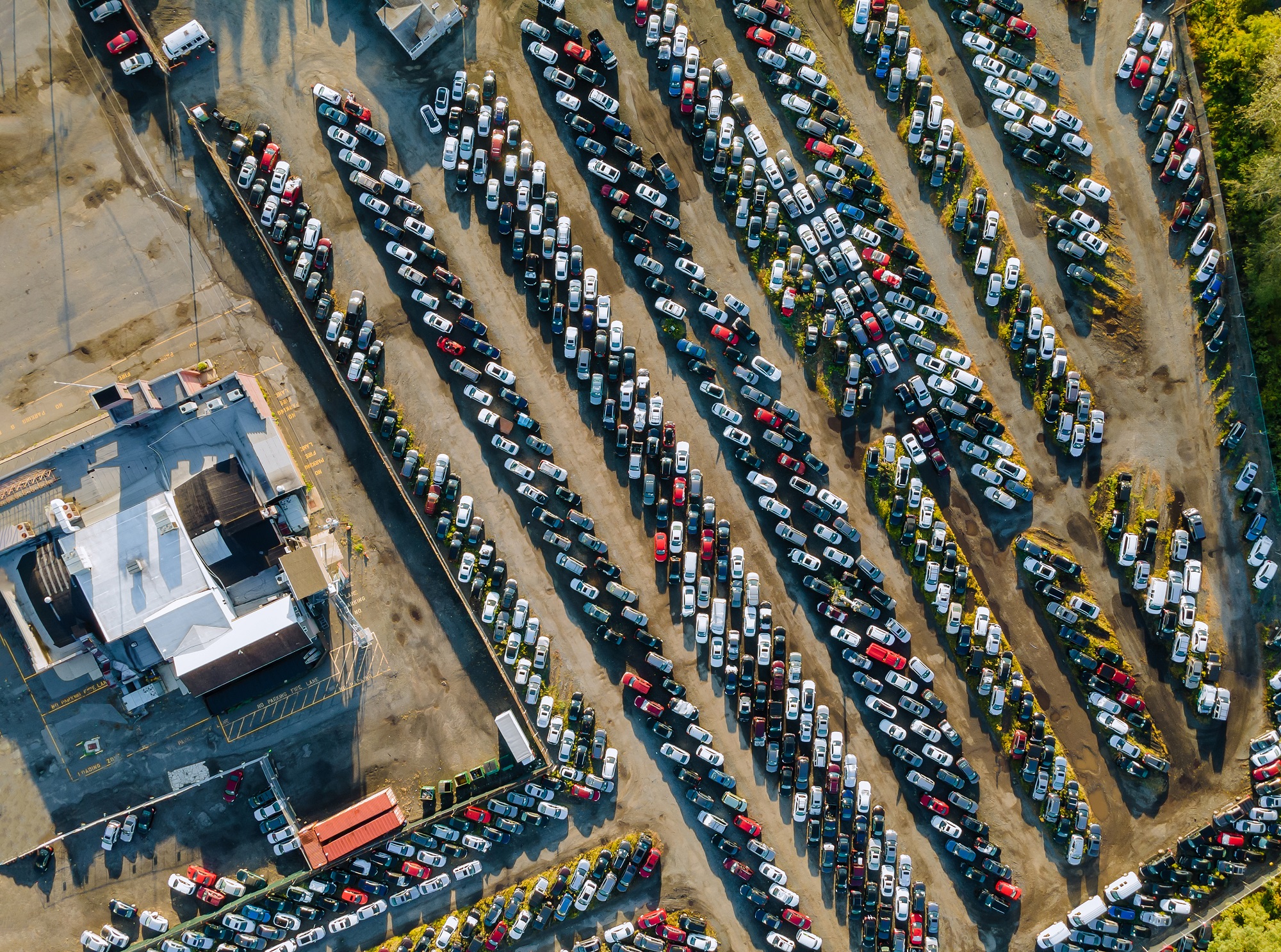
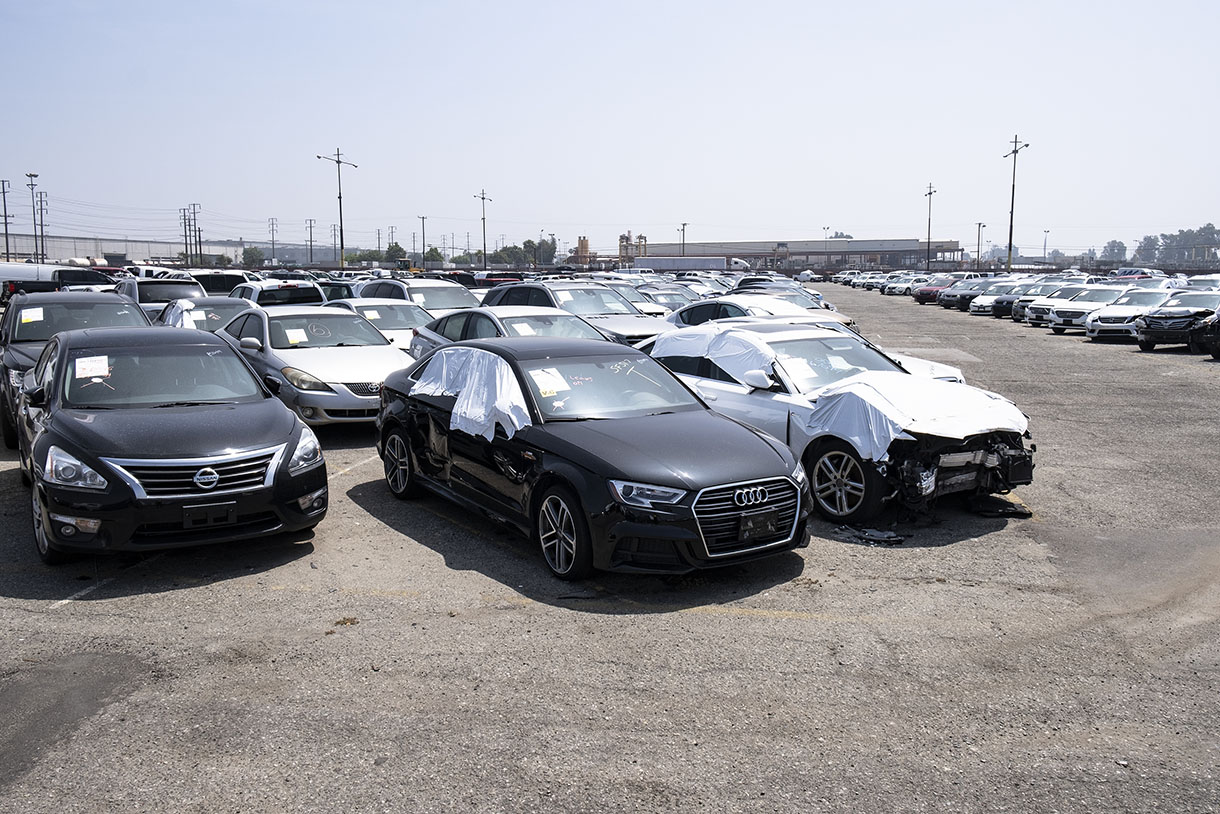
Insurance Auto Auctions (IAA) is one of the largest salvage auto auction platforms in North America, handling total-loss vehicles, insurance claims, repossessions, fleet roll-offs, and trade-in inventory. The IAA Anaheim facility, along with nearby yards in Fontana, Los Angeles, and North Hollywood, serves as a primary hub for automotive rebuilders, exporters, licensed dismantlers, and wholesale dealers.
Public vs. Licensed Buyer Requirements
Access to IAA auctions in California depends heavily on buyer licensing status:
- Licensed Wholesale/Retail Dealers: Full access to salvage, clear-title, and repossessed inventory. Dealers can place live online bids, submit proxy bids, or attend digital auctions across all California branches.
- Licensed Auto Dismantlers and Recyclers: Permitted to bid on non-repairable and scrap vehicles in addition to standard salvage inventory.
- Public/Unlicensed Buyers: California law restricts public buyers from directly purchasing salvage vehicles at wholesale insurance auctions unless the inventory is specifically designated for public sales or purchased through a licensed broker. Most IAA auctions in Southern California require a valid state dealer license, dismantler license, or out-of-state/international equivalent.
Salvage vs. Non-Repairable Titles in California
When buying inventory at IAA Anaheim, understanding title designations is essential to legal compliance and resale viability:
- Salvage Certificate: Issued when a vehicle is deemed a total loss by an insurance company but can be legally rebuilt, inspected by the California Highway Patrol (CHP), and re-registered as a "Revived Salvage" vehicle.
- Non-Repairable Certificate: Issued to vehicles that have been damaged beyond repair or stripped for parts. Under California law, a vehicle designated as non-repairable can never be re-registered, titled, or operated on public highways; it must be scrapped or dismantled for parts only.
The Significance of the September 30 Deadline
The date of September 30 represents a critical operational, legal, and financial deadline for auto dealers, salvage buyers, and auction participants operating in Southern California.
| Checkpoint | Required Action / Focus |
|---|---|
| CDTFA Q3 Tax Prep | Reconcile tax-exempt wholesale transactions |
| DMV Continuing Education (Bi-annual) | Complete 4-hour renewal course before license exp |
| IAA Resale Certificate Update | Submit updated annual state reseller documentation |
| Q3 Salvage Inventory Clearance | Complete bidding & vehicle extraction before fees |
1. CDTFA Third-Quarter Tax Prep and Resale Verification
September 30 marks the end of the third calendar quarter (Q3). Licensed dealers who purchase vehicles at IAA Anaheim using a Resale Certificate (Form CDTFA-230) must ensure all tax-exempt purchases made between July 1 and September 30 are accurately documented in their accounting ledgers.
If a dealer fails to provide an active, valid Resale Certificate to IAA before September 30, the auction platform may automatically charge state and local sales tax on all purchases or restrict account bidding privileges until documentation is verified.
2. DMV Continuing Education Cycles
California DMV dealer licenses must be renewed every two years. Dealers must complete a certified 4-hour Continuing Education course prior to their license expiration date. Because many business licenses and corporate fiscal years align with quarter-ends like September 30, completing required continuing education coursework at an accredited Anaheim auto auction school prior to September 30 prevents unexpected suspensions of dealer plates or auction privileges.
3. End-of-Quarter Insurance Auction Fleet Liquidation
Insurance carriers and financial institutions frequently target the final days of September to clear accumulated total-loss claims and repossessed vehicle inventory from auction yards to clean up Q3 balance sheets. As a result, IAA Anaheim often experiences heightened inventory volumes and auction listing counts around September 30, presenting increased buying opportunities for licensed rebuilders and dealers.
Buyer Access and License Requirements Comparison
Understanding the requirements to bid on vehicle inventory at Insurance Auto Auctions ensures full regulatory compliance and prevents registration delays.
| Category | Public Buyer (Unlicensed) | Licensed Wholesale Dealer | Licensed Auto Dismantler | Out-of-State / International Buyer |
|---|---|---|---|---|
| Direct Bidding Access at IAA Anaheim | Restricted (Broker required for most units) | Full access (Salvage & Clear Title) | Full access (Salvage, Clear, & Non-Repairable) | Permitted (Varies by state/country credentials) |
| DMV Education Requirement | None | 4-Hour Pre-Licensing & 2-Year Continuing Ed | State Dismantler Certification | Local Jurisdiction Compliance |
| Required State Tax Documentation | Pays retail sales tax at point of purchase | CDTFA Resale Certificate (Form CDTFA-230) | CDTFA Resale Certificate | Export Documentation / Bill of Lading |
| Surety Bond Requirement | None | $10,000 (Wholesale) or $50,000 (Retail) | Varies by state license type | N/A |
| Can Title Vehicle for Highway Use? | Yes (If purchasing clear or revived title) | Yes (Following CHP salvage inspection) | No (Dismantle/Parts only for salvage/non-repairable) | Subject to destination country/state laws |
Step-by-Step Guide: From Schooling to Winning Bids at IAA
Establishing an active auto wholesale or rebuilding business in Anaheim involves moving systematically from education to auction execution.
- [Step 1] Complete 4-Hr DMV Pre-Licensing Course (Anaheim Auto Auction School)
- [Step 2] Pass DMV Background Check, Obtain Bond ($50k/$10k), & Secure OL License
- [Step 3] Register with CDTFA for Seller's Permit & Resale Certificate (CDTFA-230)
- [Step 4] Register Business Account at IAA (Upload License, Buyer ID, Resale Cert)
- [Step 5] Perform In-Person/Digital Vehicle Inspection Prior to September 30 Sales
- [Step 6] Submit Bids, Win Lot, Pay Buyer Fees, & Transport Vehicle within 3 Days
Step 1: Complete DMV-Approved Pre-Licensing Education
Enroll in a California DMV-certified dealer education provider serving the Anaheim area. Complete the mandatory four-hour curriculum covering CVC guidelines, vehicle titling, resale procedures, and auction etiquette. Keep the issued Certificate of Completion for your DMV submission package.
Step 2: Obtain DMV Occupational Licensing
Submit Form OL 12 to the California DMV Occupational Licensing Inspector. Provide Live Scan fingerprints, your surety bond ($50,000 for retail, $10,000 for wholesale-only), business location lease documentation, and pass the DMV dealer handbook examination if applicable.
Step 3: File Tax Documentation with CDTFA
Register your business entity with the California Department of Tax and Fee Administration to obtain a Seller's Permit. Complete Form CDTFA-230 (General Resale Certificate), which allows you to purchase auction inventory without paying sales tax at the time of purchase when buying for resale purposes.
Step 4: Register Account with Insurance Auto Auctions
Create a business buyer account on the IAA platform. Upload:
- Valid California Dealer License or Dismantler License
- Issued CDTFA Resale Certificate
- Government-issued photo ID for authorized buyers
- Annual membership registration fee
Step 5: Research and Inspect Auction Lots
Prior to auction day—especially ahead of major quarter-end sales like September 30—review the IAA Anaheim digital catalog. Analyze title status (Salvage vs. Clear vs. Non-Repairable), examine run-and-drive verification status, cross-reference VIN history reports, and conduct in-person physical inspections during allowed viewing hours at the Anaheim facility.
Step 6: Execute Bids and Manage Post-Auction Logistics
Place proxy bids online or participate in live digital auctions. Upon winning a bid:
- Pay the total purchase price plus buyer fees within the allocated payment window (typically 2 to 3 business days).
- Arrange licensed auto transport to remove the vehicle from the IAA yard before daily storage fees begin accruing.
Fee Structures and Risk Management at Salvage Auctions
Buying at IAA Anaheim involves expenses beyond the hammer price. Factoring buyer fees, storage costs, and titling expenses into your margin calculation is essential to profitable operation.
IAA Buyer Fees
IAA utilizes a tiered buyer fee schedule based on the final sale price of the vehicle, payment method (cash, wire transfer, secure electronic payment versus credit card), and buyer account tier. Fees typically range from a flat rate on low-value lots to several hundred dollars on higher-tier bids. Always review the official IAA Fee Schedule before bidding.
Storage and Pullout Deadlines
Vehicles won at auction must be picked up within the free storage period—typically two business days following the sale date, including the day of sale. If a vehicle remains at the IAA Anaheim yard beyond this timeframe, storage fees accrue on a daily basis. Missing pickup deadlines around major end-of-quarter auction dates (such as September 30) can lead to substantial penalties.
Reviving a Salvage Title in California
For wholesale dealers or rebuilders converting an IAA salvage purchase back to a road-legal status in California, specific steps are required under CVC rules:
- Physical Repairs: Complete all necessary structural, mechanical, and safety repairs.
- Brake and Light Inspection: Obtain official certificates from a state-licensed Brake and Light Inspection station verifying the vehicle meets California safety standards.
- CHP Registration Enforcement Section (REG) Inspection: Schedule an appointment with the California Highway Patrol to verify the Vehicle Identification Number (VIN) and confirm that no stolen parts were used in the rebuild process.
- DMV Application: Submit Form REG 343 (Application for Title or Registration), original Salvage Certificate, Brake/Light certificates, and CHP inspection verification to the DMV to obtain a "Revived Salvage" title.
Frequently Asked Questions
Can I buy vehicles at IAA Anaheim without a dealer license?
Public access to IAA auctions in California is highly restricted. Unlicensed individuals generally cannot bid directly on salvage or wholesale inventory at the IAA Anaheim branch unless the specific sale is explicitly listed as open to the public, or the buyer purchases through a licensed broker service registered with IAA.
What is the difference between an auto auction school and a dealer pre-licensing course?
An "auto auction school" is a common term used within the automotive industry to describe DMV-certified dealer education providers. These schools deliver the legally mandated 4-hour pre-licensing or continuing education curriculum required by the California DMV (CVC § 11704.5) to hold a wholesale or retail dealer license, which in turn grants access to dealer-only auto auctions.
Why is September 30 significant for auto dealers buying at salvage auctions?
September 30 marks the end of the third calendar quarter (Q3). Dealers must ensure their CDTFA Resale Certificates are up to date to maintain tax-exempt buying status at IAA. Additionally, insurance companies frequently liquidate high volumes of total-loss vehicle inventory around September 30 to clear quarterly balance sheets.
What happens if I buy a vehicle with a "Non-Repairable" certificate at IAA?
Under California law, a vehicle sold with a Non-Repairable Certificate can never be re-registered, titled, or legally driven on public roads in California. It must be processed strictly for parts or scrapped by a licensed auto dismantler or recycler.
How long is my California dealer education certificate valid?
The Certificate of Completion issued by a DMV-approved dealer education provider in Anaheim or elsewhere in California is valid for 12 months from the date of issuance for initial dealer license applications.
Do wholesale dealers have to pay California sales tax on purchases at IAA Anaheim?
No, provided the licensed wholesale dealer holds an active Seller's Permit from the California Department of Tax and Fee Administration (CDTFA) and has a valid Resale Certificate (Form CDTFA-230) on file with IAA prior to purchasing inventory.
Practical Next Steps for Dealers and Auction Buyers
- Verify Educational Status: If preparing to apply for a dealer license or facing a bi-annual license renewal, enroll in a DMV-approved education provider serving the Anaheim region. Complete required coursework to keep your credentials current.
- Audit Resale Documentation: Prior to the September 30 quarter-end deadline, verify that your CDTFA Seller's Permit and Form CDTFA-230 Resale Certificate are fully updated and registered in your IAA buyer profile.
- Inspect Target Inventory: Review the IAA Anaheim auction catalog ahead of scheduled sale dates. Conduct physical or digital inspections of run-and-drive status, title classifications, and secondary damage flags.
- Calculate Total Acquisition Cost: Before bidding, account for the auction hammer price, tiered IAA buyer fees, transport expenses, brake/light certification costs, and potential daily storage charges to safeguard your profit margins.