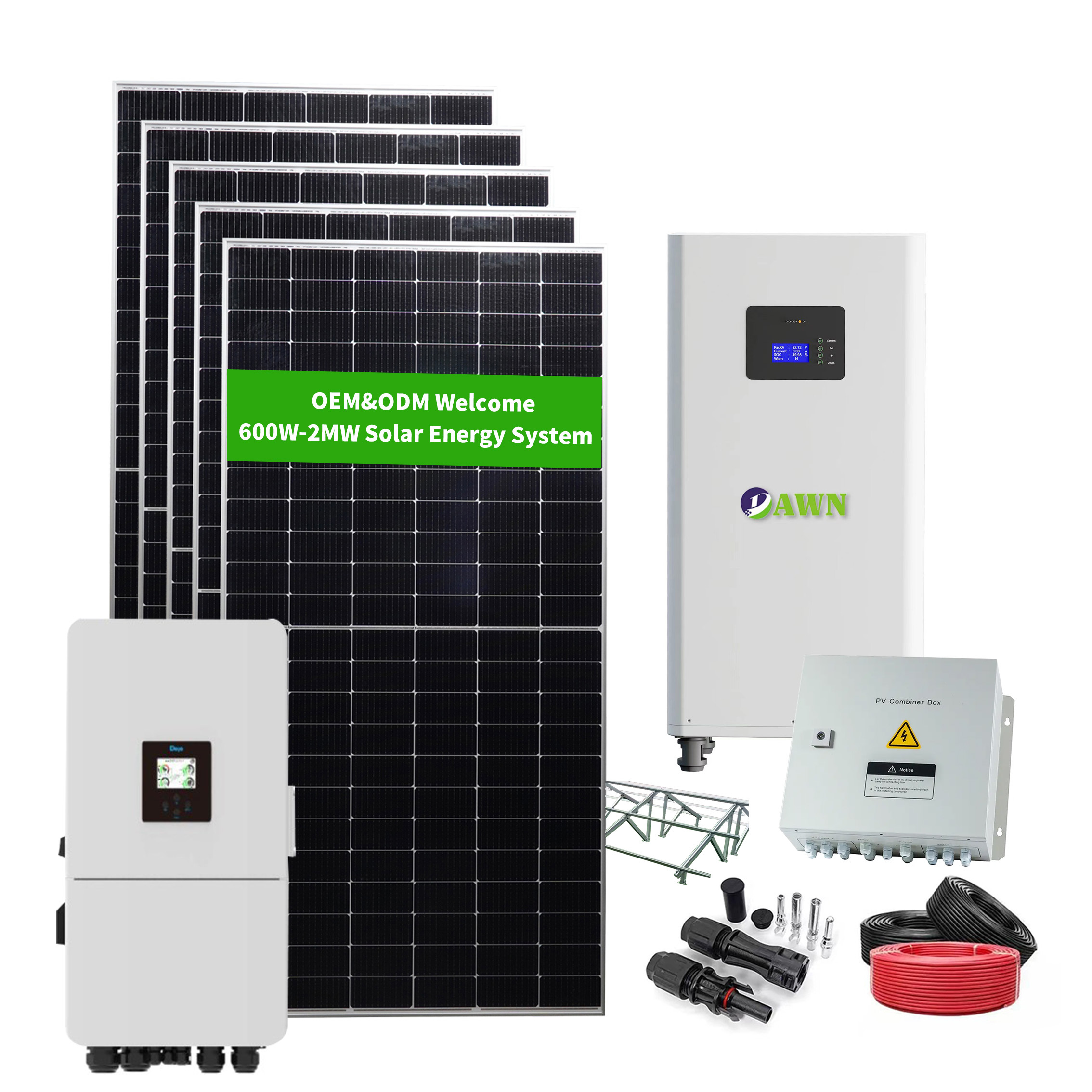
Amish communities use solar power as a strategic tool to maintain independence from the public electrical grid while meeting modern safety and economic requirements. By utilizing standalone photovoltaic (PV) systems, they can power essential equipment like buggy lights, water pumps, and shop tools without violating theological prohibitions against external worldly dependencies or "entangling" alliances with the non-Amish world.
The Theological Framework: Why Solar is "Allowed"
To understand why a community known for horse-drawn buggies and plain clothing adopts high-tech silicon wafers, one must understand the Amish concept of Ordnung. The Ordnung is an unwritten set of rules that governs daily life for each specific Amish church district. These rules are not frozen in time; they are constantly evaluated based on whether a new technology brings the community closer together or pulls it apart.
The primary objection the Amish have to electricity is not the energy itself, but the connection to the grid. A physical wire running from a house to a public utility pole represents a "tether" to the world. It makes the Amish family dependent on a secular infrastructure, subject to its fluctuations, and spiritually "unequally yoked" with non-believers.
Solar power, however, is viewed differently. Because the energy is harvested directly from the sun on the individual's property and stored in local batteries, it is considered a form of self-sufficiency. In 2026, this distinction remains the cornerstone of Amish technology adoption. Solar panels are seen as a natural resource—much like wind or wood—that can be harvested without a direct "handshake" with the outside world. This allows the community to remain "in the world, but not of it."
Practical Applications of Solar Energy in Amish Life
The use of solar power among the Amish is not uniform; it varies significantly between the "New Order" and "Old Order" groups. However, across most progressive and middle-ground districts, solar has become the standard for specific functional needs.
Residential Lighting and Safety
For decades, many Amish families relied on kerosene or propane lamps. While traditional, these methods pose significant fire risks and indoor air quality issues. By 2026, most Amish households have transitioned to high-efficiency LED lighting powered by small solar arrays. These systems are typically low-voltage (12V or 24V DC) to avoid the need for complex AC (Alternating Current) wiring that would mimic a "worldly" home.
Safety is another driver. Many states now require horse-drawn buggies to be equipped with flashing lights and turn signals for road safety. Small solar panels mounted on the roof of the buggy charge the batteries that power these safety features, ensuring the community complies with legal mandates while maintaining their traditional mode of transport.
Agricultural and Dairy Operations
The Amish are renowned for their dairy farming, but modern health regulations require milk to be cooled to specific temperatures within a set timeframe. To meet these standards without grid power, many Amish farmers use solar panels to run the cooling compressors or to power the vacuum pumps used in milking.
In many cases, solar is used in a hybrid capacity with diesel engines. For example, a diesel engine might run the heavy machinery, while a solar-charged battery bank provides the electricity for the digital monitoring equipment and lights required by the Department of Agriculture.
Woodworking and Small Businesses
Amish craftsmanship—particularly in furniture and cabinetry—is a significant part of their 2026 economy. Running a competitive workshop requires power tools. While many shops use pneumatic (air-powered) tools driven by a central diesel compressor, solar power is increasingly used to manage the "control" side of the operation. This includes powering calculators, basic word processors for invoicing (often referred to as "Amish computers" or Deskmates), and the LED task lighting over workbenches.
The Mechanics of "Amish Electricity"
The technical implementation of solar in Amish communities differs significantly from standard residential solar installations seen in suburban neighborhoods.
The Preference for DC (Direct Current)
In a standard "English" home, solar panels feed an inverter that converts DC power to 120V AC. The Amish often skip or limit this conversion. By sticking to a DC-based system, they maintain a clear distinction between their power and "grid power." This also improves efficiency for lighting and small electronics, as there is no energy lost in the conversion process.
Battery Storage and the Shift to LFP
As of 2026, the Amish have largely moved away from heavy lead-acid batteries toward Lithium Iron Phosphate (LiFePO4 or LFP) batteries. The reasons are practical rather than environmental:
- Longevity: LFP batteries last 10 times longer than lead-acid, reducing the need for frequent trips to town for replacements.
- Maintenance: They require no water topping or venting, which is ideal for closed-off battery boxes in barn lofts.
- Portability: They are lighter and easier to transport by buggy when being serviced.
The Role of the "Amish Solar Contractor"
A unique niche has emerged within the community: the Amish solar technician. These are individuals who have studied PV systems extensively and provide installation services to their neighbors. Because they understand the specific spiritual constraints of their clients, they can design systems that provide maximum utility without crossing the line into "flaunting" technology.
Comparing Energy Sources in Amish Communities
The following table illustrates how solar power fits into the hierarchy of energy sources used by the Amish in 2026.
| Feature | Public Grid (The "English") | Standalone Solar (Amish) | Diesel/Gas Generators | Propane/Natural Gas |
|---|---|---|---|---|
| Independence | Very Low | Very High | Moderate (Requires Fuel) | Moderate (Requires Fuel) |
| Ordnung Approval | Almost Never | High (Varies by district) | Very High | High |
| Noise Level | Silent | Silent | High | Silent |
| Initial Cost | Low (Connection fee) | High (Hardware) | Moderate | Moderate |
| Maintenance | None (Utility managed) | Low (Battery checks) | High (Mechanical) | Moderate |
| Common Use | Not used | Lights, Pumps, Fans | Heavy Machinery, Saws | Cooking, Refrigeration |
Economic and Environmental Impacts
While the primary motivation for Amish solar use is religious autonomy, the economic and environmental side effects are substantial.
From an economic perspective, the "payback period" for solar in an Amish context is often shorter than in a typical American home. Because they do not have the high overhead of air conditioning, electric clothes dryers, or large televisions, a relatively small (2kW to 5kW) solar system can cover almost all their electrical needs for decades. This lowers the cost of production for their farms and workshops, making Amish-made goods highly competitive in the 2026 market.
From an environmental perspective, the Amish are inadvertently becoming some of the most sustainable communities in North America. By combining traditional low-impact living with modern renewable energy, they have achieved a carbon footprint that is a fraction of the national average. However, it is important to note that most Amish do not view this through the lens of "climate change," but rather through the lens of stewardship. They believe they are tasked by God to care for the land, and non-polluting energy sources align with that mission.
Regional Variations: Not All Amish Use Solar
It is a common misconception that all Amish use the same technology. The Amish are decentralized, with each "affiliation" making its own decisions.
- Swartzentruber Amish: These are the most conservative. They generally reject solar power entirely, continuing to use kerosene lamps and avoiding even the safety lights on buggies where legally possible.
- Old Order Amish: Most use solar for specific, functional purposes like buggy lights and barn tasks but may still avoid using it in the main living areas of the home.
- New Order Amish: These groups are the most progressive regarding technology. They frequently use solar to power entire households, including appliances that might look familiar to a non-Amish person, such as refrigerators or washing machines, provided they remain off-grid.
In regions like Lancaster County, Pennsylvania, and Holmes County, Ohio, the density of solar panels in Amish areas has led to a "solar culture" where technical knowledge is passed down through apprenticeships, further cementing the technology's place in their society.
Challenges and Limitations of Solar in the Community
Despite its benefits, solar power presents challenges for the Amish. The most significant is the "Slippery Slope" concern. Church elders worry that if a home has electricity for a lightbulb, it is only a matter of time before someone wants a radio, then a television, and then internet access.
To combat this, many districts place strict limits on the size of the solar arrays or the types of devices that can be plugged into them. For example, a bishop might allow a solar panel for a well pump but forbid it for a toaster. In 2026, the struggle to define these boundaries is a frequent topic of discussion at community meetings.
There is also the issue of waste. As the first generation of large-scale Amish solar panels from the early 2010s reaches the end of its life, the community is facing the challenge of recycling and disposing of heavy metals and glass. Without a formal waste management infrastructure, this remains an unresolved issue for many districts.
The Future Outlook: Solar in 2026 and Beyond
As we move through 2026, the integration of solar power into Amish life appears to be accelerating. The technology has proven its reliability and its ability to coexist with a "plain" lifestyle. The focus is now shifting toward more efficient energy management.
We are seeing the rise of "micro-inverters" used in very specific, isolated applications and the adoption of high-efficiency brushless DC motors in tools, which allow Amish workshops to do more with less energy. While the Amish will likely never return to the grid, their use of the sun’s energy proves that "traditional" does not have to mean "primitive." They have successfully decoupled modern technology from modern culture, taking the energy of the 21st century while leaving behind the social "entanglements" that often come with it.
Frequently Asked Questions
Do the Amish pay for solar panels or make them? The Amish purchase their solar panels from commercial manufacturers, just like anyone else. While they are known for building their own houses and furniture, the manufacturing of photovoltaic cells requires high-tech cleanrooms and specialized equipment that the community does not possess. They often buy from local "English" solar suppliers or specialized Amish-run solar businesses.
If they use solar, why don't they have computers or the internet? The rejection of computers and the internet is not about the electricity required to run them, but about the content and the connection. The internet is seen as a direct portal for worldly influences, vanity, and gossip to enter the home. Solar is just a power source; it does not inherently provide access to the outside world’s media in the way a data line does.
Can an Amish person have a solar-powered cell phone? This depends heavily on the district's Ordnung. Some Amish businessmen are permitted to have "black-box" phones for work purposes, which they may charge via solar. However, for most Old Order families, cell phones are prohibited because they disrupt the focused, community-oriented nature of their lifestyle.
Is solar power considered "cheating" on their religious rules? No, because the rules are not against "technology" in a general sense; they are against "worldliness" and "dependence." Using a solar panel that you own and maintain on your own roof is seen as a form of independence, which is a core Amish value. It is no more "cheating" than using a modern hammer instead of a stone tool.
How do they store power for use at night? The Amish use deep-cycle battery banks. In 2026, the standard is Lithium Iron Phosphate (LiFePO4) batteries. These batteries are charged by the solar panels during the day and provide a steady stream of power for LED lights or essential pumps throughout the night.
Practical Recommendation
For those interested in off-grid living or sustainable technology, the Amish model provides a masterclass in selective technology adoption. If you are considering a solar setup, focus first on your "needs" (lighting, water, safety) rather than "wants." Adopting DC-native appliances and high-quality LFP storage can significantly reduce your system's complexity and cost, following the blueprint the Amish have refined over the last several decades.