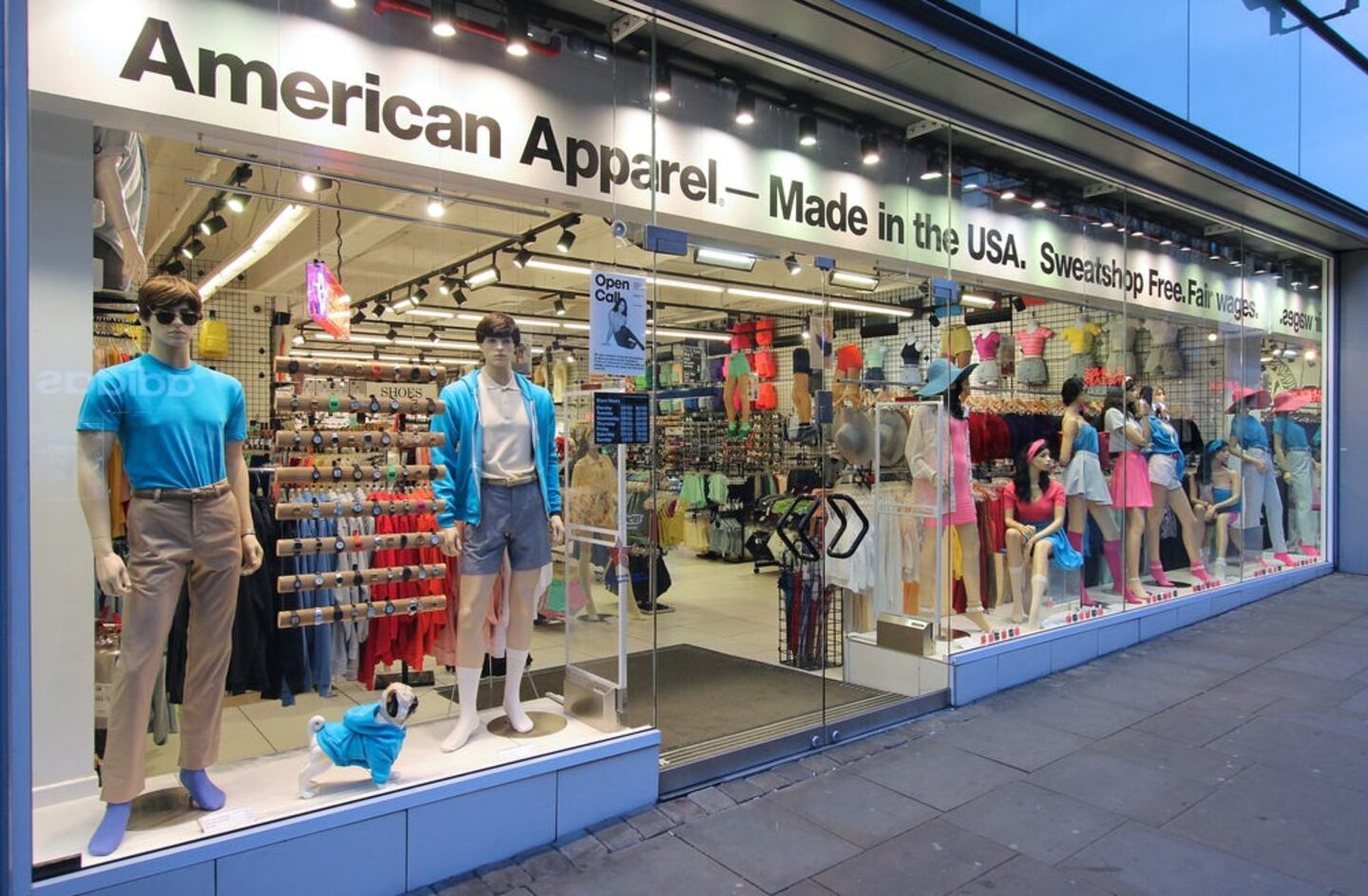
The American Apparel story is a complex narrative of industrial innovation, cultural disruption, and corporate volatility. Originally founded on the principles of vertical integration and "sweatshop-free" domestic manufacturing, the brand rose to global prominence before collapsing under the weight of financial debt and leadership scandals. Today, in 2026, it exists as a revitalized e-commerce entity under Gildan Activewear, having transitioned from a brick-and-mortar giant to a streamlined digital-first basics provider.
The Visionary and the "Basics" Revolution (1989–1997)
The genesis of American Apparel is inextricably linked to its founder, Dov Charney. A Montreal native with a singular obsession with the construction of the T-shirt, Charney began his journey in 1989 by importing Hanes and Fruit of the Loom products into Canada. However, he quickly realized that the existing market lacked a high-quality, fashion-forward basic—a "blank" that could be worn as a standalone fashion statement rather than just an undershirt.
In the early 1990s, Charney moved his operations to South Central Los Angeles, a location that would become synonymous with the brand’s identity. Unlike his competitors who were offshoring labor to developing nations to capitalize on low wages, Charney bet on the efficiency of local manufacturing. By 1997, the company was officially incorporated as American Apparel, focusing on wholesale distribution of premium blank T-shirts to screen printers and fashion brands.
The "revolution" was not just in the fabric—the signature fine-jersey cotton—but in the fit. At a time when American fashion was dominated by baggy, oversized silhouettes, American Apparel introduced slim-cut, European-style garments. This stylistic shift laid the groundwork for what would eventually become the "Indie Sleaze" aesthetic of the 2000s.
The Vertical Integration Model: A Competitive Edge
What truly set the American Apparel story apart in its early years was its commitment to vertical integration. In the garment industry, most brands design products in one country, source materials from another, and outsource assembly to a third-party factory in a fourth. American Apparel rejected this fragmented model.
At its peak, the company operated a massive 800,000-square-foot facility in Downtown Los Angeles. Every stage of production—knitting, dyeing, cutting, sewing, and marketing—took place under one roof. This model provided several strategic advantages:
- Speed to Market: The brand could move a design from the drawing board to the retail floor in as little as two weeks.
- Quality Control: Direct oversight of every stitch ensured a level of consistency that was difficult to achieve through outsourcing.
- Human Rights Branding: By paying Los Angeles workers significantly higher wages than the industry average—often $12 to $15 an hour plus benefits—American Apparel positioned itself as the ethical alternative to the "sweatshop" culture of the era.
This industrial setup was not merely a business choice; it was the brand's core marketing message. The "Made in Downtown LA" label became a badge of authenticity for a generation of consumers increasingly concerned with the origins of their clothing.
The Aesthetic of Controversy and Cultural Dominance
By 2003, American Apparel opened its first retail store in Echo Park, Los Angeles, followed by expansions into New York City and Montreal. Over the next five years, the brand exploded, opening nearly 280 stores in 20 countries.
The marketing strategy during this period was revolutionary and deeply polarizing. Eschewing professional models and airbrushed perfection, Charney often photographed employees and "real people" using amateur-style lighting and 35mm film. This "DIY" aesthetic, largely influenced by the work of photographer Terry Richardson, created a sense of raw, unvarnished reality.
However, this authenticity came with a heavy dose of hyper-sexualization. The advertisements often featured young women in provocative poses, which many critics argued crossed the line into exploitation. Despite—or perhaps because of—the backlash, the brand became a cultural juggit. Items like the Disco Pant, the Circle Scarf, and the Fine Jersey T-shirt became staples of the millennial wardrobe.
The Peak and the Cracks in the Foundation (2007–2010)
In 2007, the company went public through a merger with Endeavor Acquisition Corp., a special purpose acquisition company (SPAC). At its peak, American Apparel’s valuation soared, and its annual revenue surpassed $600 million. However, the transition from a privately held passion project to a publicly traded corporation exposed the fragility of Charney’s management style.
As the 2008 financial crisis hit, the high costs of maintaining a domestic workforce and a sprawling retail footprint began to take their toll. The company’s debt load increased, leading to a desperate search for capital. In 2009, Lion Capital invested $80 million to keep the brand afloat, but the infusion of cash came with strict covenants and increased board oversight.
Simultaneously, the brand’s image began to sour. A series of sexual harassment lawsuits were filed against Dov Charney by former employees. While many were settled or dismissed, the cumulative effect was a PR nightmare. The very "authenticity" that had built the brand now looked like a cover for a toxic corporate culture.
The Downfall: Bankruptcy and the Ousting of Charney
The decade between 2010 and 2020 was characterized by a slow-motion collapse. In June 2014, the board of directors finally moved to oust Dov Charney, citing alleged misconduct and violations of company policy. Charney fought back with a flurry of lawsuits, but the damage was done.
The company struggled to find its footing without its founder’s creative direction. In October 2015, American Apparel filed for Chapter 11 bankruptcy for the first time. The restructuring plan involved wiping out shareholder equity and handing control to a group of bondholders.
The revitalization failed to materialize. The brand had lost its "cool factor," and the rise of fast-fashion giants like Zara and H&M made American Apparel’s price points—driven by the cost of LA manufacturing—unsustainable. A second bankruptcy filing followed in November 2016, marking the end of the original American Apparel as a domestic retail powerhouse.
The Gildan Era: Restructuring for 2026 and Beyond
In early 2017, the Canadian apparel giant Gildan Activewear won an auction to acquire American Apparel’s intellectual property and certain assets for $88 million. Notably, Gildan did not buy the retail stores or the Los Angeles factory leases.
Under Gildan’s stewardship, the American Apparel story took a pragmatic turn. The brand was relaunched in 2018 as a primarily digital and wholesale business. The most significant change was the abandonment of the strict "Made in USA" mandate. To compete on price, Gildan moved much of the production to its own highly efficient, vertically integrated factories in Central America (Honduras and Nicaragua), though they maintained a "Made in USA" capsule collection for a premium price.
As of 2026, American Apparel has successfully carved out a niche as a high-end basics provider within the Gildan portfolio. It focuses on:
- Ethical Global Manufacturing: Utilizing Gildan’s "Genuine Responsibility" program, which ensures fair labor practices in their international facilities.
- Digital-First Retail: Operating via a robust e-commerce platform and a select number of strategic wholesale partnerships rather than high-overhead brick-and-mortar stores.
- Aesthetic Consistency: Returning to the "classic" styles—hoodies, leggings, and T-shirts—that defined its peak, while moving away from the controversial marketing of the past.
Comparison: The Evolution of American Apparel
| Feature | The Charney Era (Peak 2003–2009) | The Gildan Era (Current 2026 Status) |
|---|---|---|
| Primary Manufacturing | Downtown Los Angeles, USA | Global (Central America & USA Capsule) |
| Business Model | Aggressive Retail Expansion | E-commerce & Wholesale Focus |
| Brand Identity | Provocative, Raw, Controversial | Timeless, Ethical, Quality-Driven |
| Ownership | Public (Independent) | Subsidiary of Gildan Activewear |
| Number of Stores | 280+ Worldwide | Minimal (Primarily Online) |
| Worker Wages | High LA wages ($12-$15/hr) | Competitive regional wages/benefits |
Key Milestones in the American Apparel Timeline
- 1989: Dov Charney begins importing T-shirts.
- 1997: Operations move to Los Angeles; brand focuses on wholesale.
- 2003: First retail store opens in Echo Park.
- 2007: The company goes public via a $382 million merger.
- 2014: Dov Charney is ousted as CEO by the board of directors.
- 2015: First Chapter 11 bankruptcy filing.
- 2017: Gildan Activewear acquires the brand for $88 million.
- 2024–2026: Brand stabilizes as a profitable, digital-first entity focusing on sustainable basics.
Frequently Asked Questions
Is American Apparel still made in the USA?
As of 2026, most American Apparel products are manufactured in Gildan’s global facilities in Central America. However, the brand maintains a specific "Made in USA" collection for consumers who are willing to pay a premium for domestic production. These items are typically sourced from contract manufacturers in the United States that meet Gildan’s quality and ethical standards.
Why did the original American Apparel fail?
The failure was the result of a "perfect storm" of factors: excessive debt from rapid retail expansion, the high cost of Los Angeles manufacturing compared to global competitors, and a series of legal and PR scandals involving the founder that alienated both investors and consumers.
Who currently owns the brand?
American Apparel is owned by Gildan Activewear Inc., a leading Canadian manufacturer of everyday basic apparel. They acquired the brand's intellectual property in January 2017 following the company's second bankruptcy.
Does American Apparel still have physical stores?
Most of the original 280+ retail locations were closed following the Gildan acquisition in 2017. While the brand has occasionally experimented with "pop-up" shops or flagship locations in major fashion hubs, the primary way to purchase American Apparel in 2026 is through its official website or wholesale distributors.
What is the "Ethically Made" initiative?
Since taking over, Gildan has integrated American Apparel into its sustainability framework. This includes transparency regarding factory conditions, water conservation efforts, and the use of sustainably sourced cotton. This shift represents a move from the "Made in LA" identity to a "Globally Responsible" identity.
Moving Forward: How to Engage with the Brand Today
For those looking to engage with the American Apparel story today, the focus should be on the product's longevity rather than the corporate drama of the past. The brand remains one of the best sources for high-quality cotton basics that serve as the foundation of a sustainable wardrobe.
When purchasing, consumers should distinguish between the "Standard" line (globally produced) and the "Made in USA" line. If domestic manufacturing is your primary concern, check the product specifications on the official site to ensure you are selecting from the US-manufactured capsule. For business owners, the wholesale portal remains a premier destination for high-quality blanks intended for customization, maintaining the brand’s original 1990s utility in a modern, more stable corporate environment.