Amazon operates in Spain through a sophisticated ecosystem that integrates a nationwide logistics network, the Amazon.es e-commerce marketplace, and high-capacity cloud computing via Amazon Web Services (AWS). As of 2026, the company maintains over 40 operational sites across the country, serving millions of customers and supporting over 15,000 Spanish small and medium-sized enterprises (SMEs) that utilize its fulfillment and export infrastructure.
The Evolution of Amazon.es: A Localized Marketplace
Since its launch in September 2011, Amazon.es has evolved from a simple online bookstore into the dominant e-commerce platform in the Spanish market. By 2026, the marketplace has achieved deep integration into the daily lives of Spanish consumers, driven by a localized approach that respects regional nuances and language preferences, including support for Catalan, Galician, and Basque in various customer service and interface capacities.
The success of Amazon in Spain is largely attributed to the Amazon Prime program. In the Spanish context, Prime offers more than just expedited shipping; it has become a comprehensive digital entertainment and utility bundle. This includes Prime Video—which has invested heavily in original Spanish productions—Amazon Music, Prime Reading, and unlimited photo storage. For the Spanish consumer, the value proposition is centered on "convenience and speed," particularly in urban centers like Madrid, Barcelona, Valencia, and Seville, where "Same-Day" delivery is now a standard expectation for thousands of items.
Furthermore, Amazon operates specialized storefronts within the Spanish domain. Amazon Fresh and the "La Tienda de Alimentación" (Grocery Store) have expanded significantly, collaborating with local distributors and traditional supermarkets like DIA to offer rapid grocery delivery. This move into the perishables sector marks a critical shift in Amazon’s Spanish operations, moving the company from a durable goods provider to a daily essential utility.
The Logistics Backbone: Infrastructure and Fulfillment
To support its massive delivery promises, Amazon has constructed one of the most advanced logistics networks in Southern Europe. Amazon’s physical footprint in Spain is categorized into several distinct types of facilities, each serving a specific role in the supply chain.
Fulfillment Centers (FC)
These are the massive hubs where inventory is stored, picked, and packed. Key locations include:
- MAD4 (San Fernando de Henares): The first fulfillment center in Spain, which has seen continuous technological upgrades.
- BCN1 (El Prat de Llobregat): A high-capacity hub located near the Barcelona airport, crucial for Mediterranean logistics.
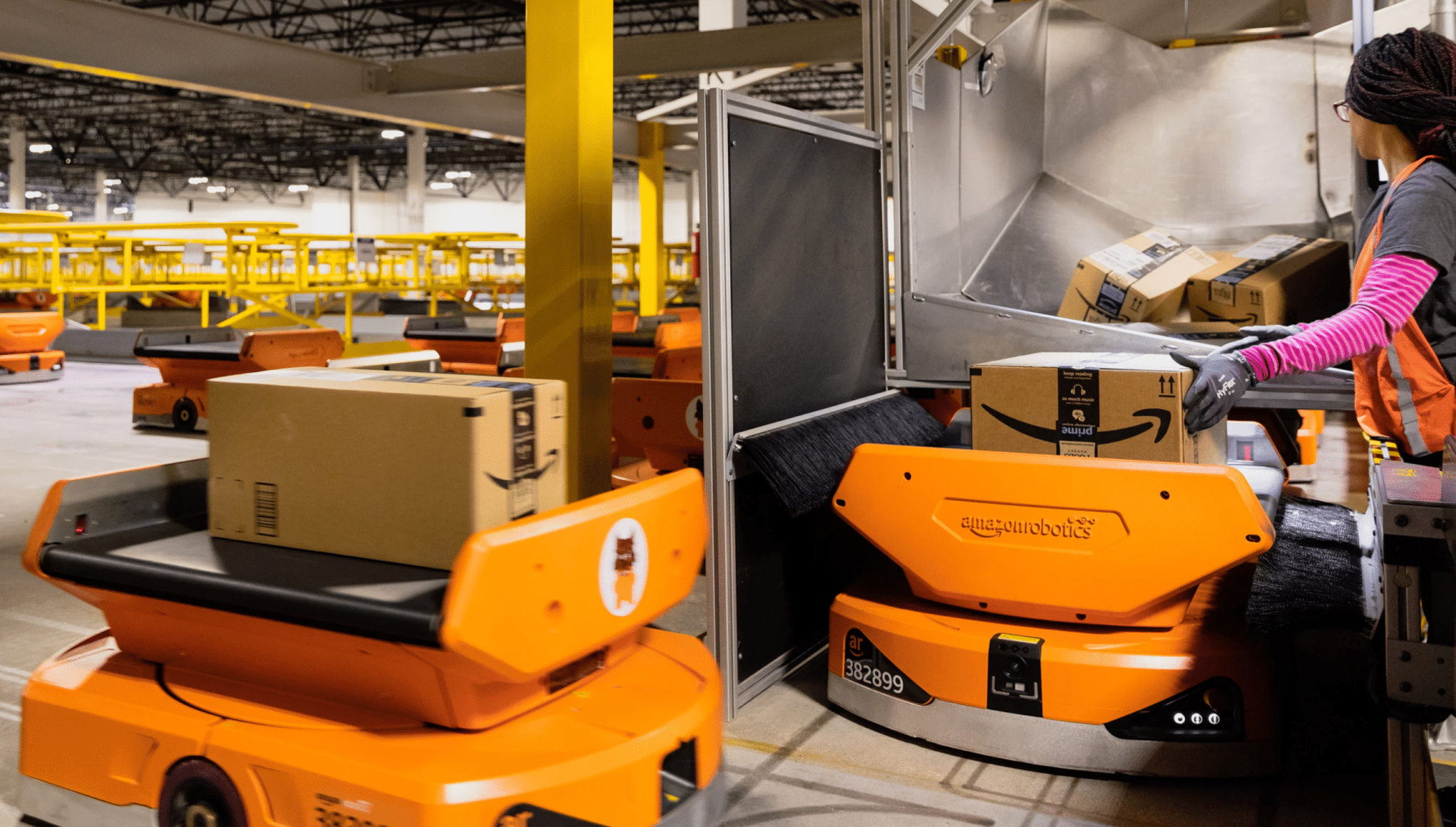
- SVQ1 (Dos Hermanas, Seville): A vital node for Southern Spain, utilizing advanced robotics to manage high volumes of stock.
- VLC1 (Onda, Castellón): A newer facility designed to handle the growing demand in the Valencian Community and Eastern Spain.
Sortation Centers and Delivery Stations
Once a package leaves a Fulfillment Center, it moves to a Sortation Center, where packages are grouped by geographic destination. From there, they are sent to Delivery Stations, the "last-mile" hubs. In 2026, Amazon has established delivery stations in nearly every major Spanish province, from Asturias to Almería. These stations are the final stop before a driver brings the package to the customer’s door.
Amazon Logistics (AMZL)
A significant portion of deliveries in Spain is now handled by Amazon’s own delivery service, rather than third-party carriers like Correos or SEUR. This vertical integration allows for greater control over the customer experience and facilitates the "Ultra-Fast" delivery windows that define the service in 2026.
Amazon Web Services (AWS) in the Spanish Territory
Beyond retail, Amazon’s technical presence in Spain is anchored by Amazon Web Services (AWS). The launch of the AWS Europe (Spain) Region represented a multi-billion euro investment in the country's digital future. Located primarily in the Aragon region (specifically Huesca and Zaragoza), these data centers allow Spanish companies and government agencies to run applications and store data locally.
The significance of the AWS Spain Region includes:
- Data Sovereignty: Public sector entities and regulated industries (like banking and healthcare) can ensure their data remains within Spanish borders, complying with both GDPR and specific Spanish data protection laws (LOPDGDD).
- Reduced Latency: Local data centers provide faster response times for Spanish users, which is critical for gaming, financial trading, and real-time analytics.
- Economic Diversification: The choice of Aragon as a hub has stimulated the local tech economy, turning a traditionally agricultural and industrial region into a center for cloud infrastructure.
Supporting Spanish SMEs and the Export Economy
One of the most impactful ways Amazon operates in Spain is by acting as a springboard for local businesses. As of 2026, over 15,000 Spanish SMEs sell on Amazon. These businesses are no longer limited to their local neighborhoods or even the Spanish national market; they utilize Amazon’s Global Selling program to reach customers across Europe and North America.
Amazon provides these businesses with several critical tools:
- Fulfillment by Amazon (FBA): Sellers send their products to Amazon's Spanish warehouses, and Amazon handles storage, shipping, and customer service.
- Despega Program: An educational initiative launched in collaboration with Spanish trade bodies (like ICEX and various Chambers of Commerce) to help small business owners digitize their operations.
- Brand Registry: Tools to help Spanish manufacturers protect their intellectual property and build their brand identity on a global scale.
In 2025 alone, Spanish SMEs selling on Amazon reached record-breaking export figures, with products like olive oil, traditional leather goods, and artisanal ceramics becoming top-sellers in international markets.
Employment and Labor Practices in Spain
As one of the largest private employers in the country, Amazon’s labor practices are a subject of significant public and regulatory interest. By 2026, the company has created over 25,000 permanent jobs in Spain. These roles range from logistics associates and delivery drivers to high-level software engineers and data scientists at the Madrid Tech Hub.
Amazon’s operational model in Spain emphasizes:
- Competitive Compensation: Providing wages that generally exceed the minimum sectoral requirements in the various regions where they operate.
- Comprehensive Benefits: Including private health insurance and educational subsidies (such as the "Career Choice" program).
- Safety Technology: Implementation of AI and wearable tech in fulfillment centers to reduce workplace injuries.
However, the company has also faced challenges regarding labor unions and collective bargaining. In Spain, Amazon engages with major unions like CCOO and UGT. The "Amazon Spain Logistics Collective Agreement" remains a cornerstone of the relationship between the company and its workforce, ensuring that national labor standards are met or exceeded within the fast-paced logistics environment.
Sustainability and Renewable Energy Investments
In alignment with "The Climate Pledge," Amazon’s operations in Spain have become a benchmark for corporate sustainability. Spain’s geography makes it an ideal location for solar and wind energy, and Amazon has capitalized on this.
| Project Type | Location | Impact/Capacity |
|---|---|---|
| Solar Farms | Andalusia, Castilla-La Mancha, Aragon | Hundreds of megawatts of clean energy added to the Spanish grid. |
| Off-site Wind | Northern Spain | Powering AWS data centers and logistics hubs. |
| Last-Mile Delivery | Major Cities | Use of electric vans and e-cargo bikes in Madrid and Barcelona "micro-hubs." |
| On-site Solar | Fulfillment Centers | Rooftop solar panels on MAD4 and BCN1 facilities. |
By 2026, a significant portion of Amazon’s operational energy in Spain is matched by 100% renewable sources. This shift is not just environmental but also strategic, as it hedges against fluctuating energy prices in the European market.
Challenges and Regulatory Environment
Operating in Spain involves navigating a complex regulatory landscape. The Spanish government, through the Ministry of Economy and Digital Transformation, has been proactive in regulating the digital economy.
- The "Rider Law": Spain was a pioneer in regulating gig-economy workers. Amazon has had to ensure that its delivery partners and independent contractors comply with these strict employment classifications.
- Digital Services Tax: Like other multinational tech firms, Amazon is subject to the Spanish "Google Tax," which targets revenue from digital advertising and intermediation services.
- Competition Oversight: The CNMC (Comisión Nacional de los Mercados y la Competencia) monitors Amazon’s dual role as both a marketplace operator and a direct seller to ensure fair play for third-party Spanish merchants.
Comparison of Amazon Services in Spain (2026)
| Service | Primary Audience | Key Feature in Spain |
|---|---|---|
| Amazon.es | General Consumers | Localized catalog and regional language support. |
| Amazon Business | Spanish SMEs & Corporations | VAT-exclusive pricing and automated invoicing. |
| AWS Spain | Tech Startups & Public Sector | Local data residency and low-latency cloud. |
| Amazon Fresh | Urban Households | 2-hour delivery windows for groceries in major cities. |
| Prime Video | Entertainment Seekers | Local Spanish "Originals" and sports content. |
Frequently Asked Questions
Does Amazon deliver to all parts of Spain, including the islands?
Yes, Amazon operates across the entire Spanish territory, including the Balearic Islands, the Canary Islands, Ceuta, and Melilla. However, delivery times and Prime benefits may vary for these regions due to customs and maritime transport requirements. For the Canary Islands, Amazon has implemented specific logistics solutions to manage the "IGIC" (Canary Islands Indirect General Tax) and simplify the customs process for customers.
How do I contact Amazon Spain customer service?
Amazon Spain provides 24/7 customer support through several channels. Users can access the "Help" section on the Amazon.es website or app to initiate a live chat, request a phone call-back, or send an email. Support is available in Spanish and English, and for specific regional inquiries, agents are often equipped to handle issues related to local delivery nuances.
Can Spanish companies sell their products on Amazon's international sites?
Absolutely. One of the core components of Amazon’s operations in Spain is the "Global Selling" feature. A business registered on Amazon.es can easily list its products on Amazon.com (USA), Amazon.co.jp (Japan), and other European marketplaces. Amazon provides the logistics infrastructure (European Fulfillment Network) to handle cross-border shipping and returns.
What is the role of the Amazon Tech Hub in Madrid?
The Madrid Tech Hub is one of Amazon’s primary research and development centers in Europe. It employs over 500 software engineers, data scientists, and machine learning experts. This team focuses on developing technologies for Amazon Business, Kindle, and the specialized software that manages the global logistics chain. It represents Amazon's commitment to not just being a retailer in Spain, but a developer of high-tech intellectual property within the country.
Is Amazon Fresh available in all Spanish cities?
No, Amazon Fresh and the ultra-fast grocery service are currently focused on high-density urban areas. As of 2026, the service is fully operational in Madrid, Barcelona, Valencia, Seville, Zaragoza, and Malaga. Expansion into mid-sized cities continues, but it depends on the establishment of local refrigerated logistics facilities and partnerships with regional food suppliers.
Practical Recommendations for Users and Businesses
For consumers in Spain, the most effective way to utilize Amazon is through a Prime membership, especially if living in a Tier 1 or Tier 2 city, as the savings on shipping and the inclusion of streaming services offer significant value. Users should also make use of the "Amazon Hub" locker network, which has thousands of locations in Spanish gas stations, supermarkets, and shopping centers, providing a secure and flexible alternative to home delivery.
For business owners, the recommendation is to leverage the AWS Spain Region for any data-sensitive operations to ensure compliance with local regulations. Additionally, SMEs should investigate the "Despega" training modules to optimize their digital presence. Using Fulfillment by Amazon (FBA) is highly recommended for those looking to scale quickly, as it removes the burden of managing complex Spanish logistics and allows for the "Prime" badge, which significantly increases conversion rates on the marketplace.