Amazon S3 Glacier Deep Archive is the lowest-cost cloud storage class offered by Amazon Web Services, designed for long-term retention of data that is accessed once or twice a year and requires a retrieval time of 12 hours or less. It provides a secure, highly durable object storage solution tailored for organizations that must preserve massive volumes of data for regulatory compliance, medical records, financial archives, and historical preservation.
Understanding Amazon S3 Glacier Deep Archive
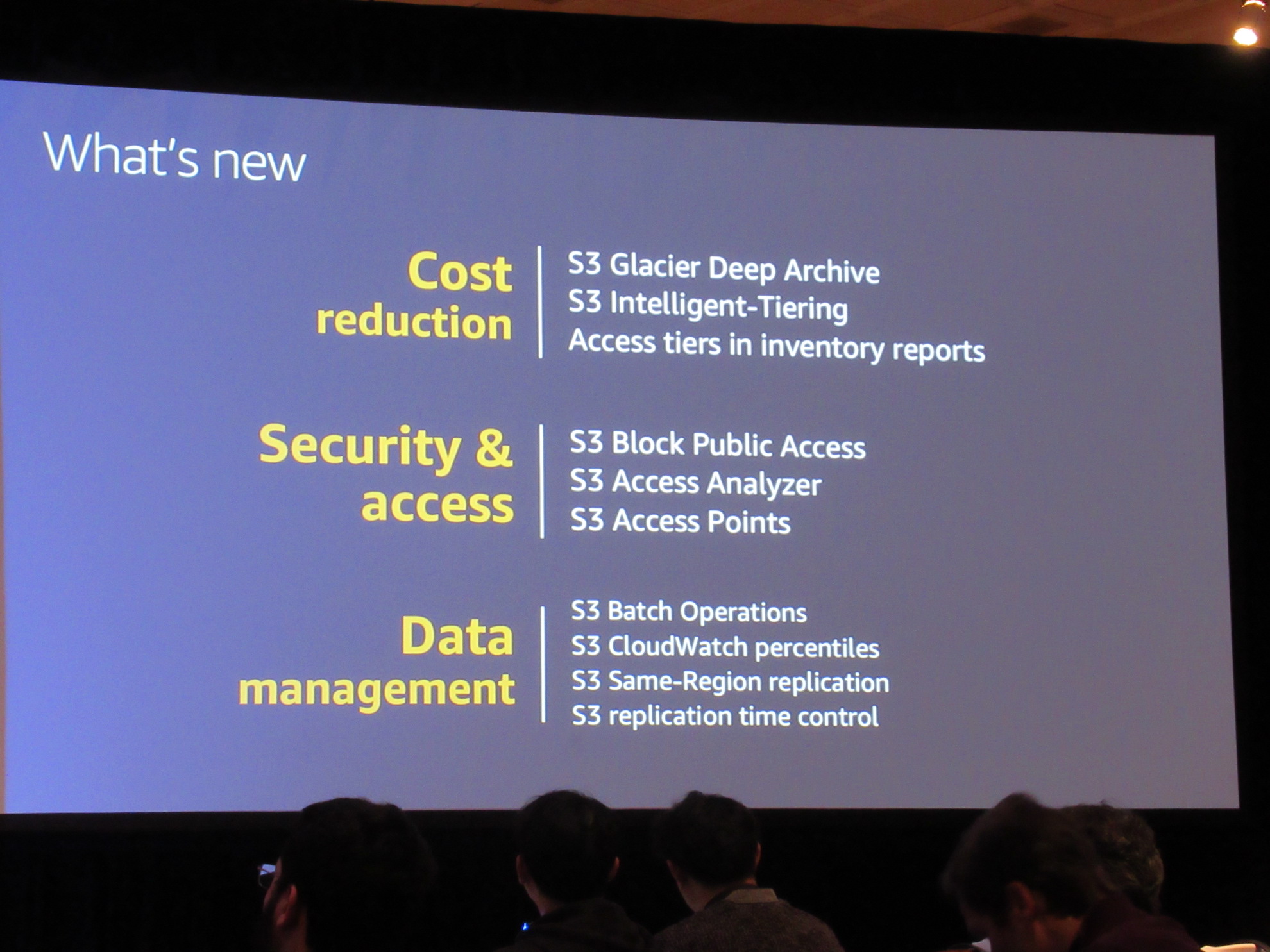
In the modern enterprise landscape, the volume of digital information generated daily continues to expand exponentially. Much of this data—ranging from raw sensor telemetry and security camera footage to compliance logs and legacy databases—must be retained for years or even decades to satisfy legal, regulatory, or internal business mandates. Storing this information in standard cloud tiers can quickly become cost-prohibitive. Amazon S3 Glacier Deep Archive addresses this economic challenge by providing a secure, highly scalable repository engineered specifically for cold data storage.
Unlike traditional tape backup systems, which require manual intervention, physical offsite transportation, and specialized hardware maintenance, Deep Archive operates entirely within the AWS cloud infrastructure. Data placed into this tier is distributed across multiple geographically separated Availability Zones, ensuring high durability. While retrieval speeds are intentionally slower than standard storage classes, the trade-off delivers unmatched cost efficiency, making multi-terabyte or petabyte-scale long-term archiving financially viable for organizations of all sizes.
Core Characteristics and Technical Specifications
To effectively leverage Amazon S3 Glacier Deep Archive, architects and system administrators must understand its underlying technical parameters. The service is built on top of the broader Amazon Simple Storage Service (S3) architecture, meaning it inherits the same security, management, and global infrastructure capabilities while introducing unique operational rules.
Durability and Availability
Data stored within S3 Glacier Deep Archive is designed for 99.999999999% (11 nines) of durability. AWS achieves this high level of reliability by automatically synchronous-replicating data across a minimum of three physical Availability Zones within an AWS Region. This architecture protects against facility-level disasters, hardware failures, and localized disruptions. However, availability metrics differ from durability; the service is optimized for background archiving rather than high-frequency read operations.
Retrieval Options and Latency
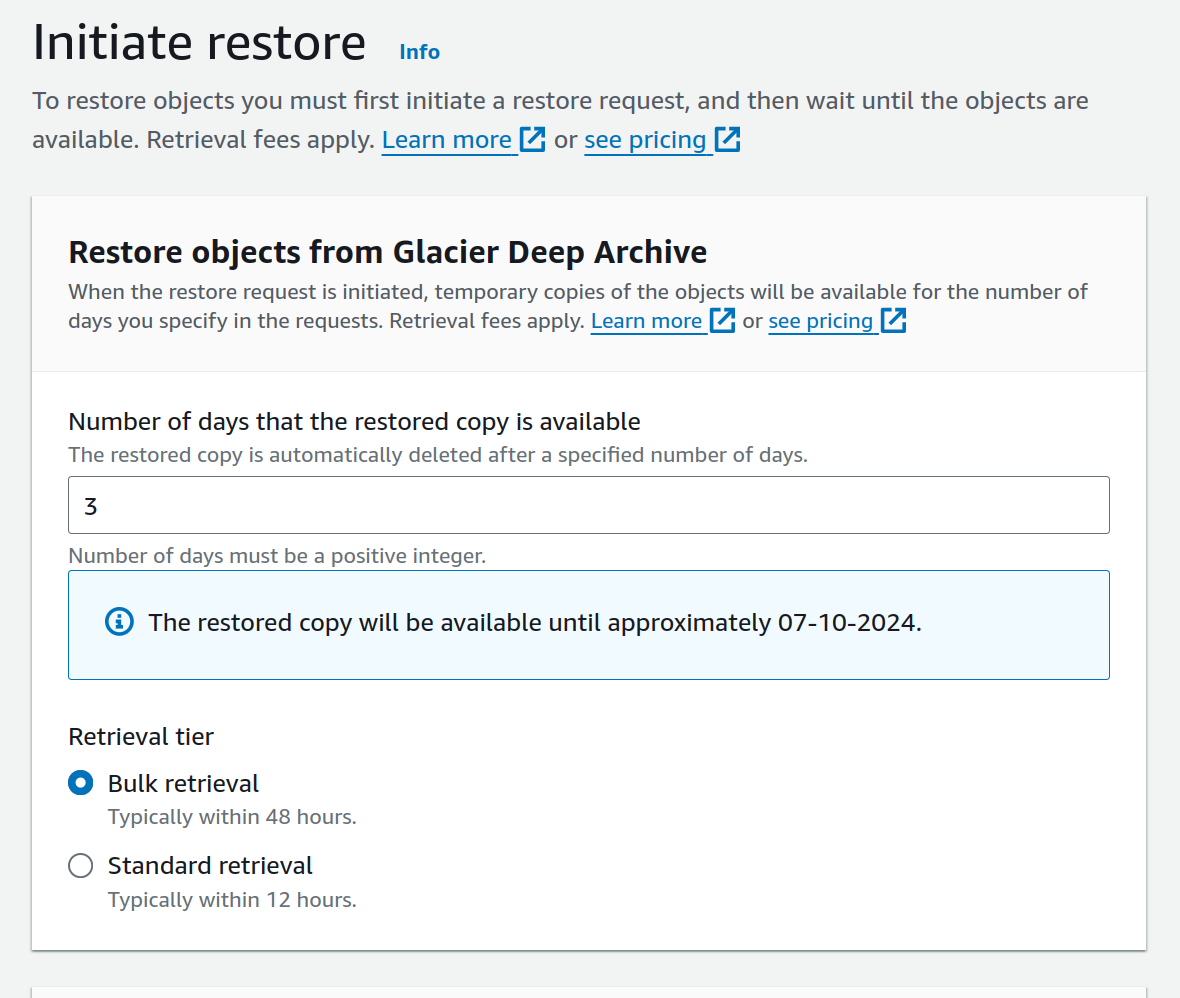
Accessing data from Deep Archive is an asynchronous process. AWS provides two primary retrieval methods to accommodate varying urgency and workload requirements:
- Standard Retrievals: Data requested via standard retrieval is typically available within 12 hours. This option is ideal for routine audits, scheduled batch processing, or non-urgent data analysis.
- Bulk Retrievals: Designed for large-scale restorations, bulk retrievals return data within 48 hours. This method offers the lowest possible retrieval cost, making it suitable for restoring entire multi-terabyte datasets when time is not a constraining factor.
Storage Minimums and Duration Commitments
To maintain its low pricing structure, Deep Archive enforces strict storage duration and minimum size policies. Objects stored in this tier are subject to a minimum storage duration charge of 180 days. If an object is deleted, overwritten, or transitioned to another storage class before the 180-day window expires, AWS assesses a prorated charge equal to the remaining days of the commitment. Additionally, a minimum billable object size applies, making it less economical for millions of tiny files unless they are bundled into larger archive containers such as uncompressed tarballs or zip archives.
Pricing Structure and Cost Optimization
Cost efficiency is the primary driver for adopting Amazon S3 Glacier Deep Archive. However, calculating the total cost of ownership requires looking beyond the raw per-gigabyte monthly storage fee. A comprehensive financial assessment must account for storage duration, retrieval volumes, API request fees, and data transfer costs.
Storage Costs
The per-gigabyte monthly storage rate for Deep Archive is significantly lower than standard S3 tiers, often costing a fraction of a cent per gigabyte. This pricing model makes storing petabytes of historical data economically sustainable over long horizons. Organizations must balance this low resting cost against the 180-day minimum retention rule to prevent unexpected early-deletion penalties when managing dynamic datasets.
Retrieval and Request Fees
Unlike standard S3 storage classes where data retrieval is generally free of per-gigabyte charges, Deep Archive assesses fees based on the volume of data restored. Every standard or bulk retrieval incurs a per-gigabyte charge, alongside request fees for API calls. Organizations must model their expected access patterns carefully; if data needs to be restored frequently, the associated retrieval fees can quickly outweigh the savings gained from cheap storage.
Data Transfer Considerations
Moving data into S3 Glacier Deep Archive over the public internet or AWS Direct Connect is generally free of ingress charges. Conversely, moving data out of the AWS ecosystem (egress) incurs standard data transfer fees. Organizations should factor in regional data transfer costs if restored archives need to be moved across different AWS regions or downloaded to on-premises data centers.
Security, Compliance, and Data Protection
Organizations utilizing S3 Glacier Deep Archive often handle sensitive, regulated, or proprietary information. AWS provides robust security controls to ensure that archived data remains protected both in transit and at rest.
Encryption at Rest and in Transit
All data uploaded to Deep Archive is encrypted by default. Users can utilize Amazon S3-managed keys (SSE-S3), AWS Key Management Service (KMS) keys (SSE-KMS), or customer-provided keys (SSE-C) to maintain strict cryptographic control over their archives. Data moving to and from the service is protected via Transport Layer Security (TLS), securing it against interception during transit over networks.
Access Control and Governance
Access to Deep Archive objects is managed through standard S3 mechanisms, including AWS Identity and Access Management (IAM) policies, Bucket Policies, Access Control Lists (ACLs), and S3 Access Points. To prevent accidental or malicious deletion of compliance records, administrators can implement S3 Object Lock in Compliance Mode. This governance feature enforces a Write Once, Read Many (WORM) model, ensuring that designated archives cannot be altered or deleted by any user—including the root account holder—until the retention period expires.
Implementation Workflow and Lifecycle Policies
Deploying Amazon S3 Glacier Deep Archive within an existing cloud architecture can be executed manually or automated through lifecycle policies. Automation is the preferred approach for enterprise environments handling continuous data generation.
Using S3 Lifecycle Rules
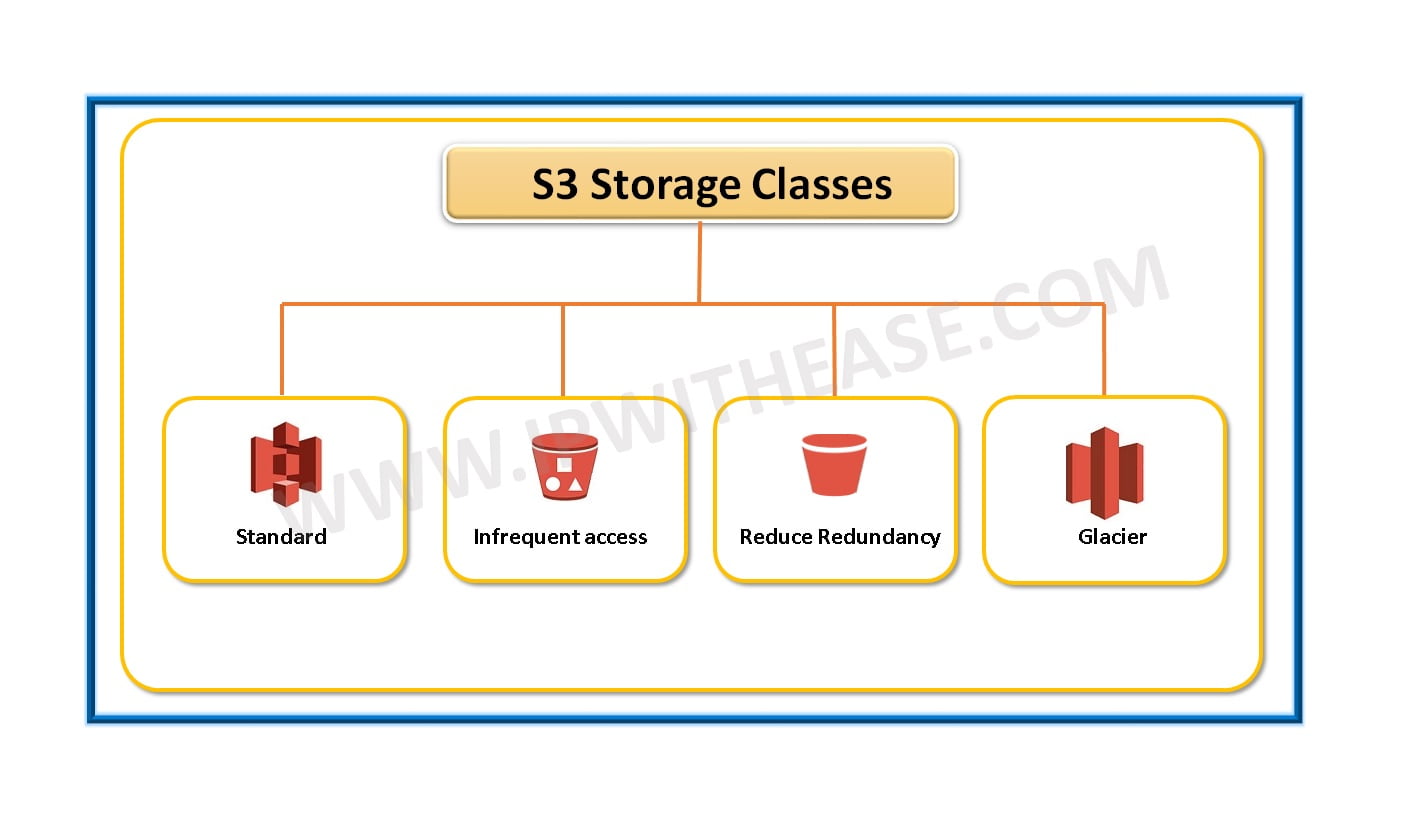
Amazon S3 Lifecycle configurations allow administrators to define rules that automatically transition objects from hotter storage tiers (such as S3 Standard or S3 Infrequent Access) down to Deep Archive based on age or prefix tags.
{ "Rules": [ { "ID": "MoveLogsToDeepArchive", "Status": "Enabled", "Filter": { "Prefix": "audit-logs/" }, "Transitions": [ { "Days": 30, "StorageClass": "STANDARD_IA" }, { "Days": 90, "StorageClass": "DEEP_ARCHIVE" } ], "Expiration": { "Days": 3650 } } ] }
By configuring these tiered transitions, organizations ensure that data remains readily available during its active phase and automatically migrates to the ultra-low-cost archive tier as it ages, minimizing manual oversight.
Direct Uploads via API and SDKs
For specialized ingestion pipelines, applications can upload objects directly to Deep Archive using the AWS Management Console, AWS CLI, or software development kits (SDKs) in languages such as Python, Java, or Node.js. Developers must specify DEEP_ARCHIVE as the storage class parameter during the put-object request.
Comparing AWS Archive Storage Classes
AWS offers multiple storage classes designed for infrequently accessed data. Choosing the right tier depends heavily on retrieval latency requirements and expected access frequency.
| Storage Class | Primary Use Case | Retrieval Time | Minimum Storage Duration | Monthly Storage Cost | Retrieval Cost |
|---|---|---|---|---|---|
| S3 Standard-Infrequent Access | Data accessed less frequently, but requires rapid access when needed. | Milliseconds | 30 Days | Moderate | Low (per-GB fee applies) |
| S3 Glacier Flexible | Long-term backup with flexible retrieval times (minutes to hours). | Minutes to Hours | 90 Days | Low | Moderate |
| S3 Glacier Deep Archive | Long-term archival, regulatory compliance, rarely accessed data. | 12 to 48 Hours | 180 Days | Lowest | Higher (per-GB fee applies) |
Common Use Cases and Industry Applications
The unique cost and latency profile of S3 Glacier Deep Archive makes it the preferred storage destination across several distinct industries:
- Financial Services: Banks and investment firms are legally mandated to retain transaction records, audit logs, and communication histories for seven years or more. Deep Archive provides a tamper-resistant, highly cost-effective repository for these compliance records.
- Media and Entertainment: Film studios and broadcasters archive raw camera footage, master tapes, and completed broadcast episodes. Because historical content is rarely revisited outside of occasional remastering projects, the 12-hour retrieval window is well-suited for the industry.
- Healthcare: Medical imaging providers, hospitals, and research laboratories store DICOM files, patient histories, and genomic sequencing data. Long-term retention laws require these files to be kept securely for decades.
- Public Sector and Research: Universities, government archives, and scientific institutions preserve census data, geological surveys, and satellite telemetry for historical analysis and longitudinal studies.
Best Practices for Managing Deep Archive
Maximizing the value of Amazon S3 Glacier Deep Archive requires adhering to established cloud architecture best practices:
- Bundle Small Files: Combine thousands of small files into larger archive formats (such as tar or zip files) prior to upload. This reduces request overhead and ensures efficient storage management.
- Monitor Retrieval Patterns: Track data access requests to ensure that files stored in Deep Archive are genuinely cold. Frequent retrievals negate the cost savings of the low storage tier.
- Leverage Object Lock for Compliance: Implement S3 Object Lock in Compliance Mode for data subject to strict regulatory frameworks to prevent premature deletion or tampering.
- Audit Lifecycle Policies: Regularly review S3 Lifecycle configurations to verify that objects transition through intermediate tiers appropriately and adhere to the 180-day commitment window.
Frequently Asked Questions
What is the difference between S3 Glacier Flexible Archive and S3 Glacier Deep Archive?
S3 Glacier Flexible Archive is designed for data that may need to be retrieved within minutes to a few hours, whereas Deep Archive is engineered for data accessed once or twice a year with a 12-to-48-hour retrieval window. Deep Archive offers a significantly lower monthly storage price point.
Can I retrieve data from Deep Archive in minutes?
No. Standard retrievals take up to 12 hours, and bulk retrievals take up to 48 hours. If you require rapid access within minutes, you should utilize S3 Glacier Flexible Archive or S3 Standard-IA instead.
What happens if I delete an object before 180 days?
If you delete, overwrite, or transition an object out of Deep Archive before the 180-day minimum retention period elapses, AWS will charge you a prorated storage fee for the remainder of the 180 days.
How do I automate the migration of data to Deep Archive?
You can automate the transition process by setting up Amazon S3 Lifecycle rules on your bucket, allowing AWS to automatically move objects to Deep Archive based on object age or prefix tags.
Is data encrypted when stored in Deep Archive?
Yes. All data stored in Amazon S3 Glacier Deep Archive is encrypted by default using server-side encryption, with options to use S3-managed keys or customer-managed AWS KMS keys.
Conclusion
Amazon S3 Glacier Deep Archive provides a robust, highly secure, and exceptionally cost-effective foundation for long-term data retention and regulatory compliance. By understanding its retrieval latencies, storage minimums, and pricing mechanics, organizations can successfully offload petabytes of cold data from expensive primary storage tiers into an ultra-low-cost cloud repository. Implementing automated lifecycle policies and adhering to storage management best practices ensures maximum financial efficiency while safeguarding critical historical records for the long term.