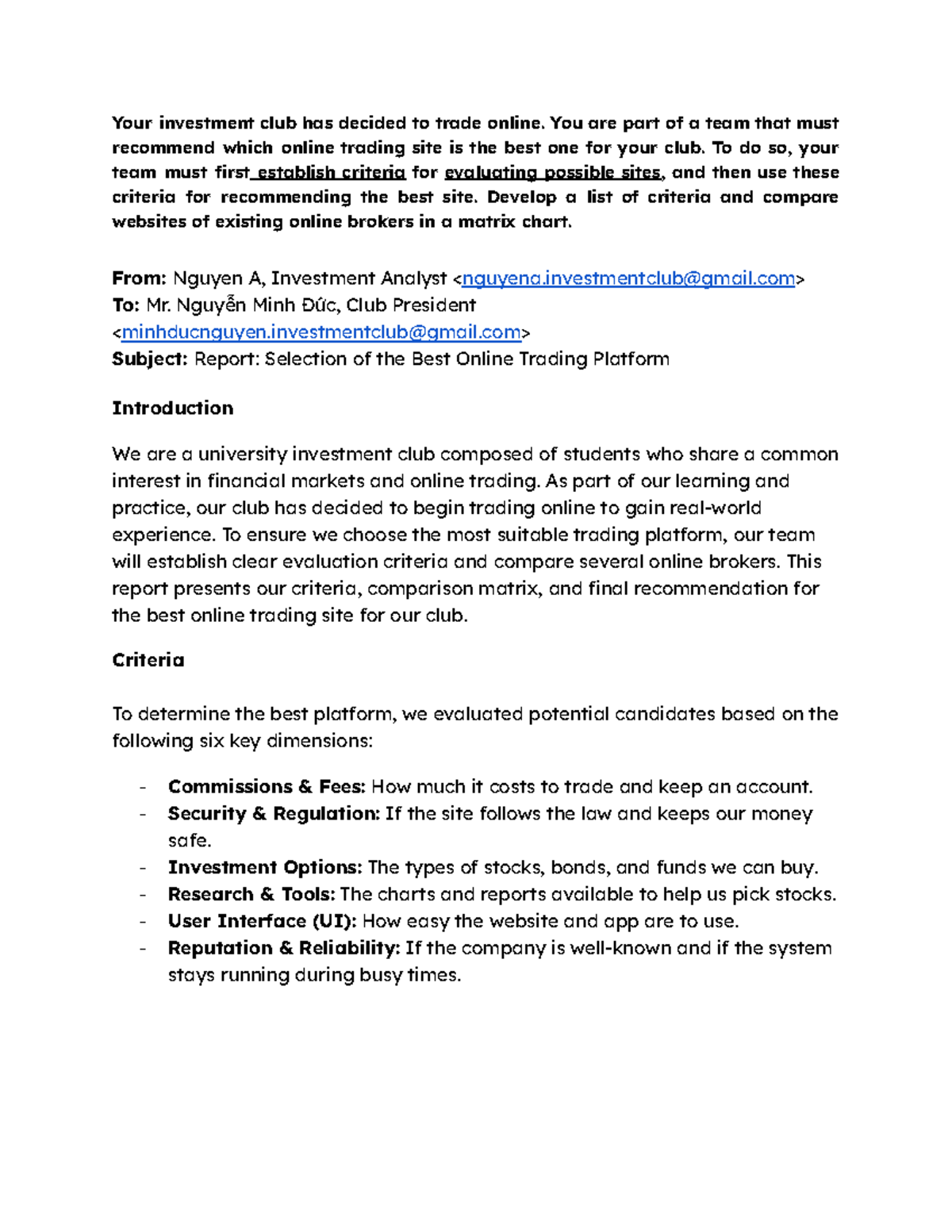
Evaluating an investment platform requires a multi-faceted approach focusing on regulatory compliance, fee structures, asset availability, and technical reliability. To choose the right service, investors must prioritize security through SIPC/FDIC protections while balancing the platform’s technological tools against its total cost of ownership, including commissions and underlying advisory fees.
The Regulatory Framework: Why Safety and Compliance Come First
The primary detail to investigate when evaluating any investment platform is its regulatory standing. In the United States, a legitimate brokerage must be registered with the Securities and Exchange Commission (SEC) and be a member of the Financial Industry Regulatory Authority (FINRA). These organizations set the rules for conduct, transparency, and capital requirements.
One of the most critical safeguards is membership in the Securities Investor Protection Corporation (SIPC). As of 2026, SIPC protection remains the industry standard for brokerage insolvency. It provides up to $500,000 in coverage (including a $250,000 limit for cash) per customer in the event a firm fails. It is vital to distinguish this from Federal Deposit Insurance Corporation (FDIC) insurance, which typically applies to uninvested cash held in "sweep" accounts at partner banks, not the securities themselves.
Beyond basic registration, look for platforms that undergo independent audits and maintain SOC 2 Type II compliance. This indicates that the company has rigorous controls regarding the security, availability, and processing integrity of their systems. In an era where cyber threats are increasingly sophisticated, checking for mandatory Multi-Factor Authentication (MFA), hardware security key support (like YubiKeys), and biometric login options is no longer optional; it is a prerequisite for any platform handling significant assets.
Understanding Fee Structures: The Reality of "Commission-Free" Trading
The shift toward zero-commission trading for stocks and Exchange-Traded Funds (ETFs) has been standard for years. However, "free" does not mean "without cost." To evaluate a platform's true expense, you must look into Payment for Order Flow (PFOF) and execution quality. Some platforms may offer zero commissions but route your trades through market makers that provide slightly worse prices, costing you cents per share that add up over thousands of trades.
Beyond trade commissions, analyze the following cost categories:
- Advisory Fees (AUM): For robo-advisors or managed accounts, the annual fee is usually a percentage of Assets Under Management. In 2026, competitive rates for automated services generally range from 0.15% to 0.35%.
- Expense Ratios: While these are charged by the fund providers (like Vanguard or BlackRock), a platform’s proprietary funds might have different costs. Ensure the platform allows access to low-cost third-party ETFs.
- Miscellaneous Fees: Look for "hidden" charges such as outgoing wire fees ($25–$50), ACATS transfer fees ($75–$100 for moving your assets to another broker), and paper statement fees.
- Margin Rates: If you plan to trade on margin (using borrowed money), the interest rate is the most significant cost factor. Rates can vary wildly from 5% to over 12% depending on the platform and your account balance.
A detailed review of the Fee Schedule (often a PDF buried in the legal section of a website) is the only way to ensure you are not being eroded by small, recurring charges.
Asset Diversity and Market Access
A platform is only as useful as the investments it permits. A top-tier platform should offer a wide range of asset classes to facilitate proper diversification. When evaluating this area, check for:
- Fractional Shares: This allows you to buy a portion of a high-priced stock or ETF, making it easier to maintain a balanced portfolio even with smaller dollar amounts.
- International Markets: Does the platform offer direct access to foreign exchanges (e.g., London, Tokyo, or Frankfurt), or are you limited to American Depositary Receipts (ADRs)?
- Fixed Income: Access to Treasury bonds, municipal bonds, and corporate bonds is essential for risk management. In 2026, look for platforms that offer a "bond ladder" tool to automate these purchases.
- Alternative Assets: Modern platforms often integrate access to private equity, real estate investment trusts (REITs), or even cryptocurrency. However, ensure these are held in a way that doesn't compromise the security of your core brokerage account.
The depth of the product offering often dictates the "stickiness" of the platform. If you have to open three different accounts at three different firms to get the exposure you need, the platform is failing to provide a centralized financial hub.
Technological Capabilities and User Experience (UX)
By 2026, the gap between "beginner" and "professional" platforms has narrowed significantly due to the integration of advanced analytics. When evaluating the technology, consider both the mobile app and the desktop interface.
The mobile app should not just be a "lite" version of the website. It should offer full trade execution, real-time data streaming, and robust security settings. For many investors, the mobile experience is the primary interaction point, so lag or frequent outages are unacceptable.
On the desktop side, look for advanced charting capabilities. Technical indicators (Moving Averages, RSI, MACD) should be customizable. Furthermore, the integration of AI-driven insights has become standard. These tools should help you understand your portfolio’s "drift" from your target allocation or provide a risk-score analysis based on current market volatility. However, ensure these AI tools are transparent and provide the data sources for their recommendations rather than acting as a "black box."
Research, Education, and Data Quality
The quality of information a platform provides can be the difference between an informed decision and a speculative gamble. Evaluation should focus on the quality of the data feeds. Are quotes delayed by 15 minutes unless you pay a subscription fee? In 2026, real-time Level 1 data should be a standard inclusion for all funded accounts.
Research tools to look for include:
- Third-Party Analyst Reports: Access to reports from firms like Morningstar, CFRA, or Argus.
- Screeners: Robust stock and ETF screeners that allow you to filter by P/E ratio, dividend yield, ESG (Environmental, Social, and Governance) scores, and historical growth.
- Tax-Loss Harvesting Tools: For taxable accounts, the ability to automatically identify and sell losing positions to offset gains is a high-value feature that can save thousands in taxes.
- Educational Content: This should range from basic "How to Invest" guides to complex webinars on options strategies or macroeconomics.
Comparison of Platform Types
To help decide which direction to take, the following table compares the three primary types of investment platforms available in 2026.
| Feature | Discount/DIY Broker | Robo-Advisor | Full-Service Wealth Manager |
|---|---|---|---|
| Primary User | Active Traders / Self-Directed | Long-term, "Set-and-Forget" | High Net Worth / Complex Needs |
| Cost Model | Mostly $0 Commission; Margin Interest | 0.15% - 0.35% Annual AUM Fee | 0.80% - 1.50% Annual AUM Fee |
| Investment Control | Absolute; You pick every asset | Limited to pre-set portfolios | Consultative; Managed by advisor |
| Technology | Highly customizable; Pro tools | Simplified; Emphasis on UX | Hybrid; Human + Digital Portal |
| Key Benefit | Lowest costs and maximum flexibility | Automated rebalancing and tax efficiency | Personalized estate/tax planning |
| Drawback | Requires significant time and knowledge | Less control over individual holdings | Highest cost of all options |
Customer Support and Human Accessibility
The importance of customer support is often ignored until a crisis occurs—such as a locked account during a market crash or a suspected fraudulent transaction. When evaluating support, test the response times.
A platform should provide multiple channels of communication:
- Live Phone Support: Ideally 24/7 or at least during all market hours.
- Secure In-App Messaging: For non-urgent documentation and account updates.
- Live Chat: For quick technical troubleshooting.
Avoid platforms that rely solely on automated chatbots or "knowledge bases." While AI can handle simple queries, financial matters often require human intervention to navigate complex regulatory or technical hurdles. Check independent review sites for the platform’s "Net Promoter Score" or customer satisfaction ratings specifically regarding their support desk.
Account Types and Tax Efficiency
Finally, evaluate the platform based on the types of accounts it supports. Most investors need more than just an individual brokerage account. Ensure the platform supports:
- Retirement Accounts: Traditional IRAs, Roth IRAs, and SEP IRAs.
- Tax-Advantaged Accounts: Health Savings Accounts (HSAs) and 529 College Savings Plans.
- Joint Accounts: For spouses or partners.
- Trust Accounts: For those with more complex estate planning needs.
The ability to view all these accounts under one "roof" allows for a holistic view of your net worth and makes it easier to manage your overall asset allocation across different tax treatments.
Frequently Asked Questions
How do I verify if an investment platform is actually safe? Verification begins with checking the FINRA BrokerCheck tool. You can search for the firm's name to see its registration status, history, and any disciplinary actions taken against it. Additionally, confirm that the website uses "https" and offers two-factor authentication (2FA) via an authenticator app or hardware key, rather than just SMS, which is more vulnerable to SIM-swapping attacks.
What is the most common hidden fee in 2026? The most common hidden cost is currently the interest rate spread on cash. Many platforms "sweep" your uninvested cash into accounts that pay very low interest while the platform earns a higher rate behind the scenes. If your platform isn't paying at least a competitive market rate on your idle cash, you are effectively paying a hidden fee.
Can I move my investments to a different platform if I’m unhappy? Yes, this is typically done through the Automated Customer Account Transfer Service (ACATS). Most assets, including stocks and ETFs, can be transferred "in-kind," meaning you don't have to sell them and trigger taxes. However, be aware that the "losing" broker often charges a fee of $75 to $100, while the "gaining" broker might reimburse this fee to win your business.
Are robo-advisors better than DIY trading? It depends on your goals. Robo-advisors are generally better for investors who want a disciplined, diversified strategy without the emotional stress of manual trading. DIY platforms are better for those who enjoy research and want to keep their costs to the absolute minimum by avoiding the AUM fee.
How does AI change the way I should evaluate a platform? In 2026, AI should be evaluated as a tool for data synthesis, not a guaranteed "oracle" for picking stocks. Look for platforms where AI helps you understand your portfolio's risk or summarizes complex earning reports. Avoid platforms that use AI as a high-pressure sales tool to push you into frequent trading, which usually benefits the broker more than the investor.
Practical Recommendation: Before committing significant capital, open a "paper trading" or demo account if available. This allows you to test the user interface, execution speed, and tool availability without financial risk. Once satisfied, start with a small transfer and test the customer support response time with a simple query before moving your entire portfolio.