The phrase "all the money in the world" refers to two distinct concepts: the historic net worth of oil tycoon J. Paul Getty, the subject of the 2017 film, and the total value of all global assets. In 2026, J. Paul Getty’s peak inflation-adjusted wealth is estimated at $12 billion to $20 billion, while total global net worth stands at approximately $550 trillion.
The term "all the money in the world" is more than just a hyperbolic expression; it is a point of intersection between cinematic history and macroeconomic reality. For some, the search for this term stems from the Ridley Scott film All the Money in the World, which chronicles the 1973 kidnapping of John Paul Getty III and the refusal of his grandfather, then the richest man on earth, to pay the ransom. For others, the query is a literal investigation into the total sum of liquidity and assets circulating in the global economy.
In 2026, understanding the scale of "all the money" requires a dual perspective. We must analyze the concentrated wealth of the individuals who have historically defined the term and the broader, more complex measurement of global net worth that encompasses physical currency, digital assets, real estate, and equity.
The Net Worth of J. Paul Getty: The Richest Man in History?
At the height of his influence in the mid-20th century, J. Paul Getty was widely considered the wealthiest private citizen in the world. His company, Getty Oil, dominated the energy sector through aggressive acquisition and vertical integration. When the 1966 Guinness Book of Records named him the world's richest person, his fortune was estimated at $1.2 billion.
While $1.2 billion may seem modest compared to the multi-hundred-billion-dollar valuations of tech moguls in 2026, it is essential to view this figure through the lens of purchasing power and market dominance.
Inflation-Adjusted Value
To understand Getty's wealth in 2026 terms, we must account for sixty years of inflation. A billion dollars in 1966 possessed the purchasing power equivalent to roughly $11 billion today. However, economists often argue that standard CPI inflation does not fully capture the "relative wealth" or "economic power" of such a fortune. When measured against the total U.S. GDP or the concentration of wealth within the energy sector, Getty’s influence was arguably greater than that of many modern-day centi-billionaires.
The Getty Oil Empire
The foundation of Getty’s net worth was his ability to secure oil concessions in the "Neutral Zone" between Saudi Arabia and Kuwait in the late 1940s. While other oil giants were hesitant to invest in what was then unproven territory, Getty spent four years and $30 million before striking oil. This gamble transformed Getty Oil into a global powerhouse, controlling everything from extraction and refining to retail gas stations.
Asset Composition
Getty’s net worth was not merely a reflection of his cash holdings. His wealth was diversified into:
- Art and Antiquities: He founded the J. Paul Getty Museum, which remains one of the most well-endowed cultural institutions in the world.
- Real Estate: His estate, Sutton Place in England, was a 72-room Tudor mansion that served as both a residence and a business headquarters.
- Energy Infrastructure: The physical assets of Getty Oil, including tankers and refineries, were worth billions in their own right.
Measuring "All the Money in the World" Literally
If the search intent shifts from the biographical to the literal, we must define what "money" actually is. Economists use specific "M" classifications to categorize the money supply, ranging from physical cash to long-term deposits.
The Tiers of Global Money Supply
- M0 (The Monetary Base): This includes all physical paper money and coins in circulation plus bank reserves. In 2026, despite the rise of digital transactions, physical currency still accounts for approximately $8 trillion globally.
- M1 (Narrow Money): This includes M0 plus demand deposits (checking accounts) and other liquid assets. This figure is significantly higher, as most modern "money" exists only as digital entries in banking ledgers.
- M2 (Broad Money): This includes M1 plus savings accounts, money market funds, and other time deposits. This is the figure most people refer to when they ask how much "money" is in the world. Estimates for M2 in 2026 fluctuate around $110 trillion.
- Total Global Net Worth: This is the most comprehensive measure. It includes not just money supply, but the value of all assets, including real estate, the stock market, and private equity, minus all liabilities. In 2026, this total is estimated at roughly $550 trillion.
The Growth of Global Wealth
The total global net worth has seen a steady increase over the last decade, driven largely by the growth of middle classes in emerging markets and the continued appreciation of real estate in developed nations. According to data from the UBS Global Wealth Report, wealth creation has outpaced inflation in most years, though the gap between the ultra-wealthy and the rest of the population continues to widen.
Comparison of Wealth Metrics in 2026
To provide context for "all the money in the world," it is helpful to compare historic figures with current global economic indicators.
| Wealth Category | Estimated Value (2026 USD) | Description |
|---|---|---|
| J. Paul Getty (Peak) | $12 - $20 Billion | Adjusted for inflation and economic power. |
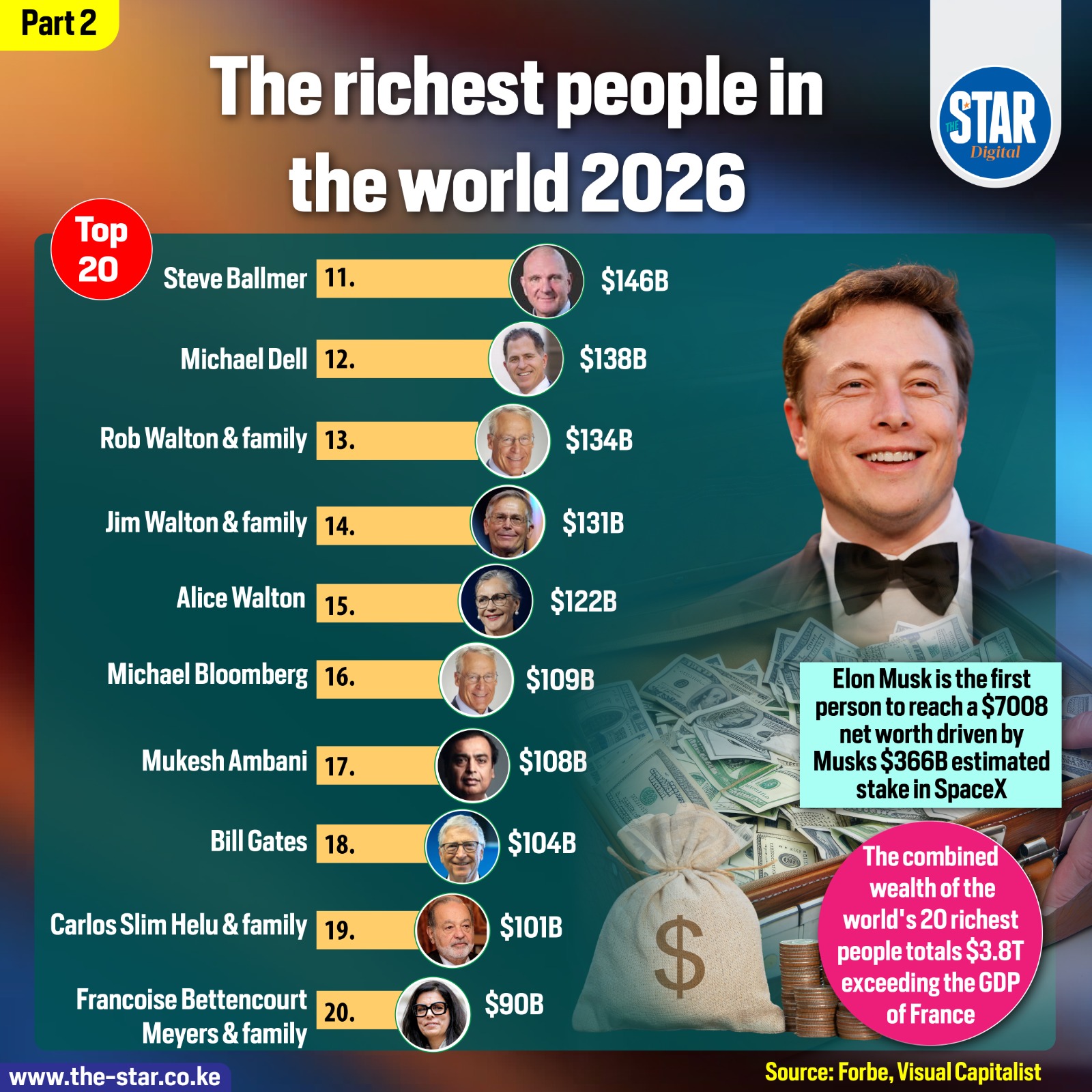
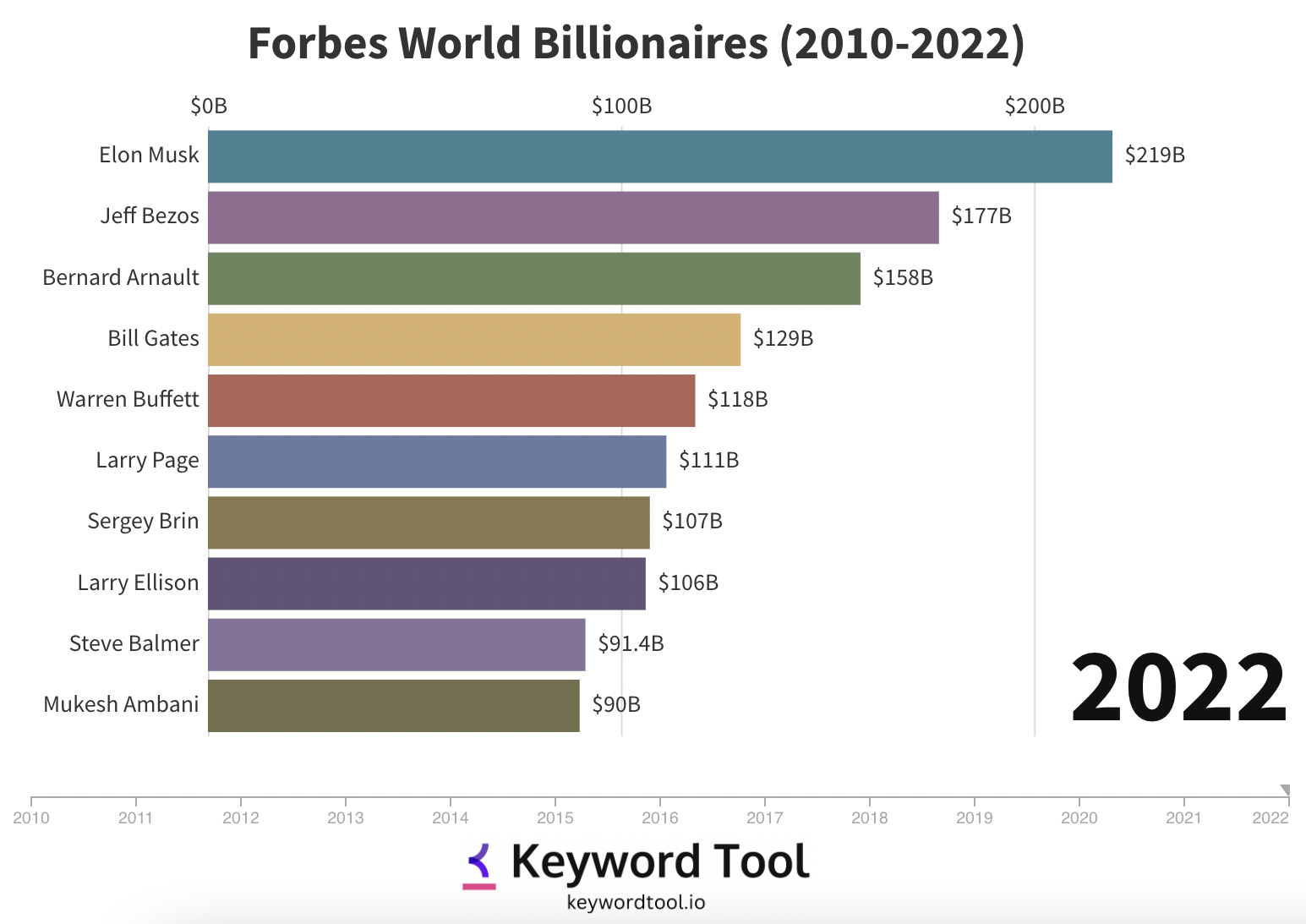
| Richest Person (2026) | $320 - $380 Billion | Top-tier tech and aerospace founders. |
| Global Physical Cash | $8.2 Trillion | Total M0 supply across all currencies. |
| Global Broad Money (M2) | $112 Trillion | Cash, checking, and savings accounts. |
| Total Global Net Worth | $550 Trillion | Real estate, equity, and all financial assets. |
| Global Debt | $315 Trillion | Combined sovereign, corporate, and household debt. |
The Distribution of Global Net Worth
One of the central themes of the film All the Money in the World is the extreme concentration of wealth and the psychological impact it has on those who possess it. This theme remains relevant in 2026, as the distribution of the $550 trillion global net worth is heavily skewed.
The Top 1% and the "Getty Effect"
The top 1% of the world's population currently holds nearly 45% of all global wealth. This concentration is a modern evolution of the wealth dominance seen in the era of the "Robber Barons" and J. Paul Getty. In 2026, the rise of "super-platforms" in the technology sector has created a new class of wealth that rivals the sovereign wealth funds of entire nations.
Real Estate: The Largest Asset Class
When calculating total global net worth, real estate remains the most significant component. Residential real estate accounts for more than half of all global assets. While high-profile billionaires often derive their net worth from stock equity, the "average" person's contribution to "all the money in the world" is typically tied to the value of their home.
The Role of Digital Assets and Cryptocurrencies
A significant change in the calculation of "all the money in the world" between Getty’s time and 2026 is the emergence of digital assets. In the 1970s, wealth was tangible—oil, gold, and land. Today, a non-negligible portion of global net worth exists in decentralized protocols.
Cryptocurrencies in the Global Ledger
By 2026, cryptocurrencies like Bitcoin and Ethereum have been integrated into institutional portfolios. While volatile, the total market capitalization of all digital assets frequently fluctuates between $3 trillion and $5 trillion. While this is a fraction of the $550 trillion global net worth, it represents a fundamental shift in how wealth is stored and transferred, moving away from the centralized banking systems that Getty mastered.
Central Bank Digital Currencies (CBDCs)
Most major economies have now implemented or are testing CBDCs. These digital versions of fiat currency are included in M0 and M1 calculations, further blurring the line between physical "money" and digital "credit."
Psychological and Social Implications of Infinite Wealth
The title All the Money in the World was chosen to highlight J. Paul Getty’s obsession with accumulation. Despite his billions, he was famously frugal—installing a payphone for guests at his mansion and haggling over the ransom for his grandson's life.
The "Satiation Point" of Net Worth
Modern psychological studies cited by financial planners in 2026 suggest that there is a "satiation point" for net worth, beyond which additional wealth does not correlate with increased happiness. For Getty, wealth was a scorecard rather than a means to an end. This "Getty mindset" serves as a cautionary tale in wealth management circles regarding the difference between net worth and financial well-being.
Philanthropy and the Getty Legacy
Ultimately, much of Getty's net worth was transitioned into the Getty Trust. In 2026, the trust remains the world’s wealthiest art institution. This highlights a common trend among those who hold "all the money in the world": the eventual transition from private accumulation to public legacy, a path followed by modern figures like Bill Gates and Warren Buffett through the Giving Pledge.
Frequently Asked Questions
Was J. Paul Getty actually the richest man ever?
While Getty was the richest man of his era, he was not the richest person in history. If we adjust for the share of the total economy, figures like John D. Rockefeller and Andrew Carnegie held significantly larger portions of the U.S. GDP. In a global historical context, Mansa Musa of the Mali Empire is often cited as the wealthiest individual to ever live, with a fortune that was effectively "incalculable."
How much of "all the money in the world" is physical cash?
Only about 1.5% to 2% of the total global net worth exists as physical coins and banknotes. The vast majority of the world's $550 trillion net worth is represented by digital entries in bank databases, stock certificates, and property deeds.
Does global net worth include debt?
"Net worth" by definition subtracts liabilities from assets. However, when economists discuss "total global wealth," they are usually referring to the gross value of assets. If you were to factor in the $315 trillion in global debt, the "net" figure would be lower, but since one person's debt is often another person's asset (e.g., a bank's mortgage loan is an asset for the bank), the numbers do not cancel out in a simple 1:1 fashion.
How does the movie All the Money in the World compare to the true story?
The film is largely accurate regarding the 1973 kidnapping and Getty’s refusal to pay the $17 million ransom initially. However, it takes some dramatic liberties with the timeline and the specific actions of certain characters, such as the Getty Oil negotiator Fletcher Chase. Getty eventually paid approximately $2.2 million (the maximum amount that was tax-deductible) and loaned the rest to his son at 4% interest.
Where can I find the most recent global wealth data?
The most authoritative sources for global wealth statistics in 2026 are the annual reports from UBS (which acquired Credit Suisse), the World Bank, and the International Monetary Fund (IMF).
Final Considerations for Wealth Analysis
Whether you are researching the specific historical net worth of J. Paul Getty or the staggering $550 trillion that constitutes the modern global economy, the takeaway is the same: wealth is a measure of both tangible assets and intangible power.
For the individual investor or curious reader, the best next action is to focus on personal net worth growth through diversification. Understanding that most of the world's wealth is held in real estate and equities rather than cash can help in making informed decisions about asset allocation. While no one person will ever truly have "all the money in the world," understanding the mechanics of how that wealth is measured provides a clearer picture of our global economic landscape.