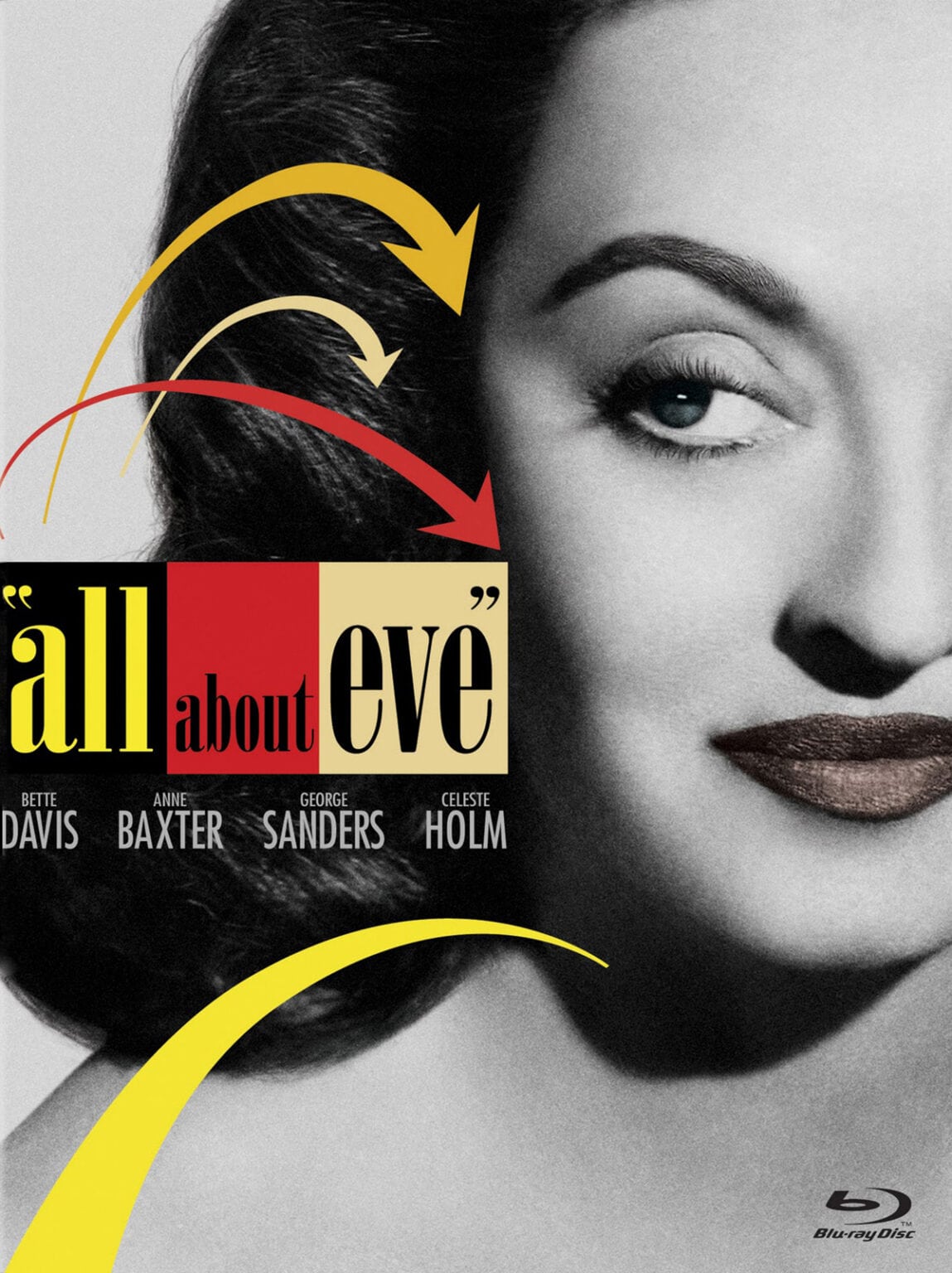
The legacy of Joseph L. Mankiewicz is defined by his unparalleled mastery of sophisticated dialogue, complex character psychology, and his historic achievement of winning back-to-back Academy Awards for both writing and directing in 1949 and 1950. As the creative force behind All About Eve, Mankiewicz cemented his status as Hollywood’s premier "literary" director, crafting a timeless exploration of ambition, aging, and the performative nature of human relationships that remains the gold standard for screenwriting excellence in 2026.
The Architect of the Literate Screenplay
Joseph L. Mankiewicz was not merely a director; he was a dramatist who happened to use a camera. In an era where Hollywood often prioritized spectacle or simple genre tropes, Mankiewicz introduced a level of linguistic density and intellectual rigor that was previously reserved for the theater. His legacy is rooted in the "Mankiewicz Touch"—a style characterized by razor-sharp wit, cynical observation, and a deep-seated distrust of surface appearances.
His career spanned the transition from the height of the studio system to its eventual fragmentation. Coming from a family of intellectuals—his brother Herman J. Mankiewicz co-wrote Citizen Kane—Joseph brought a playwright’s sensibility to the screen. By the time he directed All About Eve in 1950, he had already perfected a technique of using voiceover and non-linear structures to peel back the layers of his characters' motivations. This approach didn't just tell a story; it interrogated the very souls of the people on screen.
All About Eve: The Pinnacle of Cinematic Satire
While Mankiewicz’s filmography is vast, All About Eve stands as his undisputed masterpiece. The film, which received a record-breaking 14 Academy Award nominations (a feat only matched decades later by Titanic and La La Land), serves as a biting critique of the Broadway stage and the ephemeral nature of fame.
The Dynamics of Ambition
The film centers on the relationship between the aging Broadway star Margo Channing (Bette Davis) and her seemingly devoted fan, Eve Harrington (Anne Baxter). Mankiewicz uses this setup to explore the cyclical nature of success. Eve is not just a villain; she is a mirror reflecting the ruthlessness required to reach the top. The legacy of this film lies in its refusal to offer simple moralities. Every character, from the acerbic critic Addison DeWitt to the cynical producer Max Fabian, operates within a system where loyalty is a currency and talent is often secondary to perception.
The Power of the Spoken Word
In 2026, film students still analyze the "party scene" in All About Eve as a masterclass in ensemble blocking and rhythmic dialogue. Mankiewicz understood that words could be more violent than physical actions. When Margo Channing famously warns, "Fasten your seatbelts, it's going to be a bumpy night," it isn't just a witty line; it is a declaration of war against her own insecurities and the rising tide of a new generation. Mankiewicz’s ability to write dialogue that felt both heightened and profoundly true is why the film remains infinitely quotable and culturally relevant.
The Historic Back-to-Back Oscar Wins
To understand the weight of Joseph L. Mankiewicz’s legacy, one must look at the years 1949 and 1950. He achieved something no other filmmaker has done since: he won the Academy Awards for Best Director and Best Screenplay (Adapted or Story and Screenplay) in two consecutive years.
- 1949: A Letter to Three Wives – A sophisticated look at suburban marriage and insecurity, which utilized an invisible narrator to create tension and mystery.
- 1950: All About Eve – The definitive backstage drama that swept the major categories and solidified Mankiewicz as the king of the "A-list" prestige picture.
This feat underscored his versatility. Whether exploring the domestic anxieties of the middle class or the high-stakes ego battles of the New York elite, Mankiewicz maintained a consistent voice of intellectual skepticism. His success proved that audiences were hungry for adult, dialogue-driven narratives that didn't talk down to them.
Technical Innovations and Narrative Structure
Mankiewicz was a pioneer in the use of the subjective narrator. In many of his films, the story is filtered through the perspectives of multiple characters, often via voiceover. This was not a lazy expositional tool but a way to highlight the discrepancies between what people say, what they do, and what they think.
| Film Title | Year | Primary Legacy Contribution | Key Narrative Technique |
|---|---|---|---|
| A Letter to Three Wives | 1949 | Modernized the domestic drama | Disembodied, omniscient voiceover |
| All About Eve | 1950 | The definitive satire of celebrity | Multi-perspective narration |
| Julius Caesar | 1953 | Proved Shakespeare could be "cinematic" | Focus on political psychological realism |
| The Barefoot Contessa | 1954 | Critiqued the international jet set | Flashback-heavy structure |
| Suddenly, Last Summer | 1959 | Brought taboo subjects to the mainstream | Gothic atmosphere and symbolic dialogue |
| Sleuth | 1972 | Final masterpiece of theatrical cinema | Two-character chamber piece |
The "Cleopatra" Shadow and Late Career
No discussion of Mankiewicz’s legacy is complete without addressing the 1963 epic Cleopatra. The film was notorious for its troubled production, astronomical budget overruns, and the scandalous off-screen romance between Elizabeth Taylor and Richard Burton. Mankiewicz was brought in to save the project, and while the film nearly bankrupted 20th Century Fox, his fingerprints are still visible in the film’s more intimate, dialogue-heavy scenes.
Despite the exhaustion following Cleopatra, Mankiewicz’s later career saw a return to form with Sleuth (1972), starring Laurence Olivier and Michael Caine. This film served as a perfect bookend to his career, focusing once again on the games people play, the masks they wear, and the sheer power of language to manipulate reality. It reaffirmed that even as the "New Hollywood" of the 1970s was emerging, Mankiewicz’s classical focus on performance and text still held immense power.
Why Mankiewicz Matters in 2026
In an era of cinema often dominated by visual effects and franchise continuity, the work of Joseph L. Mankiewicz serves as a vital reminder of the importance of the screenplay. His legacy is seen today in the works of writers like Aaron Sorkin, Whit Stillman, and Noah Baumbach—filmmakers who prioritize the "music" of dialogue and the complexity of the human ego.
Mankiewicz’s films deal with universal truths: the fear of being replaced, the corruption of power, and the loneliness that often accompanies intelligence. Because he focused on these enduring psychological traits rather than fleeting trends, his films have not aged in the way many of his contemporaries' works have. All About Eve is as sharp and biting today as it was seventy-six years ago.
Frequently Asked Questions
What made Joseph L. Mankiewicz different from other directors of his time?
Unlike many of his contemporaries who focused on visual style or genre conventions, Mankiewicz was primarily a writer-director who prioritized the "literary" quality of his scripts. He was known for his "theatrical" approach, which involved long takes and dense, intellectual dialogue that explored the psychological depths of his characters.
How did All About Eve impact the career of Bette Davis?
All About Eve provided Bette Davis with the most iconic role of her later career. Before the film, her career had been in a slump. Her performance as Margo Channing—a role she took over from Claudette Colbert—revitalized her status as a top-tier dramatic actress and created a template for the "aging diva" character that would be emulated for decades.
Why is the 1949-1950 Oscar feat so significant?
Mankiewicz is the only person in Academy history to win Best Director and Best Screenplay in two consecutive years. This achievement is significant because it highlights his total control over both the narrative construction and the visual execution of his films, a level of consistent excellence that remains unmatched in the industry.
Is All About Eve based on a true story?
The film was based on a short story titled "The Wisdom of Eve" by Mary Orr, which was published in Cosmopolitan magazine in 1946. Orr based the story on a real-life incident involving the actress Elisabeth Bergner. Mankiewicz expanded the story significantly, adding the character of Addison DeWitt and deepening the satirical elements of the Broadway setting.
How did Mankiewicz influence modern screenwriting?
Mankiewicz influenced modern screenwriting by demonstrating that dialogue-heavy films could be commercially successful and critically acclaimed. His use of sophisticated vocabulary, irony, and complex narrative structures like non-linear timelines and multiple narrators paved the way for modern "talky" dramas and intellectual thrillers.
Practical Recommendation for Viewers
To truly appreciate the legacy of Joseph L. Mankiewicz, one should view his major works in chronological order, starting with A Letter to Three Wives followed by All About Eve. Pay close attention to the way he uses voiceover not just to relay information, but to reveal the character's internal biases and flaws. After the "Double Crown" winners, Sleuth (1972) provides an excellent example of how his style evolved while remaining true to his theatrical roots. For those interested in the technical aspects of screenwriting, studying the script of All About Eve is an essential exercise in learning how to balance exposition with character development through dialogue.