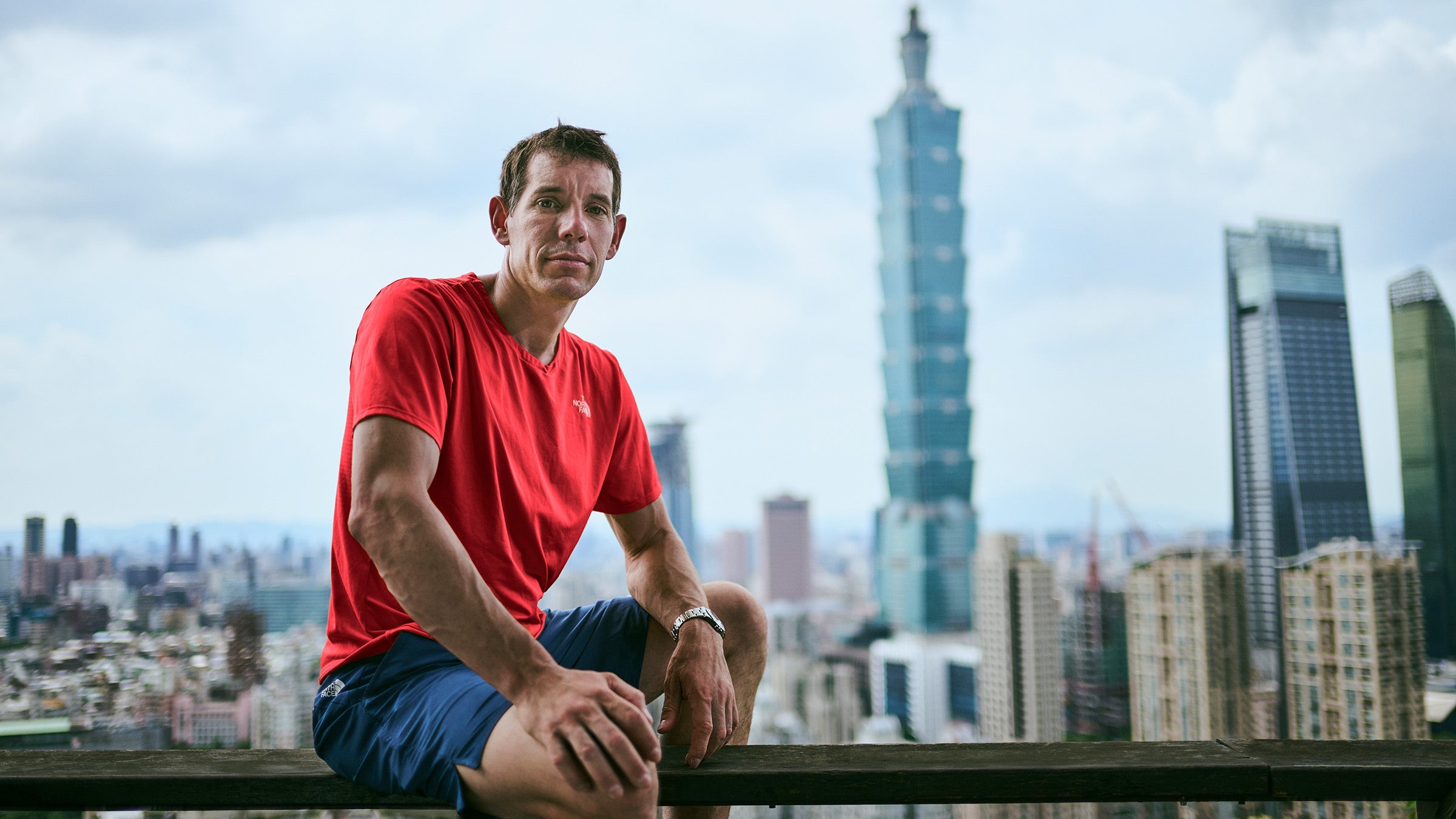
Alex Honnold did not free solo the exterior of Taipei 101. During his May 2024 visit to Taiwan for The North Face "Climb Your Impossible" campaign, he explored the building’s engineering and visited its observatory. His actual climbing focused on the natural sea cliffs of Longdong, Taiwan’s premier rock-climbing destination.
The intersection of Alex Honnold’s name and Taipei 101 often stems from his high-profile visit to the island in 2024. While Honnold is the world’s most famous free soloist—renowned for his rope-less ascent of El Capitan—his activities in Taiwan were centered on community engagement and natural rock. Taipei 101, once the tallest building in the world, has only been officially climbed by "The French Spider-Man," Alain Robert, under very different circumstances in 2004.
As of 2026, Honnold remains focused primarily on natural formations and environmental advocacy through the Honnold Foundation. This article provides a comprehensive look at what occurred during his Taiwan expedition, the technical reasons why urban free soloing differs from his specialty, and the history of those who have actually scaled the Taipei 101 superstructure.
The 2024 "Climb Your Impossible" Campaign in Taiwan
In May 2024, Alex Honnold traveled to Taiwan as the face of a major promotional and community-building effort. This visit was not a secret mission to scale skyscrapers but a celebrated tour designed to inspire the local climbing community. The campaign, titled "Climb Your Impossible," was organized by The North Face to coincide with the growing popularity of climbing in East Asia.
Honnold’s itinerary was packed with public appearances, including a keynote sharing session at the CPC Corporation building in Taipei. During this event, he spoke about the mental discipline required for free soloing and the importance of environmental conservation. Thousands of local enthusiasts attended, marking one of the largest climbing-centric events in Taiwan's history.
The confusion regarding Taipei 101 likely arose from Honnold’s visit to the tower’s observatory and the subsequent social media coverage. Footage showed Honnold examining the tower's famous Tuned Mass Damper (TMD), a 660-metric-ton steel ball that helps the building withstand typhoons and earthquakes. As a fan of high-level engineering, Honnold’s "climb" was effectively a tour of the internal mechanics and the 89th-floor observation deck, rather than an external ascent.
Technical Comparison: Urban Skyscrapers vs. Natural Granite
To understand why a free solo of Taipei 101 is unlikely for an athlete like Honnold, one must look at the technical differences between urban climbing (buildering) and traditional rock climbing. Honnold’s expertise lies in granite and sandstone, where he utilizes natural cracks, crimps, and friction.
Taipei 101 presents an entirely different set of challenges. The building is characterized by its "pagoda" style architecture, consisting of eight segments of eight floors each. The exterior is primarily glass and steel.
Surface Texture and Grip
On a natural face like El Capitan, the texture of the rock provides predictable (though often marginal) friction for climbing shoes. Skyscraper glass, however, offers zero friction. Urban climbers who scale such buildings usually rely on the structural "gaps" between panels or the external window-washing tracks. These features are repetitive and require specific finger-strength techniques that differ from the varied movements of natural rock.
Legal and Ethical Constraints
Honnold has historically avoided illegal "buildering" stunts. Most of his high-profile climbs, even the free solos, occur in natural parks where the act itself is legal, even if the "no-rope" aspect is controversial. Climbing Taipei 101 without permission is a serious criminal offense in Taiwan, involving heavy fines and potential deportation. Honnold’s career has transitioned into a professional, sponsored phase where such risks—beyond the physical ones—do not align with his brand or his work with the Honnold Foundation.
Where Honnold Actually Climbed: Longdong (Dragon’s Cave)
While he did not scale Taipei 101, Honnold did test himself on Taiwan’s actual rock. He spent time at Longdong, located on the northeast coast of the island. Longdong is widely considered the best rock-climbing site in Taiwan and one of the premier coastal climbing locations in Asia.
Geology of Longdong
Longdong features stunning cliffs of hard sandstone, stretching for about two kilometers along the Pacific Ocean. The rock is incredibly durable, providing excellent "trad" (traditional) climbing opportunities. For an athlete like Honnold, the attraction of Longdong lies in its complexity and the sheer beauty of the coastal environment.
Technical Climbing at the Site
During his visit, Honnold engaged with the local climbing community at several sectors of Longdong, including:
- The First Dragon: Known for its accessible sport routes and high-quality rock.
- The Back Door: A sector offering technical challenges and vertical faces.
- Grand Auditorium: A majestic amphitheater of rock that hosts some of the area's most iconic routes.
Honnold’s presence at Longdong was a significant moment for Taiwanese climbing. He was observed climbing both with ropes and engaging in "deep water soloing" (climbing over water without ropes) in certain sections. This activity is much more aligned with his professional history than urban skyscraper climbing.
Historical Context: Alain Robert’s 2004 Ascent
The only major external ascent of Taipei 101 was completed by Alain Robert on December 25, 2004. This event is often confused with Honnold’s 2024 visit by those unfamiliar with the history of the sport.
Unlike a typical "rogue" Alain Robert climb, the 2004 Taipei 101 ascent was a legally sanctioned event. It was organized to celebrate the building’s completion and official opening. Robert, known as the "French Spider-Man," climbed the building in approximately four hours.
| Feature | Alain Robert (2004) | Alex Honnold (2024 Visit) |
|---|---|---|
| Permission | Sanctioned by Building Management | N/A (Observatory Visit) |
| Equipment | Minimal safety gear (due to rain) | N/A |
| Climb Type | Urban Buildering (External) | Natural Rock (at Longdong) |
| Duration | 4 Hours | 3-Day Promotional Tour |
| Purpose | Building Opening Celebration | Community Outreach/Promotion |
Robert’s climb was hampered by heavy rain and strong winds, which are common in Taipei. Because it was a sanctioned event, he used some safety equipment during certain sections to satisfy the building's insurance requirements, though the majority of the movement was characteristic of his free-solo style. This remains the definitive "climb" of the tower.
The Engineering of Taipei 101: Why It Intrigues Climbers
Even if they don't climb the outside, professional climbers are often fascinated by Taipei 101's structural integrity. During his visit, Honnold spent considerable time learning about the Tuned Mass Damper.
The TMD is a technical marvel:
- Mass: 660 metric tons.
- Configuration: 41 layers of 12.5cm thick steel plates.
- Function: It swings to offset the movement of the building caused by high winds.
For a climber who spends his life calculating risk and stability, the TMD represents the ultimate "safety gear" for a skyscraper. Honnold's interest in the tower was technical and architectural. The building’s ability to survive the frequent seismic activity of Taiwan makes it a point of interest for anyone interested in the limits of human construction.
Urban Climbing vs. The Honnold Philosophy
In several interviews, Honnold has expressed that urban climbing does not offer the same "soulful" experience as natural rock. For him, the beauty of climbing El Capitan or the Eiger is the connection to the natural world. Urban environments are repetitive and often lack the aesthetic variety of geological formations.
Furthermore, the "climb your impossible" slogan used during his Taiwan visit was about personal growth rather than public stunts. Honnold’s focus in 2026 continues to be on pushing the limits of endurance and technical difficulty in remote locations—such as his recent expeditions to Greenland and the Amazon—rather than the concrete jungles of major metropolises.
FAQs About Alex Honnold and Taipei 101
Did Alex Honnold get arrested in Taiwan?
No. Alex Honnold’s visit to Taiwan was entirely legal and sponsored by major corporate partners. He participated in public events with the cooperation of local authorities and did not attempt any unauthorized climbs.
Has anyone ever died climbing Taipei 101?
There are no recorded deaths from people attempting to climb the exterior of Taipei 101. The building is strictly monitored, and the 2004 ascent by Alain Robert remains the only high-profile, successful external climb.
What is the most difficult climb Honnold did in Taiwan?
While Honnold did not report official "grades" for his climbs at Longdong, he was seen on several high-difficulty traditional and sport routes. Local climbers noted his efficiency on 5.12 and 5.13 grade routes, which he used primarily for warming up or community demonstrations.
Is Taipei 101 still the tallest building in the world?
No. As of 2026, Taipei 101 has been surpassed by several buildings, including the Burj Khalifa in Dubai and the Merdeka 118 in Malaysia. However, it remains the tallest "green" building in the world and a significant engineering icon in Asia.
Can tourists climb the stairs of Taipei 101?
Yes. There is an annual event called the "Taipei 101 Run Up" where participants race up the 2,046 steps to the 91st floor. This is a sanctioned athletic event and is the only way for the general public to "climb" the tower through physical exertion.
Practical Recommendations for Climbers Visiting Taiwan
If you are inspired by Alex Honnold’s visit to Taiwan, the best course of action is to explore the island’s natural beauty rather than its skyscrapers.
- Visit Longdong: If you are an experienced climber, hire a local guide to explore the sandstone cliffs. The "climbing season" is generally from autumn to spring to avoid the intense summer heat and typhoons.
- Check Local Regulations: Always verify the current status of climbing sectors. Some areas of Longdong can be closed due to nesting birds or rockfall risks.
- Engage with the Community: Visit local climbing gyms in Taipei, such as Red Rock or Pogo, to meet the local community that Honnold interacted with during his visit.
- Explore Taipei 101 Legally: Visit the observatory to see the Tuned Mass Damper for yourself. It provides a unique perspective on the engineering challenges of high-altitude structures.
Alex Honnold’s legacy in Taiwan is one of inspiration and technical appreciation, not of urban stunts. By distinguishing between the rumors of a Taipei 101 solo and the reality of his Longdong expedition, fans can better appreciate the discipline and environmental focus that defines Honnold’s career in 2026.