While there is no single "average" Alaska personal injury settlement, most cases fall between $15,000 and $75,000 for moderate injuries. However, catastrophic claims involving permanent disability often reach the $500,000 to $1,000,000+ range, significantly influenced by Alaska’s strict statutory caps on non-economic damages and its pure comparative negligence rules.
Understanding the Landscape of Alaska Personal Injury Settlements
When searching for an average settlement range, it is essential to understand that the "average" is often a mathematical abstraction that does not reflect the reality of individual cases. In Alaska, a settlement is a private contract between an injured party (the plaintiff) and the responsible party or their insurance provider. Because many of these agreements include confidentiality clauses, public data is skewed toward high-value jury verdicts rather than the thousands of smaller settlements reached in mediation.
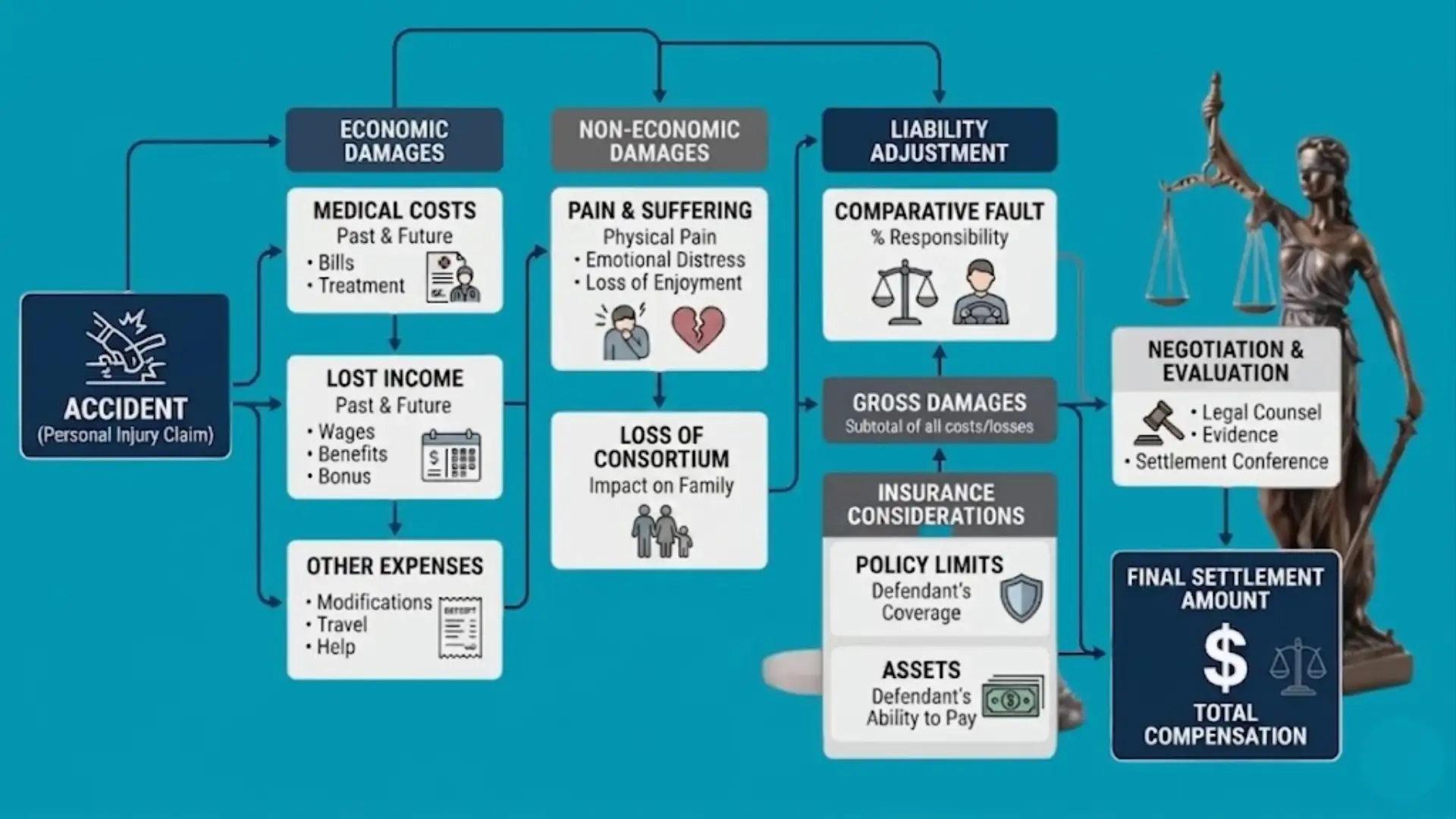
The value of a personal injury claim in Alaska is primarily driven by "damages"—the legal term for the money required to make a person "whole" again. In 2026, these damages are categorized into two main groups: economic and non-economic. Economic damages are quantifiable, such as medical bills and lost wages. Non-economic damages are subjective, covering pain and suffering, loss of enjoyment of life, and emotional distress. Because Alaska has specific laws limiting the latter, the "range" for a settlement depends heavily on which category the bulk of your losses fall into.
Alaska’s Statutory Caps on Non-Economic Damages
One of the most critical factors in determining a settlement range in Alaska is the state’s statutory cap on non-economic damages. Under Alaska Statute 09.17.010, there are firm limits on how much a plaintiff can recover for pain and suffering, regardless of how much a jury might want to award.
As of 2026, the general limit for non-economic damages is the greater of $400,000 or the injured person's life expectancy multiplied by $8,000. However, if the injury results in "severe permanent physical impairment" or "severe disfigurement," the cap increases significantly. In these catastrophic cases, the limit is the greater of $1,000,000 or the person's life expectancy multiplied by $25,000.
These caps mean that even if a person suffers immensely, their settlement for "pain and suffering" cannot legally exceed these amounts. Consequently, an Alaska personal injury attorney will focus heavily on proving economic damages—such as the cost of lifetime medical care or the total value of lost future earnings—because these are not capped by state law.
The Impact of Pure Comparative Negligence
Alaska follows a "pure comparative negligence" system under Alaska Statute 09.17.060. This rule directly impacts the settlement range by reducing your total compensation based on your percentage of fault.
For example, if you are involved in a car accident in Anchorage and your total damages are calculated at $100,000, but a claims adjuster (or a jury) determines you were 30% at fault for speeding, your maximum settlement would be reduced to $70,000. Unlike "modified" comparative negligence states—where you get nothing if you are more than 50% at fault—Alaska allows you to recover even if you are 99% at fault, though you would only receive 1% of the total damages.
During settlement negotiations in 2026, insurance companies use this rule as leverage. An experienced attorney must meticulously gather evidence (dashcam footage, witness statements, and accident reconstruction) to minimize your percentage of fault and protect the settlement range.
Variables That Define the Settlement Range
To estimate where a specific case might fall, attorneys evaluate several key variables that serve as the foundation for the demand letter.
1. Severity and Permanency of Injuries
The most significant driver of value is the medical reality of the injury. "Soft tissue" injuries, such as whiplash or strains, typically settle in the lower range ($5,000 to $20,000) because they often resolve with physical therapy and do not result in long-term impairment. In contrast, traumatic brain injuries (TBI), spinal cord injuries, or complex bone fractures requiring surgery involve higher medical costs and greater lifestyle impacts, pushing settlements into the six-figure range.
2. Economic Losses: The "Special" Damages
In Alaska’s 2026 economic climate, medical costs and medevac services are particularly high due to the state's geography. If an accident occurs in a remote area and requires an air ambulance to Providence Alaska Medical Center or Alaska Regional Hospital, that single flight can add $50,000 to $100,000 to the economic damages. High medical bills, while daunting, actually increase the settlement value because they represent a concrete, uncapped loss that an insurance company is obligated to cover if liability is clear.
3. Insurance Policy Limits
Regardless of the "worth" of a case, the settlement is often limited by the available insurance coverage. Alaska law requires drivers to carry a minimum of $50,000 per person and $100,000 per accident in bodily injury liability coverage. If you are hit by a driver with minimum limits and your injuries are worth $200,000, you may be capped at $50,000 unless the defendant has personal assets or you have Underinsured Motorist (UIM) coverage on your own policy.
4. Venue and Jury Demographics
Where the lawsuit would be filed matters. Anchorage, Fairbanks, and Juneau have different "jury pools" with varying tendencies regarding damage awards. Insurance adjusters are keenly aware of these trends and will adjust their settlement offers based on the perceived risk of going to trial in a specific Alaska judicial district.
Average Settlement Ranges by Case Type (2026 Estimates)
The following table provides estimated ranges based on historical data and current 2026 legal trends in Alaska. These figures are illustrative and do not guarantee a specific outcome.
| Injury Category | Typical Settlement Range | Primary Value Drivers |
|---|---|---|
| Minor / Soft Tissue | $5,000 – $25,000 | Duration of treatment; chiropractic vs. PT; lost time at work. |
| Moderate (Fractures/Surgery) | $35,000 – $150,000 | Surgical costs; hardware installation; recovery time; scarring. |
| Severe (TBI / Spinal / Amputation) | $250,000 – $1,000,000+ | Permanent disability; future care needs; Alaska statutory caps. |
| Wrongful Death | $500,000 – $2,000,000+ | Number of dependents; decedent's income; funeral costs. |
| Commercial Trucking Accidents | $100,000 – $5,000,000+ | Higher federal insurance mandates; corporate negligence. |
The Role of an Alaska Personal Injury Attorney in Maximizing Value
Navigating the settlement process without legal counsel often results in a "nuisance value" offer—a small sum intended to make the claimant go away. An attorney adds value through several specific mechanisms:
- Establishing Liability: In complex cases (like premises liability or multi-vehicle pileups), proving the other party was 100% at fault is essential for hitting the top of the settlement range.
- Calculating Future Damages: For chronic injuries, an attorney will hire vocational experts and life-care planners to project what the injury will cost in 2030, 2040, and beyond. This "future value" is often where the largest part of a settlement originates.
- Navigating Liens: Most settlements are not "walk-away" money. Health insurance companies (like Blue Cross Blue Shield of Alaska or Medicaid) often place liens on the settlement to recoup what they paid for your care. An attorney negotiates these liens down, ensuring more of the settlement stays in the client’s pocket.
- The Threat of Litigation: Insurance companies settle because they want to avoid the expense and unpredictability of a trial. By preparing every case as if it is going to trial, an attorney forces the insurer to offer a more realistic range.
Alaska’s Statute of Limitations: The 2026 Deadline
It is vital to act quickly to preserve the value of a claim. Under Alaska Statute 09.10.070, the statute of limitations for personal injury claims is generally two years from the date of the accident. If you do not settle your claim or file a formal lawsuit within this two-year window, you lose the legal right to recover any compensation.
While two years may seem like a long time, the process of gathering medical records, negotiating with adjusters, and conducting discovery can take 12 to 18 months. Waiting until the last minute can significantly weaken your bargaining position and lower your settlement range.
Frequently Asked Questions
How much do Alaska personal injury lawyers charge?
Most personal injury attorneys in Alaska work on a contingency fee basis. This means they receive a percentage of the final settlement (typically 33.3% to 40%) rather than an hourly rate. If the attorney does not win your case or secure a settlement, you generally owe no attorney fees. This structure allows injured parties to seek high-quality legal representation regardless of their current financial situation.
Will I have to pay taxes on my settlement?
Under federal law (IRS Rule 1.104-1), settlements for physical injuries or physical sickness are generally not considered taxable income. However, if a portion of the settlement is specifically designated for "punitive damages" or "interest," that portion may be taxable. It is advisable to consult with a tax professional regarding the specific breakdown of a 2026 settlement.
How long does it take to get a settlement check in Alaska?
A typical case can take anywhere from six months to two years to settle. The timeline depends heavily on your "Maximum Medical Improvement" (MMI). An attorney will usually not settle a case until your doctors have determined that your condition has stabilized, as settling too early might mean missing out on compensation for complications that arise later.
Can I still get a settlement if I was partially at fault?
Yes. Because Alaska is a pure comparative negligence state, you can recover damages even if you were primarily responsible for the accident. Your total settlement will simply be reduced by your percentage of fault. For example, if you were 60% at fault for a slip and fall, you can still recover 40% of your total damages.
Does Alaska have a cap on total medical expenses?
No. There is no cap on economic damages, which include medical expenses, rehabilitation costs, and lost wages. Alaska's caps only apply to non-economic damages like pain and suffering. If your medical bills are $2 million, and you can prove they were necessary and caused by the defendant's negligence, there is no statutory limit on recovering that full amount.
Moving Forward with Your Claim
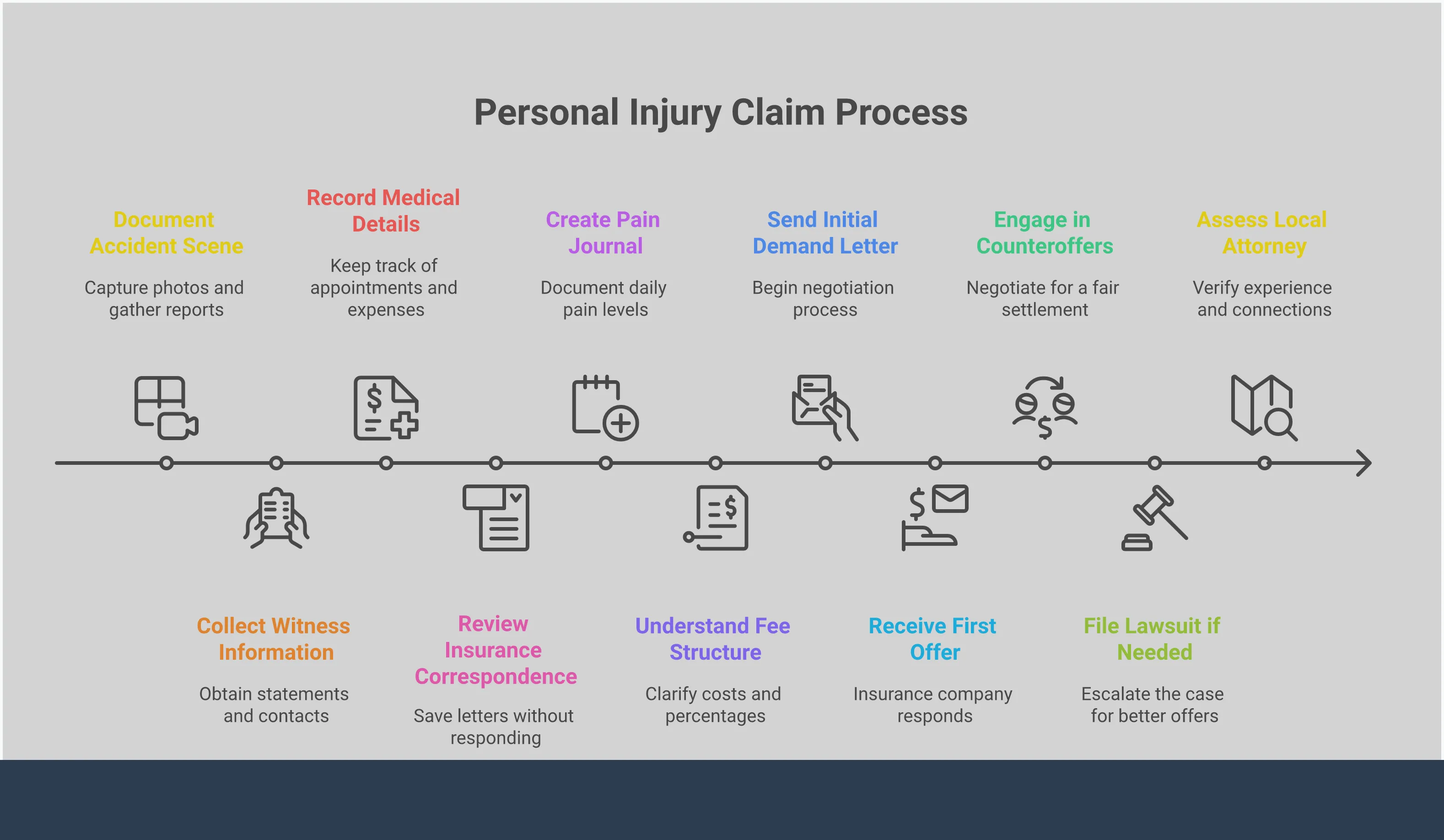
If you are seeking a settlement in Alaska, the first step is to document everything. Maintain a file of every medical bill, pharmacy receipt, and communication from an insurance company. Avoid giving recorded statements to the other party's insurance adjuster before speaking with a lawyer, as these statements are often used to assign a higher percentage of comparative negligence to you.
The most effective way to determine your specific settlement range is to consult with an Alaska-licensed personal injury attorney who can evaluate the facts of your case against the current 2026 legal landscape. A professional evaluation will consider your specific medical prognosis, the available insurance limits, and the most recent judicial rulings in the state.