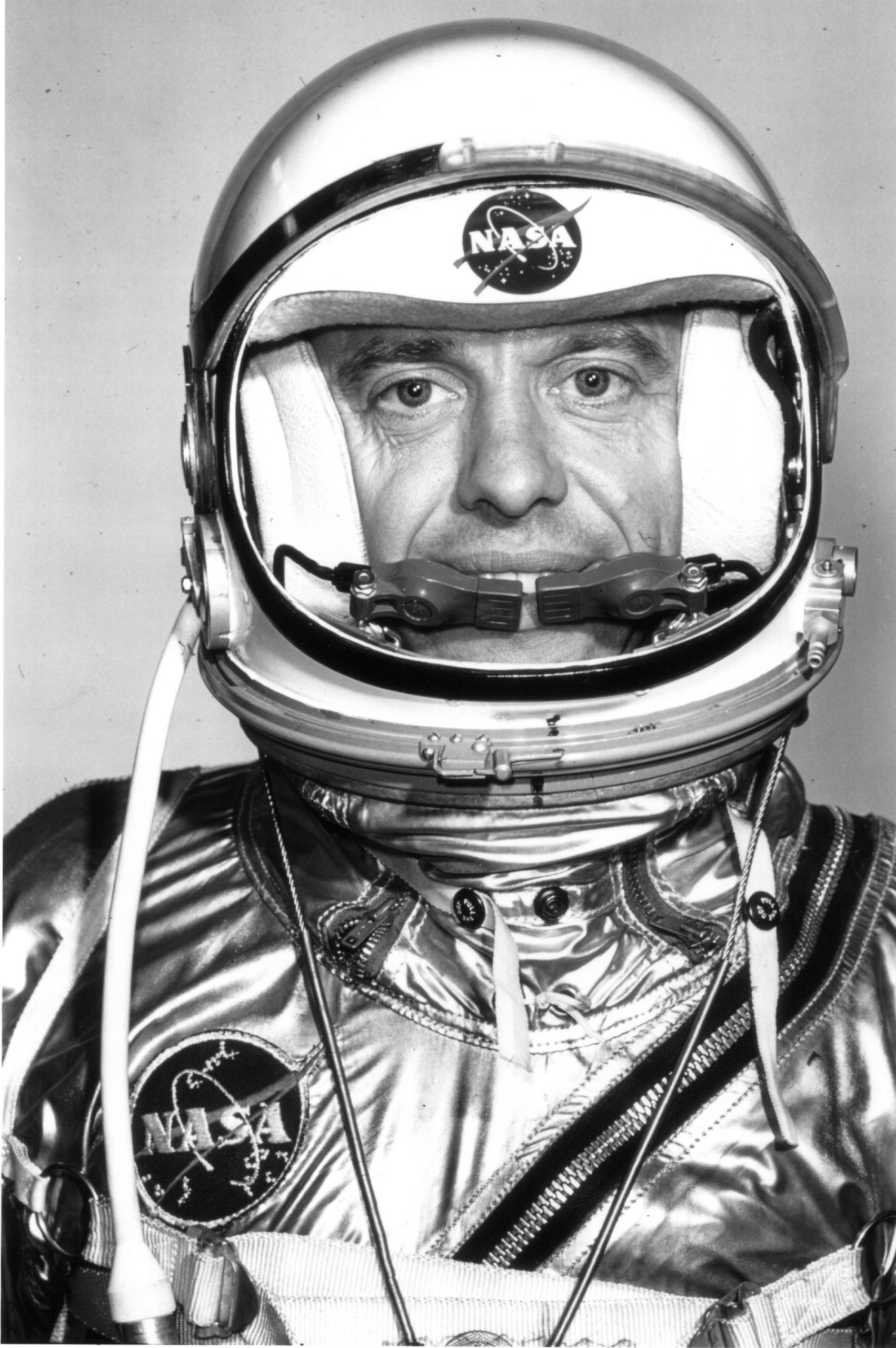
By 2026, Alan Shepard remains an anomaly in the history of space exploration—not just for his suborbital flight or his moonwalk, but for his financial acumen. At the time of his passing in 1998, Alan Shepard's net worth was estimated at approximately $5 million, which, when adjusted for 2026 inflation and purchasing power, represents a legacy of nearly $10.5 million. Unlike many of his peers who relied on government pensions, Shepard leveraged his unique position and sharp business instincts to become the first "Astronaut Millionaire."
The Financial Reality of the Mercury Seven
To understand Alan Shepard's net worth in context, one must first dismantle the myth that early astronauts were highly compensated by the government. When Shepard was selected for the Mercury program in 1959, he was a Lieutenant Commander in the United States Navy. His compensation was dictated strictly by his military rank and years of service, not the extraordinary risk of his mission.
In the early 1960s, a NASA astronaut’s salary was typically tied to the General Schedule (GS) pay scale, often ranging between GS-12 and GS-15 depending on their military seniority. For Shepard, this meant a base salary that hovered around $10,000 to $14,000 per year. Even accounting for "flight pay" (an extra stipend for active pilots), his government income provided a comfortable middle-class life, but it was far from the wealth associated with global icons.
The "context" of his wealth begins with a realization: Shepard did not become rich from NASA. He became rich because he understood the value of his own brand and the burgeoning opportunities in the Houston, Texas, business landscape during the height of the Space Race.
The Life Magazine Deal: The Foundation of Astronaut Wealth
The first significant injection of private capital into the lives of the Mercury Seven was the historic 1959 contract with Life magazine. Negotiated by lawyer Leo D’Orsey, the deal granted Life exclusive rights to the astronauts' personal stories, "first-person" accounts, and access to their families.
The contract was worth $500,000, to be split equally among the seven astronauts over several years. In addition to the cash, the deal provided substantial life insurance policies—a crucial benefit, as private insurers at the time refused to cover men sitting on top of experimental rockets.
For Shepard, his portion of the Life deal (roughly $71,000 plus insurance) served as his "seed capital." While some of his colleagues used this money for immediate family needs or lifestyle upgrades, Shepard viewed it as investment capital. This distinction in mindset is what eventually separated his net worth from that of contemporaries like John Glenn or Gus Grissom.
The "Astronaut Businessman": Banking and Real Estate
During the mid-1960s, Shepard was grounded due to Ménière's disease, an inner-ear disorder that caused severe vertigo. While this was a professional heartbreak that kept him from the Gemini program, it was the catalyst for his financial empire. During his years as Chief of the Astronaut Office (a management role), Shepard had the time and the proximity to Houston’s elite to focus on private enterprise.
The Baytown State Bank Venture
Shepard’s most significant move was into the banking sector. In 1963, he and two partners purchased a majority stake in the Baytown State Bank in Texas. Shepard wasn't just a silent partner; he was an active board member who understood credit, risk, and the local economy.
Houston was booming. The arrival of the Manned Spacecraft Center (now Johnson Space Center) drove property values and demand for commercial loans. By positioning himself as a banker, Shepard was able to capitalize on the very growth his presence in the city helped create. When he eventually sold his interest in the bank years later, the return on investment was several times his initial stake.
Real Estate and Cattle
Beyond banking, Shepard diversified into Texas real estate and cattle ranching. He understood that land in the path of Houston’s expansion was a "buy and hold" asset. By the time he was cleared to return to flight status for Apollo 14 in the early 1970s, he was already financially independent.
His reputation in the astronaut office reflected this. He was often described as "the Icy Commander," a man who was all business both in the cockpit and in the boardroom. This duality allowed him to maintain his military career while building a portfolio that included:
- Majority shares in multiple small Texas banks.
- Commercial real estate holdings in the Houston metro area.
- Cattle ranching operations that provided tax advantages and long-term land appreciation.
Apollo 14 and the Peak of His Public Influence
By the time Shepard commanded Apollo 14 in 1971, he was the wealthiest man in the astronaut corps. His return to flight was not motivated by money—he already had more than he needed—but by a drive for professional redemption.
However, the Apollo 14 mission served to cement his "Blue Chip" status. His famous "golf shot" on the lunar surface (hitting two golf balls with a makeshift six-iron) was a masterclass in personal branding. It showed a man who was confident, human, and slightly irreverent. Following his retirement from NASA and the Navy as a Rear Admiral in 1974, this brand allowed him to command high fees for board memberships and consulting roles.
Comparing Astronaut Income Streams (1960s vs. 2026 Perspective)
To accurately place Shepard’s wealth in context, we must compare the different avenues of income available to astronauts of the era.
| Income Source | Description | Estimated Value (1960s/70s) | 2026 Inflation Adjusted |
|---|---|---|---|
| NASA/Navy Salary | Base pay for a GS-15/Rear Admiral | $15,000 - $25,000/yr | $145,000 - $240,000/yr |
| Life Magazine Deal | Exclusive story rights (total share) | $71,400 | ~$750,000 |
| Banking Investments | Dividends and sale of Baytown State Bank | ~$2,000,000+ | ~$12,000,000+ |
| Corporate Boards | Post-retirement directorships | $50,000 - $100,000/yr | $300,000 - $600,000/yr |
| Real Estate/Cattle | Land appreciation in Texas | Variable | High-millions |
The Kistler Aerospace and Private Sector Years
After leaving government service, Shepard did not retreat into a quiet retirement. He became the chairman of the Marathon Construction Corp. and founded his own umbrella company, Seven Fourteen Enterprises (named after his Freedom 7 and Apollo 14 missions).
One of his more ambitious late-career moves was his involvement with Kistler Aerospace. Shepard recognized early on that the future of space exploration would involve private-sector logistics. While Kistler eventually faced financial hurdles and restructuring, Shepard’s involvement signaled his transition from a government pilot to a venture capitalist in the "New Space" economy—a precursor to the era of SpaceX and Blue Origin.
Philanthropy and the Astronaut Scholarship Foundation
A discussion of Alan Shepard’s net worth is incomplete without mentioning how he distributed it. He was a founding member of the Mercury Seven Foundation, now known as the Astronaut Scholarship Foundation (ASF).
Shepard was adamant that the wealth and influence gained from the space program should be used to foster the next generation of American scientists and engineers. Much of his later-life "work" involved fundraising and donating his own capital to ensure that university students in STEM fields had the financial support they needed. This philanthropic legacy ensures that his net worth continues to impact the industry decades after his death.
Common Misconceptions About Shepard’s Wealth
Many people assume that Shepard’s wealth came from "selling moon rocks" or secret government payouts. These are categorically false.
- Moon Rocks: Every pebble brought back from the moon is federal property. No astronaut, Shepard included, ever profited from the sale of lunar samples.
- Endorsements: While contemporary athletes make millions from shoe deals, NASA had (and has) strict rules about astronauts endorsing products while on active duty. Shepard’s wealth was built on traditional business investments—banking, land, and construction—rather than "influencer" style endorsements.
- The "Rich Kid" Narrative: Shepard came from a solid middle-class background in New Hampshire, but he was not an heir to a fortune. His wealth was self-generated through disciplined saving and aggressive, informed investing.
FAQs About Alan Shepard’s Net Worth
Was Alan Shepard the richest astronaut?
Yes, for several decades, Alan Shepard was widely considered the wealthiest member of the original NASA astronaut corps. While others became successful authors or public speakers, Shepard’s success in banking and real estate provided a much higher level of liquid wealth and asset value.
Did he get paid extra for walking on the moon?
No. NASA astronauts received their standard government salary regardless of whether they were training on the ground or walking on the lunar surface. There were no "mission bonuses" for Apollo flights. In fact, astronauts famously had to sign "insurance covers" (autographed envelopes) before missions so their families would have something of value to sell if the astronauts didn't return, because they couldn't afford standard high-risk life insurance.
How did Ménière's disease affect his finances?
Paradoxically, it likely increased his net worth. Being grounded for several years allowed Shepard to focus on his business ventures in Houston. Had he been constantly in training for Gemini and Apollo missions during the mid-60s, he would not have had the time to manage his banking interests or real estate acquisitions so closely.
What happened to his estate after 1998?
Alan Shepard passed away in July 1998, followed just five weeks later by his wife, Louise. Their estate was managed through trusts, with significant portions going to their three daughters and a substantial amount directed toward the Astronaut Scholarship Foundation. By 2026, the growth of those original charitable endowments has funded hundreds of scholarships.
Did he invest in the "New Space" industry?
Toward the end of his life, Shepard was an early advocate and investor in the commercialization of space. His leadership at Kistler Aerospace was a direct attempt to bring business efficiency to rocket launches, a vision that has since been realized by modern aerospace billionaires.
Practical Takeaway: The Shepard Model of Wealth Building
The context of Alan Shepard's net worth offers a masterclass in financial diversification. He followed a three-step process that remains relevant in 2026:
- Exploit the "Seed" Opportunity: He used the one-time windfall of the Life magazine contract as capital rather than income.
- Invest in What You Know and Where You Are: He leveraged his presence in the growing Houston economy to invest in local banking and land.
- Maintain Professional Excellence: He never let his business interests compromise his military or NASA duties, which in turn protected and enhanced his "brand" as a reliable and high-status individual.
For those looking at historical figures for financial inspiration, Shepard proves that even those in high-risk, government-salaried positions can achieve significant wealth through disciplined, outside-the-box investment strategies.