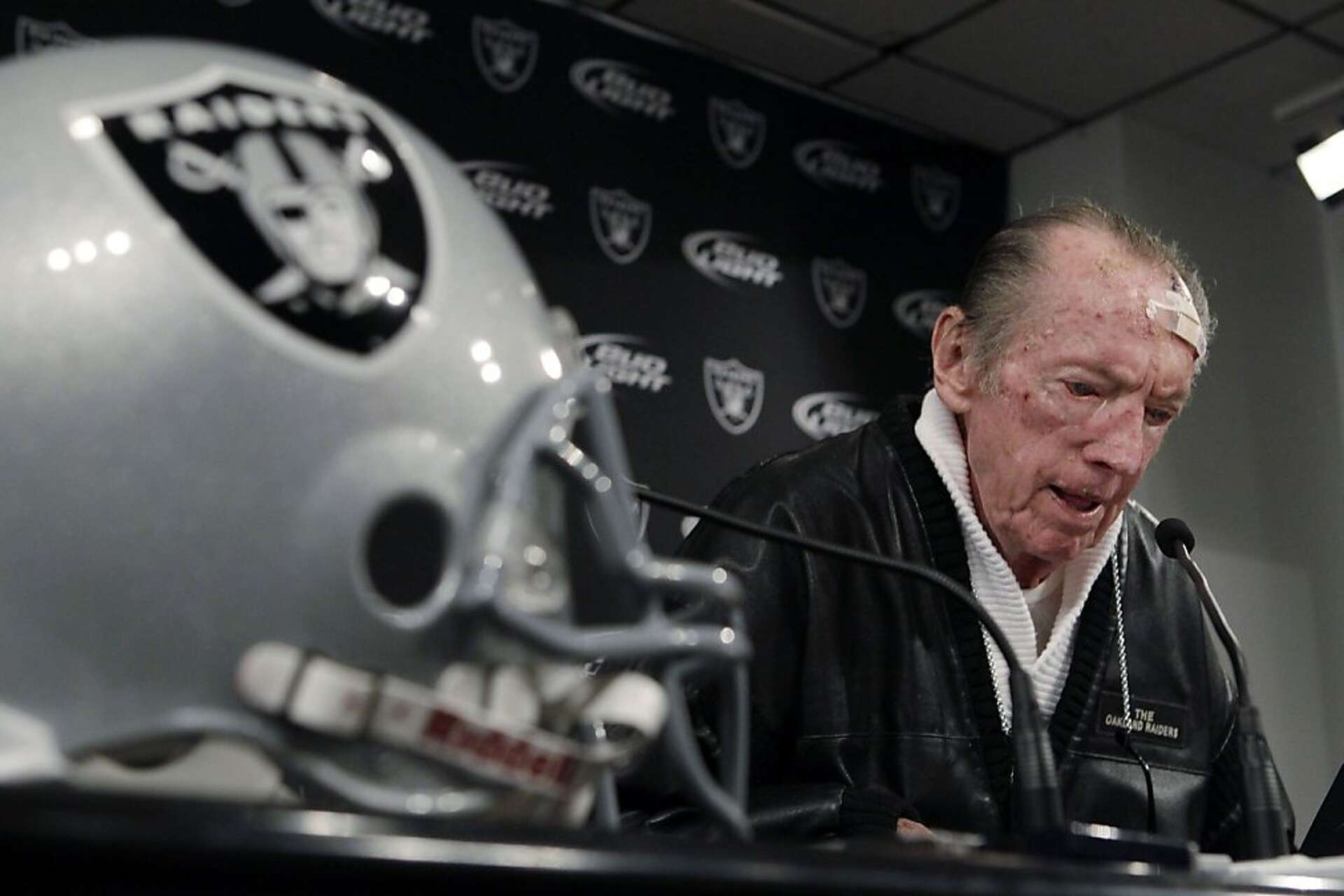
In 1966, following his brief tenure as American Football League (AFL) commissioner, Al Davis purchased a 10 percent ownership stake in the Oakland Raiders for $18,500. Combined with a landmark 1972 partnership agreement restructuring, this modest investment enabled Davis to secure total executive control and build one of professional sports' most valuable franchises.
The Origins of the Raiders Ownership Structure (1960–1963)
To understand how an $18,500 equity purchase granted Al Davis leverage over an entire professional football franchise, one must examine the chaotic founding of the Oakland Raiders. When the American Football League formed in 1959 to challenge the established National Football League (NFL), Oakland was not among the original eight charter cities. Minneapolis had been granted the eighth franchise, but after the NFL offered Minneapolis an expansion team (the Minnesota Vikings), the AFL needed an emergency replacement city for its inaugural 1960 season.
A civic syndicate of Oakland businessmen stepped forward to accept the franchise in January 1960. However, the initial ownership group quickly dissolved due to mounting financial losses and substandard stadium conditions. To keep the team solvent, the AFL reorganized the ownership into a limited partnership led by real estate developer A. Wayne Valley, contractor Ed McGah, and businessman Robert Osborne.
Valley and McGah became the primary general partners, financing the team through heavy early losses. Between 1960 and 1962, the Raiders lost heavily on the field and in the accounting ledgers, playing at makeshift venues like San Francisco's Kezar Stadium and Candlestick Park before Frank Youell Field opened in Oakland. By the end of 1962, the franchise was hemorrhaging money, lacked a clear brand identity, and suffered from a 9–33 cumulative record across its first three seasons. Valley recognized that preserving the business required hiring an executive who possessed complete authority over both coaching and player personnel.
Hiring Al Davis: Coach, General Manager, and Architect
In January 1963, Wayne Valley hired 33-year-old Al Davis, then an assistant coach under Sid Gillman with the San Diego Chargers, to serve as head coach and general manager. Davis demanded total control over football operations as a condition of his employment. Valley granted these operational powers, signing Davis to a three-year contract.
- 1960: AFL Grants Oakland Emergency Franchise
- 1960–1962: Severe Losses & Instability under Valley/McGah
- 1963: Al Davis Hired as Head Coach & GM (Full Football Control)
- 1966 (Spring): Davis Leaves to Become AFL Commissioner
- 1966 (July): AFL-NFL Merger Signed; Davis Resigns Commission
- 1966 (Late): Davis Returns to Raiders, Buys 10% Stake for $18,500
- 1972: Landmark Partnership Restructuring Grants Davis Sole Executive Control
Davis transformed the franchise immediately. He introduced the iconic silver-and-black team colors, coined the motto "Commitment to Excellence," and implemented an aggressive deep-passing offense alongside a press-man defensive scheme. Under his dual guidance as coach and general manager, Oakland posted a 10–4 record in 1963, earning Davis AFL Coach of the Year honors.
By 1965, Davis had turned the Raiders into a profitable, winning entity. His executive reputation soared across the league, setting the stage for a dramatic sequence of events in 1966 that allowed him to transition from salaried employee to equity owner.
The $18,500 Equity Buy-In of 1966
In April 1966, the AFL ownership group elected Al Davis as the league’s commissioner. The AFL was locked in a costly war with the NFL for marquee talent, and Davis immediately launched an aggressive bidding strategy, signing established NFL stars to AFL contracts. Davis's hardline approach forced the NFL to negotiate, culminating in the announcement of the AFL-NFL merger in June 1966.
Unsatisfied with a merger agreement negotiated behind his back by conservative AFL owners, Davis resigned as commissioner in July 1966. Having turned down long-term commissioner offers, he returned to Oakland with unmatched strategic leverage.
Wayne Valley and Ed McGah wanted Davis back to safeguard their investment as the merger approached reality. To incentivize his return, the general partners offered Davis an equity ownership share. Late in 1966, Davis bought a 10 percent interest in the Oakland Raiders partnership for $18,500.
1966 Equity Purchase Calculation:
- Total Partnership Equity Valuation (Implied): $185,000
- Al Davis Ownership Share: 10%
- Total Cash Consideration Paid: $18,500
While $18,500 represented a significant sum in 1966 (roughly equivalent to $175,000 to $185,000 in inflation-adjusted dollars in 2026), it was a remarkably modest cash outlay for an equity stake in a professional sports franchise poised to join an expanded NFL. The low purchase price reflected the historical capital contributions and tax liabilities of the original partnership rather than the future enterprise value of an NFL franchise.
The Coup of 1972: Strategic Contract Restructuring
Holding a 10 percent equity stake gave Davis a seat at the owners' table, but it did not grant him legal control over corporate decisions. Wayne Valley remained the managing general partner, holding the dominant financial interest and final decision-making power. As the Raiders' success grew—including an AFL Championship in 1967 and an appearance in Super Bowl II—tensions between Valley and Davis intensified over organizational policy and operational authority.
The decisive shift in franchise control occurred in 1972 through a masterclass in business contract restructuring.
The Drafted Partnership Agreement
In mid-1972, Wayne Valley traveled to Munich, Germany, to attend the Summer Olympic Games. In Valley's absence, Al Davis drafted a revised general partnership agreement and presented it to the secondary general partner, Ed McGah.
McGah, who preferred to leave football and day-to-day corporate operations to specialists, signed the agreement. The revised agreement amended the governing articles of the Raiders limited partnership in three profound ways:
- Managing General Partner Appointment: It formally named Al Davis as a general partner and designated him as the sole Managing General Partner of the franchise.
- Absolute Administrative Authority: It assigned Davis total operational authority over all football management, hiring, financial budgeting, broadcasting contracts, and facility lease negotiations, completely bypassing the majority owner.
- Irrevocable Control: It contained provisions making the management structure self-perpetuating, preventing other partners from stripping Davis of administrative authority without extraordinary legal cause.
The Legal Battle: Valley v. Davis
When Wayne Valley returned from Munich and discovered that his signature was no longer required to run the franchise, he filed a lawsuit to invalidate the revised partnership agreement. Valley argued that the contract amendment executed by McGah and Davis violated fiduciary duties and exceeded the scope of partner authority.
The case progressed through the California court system. Ultimately, the courts ruled in favor of Davis and McGah. The judicial reasoning centered on contract law governing partnerships:
- Authority of General Partners: As a co-general partner, Ed McGah possessed legal capacity to execute binding amendments on behalf of the partnership entity.
- Consent and Notice: The original operating agreements did not explicit prohibit subset general partners from restructuring operational duties if a voting majority of general partners agreed.
- Absence of Fraud: The courts found no evidence of legal fraud or misrepresentation against McGah, who testified that he knowingly signed the agreement to ensure Davis remained in charge of football operations.
With the legal ruling affirmed, Al Davis secured permanent operational control over the Oakland Raiders despite owning only a minority financial stake. Valley subsequently sold his financial interest in the team, leaving Davis and McGah as the dominant figures in the management group.
Financial Evolution: $18,500 to Multi-Billion Dollar Asset
The table below illustrates the historical evolution of Al Davis’s financial buy-in, partnership share expansions, operational control, and team enterprise valuations across key milestones leading to the modern era.
| Year | Key Milestone / Event | Al Davis Ownership Stake (%) | Implied Team Enterprise Value | Primary Control Mechanism |
|---|---|---|---|---|
| 1963 | Hired as Coach / GM | 0% | ~$1.0 Million | Employment Contract (Football Operations) |
| 1966 | Initial Ownership Equity Buy-In | 10% | ~$185,000 | 10% Limited Partnership Stake ($18,500 paid) |
| 1972 | Partnership Restructuring | 10% (expanded to ~25% gradually) | ~$10.0 Million | Managing General Partner Contract |
| 1995 | Return from LA to Oakland | ~35% - 47% | ~$200.0 Million | Absolute Administrative & Legal Authority |
| 2005 | Buyout of Limited Partner Shares | > 50% | ~$675.0 Million | Majority Equity Ownership & Managing Partner |
| 2011 | Death of Al Davis (Passed to Estate) | ~47% - 67% (Control Share) | ~$761.0 Million | Estate / Family Trust (Mark & Carol Davis) |
| 2026 | Modern Franchise Valuation (Las Vegas) | Controlling Trust Interest | $6.0+ Billion | Managing General Partner / Family Control |
Over the four decades following the 1972 restructuring, Al Davis gradually expanded his financial holding. He bought out Wayne Valley's remaining shares, acquired equity from limited partners, and renegotiated capital shares with the McGah family estate.
When Al Davis passed away in October 2011, his wife Carol Davis and son Mark Davis inherited the controlling interest. By relocating the team to Allegiant Stadium in Las Vegas, the Davis family oversaw an enterprise whose market valuation expanded from an initial $18,500 investment base in 1966 into an asset valued at well over $6 billion.
Strategic Lessons in Corporate Governance and Asset Management
The story of Al Davis’s $18,500 purchase offers critical lessons in business architecture, contract design, and equity growth.
OPERATIONAL CONTROL vs. EQUITY OWNERSHIP
- Traditional Model
- Majority Equity (>50%)
- Absolute Operational Control
- Al Davis Model (1972)
- Managing GM Authority (Operational Control)
- Minority Equity (10%)
1. Operational Control vs. Equity Ownership
In corporate governance, equity share does not always dictate operational power. Davis proved that securing specific managing general partner rights within operating contracts can grant complete executive command, even if other equity partners hold larger capital contributions.
2. Strategic Timing in Asset Acquisition
Davis acquired his stake at a pivotal historical inflection point—just after drafting the AFL-NFL merger agreement but before the full financial windfall of unified television contracts hit professional football. Identifying structural inflections in an industry allows investors to capture equity at steep historical discounts.
3. The Power of Specialized Value Delivery
Valley and McGah granted Davis equity and operational autonomy because his specialized expertise in player personnel, coaching, and marketing generated assets they could not replicate. In partnership negotiations, specialized skill acts as equity leverage.
Frequently Asked Questions
Did Al Davis really buy the Raiders for only $18,500?
Al Davis did not purchase the entire Raiders franchise for $18,500. He purchased a 10 percent equity interest in the team partnership late in 1966 for $18,500. The total franchise valuation at that time was implicitly $185,000 based on partnership accounting.
How did Al Davis take total control of the Raiders with only a minority stake?
In 1972, while co-owner Wayne Valley was overseas, Al Davis drafted an amended partnership agreement. Co-owner Ed McGah signed the agreement, which named Davis the Managing General Partner with sole, binding authority over all team operations, personnel, contracts, and business decisions. California courts subsequently upheld the legality of this agreement.
How much was $18,500 worth in 1966 compared to today?
Adjusted purely for consumer price index (CPI) inflation, $18,500 in 1966 equals roughly $175,000 to $185,000 in 2026 dollars. However, relative to sports asset appreciation, that initial $18,500 purchase represented a fractional stake in an asset class that grew from a hundreds-of-thousands valuation to a multi-billion-dollar enterprise.
Who owned the rest of the Raiders when Al Davis bought his stake?
In 1966, the primary owners were real estate developer A. Wayne Valley and contractor Ed McGah, along with a small group of minor limited partners who had invested during the team's founding years in the early 1960s.
Who currently owns the Las Vegas Raiders?
The Raiders are owned by the Davis family trust, managed primarily by Al Davis's son, Mark Davis, alongside his mother, Carol Davis. Although minority shares have been sold to outside investors over the years, the Davis family retains controlling management authority under the general partnership structure established decades ago.
Key Takeaways and Next Actions
The acquisition of a Raiders stake by Al Davis for $18,500 remains one of the most remarkable equity transactions in sports business history. It highlights how operational talent, market timing, and meticulous contract structuring can turn a minority financial buy-in into decades of complete organizational dominance.
For legal, corporate, and business analysts examining partnership structures:
- Review Governing Partnership Agreements: Ensure operating agreements explicitly specify voting thresholds, delegation of authority, and emergency amendment procedures to prevent minority takeover scenarios.
- Distinguish Equity Share from Voting Control: Structure voting rights, board governance, and management duties separately from simple equity ownership percentages.
- Analyze Strategic Valuation Moments: Evaluate enterprise asset values during structural industry changes (such as mergers or media rights expansions) to structure precise equity entries.