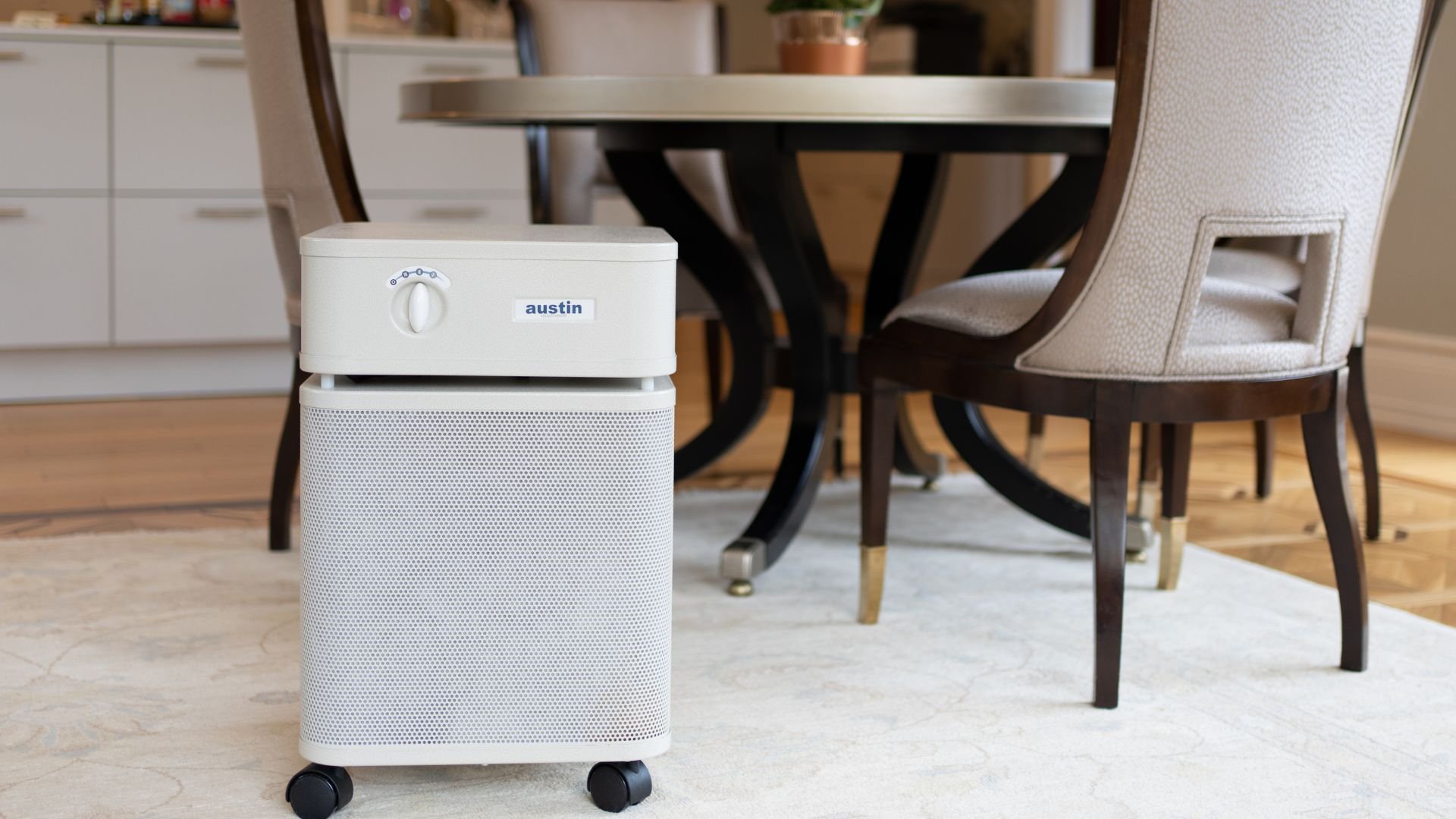
Air purifiers are essential supplementary tools in mold remediation, designed to capture airborne spores and neutralize the musty odors caused by microbial volatile organic compounds (MVOCs). While they cannot eliminate the root cause of mold—which is always moisture—high-efficiency particulate air (HEPA) filtration is critical for preventing cross-contamination and protecting respiratory health during and after the physical cleanup process.
The Vital Role of Air Purifiers in the Mold Remediation Lifecycle
Mold remediation is a comprehensive process that involves identifying moisture sources, containing the affected area, and physically removing fungal growth. In this context, an air purifier serves as a secondary line of defense rather than a standalone solution. When mold colonies are disturbed during cleaning or structural demolition, they release millions of microscopic spores into the air. Without proper filtration, these spores can migrate to unaffected areas of the home, leading to secondary infestations.
In 2026, the standard for residential mold management emphasizes a "capture-and-remove" strategy. Professional-grade air purifiers, often referred to in the industry as "air scrubbers" when used during active remediation, create a controlled environment. By constantly cycling the air through dense filtration media, these devices ensure that the concentration of airborne pathogens remains at a level that the human immune system can manage, specifically protecting vulnerable populations such as children, the elderly, and those with chronic respiratory conditions like asthma or hypersensitivity pneumonitis.
It is important to distinguish between the two primary functions of air purifiers in this scenario: active remediation support and long-term preventative maintenance. During active remediation, the purifier’s job is to handle high loads of particulate matter. Once the physical mold is gone and the moisture issue is repaired, the purifier transitions to a preventative role, catching the stray spores that naturally exist in every environment before they find a place to settle and grow.
Essential Filtration Technologies for Mold Removal
To effectively address mold, an air purifier must utilize specific technologies capable of trapping particles as small as 0.3 microns and absorbing gaseous byproducts. Not all air purifiers are created equal, and many "entry-level" models lack the seals or filter density required for toxic mold situations.
True HEPA Filtration
The "gold standard" for mold remediation is True HEPA (High-Efficiency Particulate Air) filtration. By definition, a True HEPA filter must capture 99.97% of particles that are 0.3 microns in diameter. Since most mold spores range in size from 3 to 100 microns, they are easily trapped by HEPA media. However, the 0.3-micron standard is critical because it represents the "most penetrating particle size," ensuring that even the smallest fragments of mold and associated bacteria are removed from the breathing zone.
Activated Carbon for MVOCs
Mold is often identified by its characteristic "earthy" or "musty" smell. This odor is caused by Microbial Volatile Organic Compounds (MVOCs), which are gases produced during the mold's metabolic process. Because these are gases, they pass straight through a HEPA filter. To eliminate these odors and the potential toxicity associated with them, an air purifier must contain a substantial amount of activated carbon. In 2026, high-end models often use "chemisorptive" carbon blends specifically treated to neutralize the complex organic molecules released by fungal colonies.
PECO and PCO Technologies
Photoelectrochemical Oxidation (PECO) and Photocatalytic Oxidation (PCO) are emerging technologies that aim to destroy organic matter rather than just trapping it. While these can be effective as a final polish for the air, they should never replace HEPA filtration in a mold-heavy environment. Their role in 2026 is largely seen as an added layer of safety, breaking down the cellular structure of spores that might otherwise remain viable on the surface of a filter.
Technical Specifications: CADR, ACH, and Static Pressure
When selecting a unit for home remediation, the technical specifications dictate whether the machine will actually perform or simply move air around.
- Clean Air Delivery Rate (CADR): This measurement indicates the volume of filtered air a unit delivers. For mold, you should prioritize the "Dust" and "Pollen" CADR ratings. A higher CADR means the unit can clean a larger room more quickly.
- Air Changes Per Hour (ACH): For standard air cleaning, 2 to 4 ACH is often sufficient. However, for mold remediation, professionals recommend a minimum of 5 to 6 ACH. This means the total volume of air in the room is cycled through the filter every 10 to 12 minutes, significantly reducing the "dwell time" of spores in the air.
- Filter Seals and Gaskets: A high-quality filter is useless if air can leak around the edges. This is known as "bypass." Premium air purifiers designed for remediation use internal rubber gaskets and pressure-sealed housings to ensure that 100% of the air drawn into the machine actually passes through the HEPA media.
Comparing Filtration Systems for Mold Remediation
| Feature | Standard HEPA Purifier | Professional Air Scrubber | DIY/Consumer Ionic Cleaner |
|---|---|---|---|
| Primary Use | Daily prevention & light remediation | Heavy remediation & construction | General dust (Inadequate for mold) |
| Filter Grade | True HEPA (H13 or H14) | HEPA with high-capacity pre-filters | Often non-HEPA "HEPA-type" |
| Airflow Capacity | 200 - 400 CFM | 500 - 2,000+ CFM | 50 - 150 CFM |
| Odor Removal | Small carbon pellets | Deep-bed activated carbon | Usually none or ozone-based |
| Portability | High (Wheels/Lightweight) | Medium (Heavy-duty housing) | High |
| 2026 Tech | Smart sensors & App control | Differential pressure gauges | Basic timers |
The Difference Between Air Purifiers and Air Scrubbers
In the context of home remediation, you will often hear the terms "air purifier" and "air scrubber" used interchangeably, but there is a functional difference. An air purifier is a standalone unit designed to recirculate air within a room. It is ideal for post-cleanup maintenance and for use in bedrooms or living areas during the remediation of a different part of the house.
An air scrubber, conversely, is a heavy-duty portable filtration system used by professionals. The key difference is that air scrubbers can be "ducted." This allows a contractor to create negative air pressure. By ducting the exhaust of the machine to the outside, the room being cleaned stays at a lower pressure than the rest of the house. This ensures that no air (or mold spores) can leak out of the containment zone; instead, clean air is constantly pulled into the contaminated area. For significant mold infestations (greater than 10 square feet), using a device capable of creating negative pressure is the industry standard per IARC and EPA guidelines.
Step-by-Step: Using an Air Purifier During Remediation
If you are managing a small mold issue (less than 10 square feet of growth) on your own, follow this protocol to maximize the effectiveness of your air purifier.
Phase 1: Preparation and Containment
Before you touch the mold, place the air purifier in the room. If possible, seal off doorways with 6-mil polyethylene plastic sheeting and painters' tape. Turn the air purifier on to its highest setting about 30 minutes before you begin work. This establishes a clean baseline and begins the high-ACH cycle.
Phase 2: Active Cleaning
While wearing a P100 or N95 respirator, begin the physical removal of the mold. The air purifier should be positioned near the work area but not so close that it interferes with your movement. Its role here is to capture the "plume" of spores that rises when you scrub or remove contaminated drywall. Ensure the exhaust of the purifier is pointed away from the work area to avoid blowing dust around the room.
Phase 3: Post-Cleanup Scrubbing
Once the physical mold is removed and the surfaces are disinfected, the air purifier must remain running. This is the "polishing" phase. Even if the room looks clean, billions of spores may still be suspended in the air. Leave the unit running on high for at least 24 to 48 hours after the work is completed.
Phase 4: Filter Disposal
This is the most dangerous step for re-contamination. When the remediation is finished, the filter inside the machine is essentially a concentrated mass of mold spores. Wear a mask and gloves to remove the filter. Place it immediately into a plastic bag, seal it with tape, and dispose of it in an outdoor trash receptacle. Wipe down the interior and exterior of the air purifier with a HEPA-vacuum or a damp microfiber cloth and an EPA-registered antimicrobial.
Limitations and Common Mistakes
It is a dangerous misconception that an air purifier can "cure" a mold problem. If you have a leaking pipe behind a wall or a basement with high humidity, an air purifier will only provide a temporary reduction in symptoms.
Avoid these common errors:
- Neglecting the Source: If the relative humidity in the home is above 60%, mold will continue to grow on organic surfaces (drywall, wood, fabric) regardless of how many air purifiers you run. Use a dehumidifier in conjunction with your purifier.
- Using Ozone Generators: Some "air purifiers" are actually ozone generators. Ozone is a lung irritant and, according to the EPA, does not effectively remove mold at levels that are safe for human inhalation. In 2026, many jurisdictions have strict regulations on the sale of these devices for occupied residential use.
- Undersizing the Unit: Using a small desktop purifier for a living room remediation is ineffective. Ensure the CADR of the unit matches or exceeds the square footage of the room, accounting for high ceilings.
- Relying on "Washable" Filters: While cost-effective for dust, washable filters rarely meet the HEPA standard required for mold spores. Always use replaceable, certified HEPA filters.
Maintenance and Safety Considerations
For an air purifier to remain effective against mold, maintenance must be proactive. In the year 2026, most advanced units feature "Filter Life Monitoring" based on actual air volume processed and sensor-detected particulate load, rather than a simple timer.
- Pre-filter Management: Mold remediation creates a lot of dust. The pre-filter (usually a foam or carbon sheet) will clog quickly. Check it every 48 hours during active remediation and vacuum or replace it as needed to maintain airflow.
- Sensor Calibration: If your unit has an "Auto Mode," be aware that the sensors might not always be sensitive to microscopic mold spores. During remediation, it is safer to bypass the sensor and run the unit on a fixed "High" or "Turbo" setting.
- Placement: Do not place the unit in a corner or behind furniture. It needs at least 18 to 24 inches of clearance on all sides to allow for proper intake and 360-degree exhaust.
Frequently Asked Questions
Can an air purifier kill mold on walls?
No, an air purifier cannot kill mold that is already growing on a surface. Mold is a biological colony that roots into porous materials like drywall and wood. The air purifier only removes the spores that the colony releases into the air. Physical removal and moisture control are the only ways to eliminate mold on surfaces.
How long should I run an air purifier after mold remediation?
You should run the air purifier on its highest setting for at least 24 to 48 hours after the physical remediation is complete. This ensures that any spores settled on surfaces that were kicked back into the air during the final "wipe down" are captured. Many experts recommend running the unit on a lower "maintenance" setting indefinitely if the home is prone to moisture issues.
Does a HEPA filter get moldy?
Yes, a HEPA filter can become a site for mold growth if it becomes damp. Mold spores trapped in the filter can remain viable. If the air purifier is used in a very humid environment or if water is splashed onto it, the organic matter trapped in the filter (dust, skin cells) can provide a food source for the spores. In remediation scenarios, it is best to treat the filter as a "single-use" item and replace it once the project is finished.
Which is better for mold: an ionizer or a HEPA filter?
A HEPA filter is significantly better and safer for mold remediation. Ionizers work by charging particles so they stick to surfaces (like walls and floors). This does not actually remove the mold from the room; it just moves it from the air to the surfaces. Furthermore, many ionizers produce ozone as a byproduct, which can be harmful to occupants.
Can I use a HEPA air purifier for black mold (Stachybotrys chartarum)?
Yes, HEPA filtration is effective against Stachybotrys chartarum spores, which are relatively large (typically 8-11 microns). However, "black mold" is often associated with high moisture and potential mycotoxin production. If you suspect a significant infestation of black mold, an air purifier should only be used as part of a professional remediation plan involving full containment and PPE.
Final Recommendation
When dealing with mold remediation in 2026, your priority should be a HEPA-certified air purifier with a heavy activated carbon stage. Ensure the unit is rated for at least 5 Air Changes Per Hour (ACH) for the specific room size. For any mold growth exceeding 10 square feet, do not rely on a consumer air purifier alone; consult a certified remediation professional who can implement negative air pressure and structural drying. For ongoing health and prevention, keep the air purifier running in "Auto" mode only after the moisture source has been permanently repaired and the visible mold has been physically removed.