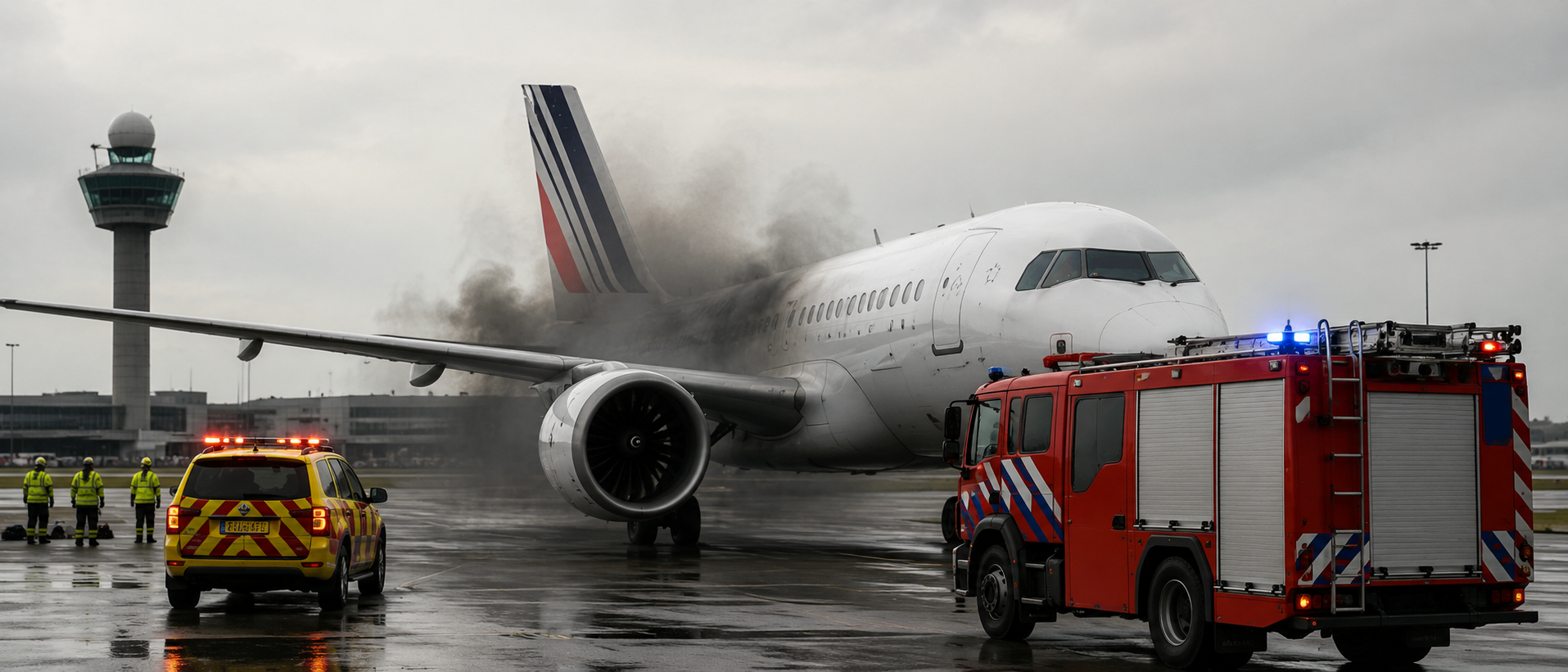
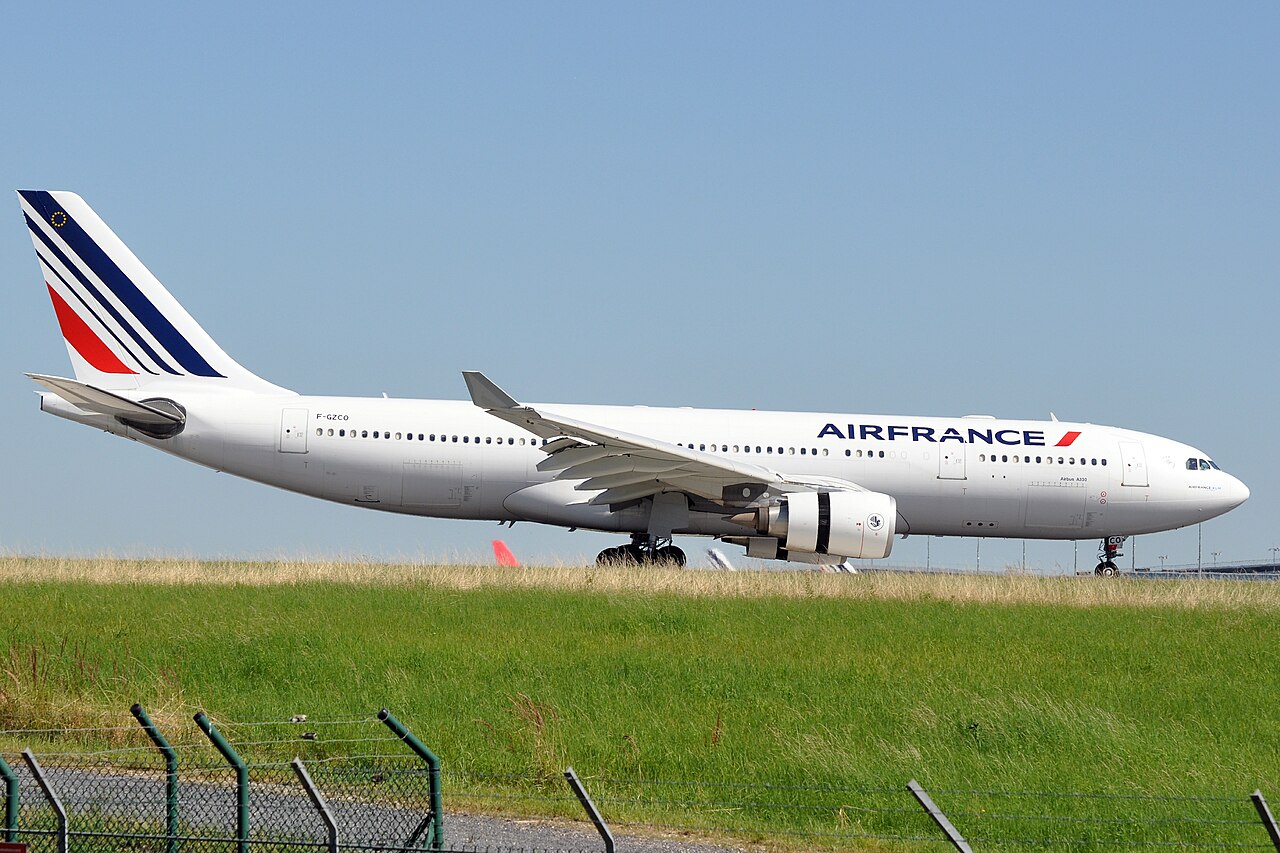
On January 21, 2024, Air France Flight 356, an Airbus A350-941, experienced a high-profile emergency during its landing at Toronto Pearson International Airport (YYZ). The aircraft suffered a severe tail strike during a second landing attempt, resulting in significant structural damage to the rear fuselage. While no injuries were reported among the 286 passengers and crew, the incident triggered a comprehensive investigation by the Transportation Safety Board of Canada (TSB) into pilot handling, environmental conditions, and flight control logic.
The "Air France Toronto emergency" has become a point of significant interest for aviation safety experts and frequent flyers alike. To understand what happened, one must look beyond the headlines and examine the physics of the Airbus A350, the specific weather conditions at Pearson International that day, and the complex interaction between human input and automated flight systems. This explanation provides a technical deep dive into the events of AF356 and the broader safety implications for long-haul operations.
The Sequence of Events: Flight AF356
Flight AF356 is a regularly scheduled long-haul service from Paris Charles de Gaulle (CDG) to Toronto Pearson (YYZ). On the day of the incident, the aircraft (registration F-HTYO) was nearing the end of its transatlantic crossing. The weather in Toronto was characterized by standard winter conditions, involving shifting winds and overcast skies, which are typical for January in Ontario but require high levels of pilot vigilance.
The Initial Approach and Go-Around
As the aircraft approached Runway 24L at Toronto Pearson, the flight crew initiated a standard landing sequence. However, the first approach was discontinued. In aviation, a "go-around" is a standard safety maneuver performed when an approach is not "stabilized"—meaning the speed, descent rate, or alignment with the runway does not meet strict safety criteria. The crew successfully executed the go-around, climbed back to a safe altitude, and coordinated with Air Traffic Control (ATC) for a second attempt.
The Second Attempt and Tail Strike
During the second approach to Runway 24L, the situation became critical. As the aircraft crossed the runway threshold and entered the "flare" phase—the maneuver where the pilot raises the nose to soften the touchdown—the aircraft’s pitch angle became excessive. The rear under-fuselage made contact with the runway surface with significant force.
Despite the impact, the aircraft remained controllable. The crew safely taxied the plane to the gate, where passengers disembarked normally. It was only upon post-flight inspection that the extent of the "tail strike" became clear: the aircraft had sustained substantial structural damage to its composite skin and internal frames in the tail section.
Understanding the Mechanics of a Tail Strike
A tail strike occurs when the rear part of an aircraft's fuselage contacts the runway during takeoff or landing. While modern aircraft are designed to withstand certain stresses, the fuselage is not meant to be a contact point.
Why the Airbus A350 is Sensitive
The Airbus A350-900 is a long-body aircraft, measuring nearly 67 meters (220 feet) in length. Because of this length, the margin for error during the flare is relatively slim. If the nose is pitched up just a few degrees beyond the certified limit during touchdown, the geometry of the aircraft dictates that the tail will hit the ground before the main landing gear can fully compress and absorb the descent energy.
The Physics of the Flare
During landing, pilots must balance two forces:
- Rate of Descent: Reducing the vertical speed so the wheels touch down gently.
- Pitch Angle: Raising the nose to increase lift as the airspeed drops.
If a pilot perceives the aircraft is sinking too fast (perhaps due to a sudden loss of headwind or "sink"), the natural reaction is to pull back on the side-stick. On a long aircraft like the A350, an aggressive pull can cause the tail to rotate downward rapidly, striking the pavement.
Technical Factors and Flight Control Laws
Airbus aircraft utilize a sophisticated "Fly-By-Wire" (FBW) system. Unlike older planes with direct physical links to control surfaces, the A350 uses computers to interpret pilot inputs and move the elevators and ailerons.
Normal Law and Protection Logic
Under "Normal Law," the A350 has built-in protections to prevent the pilot from entering a stall or overstressing the airframe. One of these is Pitch Attitude Protection. However, during the landing flare, the system enters a specific "Flare Mode." This mode is designed to mimic a conventional aircraft's feel, allowing the pilot to manually control the touchdown.
The TSB investigation focused on whether the flight control software’s transition into flare mode, combined with pilot inputs in response to Toronto's wind conditions, contributed to the excessive pitch. In some instances, if the aircraft bounces slightly upon touchdown and the pilot compensates with a sharp nose-up command, the risk of a tail strike increases exponentially.
The Role of Environmental Conditions at Toronto Pearson
Toronto Pearson (YYZ) is known for challenging wind patterns, particularly during the winter months. On January 21, 2024, the airport was reporting gusty conditions.
- Wind Shear: Sudden changes in wind speed or direction can cause an aircraft to lose lift unexpectedly. If this happens just feet above the runway, the pilot must react instantly to prevent a hard landing.
- Mechanical Turbulence: The buildings and hangers surrounding Pearson can create "rotors" or turbulent air pockets when winds come from specific headings, affecting the stability of the aircraft in the final seconds of flight.
In the case of AF356, investigators analyzed the Flight Data Recorder (FDR) to determine if a sudden gust caused the aircraft to "float" or "drop," prompting the control inputs that led to the tail strike.
Comparative Analysis: Recent Air France Incidents in Toronto
When searching for "Air France emergency in Toronto," many users find results for two very different events. It is vital to disambiguate the 2024 tail strike from the much more severe 2005 crash.
| Feature | Flight AF356 (2024) | Flight AF358 (2005) |
|---|---|---|
| Aircraft Type | Airbus A350-900 | Airbus A340-300 |
| Primary Issue | Tail strike during landing flare | Runway overrun during a storm |
| Outcome | Structural damage; safe taxi to gate | Aircraft destroyed; fire; emergency evacuation |
| Injuries | 0 | 12 serious injuries; 0 fatalities |
| Primary Cause | Mechanical/Pilot Pitch Control (Under Investigation) | Weather/Pilot Decision (Delayed Thrust Reversers) |
| Investigation Body | TSB Canada | TSB Canada |
While the 2005 incident was a catastrophic hull loss involving a runway overrun into a ravine, the 2024 emergency was a technical landing incident. The 2024 event, however, was significant because the A350 is a newer, composite-heavy aircraft, and repairs to its fuselage are significantly more complex than those for traditional aluminum planes.
The TSB Investigation and Findings
As of 2026, the Transportation Safety Board of Canada (TSB) has provided comprehensive insights into the AF356 incident. The investigation followed a standard protocol:
- Data Recovery: Both the CVR (Cockpit Voice Recorder) and the FDR were pulled immediately. These provided a second-by-second account of pilot commands versus aircraft response.
- Structural Analysis: Engineers from Airbus and Air France inspected the damage. The A350's fuselage is made primarily of Carbon Fiber Reinforced Plastic (CFRP). Unlike aluminum, which dents, CFRP can suffer internal "delamination"—where the layers of the composite separate—without showing massive external holes.
- Human Factors: The TSB examined the crew's training records and their fatigue levels. Air France’s long-haul crews are subject to strict rest requirements, but the "human-machine interface" remains a focal point in modern aviation safety.
The investigation ultimately highlighted the importance of Stabilized Approach Criteria. When an aircraft is not perfectly aligned or is experiencing fluctuating airspeeds, the safest move is always a go-around. In the case of AF356's second attempt, the TSB looked at whether the approach should have been aborted even earlier.
Maintenance and Recovery of F-HTYO
The recovery of the aircraft involved in the Toronto emergency was a feat of modern engineering. Because the tail strike caused structural damage to a composite airframe, the repair could not be handled with a simple "patch."
- Ultrasonic Testing: Technicians used specialized scanners to look through the composite skin for hidden cracks.
- On-Site Repair: Airbus "Go-Teams" often travel to the site of such incidents with pre-fabricated composite sections. The damaged area of the rear fuselage had to be carefully cut away and replaced with a new section, bonded under specific temperature and pressure conditions to maintain the aircraft's pressurized integrity.
- Return to Service: Following months of repair and test flights, the aircraft was eventually returned to the Air France fleet, demonstrating the repairability of next-generation composite jets.
Safety Lessons for the Aviation Industry
The Air France emergency in Toronto serves as a case study for several industry-wide safety initiatives:
1. Tail Strike Awareness Training
Airlines have increased the use of flight simulators to specifically mimic the "high-pitch" landing scenarios that lead to tail strikes. Pilots are taught to accept a "firm landing" rather than pulling back too hard on the stick to try and save a landing, which risks the tail.
2. Enhanced Flight Control Software
Airbus has continually updated its flight control laws. Modern iterations include "Tail Strike Protection" (TSP) logic, which provides a resisting force on the side-stick if the aircraft's sensors detect the pitch angle is approaching the geometric limit of the fuselage.
3. Real-Time Meteorological Reporting
Pearson International and other major hubs have invested in more granular wind-shear detection systems (LLWAS - Low Level Wind Shear Alert System) to provide pilots with better data during the critical last 200 feet of descent.
FAQ: Air France Toronto Emergency
Was there a fire during the Air France emergency in Toronto? No. Unlike the 2005 AF358 crash, the 2024 tail strike did not result in a fire. The aircraft taxied to the gate under its own power. Friction during a tail strike can create sparks, but the A350's fire suppression systems and the lack of fuel lines in the extreme rear fuselage prevented any ignition.
How common are tail strikes on the Airbus A350? Tail strikes are relatively rare but are a known risk for any "stretched" or long-body aircraft, including the A350-900, A350-1000, and the Boeing 787-9/10. Because of their length, these aircraft require very precise pitch control during the flare.
Did the passengers know an emergency had occurred? Many passengers reported a "very hard" or "jarring" sensation upon touchdown, and some in the rear of the cabin reported hearing a loud "scrape" or "thud." However, because the aircraft taxied normally and there was no cabin depressurization, many were unaware of the severity of the structural damage until after they had disembarked.
What happens to a pilot after a tail strike incident? In accordance with standard safety protocols, the flight crew is usually removed from flight duties pending an internal and regulatory investigation. This is not necessarily a disciplinary action but a move to ensure the crew can provide testimony and undergo additional training if human error is identified as a factor.
Is the Airbus A350 safe to fly? Yes. The Airbus A350 is considered one of the safest and most advanced commercial aircraft in operation today. The 2024 Toronto incident was a localized operational event, and the aircraft's ability to safely land and taxi despite structural damage is a testament to its robust design.
Practical Recommendations for Travelers
If you are a passenger and experience a hard landing or a suspected tail strike, follow these steps:
- Remain Seated: Even if the landing feels violent, the aircraft is most stable when it is on its wheels. Do not attempt to grab luggage until the "Fasten Seatbelt" sign is turned off.
- Follow Crew Instructions: If the pilots detect an issue, they may opt to stop the aircraft on the taxiway for an inspection by fire crews. This is a standard precaution.
- Report Observations: If you are seated in the very back of the plane and see or hear something unusual during touchdown (such as debris or unusual vibration), inform a flight attendant once it is safe to do so. Your observation can sometimes assist maintenance crews in their initial assessment.
The Air France emergency in Toronto reminds us that aviation safety is a discipline of constant refinement. Through the TSB's rigorous investigation and the subsequent technical adjustments made by Airbus and Air France, the industry continues to minimize the risks associated with landing long-body aircraft in challenging environments.